



I hope you had a great spring and successful planting season. Overall, our fields look good. With the recent moisture and heat, our crops are really taking off. Daily prayers for a cooperative growing season and strong yields.
I have been lucky enough to visit a couple customers recently. Two very different operations, but I was struck by a couple of similarities. After thinking about these, I have noticed this has been true of almost all of my member visits during my 18 years at GreenStone.
The two core similarities are pride in the operation and family involvement. This isn’t new. My grandfather proudly displayed a sign on his barn in Chapin, Mich., that read, “P.E. Jones and Sons.” When my dad bought the farm and needed to replace the barn after a fire, the sign changed to “L.D. Jones and Family.”
My grandparents and dad were very proud of their small farm. My grandparents were also proud of their livestock hauling business and partial ownership in the Owosso Livestock Sales. Every one of our customers is proud of their farm and business. And if multiple members of the family are involved in the operation, then that pride is just multiplied.
During one of the visits, I sat at a table in the member’s very nice farm office and shop listening to him describe how he grew the farm while in partnership with his best friend. I believe the quote was, “We might as well be brothers.” (The member’s son was also at the table with us and is already a GreenStone member.) The member described with pride how they slowly acquired their land and built relationships with their neighbors. Before I left, he was proud to show off a new piece of equipment that was essentially built by hand by the father and son.
During the other visit, I learned of the five generations that have been the owner/operators of the still growing business in rural Michigan. I saw pictures of the great-great grandfather in the 1920s and the great grandfather in the 1940s. The percentages are high that the sixth generation will eventually take over the business as I already met the 11-year-old son pushing a broom starting his summer job. Once again, the pride that this very hard-working family has in their business can’t be missed.
I see this at every customer visit – regardless if it’s a farm business or a new family home. It is, however, always impressive and I never take it for granted. Our member-owners put everything they have emotionally, physically and financially into their operations and families. You deserve to be proud.
I don’t own GreenStone. You do as members. But I can tell you I am very proud to be a part of and lead this organization. I have 650 teammates that are also very proud to be a part of GreenStone and we try to meet our mission every day: “To promote the business success of our customers and the rural community by being the best at providing credit and financial services.” Hopefully, you feel we are meeting our mission for you.
We will receive our “report card” from our members this summer when we see the results of our customer satisfaction survey. For those of you that received the survey, thank you for taking the time to complete it.
I can also tell you, your organization continues to perform well financially. Numbers through the first half of the year look very solid.
This quarter I also wanted to recognize the service and contributions of one of our long-time appointed directors, Gene College. Gene has served on GreenStone’s board of directors since 2009 and serves as the board’s financial expert and audit committee chair. He will be retiring from the board effective December 31, 2025. I can’t thank Gene enough for the leadership and guidance he has provided GreenStone and me personally. I know we have Gene’s expertise to lean on for another six months or so, but I didn’t want to miss the opportunity to recognize all of his contributions to our organization.
You will hear more about our two new appointed directors later in this issue, but I first wanted to welcome to GreenStone Paul Lindow and Rick Snyder. Paul will replace Gene as the board’s financial expert and audit committee chair, while Rick will serve as the board’s technology and cybersecurity expert and chair the newly formed technology committee. Both of these individuals bring extensive experience to GreenStone and our board of directors.
As always, thank you for feeding me, my family, our country and the world; and thank you for your membership and commitment to GreenStone!
Please reach out to me any time I can be of assistance.
To view the summer 2025 issue of Partners magazine in its entirety, click here.
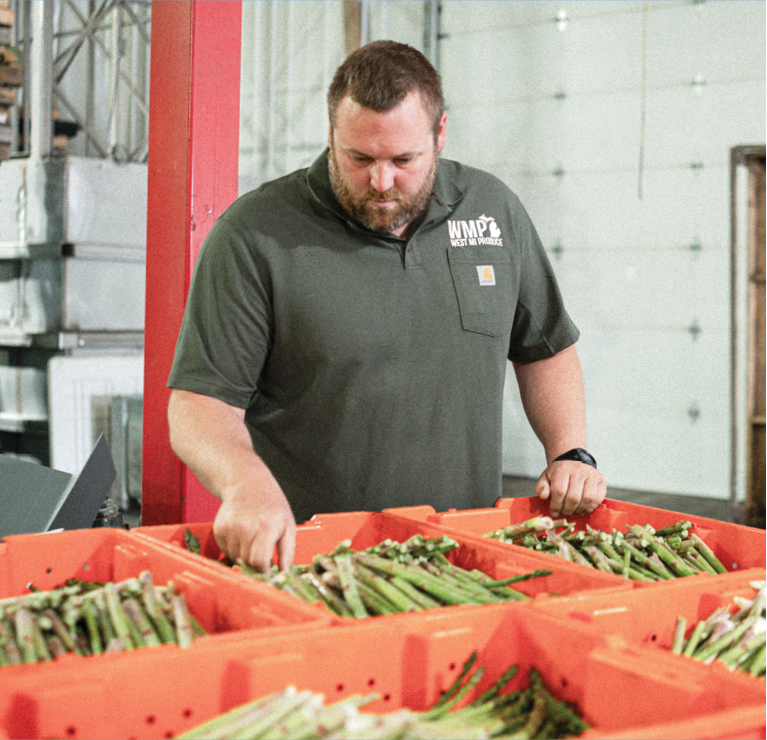
As a fourth-generation farmer, Nick Oomen of West Michigan Produce is no stranger to both the challenges and rewards that come with his job. For Nick, farming is not just his profession – it’s a lifestyle and a legacy.
“For me, there’s a sense of pride in growing something from scratch. You have to really love what you do, because there are going to be harder days you just have to work through,” he said. “I think farming is one of the only jobs where people will do it until they physically can’t anymore. That says a lot about how much we care about our farms and the quality of what we’re producing.”
Nick grew up farming beside his parents Ken and Sandy Oomen in Hart, Mich. He started getting involved in the business aspects of the farm when he was 14, a true testament to his interest and passion for agriculture. The family farm now spans four generations and began with Nick’s great-grandfather who started the farm as a dairy operation. Once Ken and his brother took over the farm in the 1980s, they began growing asparagus and slowly transitioned into vegetable farming.
Located in Oceana County, the sandy, well-draining soil and milder lake-effect weather offers the perfect growing conditions for asparagus as well as a multitude of other vegetables. Michigan itself is the second largest producer of asparagus in the country, with 80% of the state’s crop coming from Oceana County. The county is considered the “Asparagus Capital of the World” and is even home to the National Asparagus Festival!
Ideal Conditions for Growth
These ideal growing conditions are one of the reasons the farm has experienced so much success, adding more than twenty varieties of crops to the list of produce they grow, package, and ship to several national retailers. The farm produces everything from asparagus, broccoli, peas, carrots, pumpkins, squash, snap beans, cherries, and beets to cash crops such as corn, wheat, and soybeans.
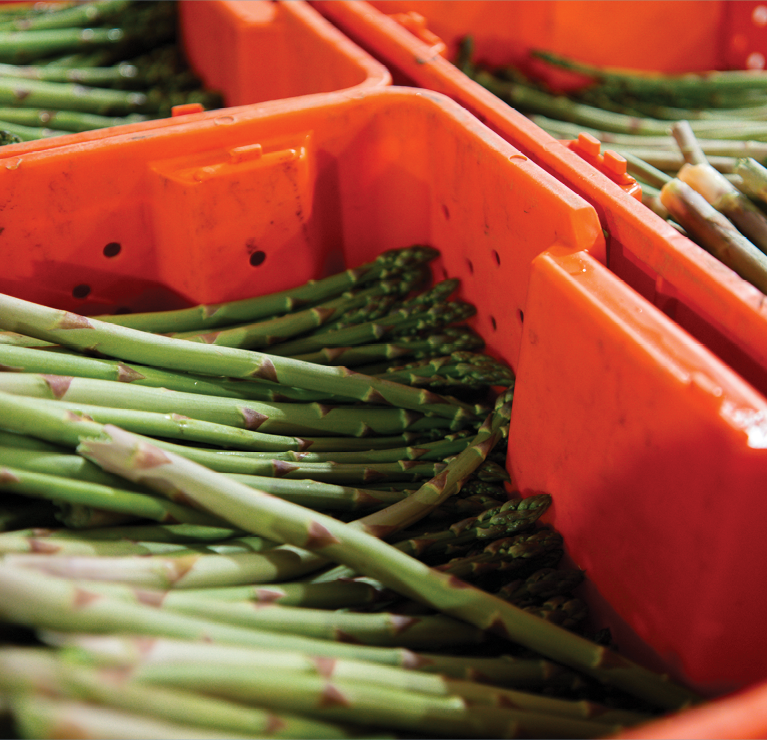
During peak asparagus harvesting season in the spring, the farm employs between 100-120 people at a time, then drops back down to around 45 after June. West Michigan Produce also picks all of its asparagus by hand using a five-person asparagus cart that combs the fields sometimes from sunrise to sundown. Hand harvesting asparagus protects the quality of the crop and prevents any damage that would otherwise occur with mechanical harvesting methods. It also allows for the spears to be kept longer for the fresh market or cut shorter later during processing for those that will be frozen.
The farm also raises several organic products which require different growing methods and regulations. “As the demand for organic produce continues to increase, I want to diversify our products as much as possible to spread out risk across multiple crops,” explained Nick.
“There are many challenges of vegetable farming not a lot of people know about. When it comes to raising organic, there are different regulations such as disease control practices, and organic inspections and certifications you may have to go through,” says Nick.
“Besides the labor required for hand picking asparagus, another thing vegetable farmers have to consider is how we harvest our produce, such as squash, so it doesn’t get rejected by retailers if it has any blemishes or bruises on it. This adds another layer of complexity to how we harvest our vegetables and pack our products. In this industry you have to be flexible and be able to adapt to the changing demands.”
A Vision for Expansion
Nick graduated from Michigan State University in 2012 after studying agricultural industries. He returned home to the family farm with new ideas on how to expand the operation, including adding a processing and packing facility to the farm. To keep up with the rapidly changing landscape of the industry, being able to process and package its own produce would allow the farm to be more self-sufficient and work directly with the retailers buying its products.
The Oomen family began packing vegetables in 2014 and has since continued to expand its processing and packing operations for both fresh and frozen products. After attending a young farmer’s event through Michigan Farm Bureau, Nick learned more about GreenStone and the CultivateGrowth resources available to young, beginning, and small farmers. He was able to secure a loan through the CultivateGrowth program that would support the expansion of the farm’s packing facility, and in 2021 completed construction of its new facility complete with a refrigerated storage area. The facility is used to pack asparagus, zucchini, bell peppers, broccoli, and more.
“The addition of our new facility allowed us to continue to grow our packing operations and work with larger retailers that ship our products all over the country,” says Nick. “It’s also opened up opportunities for us to pack asparagus for other farmers in the area as well because we have the equipment and the storage capable of doing it.”
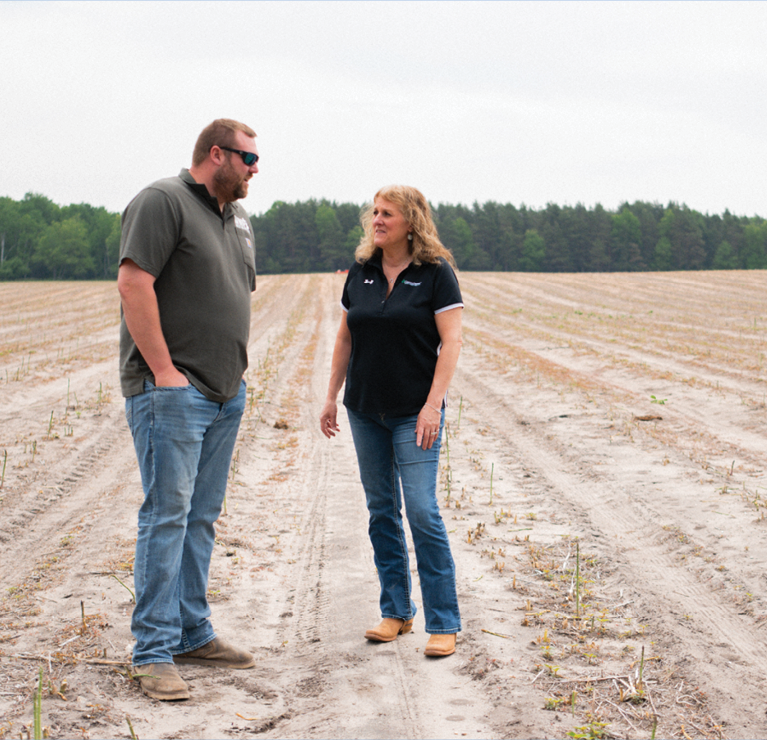
Kimberly (Kim) Sadler, Senior Financial Services Officer, has been with GreenStone for over 17 years and has worked with Nick since 2018 when he began to take on more and more operational responsibilities on the farm. She helped him secure financing for the addition of their new packing facility and all its machinery and equipment.
Advocating for Family Farms
“Nick is very hands on when it comes to running the business,” Kim explained. “He has been great to work with, and it’s exciting to see a young farmer be successful and continue to grow their family farm.”
Nick is also engaged in advocating for labor policy reform and has spoken with lawmakers surrounding the challenges farmers are facing when it comes to rising labor costs. “He is a great example of a young farmer that is raising awareness of the importance of his generation and the next generation of farmers after him to be able to continue producing the food that feeds our country,” added Kim.
“We know Kim is looking out for us and our best interest,” Nick commented. “She makes regular visits to the farm for check-ins, and for us that’s really important because working with a lender who truly understands who you are and what your business does is always easier to work with. What I appreciate about Kim is the personal interaction we get with her, whether that’s her stopping by the farm or just picking up the phone to call her whenever. You don’t always get that with other traditional lenders you work with.”
For Nick, maintaining the involvement of his family in the farm’s operations is important as West Michigan Produce continues to grow and expand. “He’s always looking to add something else new and figuring out what else we can grow. I always say, ‘don’t you think we have enough going on already’,” laughs Nick’s dad, Ken.
“Just because we’re running a larger size operation now doesn’t mean we aren’t still family owned and operated,” says Nick. “For us that will never change. People think just because you’ve grown it’s turned into corporate farming, but our family has been able to grow this ourselves. If it wasn’t for the involvement of my family, I don’t think I would be doing this. This is our family legacy, and we’re proud to continue growing it.”
To view the summer 2025 issue of Partners magazine in its entirety, click here.
Get to know GreenStone’s team of dedicated livestock crop insurance specialists!
Cameron Victor
Crop Insurance Specialist
3 years of Service
What does a typical day look like for you?
My day-to-day entails working with farmers across the eastern half of Michigan teaching them how they can mitigate risk for their operation. This includes protection against downward market movement in the cattle, swine, and dairy industries.
What is your favorite part about your job?
One of my favorite parts of my job is getting to meet producers and hear their stories. I enjoy finding ways we can help them to continue to successfully run their operation into the next generation!
What is the value of having livestock insurance?
Livestock insurance protects against the risks of declining market values. Since the market can be very unpredictable, livestock insurance is valuable risk management tool that helps to protect the livelihoods of our producers.
Katelin Buckham
Crop Insurance Specialist
2 years of Service
What does a typical day look like for you?
A typical day on the job for me includes traveling throughout the western half of Michigan to meet with producers and educate them on the different types of livestock insurance products we offer at GreenStone, and which would be best for them.
What is your favorite part about your job?
As a farmer myself, I find it very rewarding when I can help a producer enhance their risk management strategy through livestock insurance. I love being able to educate and help other farmers.
What is the value of having livestock insurance?
The right kind of livestock insurance can protect your farm from unforeseen circumstances that could otherwise be detrimental to your operation. Working with a livestock crop insurance specialist will help you determine what type of policy would benefit your farm the most.
Robert Netrefa
Crop Insurance Specialist
14 years of Service
What does a typical day look like for you?
There is no such thing as a typical day for me! Every day is different, and I enjoy being able to help farmers in northeastern Wisconsin protect their farms from the risk of declining market values.
What is your favorite part about your job?
I enjoy that I get to be a trusted advisor to my customers and help them determine which livestock insurance product is the best fit for them and their operation.
What is the value of having livestock insurance?
Livestock insurance protects against financial loss due to changes in market prices for your livestock, milk, or a decrease in your profit margin. With uncertain market conditions, having livestock insurance can provide peace of mind that your operation will be covered in the event of unforeseen circumstances.
To view the summer 2025 issue of Partners magazine in its entirety, click here.
As a member of GreenStone, you play a crucial role in determining the governance and leadership of our association! Make your voice heard by participating in elections and consider getting involved by submitting your interest in a nominating committee or director role.
Call for Nominations
Members from GreenStone’s voting regions 4 and 5 will gather in August to find candidates for open director and nominating committee positions for 2026’s elections. The remaining regions will meet in December to choose candidates for their nominating committee positions. This is your opportunity to take an active role in your cooperative’s future. We encourage you to consider participating in the governance process and submit your interest today!
The Importance of the Nominating Committee
Before a member can be elected to the board, our nominating committee identifies, evaluates, and nominates a qualified slate of candidates for stockholder election. The nominating committee holds a pivotal role in determining who provides leadership to our association.
If you’re interested in furthering GreenStone’s role as an industry leader for agriculture and our rural communities, serving on the nominating committee might be a great opportunity for you!
Get Involved Today!
To learn more about the nominating and director roles, visit https://greenstonefcs.com/about-us/board-of-directors/governance-overview/. Complete a profile to express your interest or contact our corporate governance coordinator, Cheryl Motz at [email protected] or 517-332-9557, for more information.
To view the summer 2025 issue of Partners magazine in its entirety, click here.
Did you know 2025 is the International Year of Cooperatives? The United Nations of General Assembly has declared this year the Year of Cooperatives, underscoring the vital role cooperatives play in sustainable development.
As one of those cooperatives, our business model puts our member-owners at the center of our association. Along with our commitment to our members through our vision, mission and values, GreenStone embraces the seven principles of a cooperative:
1. Open and voluntary membership
2. Democratic control
3. Economic participation
4. Autonomy and independence
5. Education, training, and information
6. Cooperation among cooperatives
7. Concern for community
To highlight a few:
Your membership in your GreenStone cooperative makes you an owner through your purchase of stock. The sale of stock provides capital back to GreenStone, which is used to help maintain a strong financial foundation and secure funding for the Farm Credit bonds which provide the funding for the loans we provide.
GreenStone members also have the power of your voice in our annual member elections. It’s up to you to appoint the leadership of our association: the governing board of directors and nominating committee. This is an important responsibility that ensures GreenStone continues to achieve our mission of serving our agricultural and rural communities.
Another significant value of your cooperative is the return of a portion of GreenStone’s annual earnings each year to our members in the form of Patronage. When our members are successful, so is your cooperative, and that puts money right back in the pockets of our members. The return of over $1 billion back to our members is a direct result of the success of our members, the relationships we’ve built with you, and your trust in GreenStone.
Beyond the financial benefits, support through education, resources and partnership with other organizations – including other agricultural cooperatives – are key to our mission and to the cooperative spirit. Helping members sharpen their skills and broaden their thinking keeps our customers on the leading edge. From conferences and seminars to mentorships and online resources, GreenStone remains committed in our pledge to cultivate a robust, thriving community and empowering our members.
For GreenStone, making the choice to strengthen communities through compassion and generosity is simple. Supporting youth by investing in education and empowering future generations with the tools to be successful, advocating for agriculture by connecting the value of farming and our customers to non-farm publics and key stakeholders, supporting causes that further develop our members and benefit their operations, helping to remove financial barriers and provide educational opportunities for those developing a career in the industry, and enhancing the quality of life in the rural communities we serve are all pillars of our outreach and community focus.
Each decision GreenStone makes as a leader in the agriculture industry, as a fellow rural community neighbor and as a member-owned cooperative, are all made with the future in mind.
As we celebrate the International Year of Cooperatives, we reflect on all the benefits of being a part of our cooperative, and the most important part of it is you, our member-owners! It is your partnership, insight, passion, commitment, and leadership that help us fulfill our mission of providing reliable financial services and rural expertise to continue strengthening our rural communities.
To view the summer 2025 issue of Partners magazine in its entirety, click here.
The budgeting process for the MI GreenStone PAC has been completed with the conclusion of the 2025 MI GreenStone PAC contribution campaign. Elected government officials were identified on a bipartisan basis by the board of directors to be recipients of MI GreenStone PAC funds with input from Kelley Cawthorne, GreenStone’s lobbying consultant in Michigan.
Meetings and delivery of the funds has started and the steady communication updates on our rural communities and agricultural industry continue. The beneficiaries are made aware the funds came from farmer cooperative members who appreciate the work being done to address challenges and create further opportunities for Michigan agriculture.
In Wisconsin, since the conclusion of the 2025 WI Farm Credit PAC contribution campaign, a disbursement has been made through The Welch Group, the lobbying consultant in Wisconsin. Further opportunities to connect legislators to GreenStone members and staff are being identified. Then when legislators can accept contributions to their campaigns the WI Farm Credit PAC will make disbursements.
The national Farm Credit PAC also continues to disburse funds within GreenStone’s territory. Meetings with members of Congress, farmer members and directors, and GreenStone staff have been mutually beneficial as the Farm Credit story is shared and the happenings and impacts of DC activities are relayed. These introductions and the financial support have resulted in meaningful connections that provide follow-up efforts to educate and advocate for policy with members of Congress and their staff.
In this season, follow-up legislative meetings are taking place to focus on Farm Credit’s priorities for the Farm Bill. The urgency of getting a Farm Bill done is communicated alongside Farm Credit efforts to build on our mission to support rural communities and agriculture.
This work is not possible without your support! Members of the legislature at all levels commended you for your work and participation in the legislative process as it establishes a positive engagement. PACs are just one part of the process for ensuring elected officials recognize agriculture as an essential component to a thriving economy and food system. Stay engaged as champions of our rural communities and agriculture through our PACs drives and branch legislative visits. We all must continue to work closely to raise awareness and gather support for the future of rural communities and agriculture in Michigan and Wisconsin!
To view the summer 2025 issue of Partners magazine in its entirety, click here.
The world we live in is complex and agriculture is no different.
The Great Lakes region of the United States presents an abundance of opportunities amidst the complexity. Despite the many blessings, unity of agricultural interests is a challenge to achieve. Squabbles over priorities and the way forward can create divisions that at first blush may seem insurmountable. Facts and figures twist and one set of details can bury another reasonable position. Commitment to focus on the big picture can help draw us together for one beautiful agricultural industry for all.
Often, we see what is important to one may not be perceived as important or consequential to the many. Yet when evaluating the policy impact or application of the rules, we must recognize the diversity and variety of impacts. Balancing divergent interests and bringing people together may be one of the most challenging aspects of any duty.
It may seem impossible to keep up with the details of changes in policy and rules, yet we are accountable for them in our agricultural businesses. This can paralyze an agricultural operation to the point of compromising a business or even taking away what has been built. It is time to step into a new reality demanding early engagement to get the details and understand the impact on the bigger picture.
Currently the collective U.S. government budget sees no ending to growth, and we are dependent on leaders to problem solve the growing dilemma. Our independent speculation we each carry seems to assist in creating conflict with one another. Details matter in sorting out these conflicts.
Details for reforming SNAP to put the program on a more sustainable path to help low-income households, lowering tax burdens and stimulating economic growth, market access program funding to address the surging agricultural trade deficit, and using left over Inflation Reduction Act dollars to the advantage of voluntary, producer-led conservation programs are front and center in agriculture policy development. These policies and programs should not conflict with each other; hence legislative cooperation should be a reasonable expectation.
Consider engaging and encouraging our leaders to seek the big picture as the need to collaborate increases. Early collective engagement may help them help us toward the goal of keeping our agricultural businesses for the next generation. We collectively need to get in front of the issues in a unified approach.
Contemplate the perspective of President Theodore Roosevelt on resolution of difficult challenges: “the credit belongs to the man who is actually in the arena, whose face is marred by dust and sweat and blood; who strives valiantly; who errs, who comes short again and again, because there is no effort without error and shortcoming; but who does actually strive to do the deeds; who knows great enthusiasms, the great dedications; who spends himself in a worthy cause; who at the best knows in the end the triumph and the highest achievement, and who at the worst, if he fails, at least fails while daring greatly, and whose place shall never be among those cold and timid souls who neither know victory nor defeat.”
The job is to be fully engaged in the battle for agricultural prosperity together – one, beautiful agriculture for all!
To view the summer 2025 issue of Partners magazine in its entirety, click here.
Cybercriminals are constantly evolving their methods, moving well beyond traditional email scams to exploit newer technologies and social engineering tactics. In previous editions, we explored wire fraud and common phishing emails. This quarter, we focus on two growing threats—voice phishing (Vishing) and QR code phishing (Quishing). These scams are increasingly sophisticated and harder to detect, even for the most cautious and diligent of users.
Understanding Advanced Phishing
Advanced phishing goes beyond suspicious links in emails. Today’s fraudsters target victims through multiple channels – calls, texts, and even printed QR codes – counting on urgency, trust, and convenience to catch people off guard.
Voice Phishing (Vishing)
Vishing occurs when scammers pose as representatives from trusted institutions – like banks, government agencies, or tech support – to pressure individuals into giving up sensitive information.
According to Keepnet Labs, in 2021 approximately 59 million Americans – 23% of adults – lost money to vishing scams. That number has climbed steadily from 43 million in 2019. Nearly 70% of these scam calls used spoofed phone numbers, making them appear to come from trusted contacts (Vishing Statistics 2025: Unmasking the Voice Phishing Threat, 2025).
How Vishing Works
- Impersonation: Callers sound professional and claim to be from known entities.
- Urgency: The scammer insists there’s a pressing issue – like fraudulent charges or locked accounts.
- Data Requests: Victims are pressured to share personal or financial information such as Social Security numbers, passwords, or account details.
An Example of Vishing
You receive a call from someone claiming to be your bank’s fraud department. They say unusual charges were detected and ask you to verify your identity. Wanting to act quickly, you provide your account information – only to realize later it was a scam.
QR Code Phishing (Quishing)
Quishing attacks involve malicious QR codes that redirect users to fraudulent websites or install malware. These codes may appear in public spaces – flyers, restaurant menus, or business cards – or in seemingly legitimate emails and messages.
Hoxhunt reports that quishing attacks have increased by 25% year-over-year, highlighting their growing popularity among scammers (Baker & Cartier, 2025).
How Quishing Works
- Placement: Fake QR codes are placed on posters or included in phishing emails.
- False Promises: They may claim to offer discounts, contest entries, or policy updates.
- Redirects: Scanning the code opens a fake site that can steal login credentials or install malware.
An Example of Quishing
While shopping, you see a flyer offering a store discount via QR code. You scan it, land on a familiar-looking page, and enter your credentials – unknowingly handing them to scammers.
Multi-Channel Attacks: A Dangerous Trend
Fraudsters now combine techniques – email, QR codes, and voice calls – to increase success rates. Here’s how a layered phishing attack might unfold against a bank customer or employee:
Step 1: The Initial Lure (Email): The target receives a highly convincing email that appears to come from a legitimate source such as their bank, vendor, or IT department. It includes personal details like their name or references to recent events to build credibility. The email warns of a problem, such as a needed software update, locked account, or urgent policy change, and asks them to take immediate action.
Step 2: The Mobile Bridge (QR Code / Quishing): Rather than including a suspicious link, the email contains a QR code and encourages the recipient to scan it with their smartphone to “securely” access a portal or document. This step:
- Shifts the victim to a mobile device, often with fewer security tools than a work computer.
- Evades traditional email security filters that don’t inspect QR code images.
- Leverages trust in mobile convenience to reduce scrutiny.
Step 3: The Deceptive Destination: The QR code leads to a fake login page or a form requesting personal information, such as a name and phone number. The page may mimic the layout of the recipient’s bank, employer, or internal system. It might also attempt to download malware disguised as a policy document.
Step 4: The Follow-Up Call (Vishing): Within minutes, the target receives a call from someone claiming to be the support agent referenced on the site. The scammer, now armed with the victim’s name and device information, sounds credible and references the “security update” to establish trust. They ask for:
- Multi-factor authentication (MFA) codes
- Account credentials or passwords
- Remote access to the device
Each step appears plausible on its own, but when layered together, they form a highly effective and convincing attack.
Protecting Yourself Against Advanced Phishing
- Verify Caller Identity: Hang up and call back using a phone number from an official source – never the one provided in a suspicious message.
- Pause Before Acting: If a request feels rushed or threatening, stop and think. Scammers want you to react without verifying.
- Be Cautious with QR Codes: Only scan QR codes you receive from trusted individuals or businesses. If something feels off, go directly to the website by typing the address.
- Use Secure Scanning Tools: Most modern smartphones preview a URL before opening it – always review the link and don’t proceed if it looks suspicious.
- Stay Informed: Threats evolve. Keep learning about new scam tactics and encourage others to do the same.
GreenStone’s Commitment to Your Security
At GreenStone, protecting your financial and personal information is one of our top priorities.
If you ever receive a suspicious message claiming to be from GreenStone – whether by phone, email, or QR code – do not respond. Instead, contact your local branch directly or call us using the verified number listed on our official website. Never use contact information provided in an unsolicited message.
To view the summer 2025 issue of Partners magazine in its entirety, click here.
Bountiful harvests are underway! Fresh produce is great to have in the summertime, but it always seems to turn before we have time to get to all of it. Processing some of the fresh produce can help extend its life and allow you to enjoy fresh tasting produce year-round. Start with finding a pickle recipe you like, whether it’s bread and butter or dill – these tips and tricks are sure to help you prepare the perfect pickles!
1. Avoid using supermarket produce, using fresh local produce is always preferred. Some supermarket produce has a waxy covering to preserve shelf life which can affect your results.
2. Select or cut produce to be uniform in shape. When preparing a batch, it’s important they are all roughly the same shape and size. This way they take the same amount of time to pickle.
3. For crisper produce, spread the produce into a wide bowl and add a layer of pickling salt on top. Cover and let sit overnight in a cool place. Take out the liquid, rinse and dry your produce before pickling like normal. The salt pulls extra moisture out for a crunchy bite.
4. Let your brine cool down completely before adding it to the vegetables. Some vegetables can cook and become soft when a hot brine is poured over top of them. It is important to warm the brine so the salt and spices can dissolve, but cooling it will help keep everything as crisp as possible.
5. Take care of your jars! It’s important to sterilize your jars before you start to ensure proper conditions. After filling, wiping the rim of the jar with vinegar will help achieve a tight seal. Instead of placing the cold jars directly into the boiling water for proper processing, place the jars in first, fill with water, and then raise to a boil. This allows the cans to acclimate to the temperature, making it less likely for them to shatter while still ensuring a good seal.
6. Label and date your jars. When pickling different types of vegetables, it’s important to date them to make sure they have proper processing times. Every vegetable takes a different amount of time to pickle so having dates recorded can help ensure you get the perfect pickled product!
7. Store in a cool, dry, and dark place. This could be a pantry, cabinet, or basement. Storing in a warm spot increases the likeliness of mold and yeast growth which can spoil the batch. It can also lead to excessive pressure in the jar, potentially bulging the lid – or worse, breaking the jar. When properly stored, they can stay more crisp and maintain their fresh-tasting flavor.
To view the summer 2025 issue of Partners magazine in its entirety, click here.
Swimming safely is of the utmost importance. Making sure each member of your family knows proper swimming technique before getting in the water is crucial. Whether it’s in a pool, local lake, or one of the Greats, these tips could be helpful for keeping your family safe for all the swimming adventures this summer!
1. Wear bright colored swimsuits. While darker colors may be more fashionable, it is harder to see those swimsuits in the water, especially from a distance. Having children wear high visibility colors, such as orange, yellow, or green, will help everyone know where they are in the water and if they need help.
2. Choose an adult water watcher. It can be easy to think others have an eye on the water, but designating someone to keep their eyes on the water removes the guess work. Having one person aware of and committed to the responsibility can alleviate a lot of worry. Taking shifts is a good option.
3. Talk with lifeguards and read the signs. When planning a trip to open water, the lifeguards know the water conditions better than anyone. Taking time to chat with them as a family and reading the signs to learn more about what the day looks like will be helpful when preparing to get in the water.
4. Steer clear of the pier. Waves are chaotic and unpredictable near piers, often being much larger than a typical wave. Swimming at least 100 yards away from a pier will help keep your group safe.
5. Take breaks! Waves, especially in large bodies of water like the Great Lakes, come in rapidly, often every three to four seconds. Playing and swimming in the waves will wear down even experienced swimmers. Knowing your abilities and taking breaks when you feel tired will help keep you alert and ready for all the waves.
6. When caught, flip and float. If you find yourself caught in one of the many dangerous currents that can occur in lakes, flip on your back, float, and follow the current. Taking breaks to swim along the shore until you’re able to swim toward the beach can conserve energy. If you find yourself too tired, floating on your back and signaling for help is the best way to safely navigate the currents.
Swimming can be both one of the most fun and most dangerous summer activities. Taking the time to make sure everyone in your group knows how to navigate the water could save lives. Hopefully these tips help your family have a fun and safe summer!
To view the summer 2025 issue of Partners magazine in its entirety, click here.