

Do you find yourself dreaming about your own outdoor refuge to hunt, fish, camp, hike, or just spend time out in nature? When you envision your future, do you see yourself building a life out in the country? No matter what your reason for wanting a piece of land to call your own, one thing is for certain – they’re not making any more of it!
Land is a Low-Cost Asset
The demand for and value of land in Michigan seems to have steadily increased over the past few years. There is no reason to believe the trend won’t continue. Based on my experience over the last few years, people are seeking land for several reasons: as an investment, for recreational use, for future homesites, and the desire to have more space and privacy.
If you’ve been considering investing in property to call your own, there’s no better time than now. Trends show that land values have continued to increase. Owning land can be a low-cost asset that can add diversity to your investment portfolio.
You don’t necessarily have to make improvements to watch the value of your land increase. However, making improvements can increase its value even more. This is a benefit you cannot get through leasing land. Adding a pole barn, cabin, fencing, utilities, or really any sort of improvement to your land is going to help increase its value – and the best part is it’s all totally up to you what you want to do with it!
As a hunter, this can be incredibly valuable when it comes to building food plots or managing your deer herd, an opportunity you just can’t get when hunting on someone else’s land.
An Investment in the Future
There are other ways to add value to your land that can offset your cost of ownership (mortgage, taxes, etc.). Consider ways you can bring in an additional source of income. Growing your own fruits or vegetables, raising livestock, harvesting timber, or even beekeeping are all options. If you don’t plan to live on your property full time, the vacant cabin on your land could be used as a rental property. You can also consider leasing parts of your land to local farmers or hunters.
There may also be tax advantages that your land may qualify for. Land eligible for a Conservation Reserve Program (CRP) can become part of a conservation effort to protect environmentally sensitive land to enhance wildlife or improve things like water quality. There are also many sanctuary programs you can participate in (like setting up bat houses on your property) that can give you a tax advantage while also preserving wildlife.
Where to Start When Looking for Land
When you are ready to take that next step and start hunting for land, there are a few important steps that will help ensure a smooth process.
First, make sure you know what you’re looking for. Know what you want to use your land for, and the qualities of the land you’re searching for. Consider what you want to use your land for today as well as what you see yourself doing with it in the future. A great place to spend time enjoying your favorite outdoor hobbies now might end up becoming where you build your forever home in the future.
“Look into whether you can have power and utilities on your land. Is it easily accessible, or would you be able to build a road to it? How many building site locations are potentially on the land? Can you get a perc test done on the property to know if you will be able to install a septic system?” says Tim Lyzenga, agent and land specialist at Wildlife Realty, a brokerage based in Michigan that specializes in the sale of hunting land, farmland, and recreational property.
“These factors are all important in determining whether a property will fit your needs long term or not.”
Work with the Experts
Working with a lender who specializes in recreational land financing will greatly improve your experience. At GreenStone, we offer financing for recreational vacant land with no stipulation to build. This means you can enjoy your land just as it is for years to come or build whenever you’re ready.
Obtaining a letter of preauthorization from your lender plays a large role in determining how quickly you are able to put an offer in on a property. Once you have a letter of preauthorization, you are ready to start looking for properties.
As you are looking for land for sale online, “be wary of clicking on links for ads that have a ‘contact now’ button,” says Blake Ver Woert, broker, agent, and land specialist with Wildlife Realty. “Your best bet when looking for the perfect property is to work with a professional realtor who specializes in recreational properties.”
“A specialty brokerage will have the knowledge, experience, and expertise in helping you determine if a property meets requirements. They will also be able to help you determine if your land is eligible for a CRP or could be a part of a wildlife sanctuary program, something a traditional realtor typically would not be aware of.”
No matter where you are on your land hunting journey, working with a team of dedicated experts is the best way to secure the property that is perfect for you!
Contact your local GreenStone branch to learn more about financing for recreational vacant land.
A wet and cold May for Michigan and Wisconsin, compounded with the wildfire smoke from Canada, has made for abnormal growing conditions this year for growers.
“What is the normal weather here anymore? I don’t think anybody knows,” says Rich Dubke, vice president of traditional lending for GreenStone Farm Credit Services. “This definitely hasn’t been an average year so far.”
With corn, early development is more critical than with soybeans, which push for growth and yield development later into the summer.
“A lot of the top end is lost early (in corn) and then it’s just, ‘how much can you hold on to throughout the summer?’” explains Dubke, who reports from southeast Michigan. “I do feel like we have lost some top end at this point. Obviously, a good rainstorm at the right time throughout the summer, and some good pollination weather, can save us and push us through.”
With current prices favoring corn over soybeans, Wisconsin farmers intended to plant 3.95 million acres of corn for all purposes in 2025 according to the USDA, National Agricultural Statistics Service – Prospective Plantings report. That is up 200,000 corn acres from 2024, while producers intended to plant 1.90 million acres of soybeans in Wisconsin.
Michigan had a projected planting of 2.3 million corn acres and 2.15 million soybean acres for 2025, which is similar to 2024. The state has maintained approximately the same number of corn acres for nearly a decade.
“From what I’ve heard and from what I’ve seen, our crop is average to slightly above average for what’s in the ground right now,” says Dubke. “No one’s in love with it, but I don’t think anyone really hates it.”
Planting challenges early in the season
Planting started earlier than usual due to dry conditions, with 73% of the corn acreage planted by mid-May in Wisconsin, according to the Badger Crop Network. The initial dry spell was followed by timely rains, which helped with emergence and overall crop health.
While the season started with challenges, the recent rains and heat are setting the stage for a potentially strong growing season, and early planted fields may have a yield advantage, says the Badger Crop Network.
“In southeast Michigan, our crop went in the ground in various stages,” Dubke reports. “We had a good push in late April, followed by multiple short windows across the month of May and early June, with some areas experiencing some replant and weather-related issues in getting the crop started.”
Corn is quickly making up for its slow start in Michigan, with most around V6/7, although some fields are past V10, according to Michigan State University (MSU). Sidedress nitrogen applications continued. Tar spot has been confirmed in many counties throughout the Midwest, but the best timing for a single fungicide application is still between VT and R3-4, MSU advises.
The 2025 U.S. corn planted area is projected to increase by 4.7 million acres (+5.2%) from 2024 and is 1.1 million acres above the market’s expectation. USDA projects the 2025 U.S. soybean area will decrease by 3.55 million acres (-4.1%) to 83.5 million acres, which is near the market’s expectation.
Michigan has 96% of its corn emerged, while Wisconsin trails a bit at 88%, according to USDA’s June 23 report. Ninety percent of Michigan’s soybeans are emerging, while Wisconsin is at 89%. Soybeans are mostly V2-V4, however some early-planted fields have plants entering reproductive stages – both states are reporting less than 5% flowering.
Michigan’s corn crop is 57% good to excellent, and soybeans are 45%, while Wisconsin is at 76% in that category and soybeans are coming in at 63%.
Temperatures are expected to remain high throughout July, keeping crop water demand high.
In June 2025, Michigan’s corn crop is experiencing a mixed bag of conditions. While some areas are showing positive growth and recovery from a slow start, others are facing challenges from cool, wet weather and the potential threat of diseases like tar spot, which is being monitored, especially in northern Indiana and creeping towards Michigan’s southern border.
“I think we’re looking at it earlier and more often,” says Dubke about tar spot. “But with tight margins, the applications of fungicides must be more calculated. Growers can’t afford to just blindly treat for it. Many growers are a lot more involved in crop scouting and working with agronomists this year to make sure they know what’s going on in their fields to make timely applications.”
Uncertain market conditions continue
The USDA projects the 2025 season-average farm price for corn at $3.90 per bushel. “There’s a lot of uncertainty in the market,” Dubke says. “I’ve had a lot of growers, who have been doing this a long time, tell me they have the least amount contracted in a long time. Historically, June provides us some good contracting opportunities, and we have not seen that yet.”
The outlook on corn pricing is bleak, he says. “There’s just too much corn out there for what we’re using and what we’re exporting. Farmers may need to get comfortable with where the market’s at today.”
While the soybean crop, looks about average, some of the early planted beans didn’t tolerate May’s cold weather, Dubke notes from southeast Michigan where some beans were replanted. “The bean crop isn’t made early, it’s made late with rains in late July and into August,” he says. “There’s a lot of time to make up ground on the bean crop.”
With some weeds sneaking through the first herbicide application, some growers are eyeing a second application. “They will also be making decisions about double-crop soybeans as the wheat crop looks to be coming off in a timely fashion. Producers are looking to get all the money they can out of what they can do in an operating cycle, and that might be double crop beans this year.”
The USDA projects the 2025/26 U.S. season-average farm price for soybeans to be $10.25 per bushel, according to the USDA. This is an increase from the $9.95 per bushel forecast for the 2024/25 marketing year.
However, the U.S.’s traditional global trading partner, China, doesn’t seem to have the appetite for American soybeans that they once did.
While the current outlook is not ideal for growers, “Farmers are a savvy bunch and historically have shown the persistence and adeptness required to absorb blips like this,” Dubke says.
A group of 17 interns joined GreenStone this summer for an interactive internship program. Interns are positioned in a variety of different departments, each with specific roles and responsibilities.
Throughout this program, students are given a chance to work on projects and real-world scenarios equipping them for their future career path. Throughout the summer, interns are exposed to customer visits, volunteer events, and career development programs while working closely with professionals to enhance their growth. With the help from the teams at GreenStone, these students can align their interests and find the route that works best for them. Introducing this summer’s GreenStone interns:
Abigail MacKersie: Quality Engineering Intern
College: Michigan State University with a major in Computer Science
Interesting Fact: I found the Farm Credit industry really fascinating. I have realized how important it is that farmers get credit service which is something I wouldn’t have thought of before.
Aiden Kim: Systems Administration Intern
College: University of Michigan with a major in Computer Science
Interesting Fact: I’ve learned about the Farm Credit System and the important role it plays to farmers.
Ava Horvath: Capital Markets Credit Intern
College: Michigan State University with a major in Finance and minor in Actuarial Science
Why GreenStone? I was interested in the hands-on projects I would be working on, and the amount of support available to be received throughout the internship. I liked the balance between getting the help I need to learn and grow while being autonomous.
Beau Belkowski: Business Systems Analyst Intern
College: Michigan State University with a major in Statistics
Why GreenStone? I liked the idea of serving farmers because they sacrifice a lot for us to have quality food to eat. My experience growing up in a rural community motivates me knowing the work I am doing goes to support farmers.
Bella Brown: Creative Design Intern
College: University of Illinois with a major in Graphic Design and minor in Advertising
Why GreenStone? What stood out to me was GreenStone’s focus on mentorship and collaboration. Learning from experienced professionals in a dynamic environment is an incredible opportunity to grow. It’s exciting contributing to and strengthening a brand that cares so much about their interns’ development.
Ben Blanchard: Quality Engineering Intern
College: Michigan State University with a major in Computer Science Engineering and minor in Business
Interesting Fact: I do not have much background in agriculture, but I found it interesting to learn about the diversity of agricultural commodities produced in Michigan from being here at GreenStone.
Brooklynn Lattimer: Appraisal Intern
College: Michigan State University with a major in Agriculture Business
Interesting Fact: I’ve grown up on a farm my whole life. I did 4-H for about 12 years and helped my dad with his cash crops. This is applicable to my role at GreenStone because I’m familiar with farmland and I can understand the farmers.
Cassandra Bosworth: Marketing and Writing Intern
College: Michigan State University with a major in Communications and minor in Entrepreneurship and Innovation
Interesting Fact: I grew up on a small-hobby farm showing animals and participating in agricultural education through 4-H and FFA. From my background, I know how important it is to promote agriculture and spread awareness which encourages me to share the impact GreenStone has on people.
Charlie Chambers: Appraisal Intern
College: Michigan State University with a major in Finance
Interesting Fact: I grew up on a farm, so it’s easy for me to relate to aspects of the Farm Credit industry. I also think I have a good understanding of what farmers might want/need from us.
Elena Medina: Finance and Accounting Intern
College: Michigan State University with a major in Finance
Why GreenStone? GreenStone stood out to me because of the learning experiences it provides to their interns. I have read about GreenStone and heard good things from other people and how they truly care for their employees.
Jamie Le: Data Analyst Intern
College: Michigan State University with a major in Computational Data Science
Why GreenStone? The culture really stood out to me from the application process to the interview. The culture at GreenStone is a great mix of professionalism, support, and genuine care. Everyone I interacted with seemed committed to growing together. That made it stand out to me as a place I feel I could ask questions and truly learn.
Kurt Geron: Information Security Intern
College: University of Mississippi with a major in Cyber Security and minor in Mathematics
Why GreenStone? I learned that GreenStone wants to help everyone, not just farmers. Their country living department is a large portion of the company and they have a lot to offer.
Mackenzie Strong: Crop Insurance Intern
College: Michigan State University with a major in Agribusiness Management
Why GreenStone? I chose to intern with GreenStone to get a deeper understanding of crop insurance. They also have a great reputation for serving their customers while providing resources to their employees.
Madison Cramer: Human Resources Intern
College: Michigan State University with a major in Human Resources and Labor Relations and a minor in Leadership of Organizations and Law, Justice, and Public Policy
Why GreenStone? From the previous interns’ stories and testimonials they had posted, GreenStone stood out to me. The program looked well put together and that those involved really wanted to work with interns and help guide them through this experience.
Randall Wagner: Application Developer Intern
College: Eastern Kentucky University with a major in Computer Science
Why GreenStone? I grew up in a family with agricultural history, and some of my family members work at a Farm Credit association. This has helped me understand the reason we do things here at GreenStone.
Samantha Stanke: Crop Insurance Intern
College: Michigan State University with a major in Crop and Soil Sciences and minor in Agriculture Business
Interesting Fact: I am from a fifth-generation family farm and participated in 4-H and FFA. This will aid me in customer visits, and meeting, speaking to, and relating to customers. It also helps me understand units, and other basic insurance principals.
Valerio Bello-Munoz: Credit Intern
College: Cornerstone University with a double major in Finance and Economics
Why GreenStone? I have enjoyed GreenStone’s values, especially the continuous encouragement for growth. They truly want us to learn and develop with the resources they provide.
If you or someone you know is interested in applying to intern with GreenStone, find out more information here!
GreenStone Farm Credit Services is proud to announce the recipients of both the GreenStone Scholarship and the Dave Armstrong Scholarship in 2025, totaling $60,000 in educational support awarded to exceptional students. Since 2010, GreenStone has awarded more than $500,000 in scholarships to students preparing to make a positive impact in the agriculture industry.
The GreenStone Scholarship Program selected 21 high school seniors who demonstrated outstanding dedication to coursework, extracurricular activities, leadership, and a strong commitment to pursuing careers in agriculture. Recipients received either a $2,000 or $1,000 award to support their education.
The 2025 awardees for the GreenStone Scholarship are: Allie Choate (Cement City, Mich.), Ava Totzke (Stevensville, Mich.), Blake Jauquet (Luxemburg, Wis.), Bryce Ritter (Byron, Mich.), Carter Lenzer (Valders, Wis.), Celina Eldridge (Stanton, Mich.), Chesaney Wenzlaff (Kingston, Mich.), Colby Tucker (Hopkins, Mich.), Darek and David Trzebiatowski (Waupaca, Wis.), Elayna Hawkins (Freeport, Mich.), Elizabeth Hartmann (Flint, Mich.), Jacob Rohm (Seymour, Wis.), Kaden Petroshus (Gobles, Mich.), Madison Wiese (Greenleaf, Wis.), McKenzie Voisinet (Laingsburg, Mich.), Owen Epple (Watervliet, Mich.), Owen Newland (Belding, Mich.), Patrick Priesman (Bellevue, Mich.), Rylee Nelson (Waupaca, Wis.), and Sydney DuRussel (Reese, Mich.).
In addition, four outstanding college students were awarded the Dave Armstrong Scholarship, named after GreenStone’s former CEO, who dedicated 41 years at GreenStone, advancing agricultural innovation and stewardship. This prestigious scholarship, $5,000 each, aims to recognize and support students continuing to pursue careers in agriculture, timber, and natural resources.
The 2025 awardees for the Dave Armstrong Scholarship are: Abigail Guza (Ubly, Mich.), Jenna Gries (Manitowoc, Wis.), Laken DuRussel (Munger, Mich.), and Lily Mendels (Holland, Mich.).
“At GreenStone, we have a deep commitment to investing in the future of agriculture by empowering the next generation of leaders,” said Travis Jones, President and CEO. “By providing financial support to these students, we aim to enable them to pursue their dreams and inspire a bright future in agriculture across Michigan and northeast Wisconsin.”
Each student selected for either of GreenStone’s scholarships met specific criteria, including residency within GreenStone’s territory, competitive GPA, and plans to pursue an agriculture or natural resources-related field. Additionally, awardees demonstrated active community involvement, leadership in school and a passion for agriculture.
Applications for the 2026 scholarships will be available on the GreenStone website in early 2026, providing another opportunity for aspiring agricultural leaders to apply for financial support.
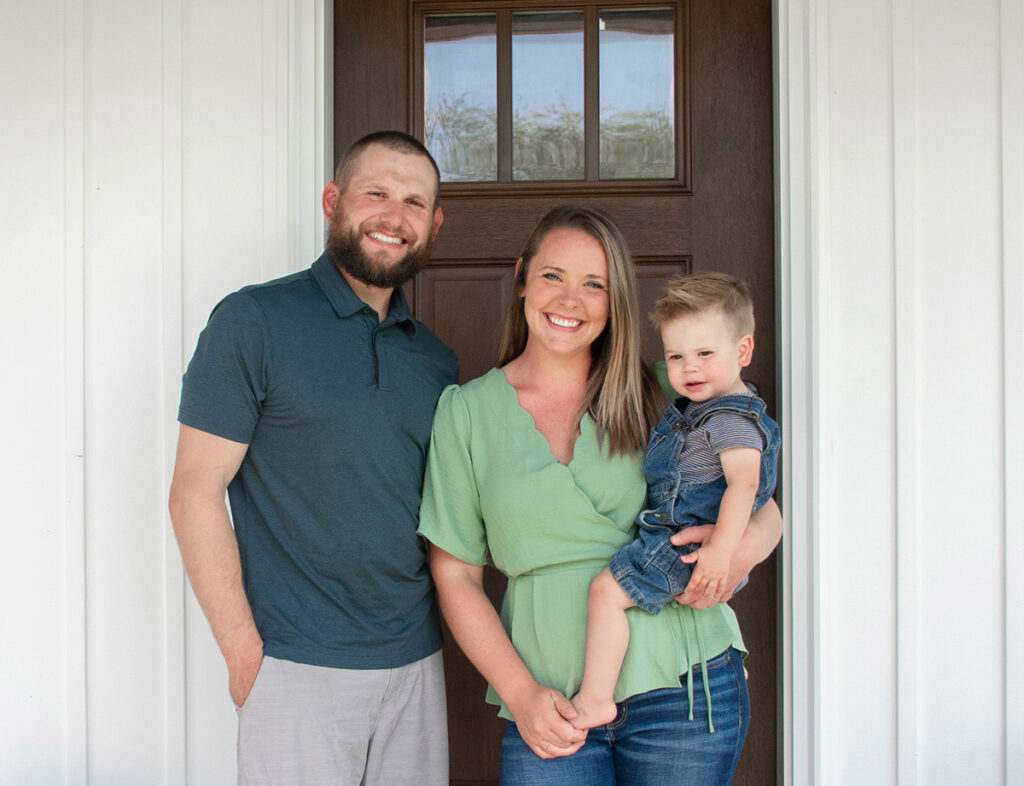
While running his agricultural business and getting his Crop and Soil Science degree in Oklahoma, Logan Maher learned the value of partnering with Farm Credit after working with them on various projects. So, when he moved up to Michigan there was no hesitation when reaching out to GreenStone.
As newlyweds, Logan and Jenna Maher bought their first piece of land in April of 2024, consisting of 115 acres. Although not all of the acreage was tillable, the couple planned to utilize various methods to get the land exactly how they wanted!
Having sold his business in Oklahoma when he moved to Michigan, Logan faced an unexpected tax burden and noted, “I definitely learned my lesson from that and decided that planning is a pretty critical thing to do while running a business.”
This meant when starting fresh here in Michigan, he wanted to ensure his new operation was set up for success. That’s when he reached out about GreenStone’s CultivateGrowth grant. Logan utilized the grant to work with a business planning agency he trusted to make sure he and Jenna were on the right track.
The Mahers both come from strong agricultural backgrounds and currently operate the farm while working full-time off the farm. The tillable land houses a cucumber crop for this summer, and the Mahers plan to build a steady rotation in the future. GreenStone also helped them close on an equipment loan to purchase an excavator, so they can further clear their land and assist others in the surrounding area. Their goal is to get as much of their land fully tillable to allow them to increase the size of their crop.
With the couple’s dedication to their success and support of GreenStone, the Mahers are excited for their future on their land.
GreenStone aims to provide opportunities for all young, beginning, and small farmers and supports their educational and personal growth efforts with our CultivateGrowth grant. To learn more about GreenStone’s CultivateGrowth grant, click here.
Pictured above from left to right: Bruce Lewis, Michael Feight, Rick Snyder, and Paul Lindow.
Two current board members have been re-elected to the GreenStone Farm Credit Services Board of Directors: Michael Feight and Bruce Lewis.
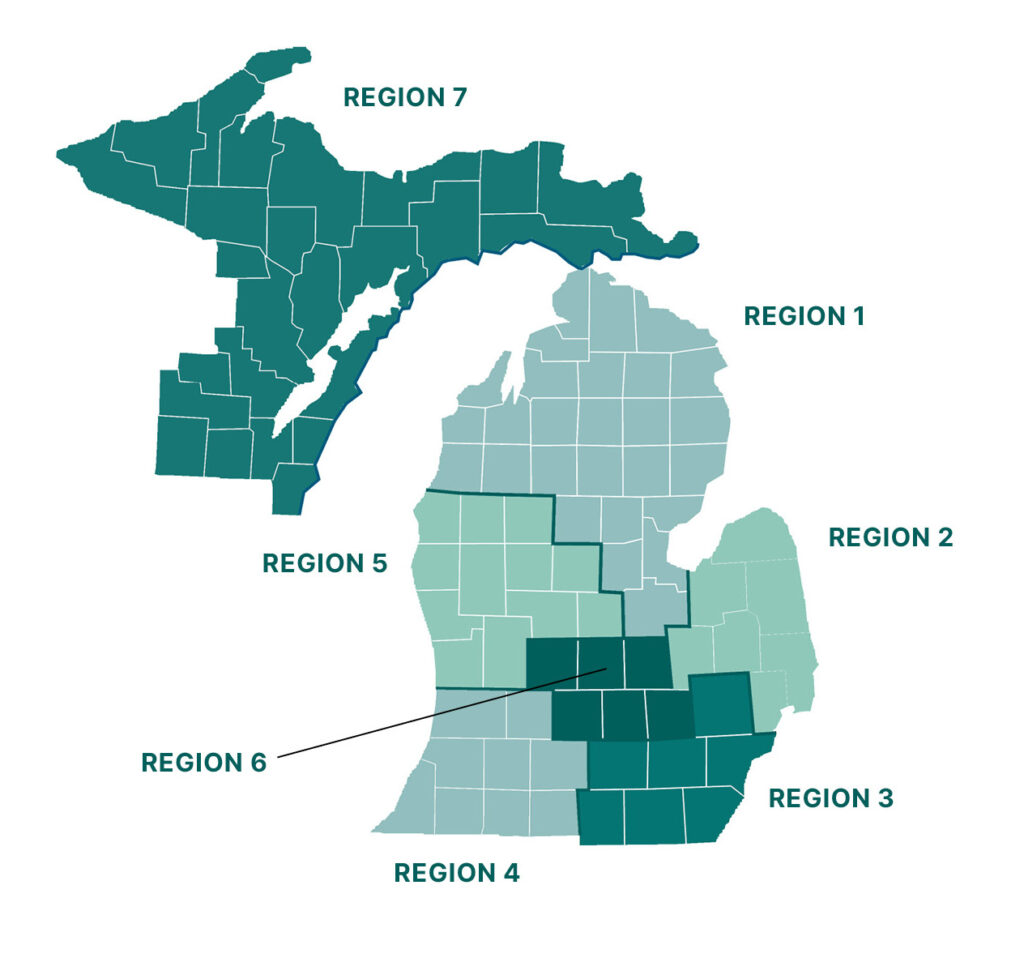
Michael Feight of Lenawee County, Michigan, was reelected to a four-year term representing voting region 3, located in the seven counties covering the southeastern corner of Michigan. Feight farms corn, beans, and wheat alongside his father and brother on their family farm. He has served on the GreenStone board for the past four years, and most recently as a member of the Finance Committee.
Bruce Lewis of Hillsdale County, Michigan, was also reelected for another four-year term representing voting region 3. Lewis, a livestock and grain farmer, has served on the board since 2011 and most recently was a member of the Audit Committee.
GreenStone’s board of directors have also selected two new appointed directors to serve on the board: Paul Lindow and Rick Snyder. As a financial expert, Lindow will chair the board’s Audit Committee, while Snyder brings his expertise in technology and cyber security with him to the board and will chair a new, soon to be established Technology Board Committee.
“As a member-owned cooperative governed by our members, GreenStone recognizes that when our members are successful, so are we,” said Travis Jones, GreenStone President and CEO. “The re-election and appointment of these board members demonstrates their deep understanding of the values and needs of our cooperative. They have consistently shown their leadership and dedication to our mission of strengthening the rural communities we serve in Michigan and northeast Wisconsin.”
Along with the board positions, GreenStone’s 28,000 members elected individuals to serve on the cooperative’s 2026 nominating committee. The nominating committee is comprised of GreenStone members from throughout the organization’s territory who are tasked with recruiting candidates for next year’s board elections and nominating committee. The 2026 nominating committee includes:
Region 1 – Nathan Clarke (Midland County, MI), and Deidre Iciek (Gladwin County MI)
Region 2 – Ty Bodeis (Tuscola County, MI), and Grant Davidson (Sanilac County, MI)
Region 3 – Calby Garrison (Lenawee County, MI), and Jason Winter (Monroe County, MI)
Region 4 – Joseph Dykhuis (Allegan County, MI), Scott Hassle (Van Buren County, MI), and Benjamin S. Schilling (Berrien County, MI)
Region 5 – Michelle L. Nitengale (Montcalm County, MI), Ann M. Patin (Newaygo County, MI), and Tyler Wilson (Gratiot County, MI)
Region 6 – Damien Miller (Shiawassee County, MI) and Francis Trierweiler (Clinton County, MI)
Region 7 – Johna C. Brock (Oconto County, WI) and Kim Kinjerski (Kewaunee County, WI)
Getting Involved in Your Cooperative
As a member of GreenStone, you play a crucial role in determining the governance and leadership of our association! Make your voice heard by participating in elections and consider getting involved by submitting your interest in a nominating or director role.
Members from GreenStone’s voting regions 4 and 5 will gather in August to find candidates for open director and nominating committee positions for 2026’s elections. The remaining regions will meet in December to choose candidates for their nominating committee positions. This is your opportunity to take an active role in your cooperative’s future. We encourage you to consider participating in the governance process and submit your interest today!
The Importance of the Nominating Committee
Before a member can be elected to the board, our Nominating Committee identifies, evaluates, and nominates a qualified slate of candidates for stockholder election. The Nominating Committee holds a very pivotal role in determining who provides leadership to our association.
If you’re interested in furthering GreenStone’s role as an industry leader for agriculture and our rural communities, serving on the Nominating Committee might be a great opportunity for you!
Get Involved Today!
To learn more about the nominating and director roles, visit greenstonefcs.com/about-us/board-of-directors/governance-overview/. Complete a profile to express your interest or contact our corporate governance coordinator, Cheryl Motz at [email protected] or 517-318-9557, for more information.
As a young, beginning, or small farmer, how can you position yourself for success when seeking to work with a lender to grow your farming operation? The Five Cs of Credit are a steppingstone to get you there! Dive into what each of these “Cs” mean, and how a better understanding of each of them can help you along the way as you grow your business.
Character
The more information you can provide to your lender up front about yourself and your business, the better! Share with your lender who you are, your background, and what your business goals and aspirations are. Even if you don’t have every detail of your business plan worked out, sharing as much as you can about your goals for your business will go a long way in helping your lender get to know you.
Inviting your financial services officer to your farm is a great opportunity for them to learn more about you and your business. It will help strengthen your relationship with your lender.
Capital
Capital gives your lender a snapshot of your personal financial statement, better known as a balance sheet. A balance sheet is a list of all your assets and liabilities — what you currently own and what you owe on. If you don’t have a balance sheet completed, don’t hesitate to ask your financial services officer to walk you through filling it out. We’re here as a resource and would be more than happy to assist you in learning how to complete it.
Your lender will also evaluate if you have more assets than liabilities. If not, it is important to communicate with your lender what your debt management strategy is going forward.
Capacity
Your ability and plan to repay debt is your capacity. This can include any existing debt as well as any new debt you are planning on taking on. Providing your lender with your plan for managing your debt will go a long way. If you can provide projections for multiple scenarios to your lender on your debt repayment plan, that is even better.
This will help them get an idea of your management abilities and show them you are willing to go the extra mile to provide the most information possible to your lender. Again, the more information you can provide up front, the smoother the lending process will be, the stronger the relationship will be with your lender, and the more your lender will be able to support you!
Collateral
Collateral acts as a secondary source of repayment and is required with every loan you are applying for with GreenStone. If you do not have a lot of assets that could be used as collateral for your loan, it will be important to have a cash down payment up front. The more you can put down as a down payment, the less you will have to use as collateral.
It’s important to remember that any collateral you use towards your loan must be a tangible asset and have some relation to your loan. For example, if you are taking out a loan for a new piece of equipment, you might be able to use equipment you already own as collateral.
Conditions
Conditions are the terms of your loan that keep both you and your lender accountable to each other. A condition of your loan may be that your lender requires a balance sheet every year throughout the length of the loan to monitor the progress you’ve made and to make sure you are on track for full loan repayment. Think of it as a way to check in with your lender and keep an open line of communication. We want to know how we can continue to best support you!
The Five Cs of credit are a framework meant to work together to present a full picture of yourself and your business plan to your lender so they can assess a loan solution that works best for you. Understanding each and why they are important will prepare you for conversations with your lender about the plans you have to grow your business. Your local GreenStone branch is available to answer any questions you might have on the Five Cs of Credit or what your lender is looking for when applying for a loan.
This article was originally published in Michigan Farm News.
Do you dream of wide-open spaces, away from the hustle and bustle of the busy city? Do you envision looking up and seeing the stars at night? Are you ready for a slower-paced life on your own land, living the country life you’ve always imagined? There are plenty of great reasons to move out to the country, but here are five more that might just convince you to take the next step and embrace the rural way of life!
1. Land values continue to rise
You’ve probably heard the saying “They’re not making any more land” when referring to the increasing value of land prices, and there is a lot of truth to it. Land prices have continued to steadily increase. In some areas land prices have doubled in the last five years. As more and more people embrace rural living and are moving out to the country, the upward trend for land values is likely to continue.
Think of your new rural home or property as an investment in your future. Mid to large size parcels ranging from 10-50 acres have continued to rise in popularity due to people seeking to live more independent and self-sufficient lifestyles. The demand for more space and a more flexible way of living isn’t going away. While that saying may seem like a cliché, there is something to be said about owning something that truly is a limited resource!
2. Lower cost of living
Rural living has more benefits than just being out in the country. The cost of living is often lower in less populated areas. Property taxes, land costs, and many living expenses are often lower in the country.
Living outside of city limits also allows you the opportunity to use alternative heating and cooling methods. For example, you could choose to heat your home with a wood stove and harvest firewood from your own property.
If you live in town, municipalities control the cost of utilities, such as water. Living in the country allows you more control over these costs. While the upfront cost of installing a well and septic system for your home can be a larger investment, there are no ongoing monthly costs, likely saving you more money on utilities in the long run.
3. Opportunities for alternative sources of income
Living on your own property provides the opportunity to use your land as a source of income through, for example, part-time farming. Not only does having your own land present you with an opportunity to become more self-sufficient and feed your own family, but it also can help provide income for your family too.
If you’re dreaming of starting your own vegetable garden, consider getting a chicken coop so you can have your own eggs, or planting a cut flower garden. Roadside farm stands are a popular way to turn one of your hobbies into an alternative source of income that wouldn’t be possible in a town or city context.
4. More access to nature and recreational hobbies
One of the biggest reasons people plant roots in the country is to experience a slower pace of life. That doesn’t mean there aren’t plenty of exciting aspects of country living! Living in the country can mean easy access to the great outdoors and a number of recreational hobbies such as hiking, kayaking, fishing, hunting, biking, camping, and just spending plenty of time outdoors.
Stop to watch the sunset and get a clear view of the stars away from the lights of the city. Take advantage of the natural beauty and wildlife that surrounds you. If you value more space, more privacy, and more access to nature, then rural living could be ideal for you.
5. Close-knit communities
There’s nothing like getting to know your next-door neighbor, even if they live a mile down a dirt road! Living in the country, or a small town or village, has many benefits including generally closer-knit communities, and of course that homey small-town feel. Many families also choose to move to rural areas because of smaller school districts and classroom sizes for more opportunities for hands-on learning.
Moving to the country can also give you a newfound appreciation for the farming and agriculture around you as you watch the seasons change with your local farmers from planting time all the way into harvest season.
There are endless reasons to move out to the country and embrace a more rural lifestyle. No matter what reason you have for making the move, you are bound to experience even more benefits than you would have thought the longer you find yourself living in the country!
Contact your local GreenStone branch to learn more about rural home and vacant land financing options.
Vacant land, home site and recreational property loans have become especially popular over the last few years as families look for ways to get out and enjoy nature.
Summer is here. As you’re spending more time outdoors, you might be considering if now is the time to invest in a property to begin making memories on. Whether you’re interested in building your dream home on vacant land or owning recreational property, GreenStone can help you finance property that fits your budget and supports your plans for the future.
Which land loan is the best fit for me?
There are many things to consider when deciding what kind of land loan will fit your needs best. It’s important to understand the characteristics of each loan, beginning with the type of property being financed and your long-term goals.
What’s a recreational land loan?
Recreational land with GreenStone is defined as more than five acres being used primarily for recreational purposes. A recreational land loan typically requires a 20% down payment, but in some cases it could be as low as 15%. GreenStone offers 30-year amortization terms for affordable payments. This land is usually used for hunting, fishing, hiking or ATV-riding, with no immediate plans for building at the time of purchase. If you have interest in building a home, pole barn or outbuilding later, GreenStone can provide do-it-yourself or contracted construction loans to fit your needs.
How does a vacant land loan work?
Similar to recreational land, vacant land is often property that is greater than five acres. What’s the difference? This property is purchased with the intention of building a structure on it. The terms of vacant land loans are like recreational land loans as a typical down payment is 20%, with some cases allowing a 15% down payment.
What defines a home site loan?
A home site property financed with GreenStone is commonly land that is less than 5 acres and does not have any structures on it. These loans are typically used by customers who plan to build a home or cabin on the land. Financing options vary for each individual and property type. However, the requirement is usually 20% down, with certain instances allowing you to put down as little as 15% down with a 30-year term.
Recreational Land FAQs
What are my down payment options?
As mentioned above, recreational vacant land mortgages typically require a 15-20% loan to value down payment. GreenStone has options for borrowers looking to secure their down payment, including:
- Providing 20% cash down.
- Other property or forms of collateral to meet some or all the down payment requirements.
How do I reamortize my loan?
Loan reamortization, referred to as an interest rate loan conversion, can be done quickly without the need to refinance throughout the life of the loan as equity is accumulated. A visit with a local GreenStone financial services officer can get the process started.
Can I finance vacant land for up to 30 years?
Yes, GreenStone is one of the few lenders who will write mortgages on land without the stipulation to build within a certain timeframe. Many of our customers use our land mortgages to purchase hunting land or recreational land.
Many people are taking advantage of GreenStone’s flexible financing to purchase property not just for today, but for a place they will keep in their family for generations to come. To learn more about home site loans, recreational land loans, country home mortgage loans and finding the best loan for your needs, visit a GreenStone branch near you.
The United States dairy industry is both bullish and bearish for producers, with many factors potentially influencing the future.
While export demand and record-high processing investment offers momentum, policy uncertainty – spanning labor, trade and nutrition assistance – combined with soft domestic demand has created downward pressure.
Milk prices are seemingly carrying over from last year with strong milk prices in the first quarter. Growers are also experiencing lower feed costs. However, tariff discussions recently caused some volatility in the futures markets, especially for Class III (cheese) prices.
“There’s always volatility in our industry, but cheese prices have rebounded and are currently profitable, with futures indicating sustained profitability for the next 6-12 months,” says Mitchell Schafer, vice president of agribusiness lending at GreenStone Farm Credit Services. “It’s no longer just, ‘what’s my local milk price?’” he says. “Some of the rebound in milk prices came from the export market, where the U.S. has competitive prices in the global cheese market. Retaliatory tariffs remain a concern.”
The U.S. dairy market is heavily influenced by international competitiveness, with approximately 16% of milk solids currently being exported, according to Leonard Polzin, Dairy Markets and Policy Outreach Specialist at the University of Wisconsin-Madison Extension.
High dairy market prices have been historically influenced by either reduced production or increased exports. As the industry looks towards the future, maintaining competitive pricing on the world stage will be crucial for sustaining strong margins, Polzin says. The U.S. exports nearly one-fifth of dairy components, primarily nonfat solids, with Mexico, Canada and China collectively accounting for about 40% of the total value of U.S. dairy exports in 2024, according to Polzin.
Investment in Processing Infrastructure
Capital costs and interest rates are higher than they were four years ago, posing challenges for growth, according to Schafer. However, there is expansion, as the U.S. dairy industry is experiencing substantial investment in processing infrastructure, exceeding $8 billion nationwide, with some estimates approaching $9 billion. Notable projects include:
- Walmart’s $350 million facility in Robinson, Texas, expected to be operational by 2026
- Fairlife’s $650 million fluid milk plant in New York
- Chobani LLC’s recently announced $1.2 billion dairy processing facility, which broke ground on April 22 in Rome, New York
This surge in milk processing is expected to create a higher demand for milk and could lead to a more stable and profitable market for dairy farmers. The price bump may stretch out depending on how long it takes for farmers to align production.
Much of the new processing investments are concentrated in cheese production. U.S. cheese exports have outperformed expectations due to lower prices relative to the European Union, where tight milk supplies have driven prices higher. This price gap has made U.S. products more competitive, but the advantage is fragile, according to Polzin.
Milk Solids Production Continues to Increase
Despite a 0.35% year-to-date decline in total milk production in 2025, calculated milk solids production increased by 1.65% as of March 2025. This increase in production efficiency coupled with an increase in the national herd of 15,000 head from January to March of 2025 and an increase of 57,000 head year-on-year, means the industry can meet new demand for milk solids more quickly than in the past, according to Polzin.
High oleic soybeans are gaining traction for increasing butterfat and protein content in milk. “It depends on production levels as to the response growers might see,” Schafer says. “There are herds that are running trials, and some are making that switch, but it’s not cheap to put in a roaster, grinder and storage to handle it. Sourcing or growing the beans yourself can also pose challenges. Producers in the 80-pound to 90-pound range may see bumps in the components (butterfat and protein) and production, as well.”
Dairy Replacement Values Remain High
“It can be expensive to buy cows. That goes for calves, heifers and springers,” Schafer notes. “But at the same time, producers are getting pretty good money if they’re selling cull cows, or day-old black calves – at least they’ve gone up together,” he says.
Dairy replacement values are high. In April, USDA reported the average price for a dairy herd replacement ready to enter the milk barn reached $2,870. That’s up from $2,120 the same time last year.
In the final 18 weeks of 2023, dairy farmers sent 140,500 fewer dairy cows to slaughter when compared to the previous year. The big pullback continued throughout 2024, as 367,400 fewer head of dairy cows went to slaughter as dairy farmers looked to shore up herd numbers when faced with fewer heifers, according to Corey Geiger, lead dairy economist at CoBank.
That trend seems to finally be reversing. Through March, the U.S. dairy cow herd was up 80,000 head when compared to the start of 2024. However, that gain, which reached a total of 9.4 million head, has less to do with replacement inventories and more to do with a historic pullback in culling, which started in the fall of 2023.
“Some producers are getting another lactation or two lactations out of their herds,” Schafer says. “Instead of culling they are getting more milk out of them because the price is favorable right now, and because there aren’t as many replacements out there.”
Butterfat Exports Rising in 2025
Butterfat exports were 203% higher than a year ago in March at 17.9 million pounds, according to the U.S. Dairy Export Council. Canada was a major buyer as sales volume grew 172% compared to the same time last year.
“Overall, U.S. butter prices continue to be discounted compared to the two largest global dairy exporters — the E.U. and New Zealand,” Geiger explains.
While March 2024 still holds the record of 110 million pounds of cheese exported in one month, March 2025 secured the number 2 spot at 109 million pounds. Mexico remains the top U.S. dairy customer and purchased 95.5 million pounds of cheese in the first quarter of 2025.