
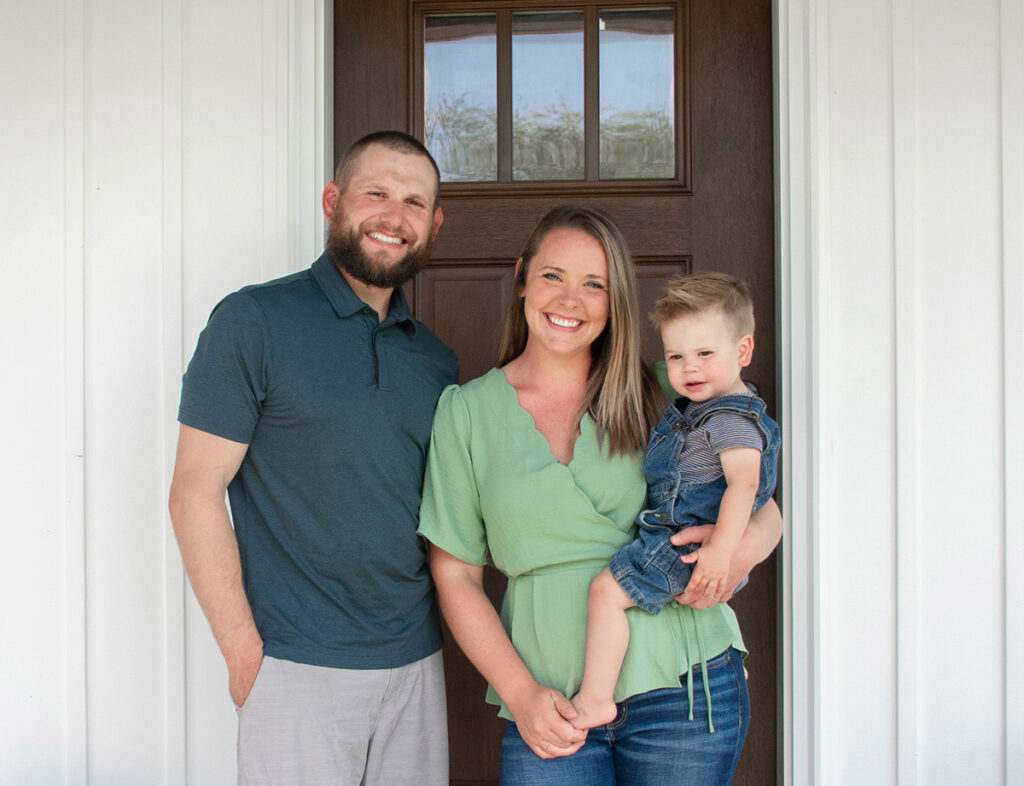

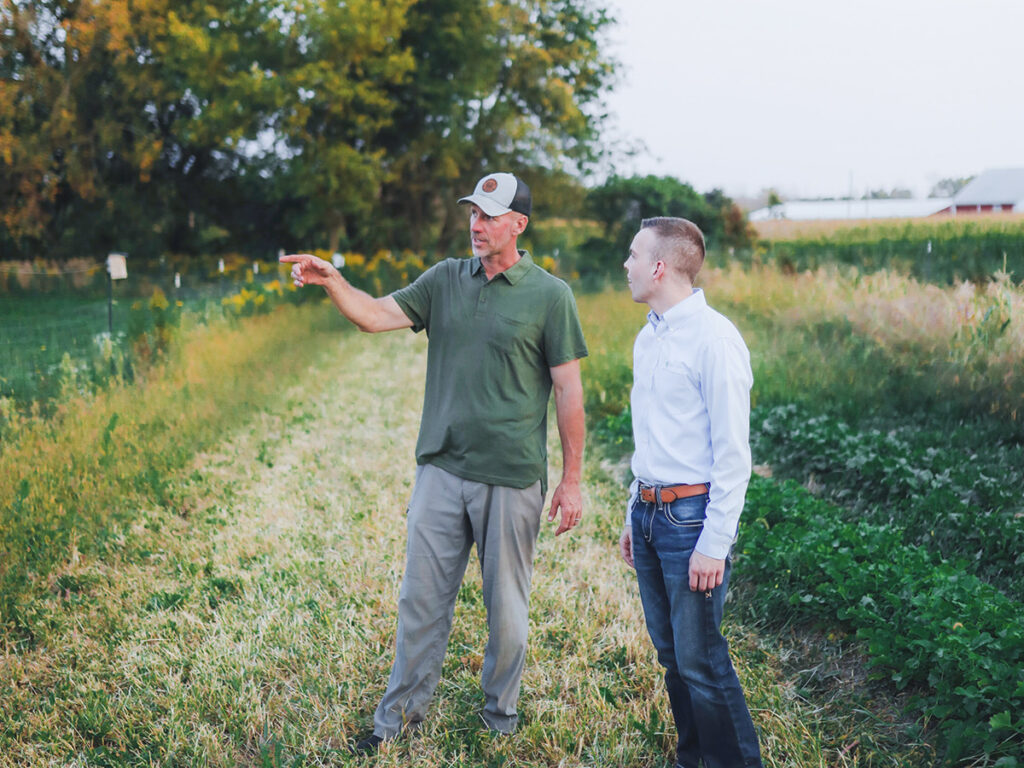
“It was a clean slate, I could do whatever I wanted with the land which was really nice,” Gregory Lewandowski recalled after he bought land from his grandparents in 2018. Just after that land purchase, he was deployed with the National Guard in Afghanistan. He spent much of his free time researching the best methods to farm his land and how he could accomplish his goals from the ground up.
While deployed, Gregory said he found GreenStone when he had to file farm taxes for the first time. “My Dad went into the office on my behalf to present my information and they did all the legwork on my taxes after we just showed up as a stranger on their doorstep. I appreciated that and stuck with them.”
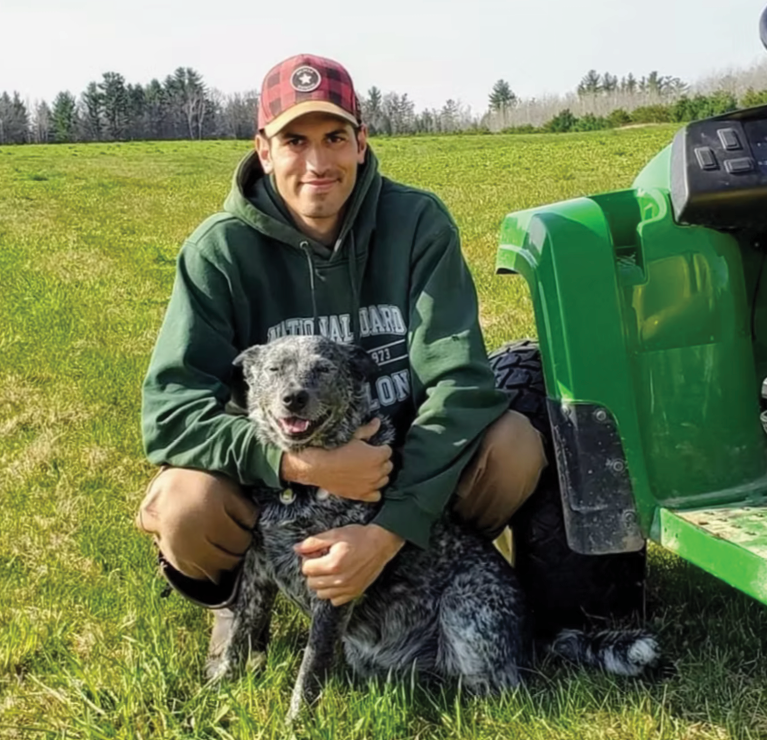
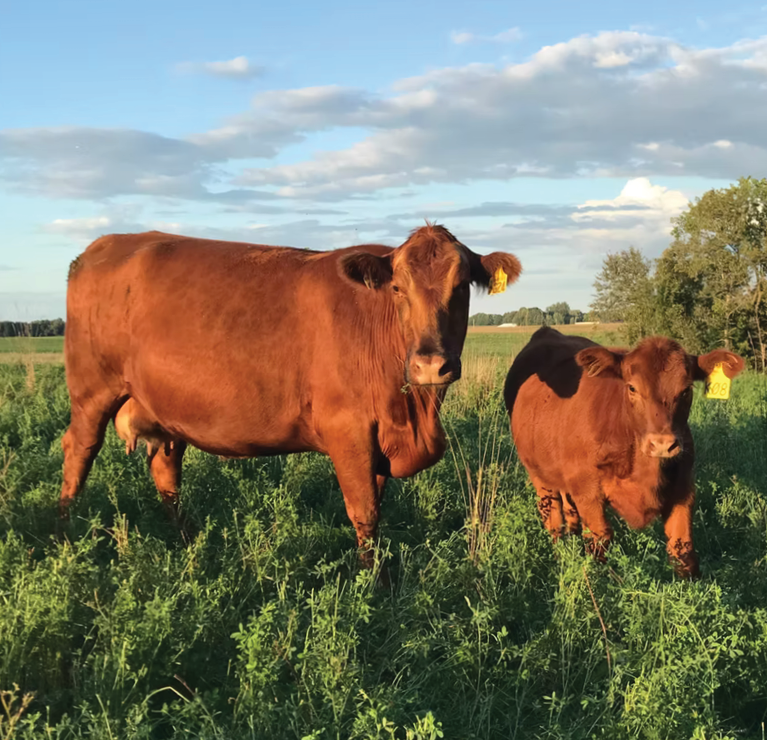
Returning to his farm, Gregory’s research helped him land on direct-to-consumer grass-fed beef. He focuses on using rotational grazing and regenerative pasture management to see the best results in his cattle and soil integrity. He noted, “At its core, regenerative agriculture is simply farming in harmony with nature, not fighting it.” Since developing his operation, he now grazes his cattle over three different properties and 180 acres.
To continue his passion for learning, Gregory enrolled in a six-year rotational course through Northeast Wisconsin Technical College. With GreenStone’s CultivateGrowth grant he was able to reimburse a portion of his course fee. The course topics vary from year to year and cover new ideas from soil management, agronomy, animal nutrition, and farm financials. “As we know with farming, like any industry, it’s consistently changing. So, there are new ideas they present, and you may have never considered them.”
While staying up to date on new methods is educationally great, he noted the best thing the course provided was communication and networking with other farmers. He said he had a great group of classmates and has since worked with multiple people on various projects around his farm. He laughed, “In fact, someone I met in class came and rescued me off the highway when I had a flat and a trailer full of cattle.” Whether on the road or in the classroom, Gregory has built a supportive community to help him reach his goals.
GreenStone is proud to be a part of Gregory’s community. We’ve got him covered from tax preparation to educational opportunities. GreenStone aims to provide opportunities for all young, beginning, and small farmers and support their educational and personal growth efforts with our CultivateGrowth grant. To learn more about GreenStone’s CultivateGrowth grant, click here.
When you’re just getting started as a beginner farmer, it’s easy to feel overwhelmed by the amount of new information you’re learning and keeping track of everything you need to stay organized and successful. Whether you are in line to take over operations of your family’s multi-generational farm or starting your own farm from the ground up, here are some questions to consider ahead of meeting with your lender to help them provide you with the best support possible!
1. Define your business goals
The first step in any business should always be to define your goals. Not only will this help to inform the decisions you are making around your business, but it will also set you up for success when it comes to working with your lender to help them clearly see your vision and strategy for your business. A clear and defined business strategy acts as a roadmap for achieving your goals.
Start by defining your SMART goals – that means specific, measurable, achievable, relevant, and time-bound goals. This framework will help you prioritize which goals are the most important and help you dive deeper into the details of your vision for your farm. Understanding your needs ahead of time is crucial to effectively communicating with your lender and developing a plan that fits your needs the best.
Before engaging with your lender, take the time to thoroughly assess your business strategy and financial goals. Having a clear vision of your lending requirements, including specific purposes and estimated costs, is essential. This preparation will not only streamline your conversation but also position you as a well-informed borrower.
2. Provide as much information up front to your lender as possible
Even if you don’t have every detail of your business plan worked out or your balance sheet filled in, providing as much information as you possibly can will go a long way in helping your lender determine what your needs are. Your local GreenStone team has been helping farmers like you for over a century and would be happy to sit down with you to review how to complete these important financial documents.
Another reason it is important to provide as much information as possible to your lender is to help them match your loan terms to your specific needs. Let’s say you are looking to finance a piece of farm equipment such as a tractor. You will want to opt for a short-term loan request versus a long-term request for something like a land purchase.
If you know you will need financing for farm equipment in addition to a construction loan for adding on to your facilities, it is important to communicate this to your lender as soon as possible. They may be able to package your lending needs together into one loan request. This is yet another reason why it is important to provide as much information to your lender up front as you can!
3. There are resources available to help you!
While it may feel daunting when you are first starting out, there are a multitude of resources available to you as a young, beginning, or small farmer. Many organizations like Farm Bureau and other members of the agricultural industry offer educational and networking opportunities or resources valuable to you. GreenStone’s own CultivateGrowth program offers a mentorship, educational resources, grants, and more to support up and coming farmers whether you are starting your own farm or taking the reins of a multi-generational farm.
Many agricultural lenders also offer more relaxed underwriting standards to help beginning farmers overcome the financial challenges they might face being a new farmer to help them get started.
When you work with an agricultural-based lender, not only are you able to receive financing and support specific to your growing farm, but chances are you’re also getting the expertise of fellow farmers. Many members of our team at GreenStone are involved in running a family farm, have a hobby farm or farm animals, or are involved in supporting a number of agricultural organizations outside of work. At GreenStone, we live the country lifestyle too! Having a lender that knows what you’re experiencing – because we’ve been there too – is paramount to the kind of support you will receive when you are first starting out as a beginning farmer.
If you have any questions on resources for beginning farmers or are ready to take the next step and apply for financing for your farm, reach out to your local GreenStone expert. We are eager to support the next generation of young, beginning, and small farmers.
This article was originally published in Michigan Farm News.
“Were you raised in a barn?” may have been a popular sarcastic comment in the past but today, growing up in a barn is a very desirable option to many people! Barn homes, also known as barndominiums and barndos, continue to gain popularity across the country. Barn homes can offer soaring ceilings with unique wide-open living spaces, speedier exterior construction and other attractive options. Functionally, the potential to combine work and living spaces or storage for recreational vehicles in one building is also appealing to those who live the country lifestyle.
Our rural lending experts have the answers to some of the most frequently asked questions when it comes to building your own barn home!
What are the benefits of building a barn home?
- Barn homes do not require interior load-bearing walls, resulting in their exceptional open floorplan designs and possibility for soaring high ceilings.
- Barn home exteriors or “shells” can often be built more quickly than a traditional home.
- Barn homes are sturdy and long-lasting; their steel exteriors can last up to 40 years hassle-free, unlike traditional homes that require regular maintenance
- Superior insulation options available for barn homes can result in higher energy-efficiency and reduced utility costs
- Depending on the design and materials used, barn homes can be more affordable than traditional stick-built homes.
Is a barn home always less expensive to build than a traditional stick-built home?
The cost of constructing a barn home depends on many factors. Like traditional homes, barn homes can range from small and simple rectangular designs, to huge, extravagant living quarters with complex rooflines, custom windows and spacious porches. The quality of materials used for flooring, walls, cabinets, windows, roofing, ceiling and lighting can all affect the final cost. In general, a barn home can be less expensive than a traditional home per square foot, but the cost depends on materials used, customization, amount of labor required and size of the home.
Does GreenStone finance barn home construction?
GreenStone offers financing options for the purchase or construction of barn homes of at least 1,000 square feet and that include at least two bedrooms. Financing options are available for up to 30 years for both the home and the home site.
How much is the down payment for a barn home?
At GreenStone, a standard down payment on a barn home is 20%. Some traditional home loans do qualify for PMI (Private Mortgage Insurance), which can be used to decrease the down payment to only 5%. If a customer is interested in a lesser down payment through PMI financing and they want to construct a barn home, they should consult with their financial services officer to ensure the scope of the property or project is in compliance with GreenStone and Enacts (PMI company) underwriting guidelines. The impact the appraisal may have on the cash needed for the complete down payment should also be considered.
A home’s expected appraisal value after construction, called “as will be” appraisal, is partially based on the value of comparable homes in the area. Because barn homes are still relatively new and less common, and few have been resold to date in most areas, it may be difficult for the appraiser to find comparable homes on which to base an accurate appraisal value. This may result in a conservative appraisal value below the actual cost to build the home. That difference will need to be paid in cash on top of the standard down payment.
How are barn homes taxed?
Barn home valuation may consider only the living areas of the building or could include the entire property, depending on the regulations in your city, township or county. It is a good idea to research barn home tax costs before construction begins to understand the long-term property tax requirements. You should always consult with your municipal tax assessor to best understand how taxes will be assessed for your future property.
What size and type of barn home can I build on my land?
Your county or township’s zoning regulations will inform what size and style your structure can be. If you intend to build a combined-usage barn home, a barn including both living quarters and a horse stable or living quarters and a public retail or service space, check with your local zoning authorities to confirm if combined usage is allowed. Variances on existing zoning are possible, but exceptions can be difficult and expensive to achieve.
What else should I think about when considering a barn home?
The native core structure of a barn home is different than a traditional home, resulting in some limitations to what one might normally expect with a home. Most barn homes are built on a cement slab foundation, not a basement, due to the post-frame construction style. Typically, if you desire to add drywall, extra framing is needed between the posts, which are usually placed eight feet apart rather than 18-24 inches for traditional homes; this can be an added expense. Insulation costs can be higher, as pole barn walls are thicker than typical stick-built homes (as a benefit, however, this can also result in lower heating and cooling costs). You may also need to add a vapor barrier to keep out moisture. Some builders consider this an upgrade.
Building a barn home can be an exciting and rewarding experience, resulting in a unique and enjoyable dwelling when the work is finished. Carefully researching and asking the right questions before construction begins can help ensure a positive outcome.
To learn more about building a barn home and GreenStone’s home construction loans, contact your local branch.
Michigan and Wisconsin cherry and peach growers, like many other fruit growers, are facing challenges with rising input costs due to inflation and low market prices, especially for tart cherries. Volatile weather, including excessive precipitation and warm spells, can lead to disease and pest issues. To combat these challenges, growers are making management and marketing changes to adapt, including diversification and vertical integration.
“There is a lot of uncertainty right now as far as the global economy,” says Devon Rosebrugh, financial services officer at GreenStone Farm Credit Services . “We import a large amount of tart cherries from Turkey, which is known to export cherry juice and products at prices lower than American production costs. So, it will be interesting to see if those imports go down with tariffs, potentially creating a larger demand for domestic fruit.”
While the tariffs may help with fruit prices, growers face a higher cost on fertilizer inputs, including potash from Canada.
David Ortega, professor of agricultural economics at Michigan State University (MSU), warns: “Uncertainty linked to tariff policies makes it extremely difficult for farmers to plan investments and strategies.”
Volatile weather patterns in recent years have also caused havoc. “A lot of precipitation in the spring can cause disease and pest issues, and warm spells in the winter can cause crop damage,” says Rosebrugh.
Milder temperatures in southern Michigan this year elevated the risk for leaf curl infections in peaches. “We’ve had the most normal winter weather we’ve had in a lot of years,” Rosebrugh says. “So that’s kind of promising except for one little warm spell we encountered.”
Wisconsin is not a major producer of peaches and therefore it is not reported by USDA. However, USDA predicted Michigan’s peach harvest at 7,500 tons for 2024, down from 11,250 tons in 2023.
2025 growing season off to a promising start
Michigan and Wisconsin have quickly moved into bloom for all tree fruits. The states are experiencing a more normal bloom season compared to 2024, when the season was advanced.
“Although it has seemed cooler than normal in the northwest region of Michigan, our growing degree day accumulations are similar to our 35-year averages, which makes the 2025 spring more normal,” says Nikki Rothwell, MSU Extension Specialist and Northwest Michigan Horticulture Research Center Coordinator.
The northwest region had stormy weather overnight April 28-29. “We had high winds, lightning and thunder, and there were trees down throughout the region,” Rothwell says.
Michigan growers remain optimistic despite last year’s devastating sweet cherry failure. With a 75% loss in some areas, the failure prompted the United States Department of Agriculture (USDA) to issue a disaster declaration for the Michigan cherry industry.
Michigan produces 75% of the nation’s tart cherry crop. However, weather, pests and rising labor costs are among the many challenges that could impact pricing in the future.
“Historically, we’ve been seeing a grower price of 15 to 20 cents per pound for tart cherries,” Rosebrugh says. “MSU research shows that it costs anywhere between 40 and 45 cents per pound to produce it.”
Many predict there will be a rightsizing of the industry over the next few years.
According to Horizon Grand View Research, the cherry market in North America is expected to reach a projected revenue of $31.6 million by 2030 with a compound annual growth rate of 7% from 2025 to 2030.
A Michigan Department of Agriculture and Rural Development (MDARD) report shows international demand was a big source of revenue for Michigan’s cherry industry last year, with agriculture exports increasing 11% to $2.9 billion since 2023.
Fruit producers diversify their markets
Many financially strained fruit growers are becoming more diversified with agritourism activities and u-pick operations. Some have vertically integrated, controlling more than just the growing segment by adding processing and packing lines. Others are pulling out trees as pressure to sell for development continues to grow.
“Diversification, with farm stands and farm markets, is getting pretty popular,” Rosebrugh says. “Some type of agritourism or vertical integration is helping growers mitigate costs.”
With the creation of the Michigan Cherry Grower Alliance, growers hope to work more closely together to combat challenges. With support from the Alliance, the Cherry Marketing Institute and the Cherry Industry Administrative Board named a new president, Amy Cohn, and hired a new marketing firm, Curious Plot, which will focus on identifying new markets and customers to sell more cherries.
In addition, “MDARD has approved a grant to fund a portion of a fulfillment and distribution center for Cherry Republic, which is a large buyer of tart cherries,” Rosebrugh says. “They’re estimating their purchases will go up by one million pounds, which is a decent amount of the market share here.”
The sweet cherry harvest is expected to begin in late June and early July. According to Traverse Bay Farms, its timing and yield will be influenced by the weather and pest/disease pressures during the growing season.
The tart cherry harvest typically begins in late June or early July, with the peak harvest in July.
When you’re first getting started on your journey to building your dream home, the home construction process may seem overwhelming and out of reach at first. With so many steps and decisions to make along the way, surely the paperwork required throughout the process may seem like it could be never ending, right? Not with GreenStone Farm Credit Services!
Whether you are building your home yourself or contracting it out, here are the four main documents your GreenStone team will need at the start of your home construction process to keep your project running efficiently and on time.
Accurate Blueprints
After you’ve spoken to your loan officer and have been pre-qualified for your desired loan, you’ll then be ready to formally apply for your construction loan. The first item you will need to provide your lender with is the blueprints for your project. Whether you’re building a modular home, site/stick built, barndominium or log cabin, every project starts with the blueprints. Blueprints are what your lender and their appraiser will look at to appraise the value of your home, which determines the amount available for your construction loan.
Blueprints are also one item throughout the construction process that shouldn’t see many major changes. While you do have the ability to change your mind on things like the color of the backsplash in your kitchen, there is less wiggle room when it comes to changes such as the number of bedrooms and bathrooms.
These more serious changes could have a material effect on the appraised value of the home. Blueprints must also be approved by your local municipality to receive the permits needed to build. Keep in mind, there may be restrictions or requirements from your local building department regarding the size, style and finishes allowable in your area as well.
Dwelling Specifications
The second document you will need to provide to your lender are the dwelling specifications. This document itemizes the types of materials you will be using in your home and includes items such as flooring, cabinets, countertops, windows, insulation, siding and roofing, which are not readily apparent in your blueprints.
Dwelling specifications are important because they not only help the appraiser value your home but also remind you of the details around the pricing you need to determine for your budget. For example, if you have your heart set on custom marble countertops for your kitchen and you want to splurge on the material used for that part of your home, you may need to reduce your costs elsewhere to make up the difference in the extra cost for that specialty item.
Minor changes can, and likely will, come about during your build. As long as they are within reason and do not jeopardize the initial appraisal value that was determined for your loan, you can make adjustments to the materials you would like to use in your home.
Up-to-Date Sworn Statement
Once you have your blueprints finalized and the different finish of materials chosen for your home, it’s time to complete your sworn statement form. The sworn statement is an important document that monitors your budget, keeps track of all payments made to your suppliers and subcontractors and accurately tracks any changes in pricing during the building process.
Before and during your project, the sworn statement will keep you organized regarding what payments have been made to which contractor and supplier and will help your lender determine if you are staying on budget for your project.
Learn more about completing your sworn statement form by watching this easy-to-follow tutorial!
Signed Builder Contract
If you are working with a general contractor to manage your build, you will need to provide a signed builder contract to your lender. This document will outline the builder’s preferred draw process for payments, provide an outline for project management, establish the construction timeline, and provide clear guidance for the roles and responsibilities of each party.
Builder contracts are important to obtain because they provide information on the process of your home’s construction as well as to ensure all legal requirements are met such as the permitting, licenses and insurance coverages required.
The more information you can provide to your lender up front, the smoother the process will be! Any additional information obtained throughout the construction project should always be provided to your lender so they can stay informed and provide the best support possible throughout the construction of your new home.
If you have questions regarding what the home construction process entails or would like to learn more about the DIY home construction loans GreenStone offers, please don’t hesitate to reach out to your local branch!
Why should I consider livestock insurance?
Livestock and dairy insurance are an important part of your farm’s risk-management strategy. They can protect against financial loss due to changes in market prices for your livestock, milk, or a decrease in your profit margin. You may be wondering if you need livestock insurance, or what livestock insurance will cover. With rapidly fluctuating and uncertain markets, it’s more important now than ever for farmers to consider livestock insurance as a part of their risk management strategy to protect their livestock, farm, and livelihood.
The right kind of livestock insurance policy can protect your farm from unforeseen circumstances that could be detrimental to your operations. Whether you are a dairy, swine, or beef producer looking to ensure the price at which your milk or livestock is sold, there is a policy to help you reduce your risks. Livestock insurance is important for farmers who want to be protected from as many unpredictable events as possible. As you are aware, one of the only things you control in farming is the effort you put forth every day. Most other aspects, including the market, is out of your control, which is why it’s important to have a comprehensive risk-management strategy for your operation.
“Livestock and dairy insurance provide producers with peace of mind the price of their livestock or milk will be insured for market value at the time of purchasing coverage,” says GreenStone Farm Credit Services Senior VP of Crop Insurance Ben Malich. “This is a valuable tool for mitigating risk to your farm operations and provides financial protection during a time of market uncertainty.”
What are the different types of livestock insurance?
When determining the kind of coverage best for you, the first step is determining what your risk-management needs are and what kind of protection would benefit you most. Livestock and dairy insurance largely fall into these three categories:
Livestock Risk Protection: LRP protects against a decline in livestock market prices for beef and swine.
Livestock Gross Margin: LGM protects against the gross margin as determined by the market value of the livestock minus feed costs to mitigate the challenges of raising both beef and swine to market weight. Dairy can also be insured by LGM.
Dairy Revenue Protection: DRP protects against the difference between the final revenue guarantee and actual milk revenue if prices fall.
Where do I begin with livestock insurance coverage?
When it comes to determining what level of coverage you will need, it helps to have an expert on your side. Working with an insurance provider who understands the ins and outs of your specific industry as well as current market prices and trends is imperative to determining the livestock insurance policy most beneficial for your farm. GreenStone’s team of dedicated livestock insurance specialists focus solely on working with farmers to help them determine which risk management option is best for them.
When you work with GreenStone, you also gain access to Farm Credit’s exclusive Livestock Insurance Analyzer tool. This tool allows producers to view quotes, request coverage, track endorsements, and stay informed through access to the latest market updates. All this and more can be done right in the palm of your hand through a mobile app!
If you are considering livestock insurance as a part of your farm’s risk-management strategy, the first step is to contact your GreenStone crop insurance or livestock insurance agent. If you are interested in learning more about the options available to you, GreenStone’s team of livestock insurance specialists would be more than happy to answer any questions you might have.
After having someone come out and spray their crops for a few years, Karisa’s realization hit her. She was fully capable of spraying crops, and why not make a profit if the opportunity was there!
Karisa Bailey has been helping on her partner’s farm for over two decades – from the fruit trees, to cider, and deliveries – she was a part of it all. Now, she’s taking steps to become more involved and assist other operations in the process!
She said they had found the idea of using a drone to spray crops a few years ago and had contacted someone local to try it out on their operation. “I was just in awe watching; I knew I could do that,” Karisa exclaimed.
There are quite a few steps between getting a drone for spraying and being operable. Right now, Karisa is fully licensed but waiting on a few logistical pieces to be 100% in business. Her goal is to spray her partner’s operation and offer the service to other operations local to their area.
While waiting on approval, Karisa was able to use the CultivateGrowth grant to attend the Spray Drone End User Conference. She was able to learn about vegetation management, the importance of adjuvants while spraying, pesticide management, and many other topics. Before the conference Karisa said she was having a hard time choosing which sessions to attend because there were so many great options to choose from. In hindsight she says, “I knew I had a lot to learn, but I was able to get so much great information!”
She was grateful to learn more about starting a business and hearing others share their experiences in the same fields. Karisa noted, “Something that stuck with me was if you look out for your customers first, you’ll have customers for life. If you look out for you first, you won’t have as many customers.”
Karisa is excited to start this new opportunity of spraying fields with her drone and already has plans for her first season spraying. She is ready to hit the ground running once the final requirements are complete!
GreenStone is proud to support individuals like Karisa who are embracing options to propel forward in the agriculture industry. GreenStone aims to provide opportunities for all young, beginning, and small farmers and support their educational and personal growth efforts with our CultivateGrowth grant. To learn more about our CultivateGrowth grant program, click here.
John and Julie Evans had always envisioned a life out in the country. After raising their family in Menasha, WI, they were ready to be surrounded by nature and live the rural lifestyle of their dreams. As avid outdoor enthusiasts, they had purchased a 20-acre lot through GreenStone over 10 years ago. Now they were ready to call their rural getaway home!
The Perfect Landscape
When they first purchased their property, they fell in love with the variety of recreational opportunities the landscape had to offer. As a fervent hunter and fisherman, John was immediately attracted to the 15 acres of both hardwood and pine woods residing on the land. In addition, it also boasted the perfect fishing river running from end to end of the property. For Julie, the natural landscape was the perfect opportunity for enjoying hiking, snowshoeing, cross country skiing, and just getting out in nature. The Evanses even enjoyed camping on the land and would make frequent trips up for a weekend getaway.
“We always looked forward to spending time on our land and would dream about the day when we would only be a few steps out our front door away from it instead of the hour and a half commute from our home in Menasha!” said Julie.
When John and Julie had decided they were ready to take the leap and make their country dreams a reality, they sought out the best way to ensure their forever home was exactly what they were envisioning.
“It’s kind of an interesting story how we ended up deciding to build our own home with a DIY construction loan through GreenStone,” explained John. “We started by looking at model homes for inspiration and then ended up going to a builder to customize our home with exactly what we were looking for. However, we knew we wanted to be really hands-on in the process. The only problem with that was, when we went to our traditional lender, they wouldn’t provide the financing for the project since I was going to be acting as the general contractor. That’s when we turned to GreenStone for a second time.”
Planning a Forever Home
Having financed their recreational land with GreenStone years prior, the Evanses decided to reach out once again to see if it would be possible to build their dream home on their own terms.
“When we had financed our land with GreenStone years before, there was no stipulation to build on the land which was perfect for us at the time since we didn’t know exactly what the future would hold and if we would end up being able to build out here,” explained Julie. “We were able to enjoy our land for years, and then when we were ready, GreenStone provided the financing for us to build the home of our dreams in the perfect setting.”
In September of 2024, the Evanses broke ground on their new home. “Once we partnered with GreenStone on the financing of the construction project, it was a smooth process from there,” said John. “When I had originally contacted a traditional lender, there were so many nuances to the process, and we had spent around 3 months trying to get the financing accomplished. That’s when I decided to give Ann a call.”
“When John and Julie came to GreenStone for the financing of their new home, we were able to get them approved right away,” said Ann Klemp, vice president of lending out of GreenStone’s Clintonville branch.
“It was a really smooth process from start to finish,” commented Christina Stants, the Evanses’ construction disbursement specialist at GreenStone. “John and Julie were great to work with, and they knew exactly what they wanted so that made it easy for us.”
As the general contractor of the project, John was able to be involved with every detail of the construction process. “When you have a contractor doing everything for you, you don’t have complete control over the construction process and every detail going into the house,” explained Ann. For John and Julie, it was important for their new home to include the features they had been dreaming of for so long.
A Dream Come True
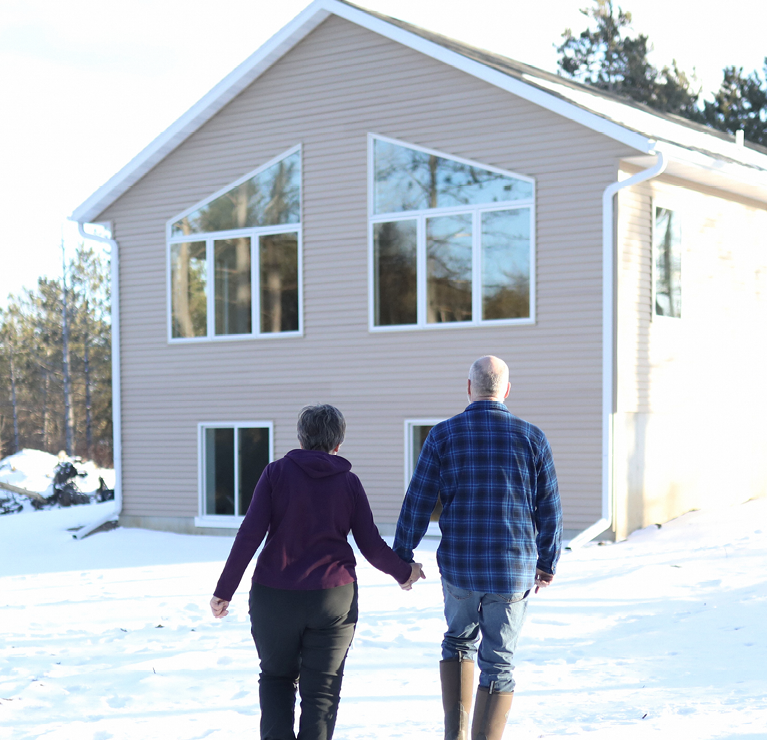
In January of 2025, they completed the construction of their long-awaited rural dream home. The house stands overlooking the woods, with plenty of room in the back yard for turkey, deer, and other wildlife to roam in. With an 18-foot vaulted ceiling, open-concept floor plan, and enormous living room windows with an outstanding view of the property, it’s clear why John and Julie originally fell in love with the land all those years ago. The home features rustic finishes such as solid wood doors, knotty pine trim, and hickory cabinets.
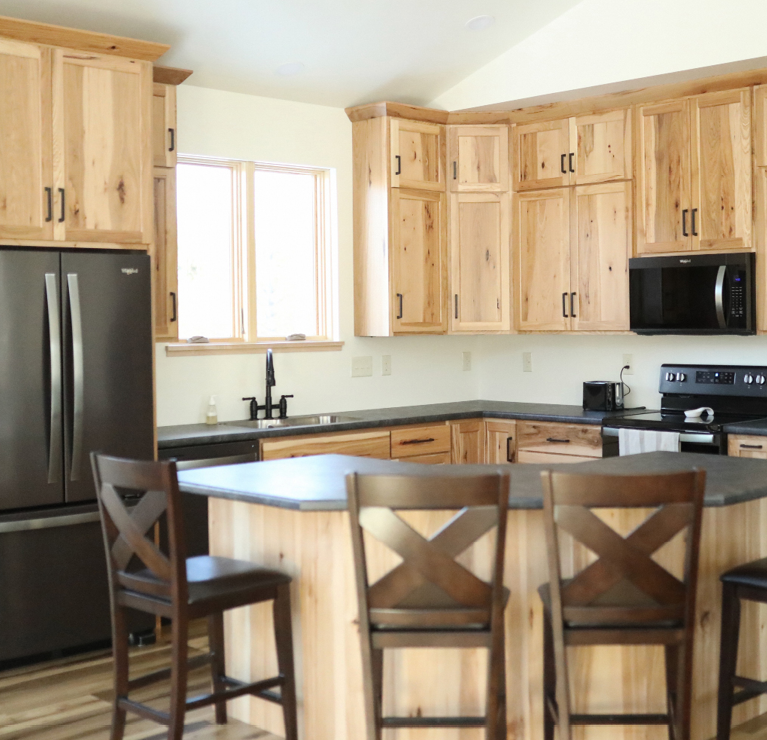
One of the must-haves when building their home included John’s “man cave” downstairs, the perfect place to display all those trophy deer he’s collected over the years hunting on their property!
For Julie, her favorite part of the home is the living room windows. “I love just coming out here in the morning with all the natural light coming in. The view is fantastic, and I’m excited to get to see the landscape change with the seasons each year.”
John and Julie are also looking forward to beekeeping on their new property for their small honey business. “We keep around 30-50 hives at a time and sell to retailers as well as individuals,” said John. “We’re looking forward to another way we can enjoy doing something we love on our property.”
With so much to enjoy on their property in their new home, John and Julie are sure to make countless memories for years to come.
“We don’t even want to go anywhere else now,” laughed John. “We used to dream about the day when we would never have to leave here,” added Julie. “It used to be we would come out here on the weekends to make memories, but now those days are every day for us. It’s like a dream come true!”
To view the spring 2025 issue of Partners magazine in its entirety, click here.
Tyson Lemon
Regional VP of Sales and Customer Relations
20 years of Service
What is your favorite part about your role?
I really enjoy our team here at GreenStone and the financial services officers I get to work with on a daily basis. Our team works hard to help people build or buy that dream home or property, and I love being a part of that process and creatively finding solutions to make a customer’s dream become a reality.
How does your role support GreenStone’s mission of supporting our rural communities?
I get to work with a great team of people helping our members make their rural dreams come true. Providing financing for rural homeowners or landowners helps strengthen and build up our rural communities.
What is the most valuable lesson you’ve learned during your time working in the country home financing industry
During my time with GreenStone’s home lending team, I have learned there are many types of unique requests we can work with in order to help finance a customer’s dream home or plot of land. I have seen loan requests for everything from large tracts of land in Michigan’s Upper Peninsula to one-of-a-kind barndominiums or simple ranch houses.
Jim Nowak
VP & Managing Director of Country Living Sales
20 years of Service
What is something most people don’t know about the country living segment?
Do-it-yourself (DIY) construction financing is probably our most significant niche in the marketplace. DIY construction is something most banks, credit unions and mortgage companies are not interested in financing. However, GreenStone has been offering this type of lending for decades and our members have had much success with it.
How does your role support GreenStone’s mission of supporting our rural communities?
Obviously, agricultural financing is at the core of what we do; however, the part-time farmers, hobby farmers, and rural residents are valuable members of the communities we serve as well. By providing financing for rural homes, construction projects, home sites and vacant land, we assist in keeping economic activity strong and vibrant in our rural communities.
What is the most valuable lesson you’ve learned during your time working in the country home financing industry?
Providing great service and a positive customer experience is so key to our success. Happy customers will talk to their friends, family and co-workers, leading to numerous referrals, and they will also come back to us for their next loan!
Mike Niesyto
Regional VP of Sales and Customer Relations
14 years of Service
What is something most people don’t know about the country living segment?
Our service is the best in the industry! As a portfolio lender, the financial services officer the borrower works with on their loan will be the same person they talk to in the future if they need anything. In other words, our loan officers are relationship managers. They work in tandem with our loan processors to deliver a personalized service. Other lenders are focused on the transaction, whereas we’re focused on the people, both in the moment and down the road. An overall customer satisfaction rate above 95% is dramatically higher than our competition. That’s a testament to our people and how attentive they are to the customers and their needs.
What is your favorite part about your role?
Working with our talented team of loan officers. We have such a diverse group when it comes to experience levels, backgrounds, and career paths that all lead to great collaboration. That collaboration ultimately delivers a quality product to our customers. At the end of the day, it’s about delivering a positive experience and helping people live their dreams. From dream land to dream home and everything in between, we’re here to serve our marketplace and be a part of making their dreams become a reality. That’s what drives me day in and day out.
How does your role support GreenStone’s mission of supporting our rural communities?
I get to work with our lenders on any challenges they face throughout their day. My job at its core is to empower the team to do what’s right for our customers and help them navigate any challenges they’re facing. Every day and every challenge are unique. We collectively problem solve to get loans approved and closed, which ultimately supports the flow of funding to the rural communities that our borrowers enjoy.
To view the spring 2025 issue of Partners magazine in its entirety, click here.
As the weather warms and days grow longer, spring offers a perfect opportunity to step away from screens and enjoy the outdoors! Reducing screen time not only benefits physical and mental health, but strengthens family bonds and fosters creativity. Health experts say screen time at home should be less than two hours a day for adults and children, and here’s a few different ways to help you and your family reduce screen time this spring!
Start by having a family conversation to discuss screen time and to set limits and goals. Chat about what your screen time currently looks like, and what is your family total is per week. Seeing where your family is with their screen time will help you all decide on daily or weekly goals and sets a baseline. Setting goals based on current behavior will help everyone feel motivated to achieve them. Using parental controls or apps to monitor usage will help each member to stay accountable. You could even create designated screen-free zones, like the dining room or bedrooms, to promote more face-to-face interaction.
The spring weather could be a great opportunity for outdoor adventures! Planning a family hike, bike ride, picnic, or trip to the park are great ways to explore the area you live and encourage your family to enjoy the sunlight. Gardening, playing sports, or even walking the dog can provide a fun and active alternative to screen-based entertainment.
On rainy days, reaching for the craft box is a way to get creative and stay true to your goals. Hands-on activities such as puzzles, crafting, cooking, and reading can be great ways to spend time together without leaving the house! Starting a family project where everyone can contribute can be a wonderful way to get each member involved. Something like building a birdhouse, creating an art display, or a family version of your favorite board game are great examples!
Leading your family by example is a key factor to decreasing your overall screentime. Taking charge in holding yourself and your family accountable will help model these new healthy habits. Celebrate milestones in your screen time journey as you hit them to reward consistent efforts with fun screen free activities. A family camping trip, pizza night, or beach day could be fun rewards to highlight how much your family has grown!
Decreasing the amount of time we spend on screens can be difficult, but not impossible. These tips can help you and your family explore new ways to have less screen time this spring. By being intentional with screens, getting outside, and diving into creativity, families can build stronger connections and create lasting memories while building a healthier lifestyle!
To view the spring 2025 issue of Partners magazine in its entirety, click here.