




As the second term of President Donald Trump begins, we know for certain that there will be changes in governance. The ultimate effect of his unconventional approach to the presidency on businesses, including the agriculture industry, is yet to be determined. On one hand, there is a push to deregulate and downsize the government. On the other hand, some of the cabinet picks could pose challenges to agriculture. With the unprecedented pressures on agriculture to produce more, we cannot stifle innovation.
The President has made it clear that he will focus on reducing regulations across the board. An Executive Order (EO) on January 31, 2025, reads in part, “whenever an agency promulgates a new rule, regulation, or guidance, it must identify at least 10 existing rules, regulations, or guidance documents to be repealed.” How will the deregulation ambitions square with his appointees?
Cabinet Appointments
The juxtaposition of the President’s plans against the atypical group of cabinet appointees should make for some interesting policy debates in the next four years. One of those appointees, Robert F. Kennedy, Jr., (Secretary of Health and Human Services or HHS) is leading the “Make America Healthy Again” or MAHA initiative.
Kennedy was the president of the Waterkeeper Alliance, an environmental advocacy group. Waterkeeper opposes the expansion of fossil fuels, which is at odds with the President’s commitment to expand fossil fuels.
From Breakthrough Journal on December 13, 2024: “Altogether, an RFK-led HHS has the capacity to make life harder for agricultural producers, decrease food production, and increase food prices for the American consumer, all in the name of conspiratorial thinking and a poor understanding of both agronomy and economics. It will be important for Senators from agricultural states to oppose RFK’s nomination to head HHS.”
The article further states that Mr. Kennedy can alter pesticide use, curb biotechnology innovation, and potentially challenge Genetically Modified (GM) products already on the market. They also state that “he could still bring significant negative consequences for U.S. farmers and consumers.”
The President’s appointment of Ed Russo as Environmental Task Force Advisor is another atypical appointment for a Republican. In a recent webinar, he stated, “So farming is, I hope I’m not insulting anybody, but farming, believe it or not, is the biggest polluter in the world. Sorry, it’s just a fact.”
The EPA Administrator, Lee Zeldin said he anticipates cutting 65% of the EPA staff. This approach is in line with President Trump’s first term, which focused less on command and control and more on cooperative federalism. At the same time, Mr. Zeldin has expressed concerns about climate change, and while a member of Congress, he voted twice in favor of legislation to address per- and polyflouralkyl substances (PFAS). PFAS continues to be an important and potentially-consequential issue for agriculture (see Partners Fall 2023 and Fall 2024).
How Mr. Zeldin plans to address PFAS or climate concerns with reduced staff remains to be seen.
Unleashing Innovation
Over the years, we have covered agriculture’s largely unrecognized, remarkable accomplishments (see, for example, Partners October 2022). As our global population continues to grow, we must embrace and not handcuff innovation, especially in agriculture.
While we have experienced inflation in the past few years, as of 2022, in the United States, the share of expenditure spent on food versus total consumer expenditure was 6.7% (food bought for consumption at home). The next closest nation is Australia at 9.3%. Other countries spend 10% to as much as 59% of their income on food (Our World in Data).
Several factors allow us to use our money on pursuits other than basic nutrition. Make no mistake; the innovations in agriculture are indispensable for human flourishing.
The remarkable work of Norman Borlaug (The Green Revolution) in the 1950s using plant breeding techniques saved an estimated one billion lives globally. Innovations have continued over the years with the use of disease and drought-resistant crops.
These improvements, largely unrealized by most in society have continued. Consider that between 1910 and 2020, the U.S. population grew from approximately 90 million to more than 330 million. During the same period, agriculture more than quadrupled its output while requiring less labor. In 1900, 41% of Americans worked in agriculture; now, it is less than 2% (Breakthrough Journal).
Agriculture uses approximately 80% of the water in the western United States. However, for perspective consider that in California (which accounts for one-third of the vegetables and three-fourths of the nuts in the US), agricultural water use in 2015 was 14% less than in 1980, while economic output from farming was up 38%.
Innovative water management practices are evident in Las Vegas as well. Total water use has fallen by 26 billion gallons since 2002 even as they have added nearly one million new residents (Human Progress, September 21, 2022).
Agriculture, like all businesses, faces many environmental challenges. For agriculture, some of the more immediate concerns include managing nutrients and avoiding impacting groundwater and surface water. The PFAS issue, especially in biosolids and source water, will continue to be one of the more significant challenges for agriculture.
Business as usual is not likely what we will see over the next four years. Regardless of the administration, it is always a good practice to keep a pulse on developing agricultural/ environmental policies. As the administration focuses on Making America Great Again and Making America Healthy Again, we need to be part of the discussion to keep agriculture great.
To view the spring 2025 issue of Partners magazine in its entirety, click here.
Wait a minute… wait a minute… wait a minute…
So much is in flux. It all seems so dramatic and there is a yearning for settling down to stability. Stability in the economy, public policy, market prices, and culture is yearned for as families in rural and urban environments face seemingly unprecedented challenges. Yet in these times we must make important decisions for our unique situation.
When you face an important moment calling for you to decide, you hope you have all the information and experience in front of you to make an informed decision. For example, a simple seed planting decision may not be so simple, but once you decide upon the seed to plant and roll forward with execution of your plan, you turn the page and go.
The U.S., and many other nations, appear to be in a transition economy. The debt burden of the U.S. is being addressed which has brightened the lights on many different challenges. With 87 Executive Orders issued by President Trump as of March 6, 2025, (compared to President Biden issuing 162 in total of which 62 were revoked by President Trump), we all can settle into an environment where times are rapidly changing. Front and center of changing times are tariffs. For us and our members, we are alerted to how agriculture businesses may be impacted.
Tariffs is not an easy subject with the brightest of lights upon them. Maybe our leaders will finally get to the point of resolving the age-old policy of the “Chicken Tax”. The “Chicken Tax” is a 25% tariff on imported light trucks (and originally on potato starch, dextrin, and brandy) imposed by the U.S. in 1964, in retaliation for tariffs placed by France and West Germany on U.S. chicken exports. And yes, the Chicken Tax still exists as a curious solution to trade issues. Creative circumvention of the tariff is amusing and worth a deeper look into the six-decade long policy.
Traditions, past practices, routines and habits often dictate our ways of deciding and acting. With all the current forces of change, it sometimes feels we are in a constant state of fight and fright with long term implications for our families on every decision. This is a yearning for stability, predictability and certainty, but that seems far off as the U.S. addresses the burden of debt. GreenStone members understand the challenges of managing debt at their levels. It is recognized that the need is there to be responsible on the federal and state level as well.
Together we grow, adjust, and change to be part of the progress for a better future. Certainly, most every good person believes in doing good and choosing ways best for the interests of themselves and others. By bringing intelligence and truth we can all find the best ways to serve our common cooperative interests.
Communication with strength and courage will be required to forge a solid future path. As we work together for our common cooperative interests to meet the mission of each member, we look to enforce accountability of each leader that has been chosen to serve and sort through the noises and biases that might seek to divide or undermine agriculture or rural community interests. The newly appointed Secretary of Agriculture shoulders the burden for agriculture policy in the executive branch. Her commitment is clear as she stated: “Every day, I will fight for American farmers, ranchers, and the agriculture community. Together, we have a historic opportunity to revitalize rural America and to ensure the U.S. agriculture remains the best in the world for generations to come.”
To view the spring 2025 issue of Partners magazine in its entirety, click here.
From the field to the food on our table. While some face challenges, others celebrate successes, and on both fronts your cooperative is working to ensure we’re providing the proactive support and foundational stability to assist customers through it all.
We asked two directors to share their perspective on the discussions occurring in the board room with your management team. These directors had been serving on your GreenStone board of directors, yet going forward will be offering perspective on two different boards. While Peter remains on GreenStone’s Board of Directors, in March Mike Timmer was elected to and transitioned to the AgriBank board of directors. Their account of GreenStone’s priorities and actions emphasize your cooperative’s proactive, committed culture to work with customers through challenging times, providing superior customer service and satisfaction, all while ensuring we remain a reliable partner for our customers for years to come.

GreenStone is a team of highly skilled and successful members, employees and leaders. We love to compete and win. Part of that competitive mentality is a focus on being the best in the business and the Farm Credit System. Staying at the top is not only a goal, but an expectation in our culture to be the best. As a shareholder and board member I have been fortunate enough to take a deeper dive into our association and “buy in” to the Farm Credit mission. The mission of supporting our farms and communities with credit has been an integral part of GreenStone and has allowed many of our family business not only to continue, but to grow and thrive. It has also become a passion for our board, management teams, staff and our members.
As a board we are very focused on many facets.
Our board meetings generally last two days with committee meetings, reports from management, and board action items that generally include policy items and things like Patronage! Discussions and priorities include a positive customer experience and satisfaction, the financial health of the industries that our customers are coupled with, as well as credit quality of the association members.
We examine how changes in interest rates impact our customers and their businesses. Annually, we utilize a stress test model where we dive into worst case scenarios for our customers and GreenStone to ensure we have enough capital and capacity to continue with our mission.
We are also hyper-focused on information technology and house technology for several other associations with our CTC technology collaboration. This allows us to lead the industry in security of our shareholders in an ever-changing landscape that we must stay ahead of. The cyber environment is rapidly changing, and we are focused on staying ahead of the threats with technology, training, and personnel.
Audits are also a focus: external, internal, regulatory, as well as audit framework for long term success.
In addition, as chair of the compensation committee, I am acutely aware of our employee retention and satisfaction ratings. I am a firm believer we are only as strong as our weakest link and highly value our staff and their well-being.
As a former young farmer (I turned 40 last summer), I have a passion for our young, beginning and small farmer programs and always want to make sure it is successful, collaborative and an open door for our beginning producers.
These are just a few examples of some of the topics we focus on as a board. I hope our members have the confidence in our cooperative today and into the future as we fulfill the mission of Farm Credit in good times and challenging times. Our Board of Directors are fully invested in the success of our organization for our shareholders. Our focus stays clear: the long-term success and health of our cooperative.

The Farm Credit System depends on the financial strength of the associations like GreenStone that work closely with their members to provide financing and financial related services. GreenStone is one of the strongest performing associations in the AgriBank district.
The GreenStone board of directors works closely with executive management to maintain adequate levels of capital and focus on efficiencies that reduce costs for the association. These efforts have consistently allowed GreenStone to meet the needs of the diverse loan portfolio that it strives to support. This diversity helps the association remain strong through the financial cycles in the industry. While some segments may be struggling, others are looking to expand or increase market share during their good times. GreenStone must keep the financial stability and capital necessary to meet the needs of all the market segments in its portfolio.
GreenStone is here to help you reach your goals and be a constructive financial partner. Some of the tools you can utilize are the GreenStone accounting and tax services, as well as the crop and livestock insurance programs. GreenStone has worked diligently to strengthen these services. During these times of slim margins, it is so important to know your costs, estimate income potential, and minimize risks. Whether you need help gathering good financial information for your operation or need to discuss how GreenStone can help you minimize risk and develop marketing plans using crop and livestock insurance, GreenStone has the staff and expertise to help.
GreenStone wants to build relationships with our members you can trust to be there during the challenging times and prosper with in the good times!
To view the spring 2025 issue of Partners magazine in its entirety, click here.
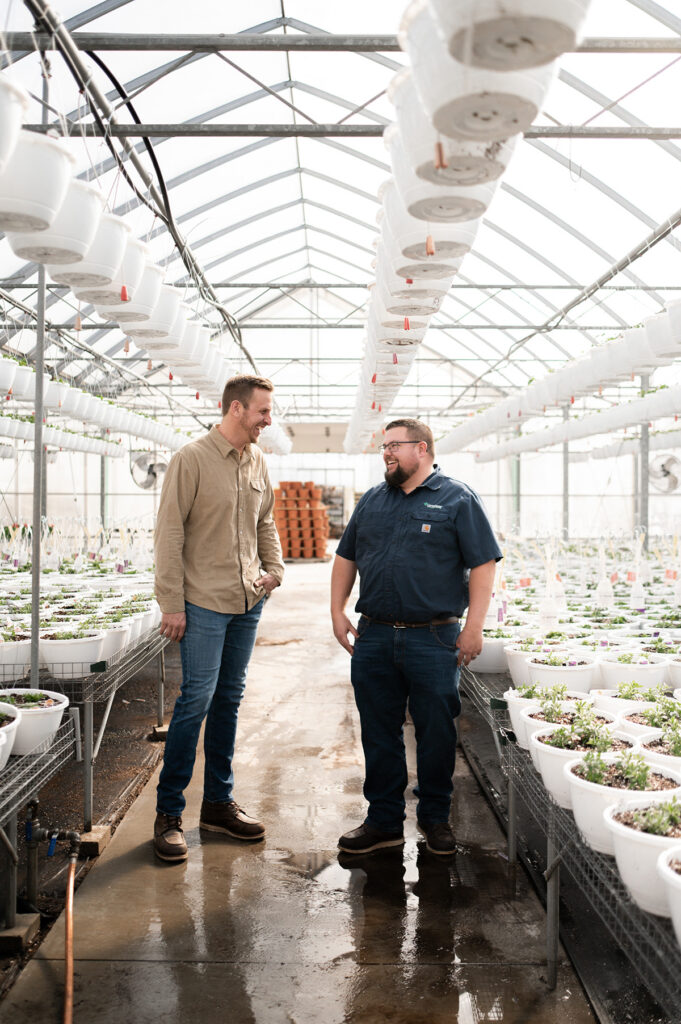
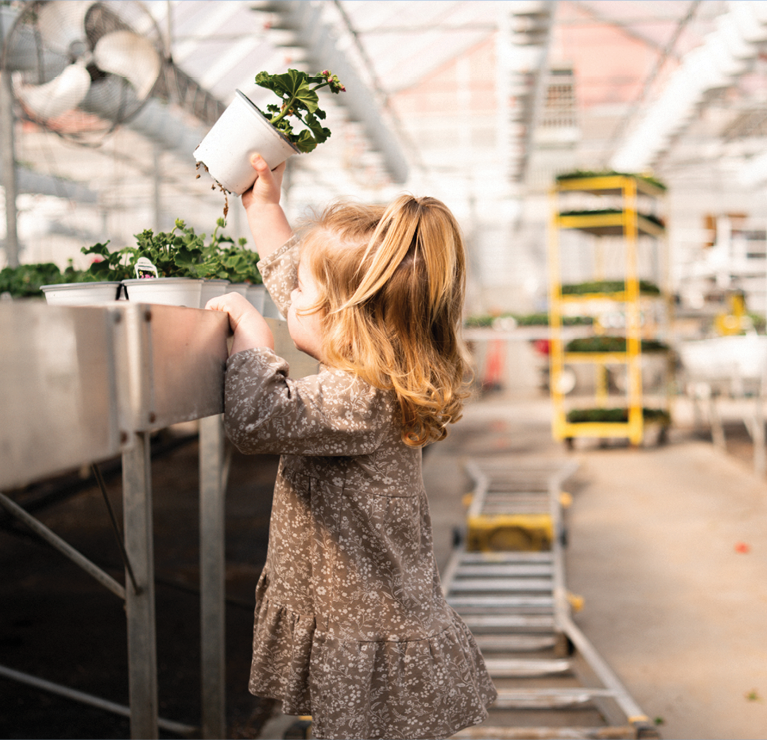
Driven by a passion for bringing beauty to his local community, Tyler Keit, the proud owner of Rooted by Keits greenhouse located just outside of Bay City, MI says he’s the luckiest man alive. “There’s never a time where I say, ‘Oh man it’s Monday again, I have to go back to the greenhouse!’ I love what I do, and I can’t imagine doing anything else.”
When Tyler set out to open his own greenhouse, he had no idea the positive impact it would have not only on his own life, but for his community as well. “I’ve always known working a traditional corporate job just wasn’t for me,” said Tyler. “I’ve always had an entrepreneurial spirit and just wanted to go out on my own and see what I could achieve.”
Tyler grew up working with his parents at their own family greenhouse, so he knew firsthand the dedication and drive it would take to be a successful greenhouse owner. Eager to grow a name for himself yet sticking to his roots, Tyler ventured out on his own when he was just 18 by selling flowers seasonally out of a used greenhouse he purchased.
“I had bought a greenhouse and was selling flowers and was also doing all sorts of odd jobs on the side. I have a bachelor’s degree in finance, but I always knew I wanted to end up working with my hands,” he shared.
In 2020, Tyler set his sights on becoming a business owner himself when he discovered a local greenhouse looking to sell after being in business for over 20 years. With a little encouragement from his now wife Lindsay, Tyler decided to take the leap. “I called them up and that was really the start of it,” explained Tyler. “I came in at just the right time and it wasn’t long after I was getting ready to open my own business that spring!”
Putting Down Roots
That was the beginning of 2020, a year where many young businesses faced tremendous hurdles and even established businesses felt the affect of the pandemic. However, as Tyler explained, the greenhouse industry thrived during this time.
This was a time where people couldn’t do anything else except be outside. More people were spending time in their gardens at home, and greenhouses were one of the only places that remained open. “Our first year there were a lot of lessons learned. But we did well that year and that propelled us to keep going and expanding our business.”
Tyler purchased the greenhouse when it was just 17,000 square feet. Today, Rooted by Keits’ entire property is just under 60,000 square feet total, and includes 20 greenhouses! With the help and hard work of his wife Lindsay, his parents, and around 12 seasonal employees, Rooted by Keits has since over tripled in size!
Since the beginning, Tyler has envisioned a space where members of his community could gather to enjoy the beauty of the hundreds of varieties of flowers and plants his greenhouse offers. “We have everything from annuals, perennials, hanging baskets, patio planters, potted plants, vegetable starts, u-pick strawberries – just about anything you could hope to find!” Tyler says proudly.

Branching Out
Not only does the greenhouse provide an expansive offering of flowers and plants, but it also serves as an event center for holiday and family parties, bridal or baby showers, corporate meetings, and more! Rooted by Keits even offers classes and community events such as sunrise yoga classes, sip and swirl painting classes, and Strawberry Fest, a celebration of the strawberry season and a great way to enjoy the harvest of their very own strawberry fields.
Through their eagerness to engage with the people of their community, they’ve fostered numerous connections and relationships that continue to grow. “I just enjoy being out in the greenhouse and catching up with our customers,” explained Tyler. “I think everyone likes being out in the fresh air surrounded by all the plants and greenery, you can’t help but be in a good mood.”
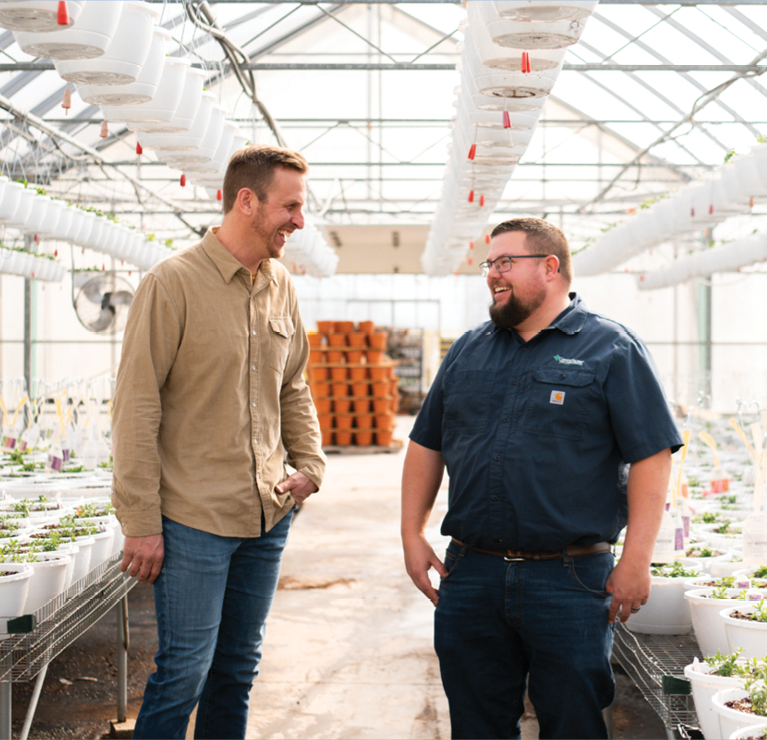
That very instance is how Tyler formed a connection with GreenStone Financial Services Officer Joshua (Josh) Quaderer. Josh, a neighbor of Tyler’s, had decided one day to check out the greenhouse down the road that was under new ownership. “While I was there Tyler and I kind of hit it off right away,” said Josh. “I just told him to reach out if he ever needed anything, and I remember he said, ‘well you don’t look like the typical banker,’ and I replied ‘well we’re not your typical lender!’”
Growth with GreenStone
Years later, when Tyler was looking to expand his business by adding more greenhouses and creating a more walkable layout and retail space for customers, he reached out to Josh to see if GreenStone could help him achieve his vision for his business.
“Tyler came to me to see if GreenStone could help with the financing for his expansion, and we were more than happy to help,” explained Josh. “Since GreenStone is a lender who actively supports young, beginning, and small farmers, I enjoy working with customers like Tyler to see how we can help them expand their business and be successful. Tyler has been great to work with too, he’s always full of energy and has a true passion for what he does and for the greenhouse industry.”
With the expansion underway, Tyler is looking forward to opening the doors of Rooted by Keits for the 2025 season and is hoping the new and improved layout will create an even more enjoyable visit for customers of the greenhouse this spring.
“The support from GreenStone has really helped us achieve our vision for how we wanted to expand this year,” said Tyler. “Working with Josh has been great. Since the beginning, our relationship has really been more like two neighbors, because that’s what we are. I know I can text or call him to run ideas past him and know he has our best interest in mind.”
Tyler also values the benefit of GreenStone’s depth in the industry. “It’s also been nice to work with GreenStone as an agricultural lender because they understand the hurdles of this industry better than any other traditional lender. Being in the greenhouse industry comes with its own sets of challenges, and since we’re a seasonal business, sometimes it’s hard to know if all the work we put in during the winter is really going to pay off until we’re in the middle of our busy season.”
So, what makes it all worth it, despite the challenges they face each season? “For me there’s something special about when people come in to get their flowers each year. It can be a gloomy, rainy spring day in Michigan but the second you step into the greenhouse you’re surrounded by all these beautiful flowers. It’s usually only something people do once a year too, so being able to brighten their day and be a part of that process is what makes it all worth it for me,” Tyler says fondly.
From sharing the beauty of a wide variety of flowers and plants, to hosting events that promote connection, there’s no doubt Rooted by Keits is deeply rooted in the success of their community.
To view the spring 2025 issue of Partners magazine in its entirety, click here.
Spring in Michigan marks the return of robins and red-winged blackbirds, with their unmistakable songs echoing in our backyards. Another feathered species that brings excitement with its springtime calls is the wild turkey. Eastern wild turkeys can be found in most every county in the Lower Peninsula, and many areas in the Upper Peninsula as well. Hunters take to the woods and fields each spring in pursuit of this wary species that proves to be both exciting and frustrating to hunt. Majestic toms are the focus, and their piercing gobbles fill the woods and roll through the early morning fields in April and May. Through successful management efforts by the state and private organizations alike, the wild turkey is absolutely flourishing in Michigan.
I’ll never forget my first successful spring turkey hunt. It was exactly 30 years ago in Alcona County, and my step-dad was my guide. He had been honing his calling skills for a few years, and had embraced the explosion of the wild turkey population (and hunting season) there with a passion that bordered on addiction. At the time, I was indifferent about it. Deer hunting seemed exciting enough, and I couldn’t imagine a bird hunt would get my heart pumping like a close buck encounter did. I begrudgingly agreed to give it a try.
We hit the woods that particular April morning well before daylight. My step-dad with his vest full of slates, diaphragms and box calls, and me with his Remington 11-87 Special Purpose 12-gauge over one shoulder and a bag of decoys over the other. We quietly set up in an area Dad hoped the gobblers would be heading once they hit the ground. It was within earshot of their roosting trees, and on the edge of an expansive, rolling field. He set a couple of hen decoys 20 yards out in the field in front of us. We heard a couple of distant gobbles early, and then nothing. As we sat there on the ground with our backs against a couple of trees, daylight crept into the sky and very, very faintly we heard a couple of high-pitched gobbles answer Dad’s box call. Now things were getting exciting! Under Dad’s direction, I shouldered the shotgun and rested the forestock on my knee.
Dad glassed the field and saw three birds on the far side of it – nearly 300 yards out – heading our way in a hurry. They vanished from sight as they headed down into a large, rolling depression in the field. A couple more gobbles came – a lot closer this time. My pulse was picking up. Dad whispered “be ready.” And here they came. Three jakes, all with identical 3-inch beards bobbing as they ran up out of the dip and made a beeline for our decoys. My heart was pounding in my throat. I’m not sure I was breathing. I watched in complete awe for a moment as the turkeys jockeyed for position to be the first to the decoys. Dad whispered, louder now, “take one!”. Instinct took over. I picked the bird that was facing me, clicked off the safety, trained the bead at the end of my barrel on the base of his neck and squeezed the trigger. The morning absolutely lit up – the shotgun blast echoing through the morning air, two of the jakes running away with wings flapping, and one laying where he stood a moment earlier. We got up and ran to check out my first turkey. Dad was beaming with pride, and me? I was absolutely hooked on turkey hunting.
Back in 1995 we didn’t carry cameras or cellphones with us. Sadly, I don’t have a picture of that hunt. What I do have, though, is an indelible memory of that morning. Tagging and carrying that bird back to the family cabin. Breakfast in town with Dad. Telling and re-telling the story of the hunt. My passion for turkey hunting was born that morning 30 years ago. I still hit the turkey woods every spring, and most times I carry that same Remington shotgun that Dad gave me. We lost Dad last February, but I will carry his memory with me each and every time I sit in the spring woods and hear the echo of a gobbler in the air.
To view the spring 2025 issue of Partners magazine in its entirety, click here.
This comforting yet fresh Asparagus and Lemon Risotto dish is the perfect start to spring, highlighting one of our region’s most abundant seasonal stars: asparagus!
Ingredients
- 1 bunch asparagus, cut into 1” pieces
- 1 ½ cups arborio rice
- ½ onion, finely chopped
- 2 cloves of garlic
- 4 cups of vegetable broth
- ½ cup grated parmesan cheese
- 2 tablespoons of olive oil
- 1 tablespoon fresh lemon juice
Directions
Prepare the asparagus: Blanch the asparagus in boiling water for 2-3 minutes, then drain and set aside.
Cook the risotto: In a large skillet, heat olive oil over medium heat. Add the onion and garlic and cook until fragrant. Add the rice and cook for another 1-2 minutes.
Add broth: Add your vegetable broth and stir until absorbed. Cook for about 20 minutes, until rice is tender.
Serve: Stir in your asparagus and lemon juice. Add the parmesan cheese and salt and pepper to taste. Serve hot and garnish with more freshly grated parmesan!
To view the spring 2025 issue of Partners magazine in its entirety, click here.
Landscaping is one of the first things guests see when they visit, it enhances the beauty of your home and creates an inviting outdoor space. Whether you’re starting from scratch or refreshing your current landscape, thoughtful planning and creativity can help you achieve a stunning yet functional yard!
Assessing the current situation, setting goals, and planning your space are all key aspects of landscaping. Take time to stroll around your property and identify areas that may need improvement. During this you can be thinking through what you want to add, these could be things like adding a different variety of flowers for more color, a bonfire pit with seating, or an extra garden bed so you can grow more food this summer! Once you have some ideas in mind, sketch out your vision and set goals for the project!
When identifying plants to use in landscaping, they will often be an annual or a perennial. All annual plants will complete their life cycle in one year and will need to be planted again. Annuals fall into three categories: hardy or cool-season, tender or warm-season, and half-hardy. These break down what season and climate your annuals will do best in. Many annual plants flower for long periods of time in one season in order to generate enough seeds, so oftentimes perfect for landscaping.
Perennial plants do not complete their life cycle in one year, but return each year to continue growing, with a varying life span. Typically, perennials flower for one season each year and remain as foliage for the other seasons. Perennials may be more cost upfront but are a great investment for low maintenance landscaping. Both annuals and perennials are great choices for landscaping; consider a mix of both with different bloom times to maximize your liveliness year-round!
Incorporating native and low maintenance plants is one of the best ways to create a sustainable and easy landscape. Taking some extra time when planning to research what plants are native in your area can be helpful to reduce water, fertilizer, and maintenance. Native plants support wildlife too, like birds and pollinators. Consider mixing in native perennials and shrubs for year-round color and texture, while reducing the need for replanting and caring for your environment.
Now that the plants are identified, you can consider adding functional and aesthetic elements to add the finishing touches to your landscaping project. Paths, patios, and seating areas can provide practical outdoor entertainment spaces, while decorative elements like garden art, lighting, or even a water feature can add charm and character. Items like raised garden beds, vertical planters, or a pollinator box can add charm and utility to your space!
Once your landscape is in place, try and find a regular maintenance routine that works best for you. Regular watering, weeding, pruning, and mulching can keep your landscape looking its best. As seasons change you may want to swap out annuals, trim overgrowth, or add new fauna. Landscaping adds to the beauty of your new or existing home, and these tips can help you create or refresh your space!
To view the spring 2025 issue of Partners magazine in its entirety, click here.
The 2025 MI GreenStone PAC contribution campaign brought in almost $30,000 from more than 350 Michigan GreenStone customers. This is another strong representation of the support members have for the MI GreenStone PAC. Your board of directors and management team are diligently evaluating legislative leaders and will be sharing the importance of rural communities, agriculture, and the Farm Credit System with elected officials.
Your WI Farm Credit PAC contribution campaign received over $2,000 from Wisconsin GreenStone customers. The WI Farm Credit PAC funds will also be disbursed by your board of directors and management team after an evaluation process.
The AgriBank District 2025 Farm Credit PAC drive brought in almost $30,000 in contributions and these funds are used to support federally elected officials. A portion of the Farm Credit PAC funds have been allocated to the GreenStone territory and your directors and management will assist in the delivery and communication of the Farm Credit message.
Our success will be determined by the strength your individual involvement and the collective relationships we have with elected officials. The work is necessary to protect and advance our rural communities and agriculture, and that is why your support of the PACs is so important. Thank you for being a champion of our communities and the agricultural industry. Please watch for opportunities to engage with legislators this year!
To view the spring 2025 issue of Partners magazine in its entirety, click here.
Many farmers are facing a volatile agricultural marketplace, balancing potential tax reform, potential economic reform, and the ups and downs in commodity pricing. Focusing on things that are uncontrollable might make you want to pull your hair out, and while there are many things that are outside of your control, there are also items that each famer should focus time and effort on to set themselves up for success.
If you are not fully utilizing accounting reports to help guide your farming operation, stepping up your record keeping game can help you:
- Manage your business operation effectively.
- Manage your tax liabilities effectively (and with less stress).
- Make family living budget decisions more easily.
Accurate and up-to-date financial records demonstrate your commitment to knowing your numbers and providing accurate historical results, which lenders and other capital providers appreciate. It allows them to produce lending decisions in a quick and more seamless manner.
It’s no fun scrambling around at the end of the year catching up on your record keeping to determine what you need to buy for inputs or equipment to minimize tax liabilities. Keeping your accounting completed throughout the year allows you more time to plan and shop for the best prices on any necessary purchases.
A few key financial statements to produce include:
- Balance sheet – This is your financial position as of a point in time. It’s a nice measuring stick to look at year-over-year to check your financial health. You always want current assets and total assets to be increasing quicker than liabilities – this means you’re creating net worth from your farming operation.
- Income statement – This summarizes your revenue, expenses and other gains and losses over a specific period. It’s important to be consistent in the recording of revenue and expenses to the line items that you choose. A schedule F provides a good mapping structure to follow – unless you need deeper or more detailed information.
- Statement of cash flows – This shows where all of your cash is going from your deposits and disbursements.
Being caught up on your accounting allows you to produce these reports at any point in time during the year and compare yourself to prior years, which can be invaluable.
In addition to completing your accounting timely and routinely during the course of the year, you should also complete a budget and track actual performance versus your budget. A detailed and realistic budget is one of the most important tools for guiding your farming operation and providing the information necessary to operate within your family living means, handle upcoming challenges, and hopefully record profitable results. During the course of the year, you should continually refer to your farm’s budget as a way of measuring actual performance against expectations.
How can you know what’s possible financially in the future if you don’t understand the historical results you’ve posted? The first step in the budgeting process is to make sure you know where your money has gone historically.
A budget is a planning tool necessary for building a framework for your farming operation and its finances. Combining past trends with realistic forecasts for the upcoming year, a budget provides a detailed view of realistic revenue expectations and how those stack up against your anticipated expenses.
Budgets also help with setting goals and establishing priorities. Like any business, farmers should, at a minimum, look at their total farm operation each year and establish goals for the upcoming year based upon their best guesses of what will happen.
Goals should also be established for the upcoming year. Review income statement expenses line by line, including the reasons and rationale behind any expected change in your cost structure. Will expense line items increase by cost-of-living adjustments or much more due to inflation? Are you going to outsource less custom hire work? Do your rent agreements have escalations in the current year? Does ground you have rented each year no longer make sense given where commodity prices are at today and projected through the rest of the year?
Occasionally, farms will complete their budgets with multiple scenarios: worst-case, most likely, and best-case models are all frequently used. This helps farmers to mentally prepare for contingencies and identify potential changes from initial expectations.
For example, assume a budget accounts for $4.15 corn and $10.00 soybeans. What if prior to planting is completed, soybean futures prices have dropped drastically, and you now expect that your sales price per bushel will be $9.00? How would that affect your operation’s break-even price for your expected corn production? Let’s look:
You now need to sell your corn for $4.77 to break even. Is that possible, and if it is do you sell it all when you see that price available, or just a portion of it? If it is not possible, you’ll need to consider where are you at to budget on other financial statement line items and determine if you need to cut expenses elsewhere, or possibly tighten the family living belt.
You are only able to answer these questions and make educated decisions if you understand your numbers and are up to date on your record keeping (tracking actual revenue and expenses and comparing them to what was budgeted). This also helps to ensure your farm is sticking to its plans. Budgeting offers an important means of identifying problems and opportunities.
To learn more about recordkeeping and accounting, contact your CPA or a tax accountant at your local GreenStone branch. GreenStone offers a full array of accounting services for farmers and business owners.
To view the spring 2025 issue of Partners magazine in its entirety, click here.
Imagine wiring $50,000 for a new piece of farm machinery, only to find out the dealership’s email was a fake. Fraud like this continues to impact farms and businesses, and we expect it to strike harder than ever in 2025.
As your trusted financial partner, GreenStone is here to inform you to help you stay one step ahead of these scams. The Federal Trade Commission’s Snapshot of 2024 paints a stark picture: fraud losses hit $12.5 billion in 2024, with 2.6 million reports filed. Nearly 1 in 3 Americans—30 percent—fell victim, losing an average of $1,600 each. Imposter scams, often delivered through email, topped the list as the most reported fraud type.
At GreenStone, we want to help our customers be prepared to recognize and prevent these types of scams by providing the tools, resources, and knowledge needed to safeguard their financial legacy.
Phishing Scams and Wire Fraud
Wire fraud can drain your accounts in an instant, and with 2025 shaping up to be a peak year for scams, understanding the threat is critical. Fraudsters use phishing emails to impersonate trusted contacts—like loan officers or equipment dealers—and trick you into sending money to fraudulent accounts.
How These Scams Work
- Fake Emails and Urgent Requests: You receive an email that looks like it is from a legitimate source (title company, lender, real estate agent, vendor, etc.). The message claims that wire instructions have changed and provides a new account for payment.
- Professional Impersonation: Scammers manipulate email addresses and website URLs using characters that look nearly identical to legitimate ones. For example, replacing the letter “o” with the number “0” or using Cyrillic letters that resemble English characters (e.g., [email protected] vs. [email protected]). These attacks, known as homograph/homoglyph scams, can trick even the most careful individuals. Always verify suspicious emails by directly contacting the sender.
- Sense of Urgency: The email will pressure you to act quickly, warning that failing to send the payment immediately could result in delays, penalties, or even losing a deal.
- Funds Are Stolen: If you comply, the wired funds go to a fraudulent account, often overseas, making recovery extremely difficult.
Example
A farmer wiring funds for a new equipment purchase receives an urgent email from what appears to be the dealership, stating, “Our bank details have changed. Please wire funds to this new account.” Without verification, the individual sends the money only to discover later that the request was fraudulent and the money is unrecoverable.
How to Protect Yourself from Wire Fraud
- Verify Wire Instructions Over the Phone: Never trust last-minute changes to payment details sent via email. Call the known phone number of the recipient (not the one listed in the email) to verify any requested changes.
- Be Skeptical of Urgent Payment Requests: Scammers use pressure tactics to rush you into action. If a request demands immediate payment or threatens consequences for delays, take a step back and verify.
- Double-Check Email Addresses Carefully: Fraudulent emails often come from addresses that look nearly identical to the real sender. Look for small differences, such as extra letters, dashes, or misspelled names.
- Verify Bank Account Details: When you receive new payment instructions, confirm the details by calling a trusted phone number from an official website or prior communication. Never rely on contact information from an email requesting changes.
- Enable Multifactor Authentication (MFA): MFA adds an extra layer of security to your email and financial accounts, making it harder for scammers to gain access.
- Never Click on Suspicious Links or Attachments: Phishing emails often contain links that lead to fake login pages designed to steal your credentials. Always verify before clicking.
- Secure Your Email Account: Many phishing scams target email accounts because they contain financial communications and personal data. Regular password changes are no longer recommended unless a breach has occurred.
- To check if your credentials have been compromised, visit HaveIBeenPwned.com.
- If your email appears in a breach, immediately update your password with a strong, unique combination and enable multifactor authentication (MFA) for extra protection.
Use Secure Banking Tools: GreenStone Farm Credit Services offers several secure banking solutions to provide added layers of protection:
- Secure My Access Online Portal: Allows customers to receive and upload documents securely with GreenStone staff.
- Advanced ACH: Customers can upload and verify their own ACH transactions to prevent fraud.
- Positive Pay: Customers can approve draft payments in advance, ensuring only authorized transactions are processed.
What to Do If You Suspect Fraud
If you believe you have received a fraudulent request for payment, act quickly. Follow these steps to minimize potential damage:
- Do Not Engage: Do not respond to the email, click any links, or download attachments.
- Verify the Request: Call the individual or business using a trusted number (not from the email).
- Notify Your Financial Institutions Immediately: If you have already sent funds, contact your bank right away. If caught quickly, there may be a chance to stop the wire transfer.
- Report the Fraud: File a report with the Federal Trade Commission (FTC) at ReportFraud.ftc.gov, the FBI’s Internet Crime Complaint Center (IC3) at www.ic3.gov, and your local law enforcement agency.
Other Common Financial Scams to Watch For
Even if you do not fall for a wire fraud attempt, scammers continue to evolve their methods. Beyond phishing emails, be aware of these additional fraud types that could impact your finances.
- Late Changes to Payment Methods: Be suspicious if a company you regularly do business with suddenly changes their bank account details.
- Fake Equipment or Property Listings: Scammers post nonexistent farm equipment or real estate for sale and demand payment upfront before disappearing.
- Government Impersonation Scams: Someone claiming to be from the IRS, Social Security, or a lender asks for personal details or immediate payment.
Scammers often use fear and urgency to manipulate their victims. A good rule of thumb: If something does not feel right, take a step back and verify before acting.
Stay Vigilant, Stay Secure
Wire fraud and phishing scams are growing more sophisticated every year. However, by staying informed, securing your accounts with strong passwords and MFA, and leveraging GreenStone’s secure banking tools, you can significantly reduce your risk of becoming a victim.
Key Takeaways
- Always verify wire transfers by phone using a known number.
- Be cautious of last-minute changes to banking details.
- Look for email address red flags—even small differences matter.
- Use GreenStone’s secure online banking tools to reduce fraud risks.
- When in doubt, verify directly with your financial institution.
GreenStone Farm Credit Services is committed to helping you protect your financial future. If you ever have concerns about fraud or suspicious activity, contact us immediately. Together, we can keep your finances secure in 2025 and beyond.
To view the spring 2025 issue of Partners magazine in its entirety, click here.