

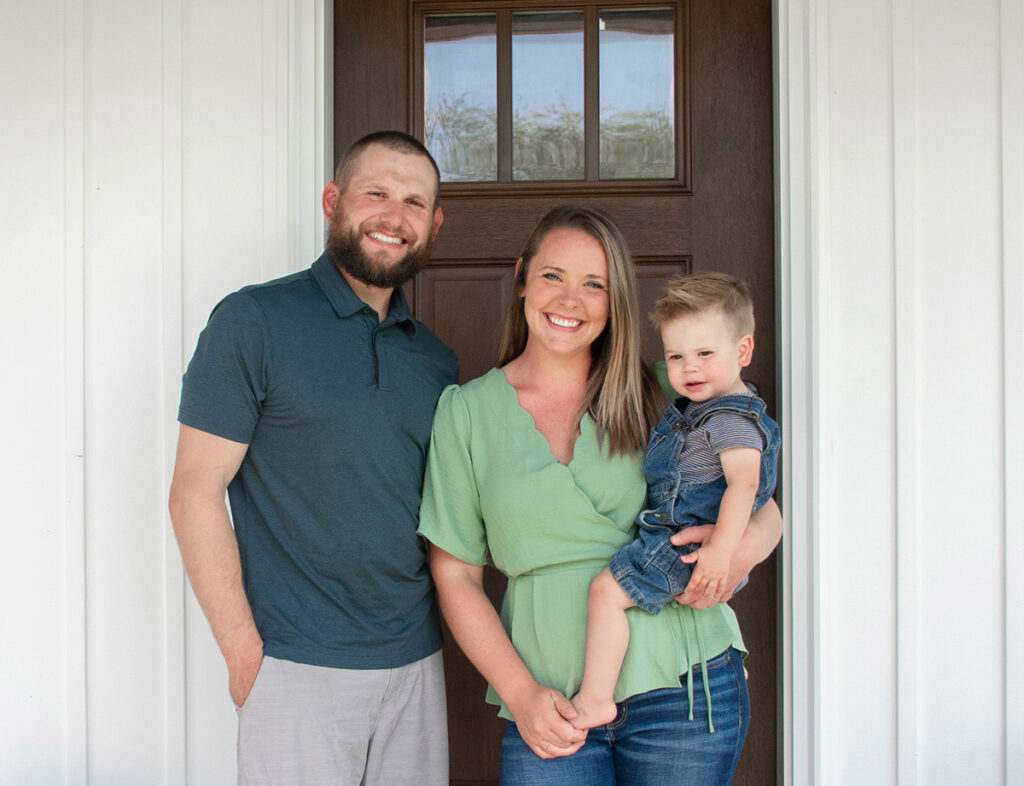

Mark Klett
Senior Crop Insurance Specialist
15 years of Service
What do you enjoy most about your role?
I really enjoy visiting and getting to know my customers. Over time I really get to know their operation, and in many cases the individual crop fields that are on their minds. I enjoy taking the time to help them understand how crop insurance works so we can work together to find the right solution for their unique operation.
What made you interested in pursuing a career in crop insurance?
My entire career has been dedicated to helping farmers grow and their operations thrive. Through my experience working in crop insurance, I’m able to put my knowledge to work to help farmers succeed.
How does your role support GreenStone’s mission of supporting rural communities and agriculture?
My role directly helps farmers protect their investment in their operations. Providing a risk management solution that is unique to each farm or operation helps ensure their success and longevity.
What is one thing people may not know about crop insurance?
One thing I think most people would be surprised to learn is that a large majority of the fields you drive by each day are insured. The way that we determine coverage levels for crops has also become very sophisticated in order to help make an accurate calculation of the level of coverage that would suit your operation best.
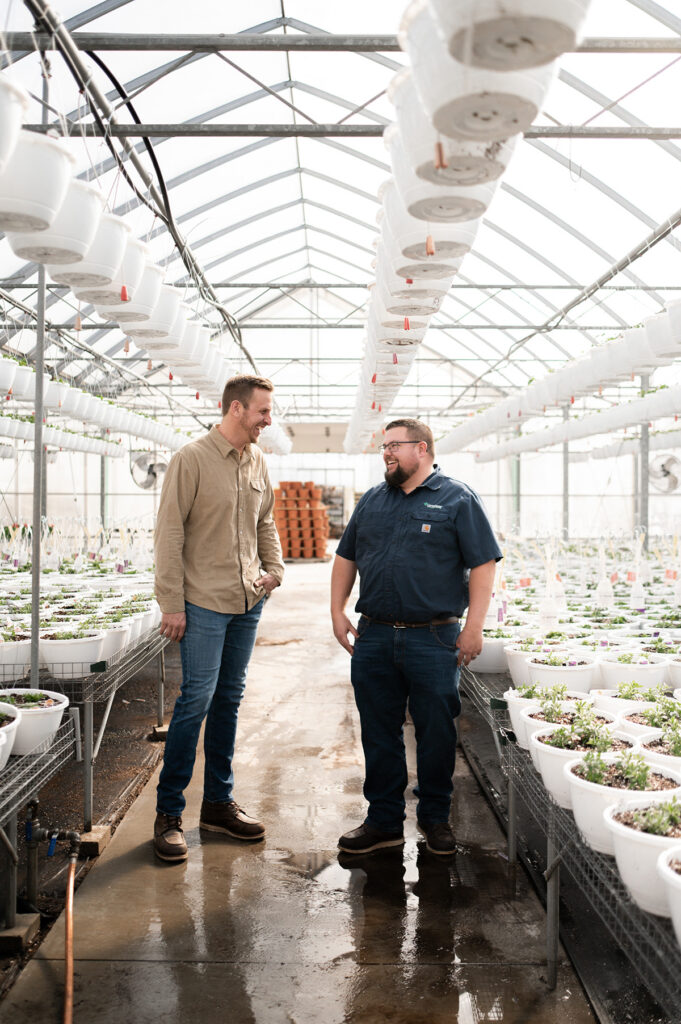
Scott Schmidt
Crop Insurance Manager
12 years of Service
What do you enjoy most about your role?
My favorite part of my role is getting to meet and talk to local farmers. Farmers love to talk, and so do I! I find there’s no shortage of knowledge they have to share.
What made you interested in pursuing a career in crop insurance?
I grew up on a cash crop farm in Kawkawlin, MI. Growing up I spent my spring, summer, and fall playing sports rather than helping my dad on the farm. I have always had a tremendous amount of respect for our agricultural community and this opportunity was a great way for me to get involved. Now I spend a couple weeks every fall helping my dad and brother during harvest time. I like to think I am getting the best of both worlds!
How does your role support GreenStone’s mission of supporting rural communities and agriculture?
By providing farmers individualized risk management solutions, we have the ability to help give them peace of mind throughout the year so they can focus on the task at hand and running a successful operation. I enjoy helping them find a solution, so they don’t have to worry about what would happen if they experienced a crop failure, hailstorm, or damage to their property.
What is one thing people may not know about crop insurance?
Crop insurance was first introduced in the 1930’s! It’s a tried-and-true financial tool to help mitigate the sometimes-unavoidable risk that comes with farming.
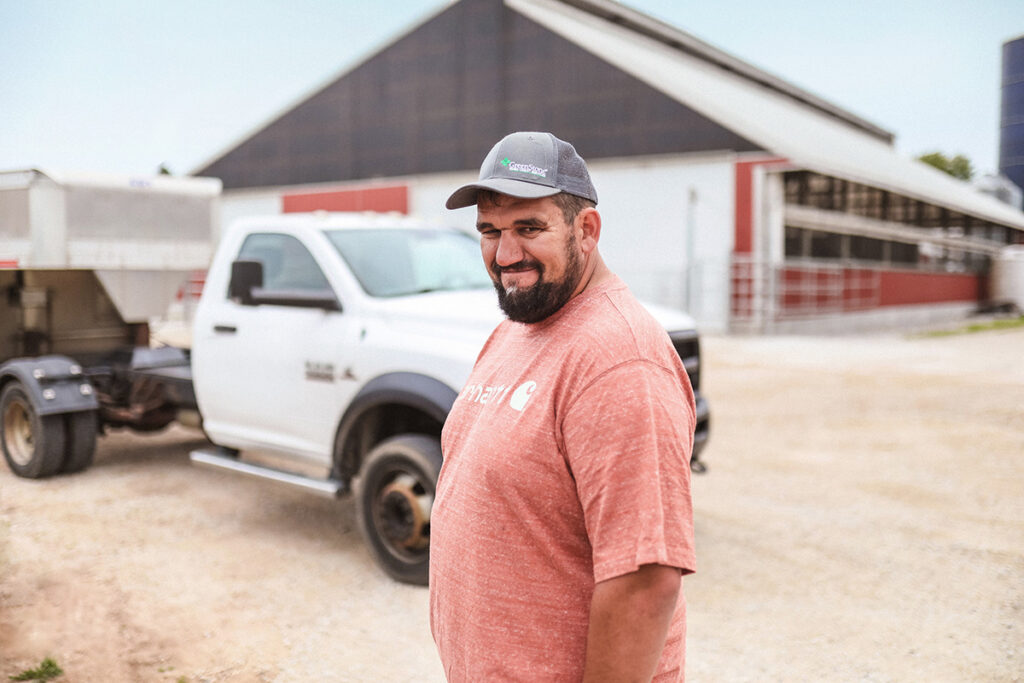
David Moll
Crop Insurance Manager
12 years of Service
What do you enjoy most about your role?
I know, even when the worst weather or market events happen, that because of the decisions a farmer has made on their crop insurance policy I will be able to help them and their family continue farming and reaching their goals. Over the years, it has been very rewarding helping so many farmers lift some of the stress of not knowing what would happen if they didn’t have crop insurance.
What made you interested in pursuing a career in crop insurance?
I was very interested in helping producers with risk management decisions. It’s a very rewarding experience.
How does your role support GreenStone’s mission of supporting rural communities and agriculture?
With GreenStone’s exclusive Optimum crop insurance tool, producers can make data driven decisions for their operation. When bad weather or market swings cause losses, we are able to help farmers financially, so they can continue to do what they do best: produce food to feed the world.
What is one thing people may not know about crop insurance?
Grain marketing plans and crop insurance are best when used together. Talk to your crop insurance specialist about when to use them to add net revenue to your bottom line.
To view the winter 2025 issue of Partners magazine in its entirety, click here.
For over a century, GreenStone has remained dedicated to our mission of helping farmers, agribusinesses, rural homebuyers and land seekers achieve their goals and dreams through tailored lending solutions and financial services.
Our CoreFour Values serve as the guiding principles that shape this mission. Customer First, Deliver Quality, Get Involved, and Do the Right Thing are not just words, they are the foundation upon which we build relationships, make decisions, and conduct ourselves in every aspect of our work. Our brand characteristics align with these CoreFour Values and determine how we represent ourselves visually and communicate with you, our member-owners.
To effectively represent how we continue to grow and support our members, you will notice some changes in how we portray ourselves visually through our communications, social media presence, and more. Don’t worry, we’re still the same GreenStone you’ve come to know and trust, just with an updated and refreshed look!
You will see that neither our name nor logo has changed. Rather, updated colors, graphic elements, and messaging are all a part of the brand refresh that kicked off this year. We’re excited for you to engage with our fresh new look, designed to help assure GreenStone maintains a strong relevant presence within the marketplace. We hope you find that GreenStone’s brand refresh illustrates this, and we look forward to continuing to grow with you in 2025 and beyond!
To view the winter 2025 issue of Partners magazine in its entirety, click here.
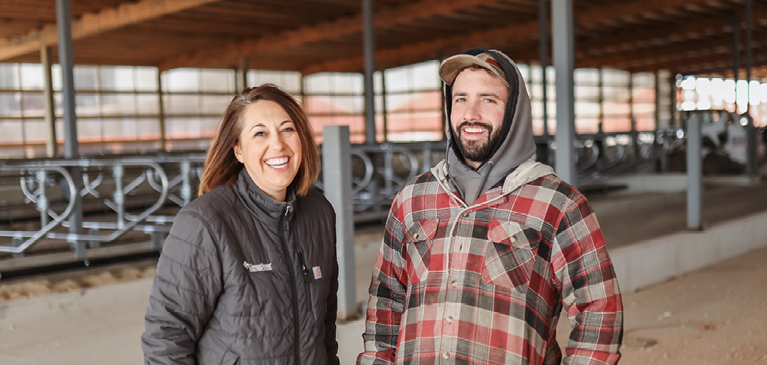
What does it mean to be a fourth-generation farmer in today’s agricultural climate? For Tyler Baudhuin of Baudhuin Farms based in Sturgeon Bay, Wisconsin, it means having the drive, passion, and determination to continue to grow and prosper what those who came before you started.
“I knew this is what I wanted to do since I was eight years old”, says Tyler. “I’ll never forget the day I missed baling hay with my dad because my mom had to take me in for a doctor’s appointment. I was so upset I missed it. I truly have felt like this has been my calling ever since I can remember.”
The Start of a Family Legacy
Baudhuin Farms was originally purchased by Tyler’s great-grandfather in the 1940’s. He bought it on a foreclosure deal from a Sturgeon Bay bank, with the original property spanning only 120 acres. The farm has remained in the family ever since, and alongside his father David, Tyler has helped grow Baudhuin Farms into the successful operation it is today.
“We currently farm over 900 tillable acres, and are milking around 200 cows every day,” says Tyler. The farm also produces cash crops such as winter wheat and beans, and raises a number of angus beef every year to sell.
As the farm has continued to expand, so has their need for improved infrastructure and better cattle management practices. “We were at the point where we needed to make an investment to improve our everyday practices to become more efficient long term and help our cows reach their full potential,” explained Tyler. “We needed a solution that allowed us to have all of our cattle on site in one location together, and something that would also improve their quality of life.”
A Lifelong Relationship
That’s where GreenStone came in. Now no stranger to working with the Farm Credit association, Tyler laughed as he recalled the first time he met with his financial services officer, now VP of Lending Antonia (Toni) Sorenson, before he was truly committed to the long-term farm business.
“I was about 18 years old at the time and walked into the GreenStone branch in Sturgeon Bay wanting to buy a piece of equipment. I remember she laughed and told me to come back when I had a plan,” he chuckled. “I knew I wanted to farm, but I wasn’t necessarily married to the idea yet.”
A few years later, David had just taken over the farm full-time from his father (Tyler’s grandfather). “At this point I was committed to farming, and knew it was truly what I wanted to do,” he said. He went back to GreenStone, this time intent on purchasing land for the farm. “Toni worked with me on the purchase of the land, and we’ve pretty much worked together ever since,” he says.
Their relationship with GreenStone has only continued to grow over time. “Whenever we need anything, we know we can go to Toni and she has our best interest in mind,” explained Tyler.
Since financing that first plot of land with GreenStone, Tyler and David have trusted GreenStone to support their operation through lending needs, tax and accounting services, and crop insurance, which Tyler advocated for.
“I was the one who brought it up to my dad that this could be a worthwhile investment for us even though we had never really used [crop insurance] before. We looked into it after GreenStone recommended we get coverage, and it has definitely paid off for us. There are some years I look back at and think if we wouldn’t have had the crop insurance coverage, I’m not sure what we would have done. We stick with GreenStone because we know we’re always going to be provided with honest answers about what we do and don’t need,” says Tyler.
Building Towards the Future
Most recently, their construction project for the new free-stall barn and milking parlor is an example of the trust Tyler has working with Toni to find what the best solution for their farm is going to be – even if it takes some time.
The project first came to light around four years ago, with a vision to get all cattle in one location along with building a more efficient cattle housing and milking facility. At the start, Tyler recalls bringing plans to Toni to figure out realistically what the best option for their needs would be.
“We would look at plans and then have to start over again in order to find what was going to have the most impact on our everyday operations as well as what our return on investment would be on it,” Tyler explained. “It’s been about four years in the works to get this project perfected and underway, but we know this is the right solution that is going to help us continue to grow many years into the future.”
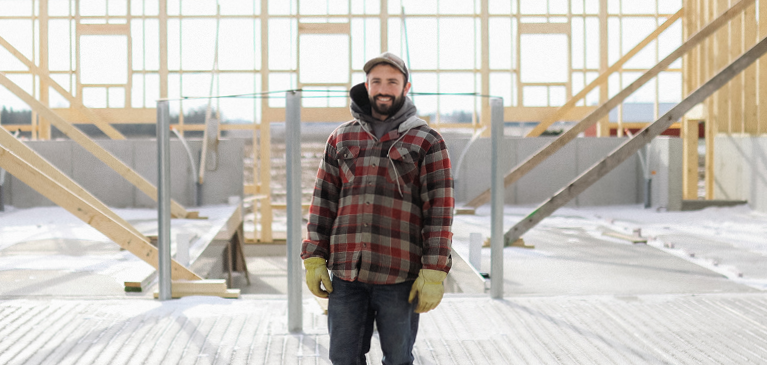
The Baudhuins officially broke ground on their new free-stall 300 cow barn and milking parlor in July of 2024.
“It’s really rewarding to see this project come to life and see Tyler continue to live out his family’s legacy,” commented Toni. “I’m really proud of what he has accomplished and it’s so exciting to see where the future of their farm is headed. I’m looking forward to watching them continue to grow!”
The new barn and milking parlor are expected to be completed in the spring of 2025. “The completed construction project will allow for better footing to promote cow hoof-health, improved air quality, and an overall larger and more comfortable facility for not only the cows but the Baudhuins and their employees as well,” added Toni. “Being able to support young farmers such as Tyler and help them achieve their dreams is what it’s all about for me.”
A Sustainable Operation for Years to Come
Tyler’s story isn’t one that didn’t come without its own set of challenges. “There were plenty of days that we asked ourselves if all of this was worth it. At the end of the day, this isn’t just a job for me, or for anyone else who is a farmer. This is a lifestyle.”
Tyler has a great amount of gratitude for his family as they have worked to help him achieve this dream. Tyler appreciates his dad always doing anything that is needed on the farm, and he continues to learn from his mom, Sue, who has always been instrumental in great calf care. He feels lucky to have parents who are willing to believe and invest in the future of the operation.
Tyler had some words of advice for other young multi-generational farmers when it comes to facing the challenges of the ever-changing agricultural industry. “Listen and learn as much as you can. Don’t be so hard on yourself. Tomorrow is a new day, continue to persevere, and you will be successful.”
Tyler’s story is a testament to the value of what the right partnership can provide – an open line of communication, trust, and a united vision to continue to grow and prosper a family farm so it can stand for generations to come.
To view the winter 2025 issue of Partners magazine in its entirety, click here.
US Economic Outlook:
With the election over, what can we expect? The Republican party managed a trifecta win and will chart the economic course for the country. If campaign promises come to fruition, tariffs against China will surge, and there will be extensions of the Tax Cuts and Jobs Act of 2017, as well as tax cuts on Social Security benefits and overtime income. This could lead to a larger federal deficit, as the income from the new tariffs will lag the projected tax cuts. It will be imperative for additional action to be taken to achieve a stable fiscal policy and limit expansion of the deficit.
How will the Fed respond to the plans laid out by the new administration regarding future rate cuts and where the target fund rate should settle? Economic stimulation from proposed tax cuts will be buffered by the drag from the additional tariffs, allowing the Fed to continue additional rate cuts, while keeping a close eye on unemployment numbers and inflation. After the December rate cut, a couple of additional rate cuts are expected in each of 2025 and 2026.. The Fed is expecting the target fund rate to settle in the 3.25-3.5% range, a substantial reduction from the previous high of 5.2-5.5%.
Economists were nervous in July when the unemployment number jumped to 4.3%. However, in September the unemployment rate dipped back to 4.1%. The softening job market is a continuing trend as both private and government sector employment are growing at a slower pace. Unemployment is projected to continue to rise through the remainder of 2024 and stabilize at 4.4% second quarter of 2025 and the balance of the year.
Monetary and fiscal policy, along with global commodity price volatility due to supply disruptions and increasing civil unrest globally, will be the economic drivers heading into 2025.
Agricultural Economic Outlook – December WASDE and ERS Outlook Report
Corn:
The U.S. is coming off a successful growing season with a near record corn crop. The U.S. Grains Council Corn Harvest Report indicates that the quality of the corn crop is extremely high – excellent news for exports. December’s report estimates corn yield at 183.1 bushels per acre and total production at 15.1 billion bushels, unchanged from the previous report as harvest is essentially complete. There is good news as ethanol production has increased throughout the fall months. The Grain Crushing report shows the highest usage of corn for ethanol production from September to November since 2017. In addition, the Outlook for U.S. Agricultural trade released last month by the USDA raised projected corn exports by 200 million bushels. Higher domestic use and higher exports will lower ending stocks, however the forecasted season average corn price received by producers remains at $4.10 per bushel for 2024/2025.
Soybeans:
This month’s supply and usage report shows the 2024/2025 soybean crop figures unchanged from last month with total production of 4.5 billion bushels. Soybean oil production is projected to increase along with stronger export numbers which will drive ending stocks lower. However, global oilseed production was raised this month by 1.7 million tons to 427.1 million with increases in Argentina, Bolivia, and Canada. This will result in higher global ending stocks and continued negative pressure on US soybean prices. The USDA revised their season average soybean price received for the 2024/2025 crop sixty cents lower, now estimating $10.20 per bushel for soybeans.
Dairy:
Per the USDA milk production report, milk production was up 0.2% from October ’24 compared to October ’23. This increase was primarily driven by a larger U.S. dairy herd, expanding 46,000 head in the past three months, breaking a downward trend in the herd size that started in March ’23. Not coincidentally, the compressing herd trend, coupled with strong demand, has allowed for increased milk prices in the second half of ’24. The average Class III milk price for Q3 jumped to $21.26 compared to $17.97 in Q2 and $15.86 in Q1. The USDA dairy cull cows marketed through US slaughter plants are at the lowest point dating back to September 2007, suggesting dairy producers are keeping their cows longer days in milk or breeding for another lactation. This makes sense due to the smaller overall dairy herd (despite the recent increases) and higher demand for replacements due to the scarce heifer supply.
With production also up as yield increased by 3 lbs. to 1,996 pounds/cow, U.S. butter prices have declined 22% from their peak earlier this summer while CME spot cheddar barrels are down 48% from mid-September and blocks are 32% lower. Despite this pressure weighing on CME milk futures, it is making U.S. supplies more competitive in the export market. Class III milk futures for 2025 average $18.99 and Class IV milk futures average $20.65. These prices are slightly higher than the averages experienced in 2024, a profitable year for dairy production. Relatively strong basis continues as demand for new processing plants coming online persists. These milk prices, coupled with the drop in feed costs, should provide producers with an opportunity for solid margins into 2025.
HPAI continues to impact the industry as 248 cases have been confirmed in California in the last 30 days leading up to the end of November and 13 new cases in Utah. Since March 2024, 650 cases have been confirmed across fifteen states. Production in California has dropped as output dropped 3.8% year-over-year and total cows declined by 4,000 head in October. The USDA recently announced plans for mandatory animal testing for H5N1.
Pork:
Fourth quarter rallies in pork prices and improved producer margins are always welcomed but are also rare. The first 2 months of Q4 2024 have been unusually good due to a counter-seasonal upswing in the pork cutout, cash prices, and lean hog futures markets, coupled with lower corn and soybean meal prices. Entering December, the outlook for margins over feed for producers for the next four quarters is stronger than for most periods over the past decade. Producers are increasing hedging activities and purchases of LRP policies to lock in some of these surprising margin opportunities. The Pork Cutout is up 7% vs. a year ago, led by increased ham and belly prices. Retail prices for pork are at the highest levels since Q4 2023 at $4.92/pound at the end of October.
Export demand remains solid with volumes up 5% vs. a year ago through September and export values up 7%, with exports to Mexico leading the way. The September USDA Quarterly Hogs and Pigs Report showed an increase of 4.3% in heavy weight hogs. However, hog numbers marketed since that report have not matched up. Pork inventories are at a 20-year low for the end of October and down significantly from a year ago. The previously strong demand for bellies is waning, which will negatively impact Cutout price.
Disease pressure may further limit supplies as fewer than expected head have been marketed in recent weeks and carcass weights have not increased as much as they often do seasonally. Live hog weights have been below 2023 weights and the 5-year average over the past several weeks. While a stronger finish in 2024 will make for a much better year for producers and provide cautious optimism for 2025, it has still been a challenging year and average returns per hog sold will vary widely based upon herd health, production efficiency, packer contract type, and the timing and degree of price risk protection utilized.
To view the winter 2025 issue of Partners magazine in its entirety, click here.
It’s Patronage time for GreenStone’s cooperative members, and the members elected to the Board of Directors are pleased to approve another $120 million back. For 20 years GreenStone has returned profits back to members through the Patronage program, and this year’s return will bring the total to more than $1 billion back in member’s hands. This billion means more than the dollars returned, and your board members took the opportunity to share their perspective of what that $1.08 billion means to them!
Gene College,
Appointed Director
A billion dollars – if every employee conversation about how to serve our customers more effectively was worth $1,000, that makes one million thoughtful dialogues!
Michael Feight,
Lenawee County, MI
A billion dollars of Patronage. A true sign of how a cooperative was designed to work. The staff at GreenStone is doing their part to help you realize your goals that move from generation to generation.
Terri Hawbaker,
Clinton County, MI
GreenStone’s ability to distribute a record setting billion plus dollars in Patronage simply validates their efficiency, and the program’s procedure by keeping the cooperative healthy first then maintaining competitive rates to its members. The Patronage program ensures GreenStone will be there for many generations to come!
Trent Hilding,
Montcalm County, MI
GreenStone creates a lot of opportunities in providing the money it loans and returns to its customers. It is hard to grasp a billion dollars has been returned to borrower members, but I am grateful for the opportunity to participate.
Bruce Lewis,
Hillsdale County, MI
A billion dollars of Patronage returned to our members in twenty years. What a wonderful event. What a great organization we have that not only is there daily to help with our needs but also there to give back year after year.
Ron Lucas,
Alpena County, MI
As you meet your fellow shareholders on Patronage Day, they are all appreciative to get a Patronage check back. Most can’t believe we’ve given back that much!
Peter Maxwell,
Midland County, MI
I reflect on one billion dollars and think of a popular fast-food chain that used to say millions served, then posted over one billion served and eventually used the line, billions and billions served. I look forward to our future when we can say billions and billions returned. I certainly know the returns we send directly back to our shareholders are impactful and am personally grateful!
Dave McConnachie,
Sanilac County, MI
Owners of the cooperative know what a billion dollars in Patronage returns means to their farms. As a director, I know it’s a direct response of the health of GreenStone. And I’m confident the next twenty years will be even better.
Dennis Muchmore,
Appointed Director
Over the twenty years I’ve been fortunate enough to be included on the GreenStone Board, I‘ve seen first-hand what a billion dollars of Patronage can mean to our members and our agricultural community at large. This exceptional co-op has created a billion dollars of reinvestment, a billion dollars of leadership and with apologies to the original lyricist for a slight alteration in an old song, “Greenstone has walked a billion miles for your smiles.”
Ed Reed,
Cass County, MI
The last 20 years have been successful in a billion ways. I can think of a billion reasons to be part of the GreenStone family. What has a billion dollars meant to the 28,000 GreenStone cooperative members? About 100 basis points – 1% – returned to them as cash Patronage.
Go GreenStone!
Scott Roggenbuck,
Huron County, MI
A billion is a large number. A billion seconds is 32 years.
It took around 20 years to reach the milestone of a billion dollars of Patronage paid out to our members. However, at the current pace we could reach the second billion before half that time expires. Patronage, just one more thing that sets GreenStone apart from the competition.
Troy Sellen,
Oconto County, WI
For 20 years GreenStone has given us cash to put back into our homes, communities and businesses. Patronage is more than a bonus check. It’s a billion different examples that prove the cooperative structure of Farm Credit lending works.
Marilyn Thelen,
Clinton County, MI
The billion dollars returned to customers over 20 years is an indication that GreenStone is doing well and when they do well, they share this back with the members. This is a “thank you” to the members. It takes good members working with GreenStone to be successful. Farmers big and small will be very appreciative of the check this March.
Mike Timmer,
Allegan County, MI
While GreenStone appreciates the relationships it has with our shareholders, nothing says, “thank you, we have been successful together,” like Patronage. One billion over 20 years… Wow!
Dale Wagner,
Manitowoc County, WI
Returning a billion dollars of Patronage to our members is an impressive milestone. However, to me what’s even more important is the effort put in by every employee and member borrower to do their job well, to operate their business efficiently and to work together as a team so we all can be successful. This is why, as a GreenStone director, I would like to offer a billion Thank Yous.
Jed Welder,
Montcalm County, MI
I always appreciate the timing of Patronage. It’s well after the harvest but before our large expenditures during planting season. It’s also a time to reflect on our profession before we get too busy to consider anything other than the placement of the seeds going into the ground!
To view the winter 2025 issue of Partners magazine in its entirety, click here.
For Tanner and Mariah Sharp, 2024 was a life-changing year. In November, the couple officially adopted their two daughters, Ella and LeeAnn, completing their dream of becoming a family of four.
With this milestone celebrated, they were eager to move out of town and begin a new chapter in the countryside. They envisioned their daughters growing up on a property with plenty of room to run around and play outside.
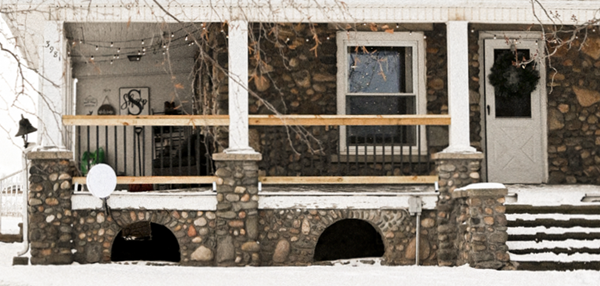
On the outskirts of the small town of Rosebush, Michigan, the Sharps fell in love with a five-acre hobby farm, complete with a mid-1920s stone farmhouse, a pole barn and of course, plenty of space for the girls to explore and play.
The property was perfect, but just as they approached the finish line in the home-buying process, their previous lender unexpectedly backed out of the deal. The reason? A windmill lease tied to the property. The news came just days before closing, leaving the Sharps discouraged and scrambling to find a solution.
“We found out two or three days before closing that our lender wasn’t going to finish the loan,” Tanner Sharp said. “It was pretty disheartening.”
Turning to GreenStone for Help
With limited options and a fast-approaching deadline, the Sharps turned to GreenStone. Both Tanner Sharp’s parents and his brother and sister-in-law were GreenStone customers and had positive experiences working with the team. Encouraged by their recommendations, he reached out to Financial Services Officer, Jordan Hendrian.
“I got Jordan’s contact information from my sister-in-law, and I explained the situation to him,” Tanner Sharp recalled. “Jordan said, ‘Let’s talk over the details and see how fast we can turn this around.’ From that point, everything moved quickly.”
A Race Against Time
GreenStone’s team immediately got to work to make sure the Sharps got into their dream home. Typically, closing a home loan takes about 30-35 days, but the Sharps didn’t have that kind of time. They were set to sell their current home in a few days, and without a solution, they faced the very real possibility of being left without a place to live.
“Everyone—from the appraisal team to the loan processors—worked on all cylinders to make this happen,” Hendrian explained. “We knew this was a priority, not just to get the deal done, but to ensure the Sharps had a place to call home for their family.”
In just 17 days, GreenStone closed on the loan. To make it happen, the team coordinated with the title company to transfer the necessary documents into GreenStone’s name and successfully transferred an existing appraisal to save the Sharps time and money.
“Jordan was on the ball,” Tanner recalled. “He told us exactly what he needed, and we got it to him right away. GreenStone’s communication was by far superior to anything we’d experienced before. They kept us informed every step of the way.”
The team even worked with the seller’s realtor to allow the Sharps to rent the property while the loan was being finalized, ensuring they could move in right after selling their previous home.
Starting a New Chapter
Now settled into their forever home, the Sharps are loving life in the countryside. They’re enjoying the charm of their historic stone farmhouse and have plans to update the home while preserving its vintage woodwork and character. More importantly, they’re cherishing this time as a family, creating memories with Ella and LeeAnn in a space they can call their own.
“GreenStone turned a stressful situation into a seamless experience,” Tanner remarked. “They were the reason we were able to close so quickly and start this new life on the farm. We couldn’t have asked for a better partner.”
For the Sharps, the experience reinforced the importance of working with a lender they could trust.
“Jordan went the extra mile to make sure everything went smoothly,” Tanner added. “He even ensured the appraisal didn’t cost us anything extra. GreenStone proved they were willing to do what it takes to make things work.”

A Team Effort at GreenStone
For Jordan, the Sharps’ story is a testament to what’s possible when everyone works together.
“To pull off a 17-day closing takes dedication on both sides,” he said. “Tanner and Mariah were incredibly responsive, getting everything back to us within minutes. Their realtor was fantastic, and everyone at GreenStone worked tirelessly to make this happen.”
Jordan also noted how the collaboration highlighted GreenStone’s unique ability to navigate unexpected challenges. “It was rewarding to hear the Sharp’s realtor say, ‘I know we can go through GreenStone without any issues.’ That trust in us made a big difference.”
GreenStone’s Commitment to Making Dreams Happen
For GreenStone, the Sharps’ story is more than just a story about a successful loan—it’s a reflection of their mission to support rural families and their dreams.
“This was a win for everyone involved,” Jordan said. “It showed what we can accomplish when we put our heads together and focus on helping families like the Sharps achieve their goals. It’s moments like this that remind us why we do what we do.”
Thanks to GreenStone, the Sharps can look forward to many happy years in the country—creating memories, raising their daughters and living out their country dreams.
To view the winter 2025 issue of Partners magazine in its entirety, click here.
As the ice starts to form on the local lakes and frosty mornings become the norm, I try to take some time during the winter months to reflect on the previous year. Part of that process involves looking back on the past hunting season. Every year I make an effort to take note of the highs and lows along with what I did well and what I could have done better. As I reflect on the 2024 hunting season, I can’t help but smile as I remember the year that was.
As a hunter myself and a producer for Michigan Out of Doors TV, life during deer season is pretty chaotic. Regardless of how present I try to be for every day in the field, the days just seem to slip away faster as the years go by. That was especially the case over the past year. In addition to the normal fast paced life of working and parenting, my wife and I were also expecting our third child in December. If that wasn’t enough, we broke ground on our new house a couple of months before the season started. As the hunting season approached, I remember worrying about how much time I would get in the field throughout the fall with everything we had going on in this season of life. As I look back, it’s easy to see why I was concerned.
The archery season actually started out pretty slow. My time was somewhat limited over the first few weeks of October, but the weather was warm and windy, which had the deer movement at a minimum. So, I wasn’t too concerned about missing time. As the season progressed, I started getting pretty consistent trail camera pictures of the oldest known buck on our farm. A 5 1/2 year-old eight point that I knew well from the previous two seasons. I hunted him hard throughout October and had multiple encounters with him. I actually had him within range on three different occasions but never could get an ethical shot.
As November rolled in, he disappeared for about a week only to return again on November 6th. Early that morning, one well placed arrow helped me put a tag on my oldest buck to date. At that point, the season was already a success. Taking any mature buck with a bow and arrow is an accomplishment and I was already completely content with my season. Although this buck didn’t score quite as high as some of the other deer I have taken, the back-and-forth during bow season along with the history I had with this buck made for one of the most enjoyable hunting seasons I have ever had. However, around the time I was able to close the chapter on that buck, a bigger buck moved in. A buck that I knew would be my biggest to date. I took a couple days off to get caught up on things around home. However, that was short-lived. With my wife’s blessing, I refocused on the new buck and the chase started all over again.
Over the final week of bow season I hunted every day, having multiple encounters with the new buck. Unlike the first buck, I couldn’t seem to figure out how to get within bow range of this deer, or even close to it. Throughout that week, I hunted six different locations, including three new tree stands that I hung specifically for him. He was living in a heavily used bedding area and getting within range of him was difficult. With the high deer densities of southern Michigan, he was constantly surrounded by a harem of does.
On the night of the 13th, the last night I was able to bow hunt, I decided to take a calculated risk and hunt a new spot in his home area. Long story short, I ended up sitting on a platform of an old gun blind about 8 feet off of the ground. It wasn’t pretty, but it was effective. Around 4:30 in the afternoon the buck presented me with a 30 yard shot and I was able to make the most of it. He was indeed my biggest to date and capped off an incredible year in the timber.
Just when I thought my season couldn’t get any better, it did. On the opening day of gun season, November 15th here in Michigan, I was able to take my 88-year-old grandpa out for the morning hunt. He tagged a beautiful eight point to put a bow on what really was a year for the books. As an extra bonus, I was able to capture the entire hunt on camera which made for not only a memorable segment on the show, but a memory I can relive over and over again.
When my wife and I purchased this piece of property a few years back, it was hard not to think about what was to come. A constant battle of being present and also planning for the future. Here we are two years later expanding our family, building a new home, and creating memories we will never forget. This year was not only a dream season from a hunting standpoint, but from a life standpoint. I can’t imagine a time where we will ever be busier than we are now, but it only takes a little time to reflect on what we have to realize that we’re already living the life we always dreamed of.
To view the winter 2025 issue of Partners magazine in its entirety, click here.
Family Resolutions
The holidays are a wonderful relaxing time for the whole family to spend time together, celebrate the past year, and look forward to the future. Often when looking forward to the new year, we set individual New Year resolutions. However, these goals tend to be hard to follow for the entire year. After about a month many often lose track of these resolutions and cannot keep them up to the same standard we intended to.
An issue with these resolutions is that they are independent. Keeping track of a busy schedule and new goals by yourself can be hard to navigate. Accountability partners have been shown to provide extra motivation and support to accomplish your goals.
Taking all of this into account, what if we did family resolutions? These could focus on quality time, kindness, acts of service, or anything specific your family sees as a need for the new year. Taking the time to sit down together and hear everyone’s thoughts on what should be included and how you can accomplish these goals together.
1. What goals or resolutions should you set? A baseline could be one for each member of the family!
2. How will you keep each other accountable? Will you do weekly check ins?
3. What is the timeline for each of the goals? Where do you want to be at this time next year?
Guiding conversation like this could help shape your expectations for these new goals. Taking time together to outline all milestones and expectations up front will provide a clear path to accomplishing each goal you set. Each milestone should serve as a step of progress for all resolutions. At each milestone you can find a different way to celebrate all progress. Something that would interest everyone and encourage the family to finish the goal – perhaps a homemade trophy, candy, or a game night!
It’ll also be important to plan what the whole family wants to do in celebration of seeing the resolutions all the way through. Something special to congratulate yourselves on all of the hard work it takes to stay consistent as a unit throughout the year! Consider a picnic at the park, dinner at your favorite restaurant, or homemade sundaes to celebrate your success. Collaborating as a family can help everyone to feel included, on track, and connected to accomplish these goals together.
We hope your family is able to set and accomplish these resolutions for 2025, teamwork makes your dreams work!
To view the winter 2025 issue of Partners magazine in its entirety, click here.
As winter continues to gear up, snowmobiling across the icy trails of Michigan and Wisconsin is increasingly popular.
Winter is filled with snow, chilly temperatures, and fun memories outside. Snowmobile riding is a big piece of the winter fun for many, and here are a few tips to make sure all the fun stays safe!
Riding Tips
Whether you’re on the trail, road, or hilly terrain, it’s important to understand how to maintain control of your snowmobile throughout your trip. Understanding your path of travel is crucial as it can be hard to steer or stop a sled that is sliding. Keeping a clear path and planning your route will help you ensure safety and keep you heading in the right direction! Shifting your weight from one side to another can help you maintain balance, especially during turns. Slowing down and shifting your weight to the inside of the turn will help you accelerate after and maintain control.
Wearing the Right Gear
All it takes is one wet layer to put a damper on the adventure. Making sure you have the proper underlayers, like thick socks and long sleeves can go a long way. Merino wool is known to be a good material for underlayers because the wool is capable of wicking away moisture from the body, unlike cotton which causes moisture to stick around. Waterproof gear is key, having the proper coat and boots to keep yourself insulated and dry on top of these underlayers is important. No matter what gear you have or don’t have, the most important piece of a snowmobile is the helmet. Ensuring you have a full-face snowmobile helmet will be the key to safety. A snowmobile helmet has a dual pane system to protect faces from frostbite and prevent fog. This will keep you safe and comfortable for your ride!
Adapt to Changing Conditions
Depending on the weather, the snow can easily change from hard-packed to deep powder throughout the day. Prepare by monitoring the snow conditions to adjust your route to fit. Driving in deep powder can be challenging when going uphill consistently, preparing for that challenge or adjusting to a more flat route during these conditions may be ideal. Hard-packed snow allows you to easily gain speed and momentum, but it is also much harder to come to a stop. Maintaining control on hard-packed snow may be considerably more difficult, so adjusting your route to take less turns may be beneficial.
Using tips like these can help keep your winter memories fun and exciting each time you head out to enjoy the season!
To view the winter 2025 issue of Partners magazine in its entirety, click here.
Indulge in this classic treat with a Sharp family twist for the most delicious, ooey-gooey chocolate chip cookies you’ve ever had! Pair with a chilled glass of milk for the perfect cold winter night’s snack.
Total Time: 25 minutes
Serves: 9-12
Ingredients
- 8 Tbsp salted butter
- ½ cup white sugar
- ¼ cup light brown sugar
- 1 tsp vanilla
- 1 egg
- 1 ½ cups flour
- ½ tsp baking soda
- ¼ tsp salt
- ¾ cup chocolate chips
Directions
1. Pre-Heat oven to 350°
2. Melt butter
3. Beat butter with both sugars
4. Add vanilla and egg; beat on low for 10-15 seconds (not too long, beating the egg too long will make a stiff cookie)
5. Add flour, baking soda, salt and chocolate chips
6. Mix until crumbles form
7. Use hands to form dough into ball
8. Roll into 9- 12 small balls
9. Bake for 9-11 mins (any longer will make them tough) Enjoy your Sharp family cookies!
To view the winter 2025 issue of Partners magazine in its entirety, click here.