
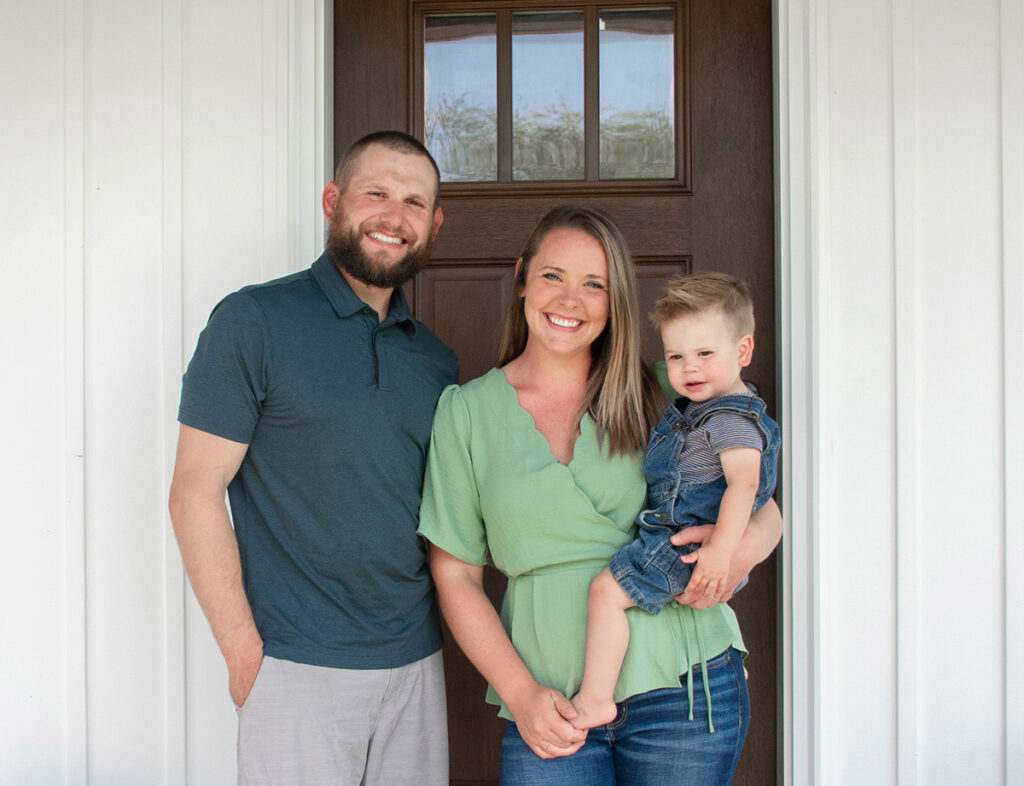

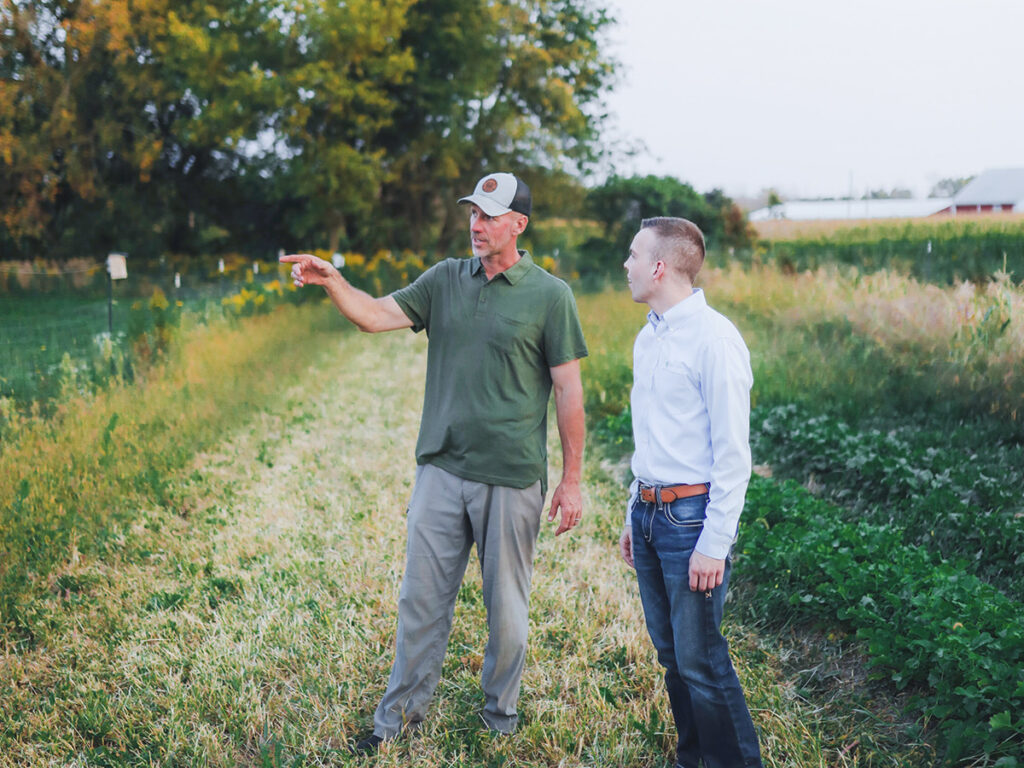
Kelly Ratajczak turns her hobby into a passion with her growing farm stand, The Koop.
In the heart of Munger, Mich. sits at an organic farm stand called The Koop, run by Kelly Ratajczak. Before branching out on her own, Kelly learned everything she knows from growing up alongside her mom, dad, 3 sisters, and 3 brothers. Together, they raise corn, soybeans, dry beans, wheat, and rye – all organically grown. Instead of relying on pesticides or herbicides, the family manages weeds through careful mechanical cultivation, a practice that reflects their commitment to stewarding the land.
Though Kelly grew up on a farm, she started her own operation in 2020 after purchasing land through GreenStone. The following year, she expanded again with another land purchase, continuing to blaze her own path while still working closely with her family’s operation.
The Koop began as a hobby but soon became Kelly’s passion project. Her goal is to focus her operation on direct-to-consumer sales. Currently, she sells farm-fresh eggs, beef shares, and beef tallow lotions and products. New this year, she’ll soon be offering sweet corn and pumpkins.
Kelly’s passion for providing organically raised, transparently grown food to her community is unmistakable. “I love talking to customers face-to-face and explaining how we grow things. That connection is important to me,” she said.
Kelly’s farm stand is located at her family’s main farm location. This summer she plans to expand into local farmers’ markets around Munger and Bay City, Mich.
Kelly first learned about GreenStone’s Cultivate Growth Grant at the 2025 Cultivate Growth Conference – an event she attended after her financial services officer encouraged her to go. The grant allowed her to enroll in the Joel Salatin course, a comprehensive program covering seven main topics, including: pastured broilers, laying hens, pigs, rabbits, beef, cattle grazing management, and direct-to-consumer marketing.
The course taught her everything she needed to know to make fruitful changes to her farm to be more successful and strengthened her commitment to raising food that’s good for the land and the consumer.
“The biggest changes were learning how to raise pastured broilers, expanding pastured laying hens, and improving cattle grazing… these will help me add more products to my stand,” Kelly said.
This spring, she constructed her first brooder box and began working on a chicken tractor. She plans to raise her first batch of pastured broilers later this summer while preparing to expand her laying flock and improve her cattle grazing practices using what she learned from the course.
“My biggest passion is taking care of the environment and land in the safest, best way. That’s why we farm organically. I believe pastured livestock is better for the land and for the consumer,” said Kelly.
During planting season, Kelly’s days start early and end late. A typical morning includes weeding sweet corn at sunrise, repairing equipment, planting dry beans, cultivating row crops, gathering and washing eggs, and feeding her chickens and cattle. “The days are long from April through harvest, but I love being outside,” she said. Despite the workload, Kelly’s energized by the direction her operation is heading.
Kelly encourages young, beginning, and small farmers to take advantage of the Cultivate Growth grant. “It’s a great opportunity to learn and grow your business. I’m very grateful GreenStone offers it.”
With new skills, new products, and a growing customer base, Kelly is excited to see where The Koop goes next. What started as a hobby is becoming much more – a business rooted in stewardship, community, and a passion for raising food the right way.
I hope you and your families are having a great summer. It is very hard to find more beautiful areas in our great country this time of year than northeast Wisconsin and Michigan. When you have lived in this area your whole life, you tend to take these springs, summers, and falls for granted.
I was reminded how beautiful our states are a couple of years ago when the CEO of AgHeritage Farm Credit Services, headquartered in Little Rock, Ark., visited a number of spots in Michigan during July. He still gushes over how beautiful Michigan is, whether it’s our farms, small towns, or plentiful lakes.
Speaking of Arkansas, our Board of Directors and executive team are going to have a joint board meeting in August with the board and executive team of Farm Credit of Western Arkansas. GreenStone will host our guests in southwest Michigan. This will be the fourth year in a row where we have had a joint board meeting with some of our Farm Credit partners.
I fully expect we will have outstanding numbers to report to our board in August. Your association is off to a very strong start in 2026 from a financial standpoint. Loan growth, credit quality, profitability, operating efficiency, and capital all remain solid. GreenStone continues to be one of the top performing Farm Credit associations in the country when considering these financial categories and our Patronage payments. You, our owners and members, get to share in the value of doing business with a financial cooperative. Our financial strength also ensures GreenStone will continue to meet its mission, “To promote the success of our customers and the rural community by being the best at providing credit and financial services.”
Farm Credit has been assisting farmers and rural communities for 110 years. We have seen a lot of cycles in all of our various commodities, and we continue to be here to help our members in all phases of the cycles you find yourselves in.
We also support our young farmers and youth in agriculture whenever possible. GreenStone continues to support FFA and 4-H from a financial and leadership standpoint. Also, later in the magazine you will be introduced to our scholarship recipients for students studying agriculture in college. In addition, you will meet GreenStone’s summer interns. They are a very impressive group of future leaders.
The results of our customer satisfaction survey are expected later in July. For those of you that received the survey, thank you for taking the time to complete it.
Your association’s annual election process wrapped up in June, and I would like to welcome our newest GreenStone Directors: Lori Drozd and Joel Layman. They were both elected from Voting Region 4 (southwest Michigan). Lori lives in Allegan County and Joel resides in Berrien County. Welcome to GreenStone’s Board of Directors!
Re-elected from Voting Region 5 (central and west Michigan) were Jed Welder and Trent Hilding. Congratulations to our returning Directors!
I also wanted to recognize the service and contributions of one of our long-serving directors, Ed Reed from Cass County. Ed served on the GreenStone Board of Directors from June 2008 through June 2026. When Ed was first elected to the board, GreenStone’s total assets were approximately $4.4 billion. Today, our total assets exceed $16.1 billion. Total Patronage paid has increased from $13.5 million in 2008 to $125 million this year. Ed also served as our Board Chair from 2016 through 2025. I can’t thank Ed enough for the leadership and guidance he has provided GreenStone and me personally. Thank you, Ed for all of your contributions to our organization!
Speaking of our directors, Cheryl Motz, our senior executive assistant to the CEO, has announced her retirement. For the past 11 years, Cheryl has supported Dave Armstrong (former CEO), me, and our executive leadership team. She has also played a key role in supporting our Board of Directors and GreenStone’s corporate governance processes, including the elections of Directors and nominating committees. Cheryl will retire effective October 1, 2026, following a 44-year career with the Farm Credit System. She started her career with the Federal Land Bank Association of St. Johns when she was 17 years old! Her work has helped our members and supported many teams across our organization, beginning with branch support and including managing and leading teams within GreenStone. Cheryl’s attention to detail, strong follow-through, and deep knowledge of GreenStone will certainly be missed. A big thank you to Cheryl for the support and assistance she has provided me over my four years as CEO.
Again, I hope you have a great summer and very successful growing season and home construction season! Please feel free to reach out to me any time if I can ever be of assistance.
As always, thank you for feeding my family, our country and the world, and thank you for your membership!
To view the article in the online 2026 Summer Partners Magazine, click here.
A cooperative is special because it is owned and guided by its members, meaning the people who use and rely on the association have a direct voice in its direction, leadership, and long-term success.
In GreenStone’s case, members help shape the organization through board service, committee involvement, and shared responsibility for keeping the cooperative financially strong, responsive, and focused on agriculture and rural communities. The cooperative model creates a strong connection between leadership and the people it serves, allowing decisions to be grounded in real member needs, practical experience, and a commitment to long-term value.
In order to maintain this, the cooperative needs engaged members. Here, three Board Directors share their perspective on why being involved is important, how it benefits the cooperative, and what their personal experience has been serving as a Board member.
Bruce Lewis
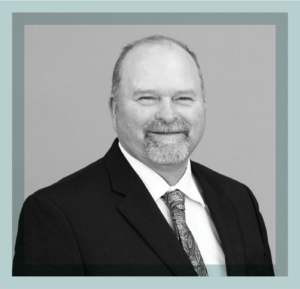
Being involved in GreenStone is very important to me. By being a part of a cooperative, we all have a responsibility to help ensure the future viability of our organization.
As a nominating committee member, you have the ability to interview the candidates for Board positions, which also gives you insight into the Board function. As a Board member, you help set the direction of the business with policies, gain many additional insights within our business, and work with many of our great teammates running the day-to-day operations.
We have many great individuals serving as Board members with a diverse background of knowledge from different segments of agriculture all working together for the common good of GreenStone. The meeting agendas are full, concise, and respectful of time management.
My involvement in GreenStone has been a great experience in my life advancing my knowledge and working with many great people. I would encourage others to consider involvement in GreenStone to help guide our organization into the future.
Troy Sellen

Serving on the GreenStone Board of Directors is a fantastic opportunity to help shape the future of agriculture and rural communities. Directors help keep GreenStone financially strong, member-focused, and prepared to meet the changing needs of farmers, agribusinesses, and rural homeowners. As our coop currently manages over $16 billion in loans, this is no small responsibility!
For those dedicated to agriculture and committed to serving fellow members, board service is a meaningful way to give back to a cooperative whose purpose is to provide the financial support members need to achieve their goals. Board service is also a valuable leadership and personal development opportunity. It has given me insight into agricultural finance, governance, risk management, and strategic planning while working with a diverse group of fellow directors. Through educational opportunities and engagement with GreenStone’s executive team, we have the opportunity to deepen our understanding of the challenges and opportunities facing agriculture today while also drawing upon our own real-world experiences to provide input. This knowledge benefits GreenStone and can strengthen your own businesses and leadership skills at the same time.
Most importantly, serving on the board gives you and your fellow members a direct voice in the direction of the cooperative you own. GreenStone’s director-owners help ensure the cooperative remains responsive to its members and focused on long-term value. By bringing your experience, perspective, and commitment to the boardroom, you can help preserve a strong Farm Credit System for future generations of farmers and rural residents. If you want to make an impact beyond your own operation, board service is a rewarding and mutually beneficial way to be involved in your community.
Dale Wagner
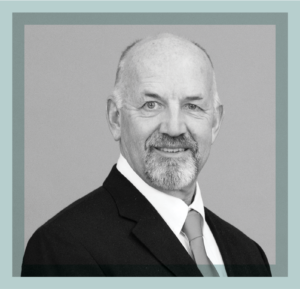
Serving as a director is both a responsibility and a privilege. It’s a chance to represent fellow members while helping guide where the organization is headed. To me, it really comes down to listening, sharing perspectives, and making sure decisions support the long-term success of both the membership and GreenStone.
I remember early on sitting in a boardroom having a discussion about strategic planning. Listening to the different viewpoints around the table—and realizing how those conversations turn into real decisions for our members—really stuck with me. It made me appreciate how important it is for every voice to be heard and thoughtfully considered.
That’s really why serving as a director matters. A strong, engaged board helps keep the organization grounded and accountable, while making sure member needs stay front and center. Since directors come from the membership, they bring real-life experience and a practical understanding of the challenges and opportunities members face every day.
That member connection is what makes our board work so well. There’s a level of trust and authenticity that comes from knowing the people making decisions truly understand the business and the people behind it.
Getting involved—whether on the board or the nominating committee—is a great way to give back while also learning and growing. For me, it started with a simple desire to get more involved and contribute where I could. I’d encourage others to consider doing the same. Your perspective matters, and stepping forward is a great way to make a meaningful impact.
To view the article in the online 2026 Summer Partners Magazine, click here.
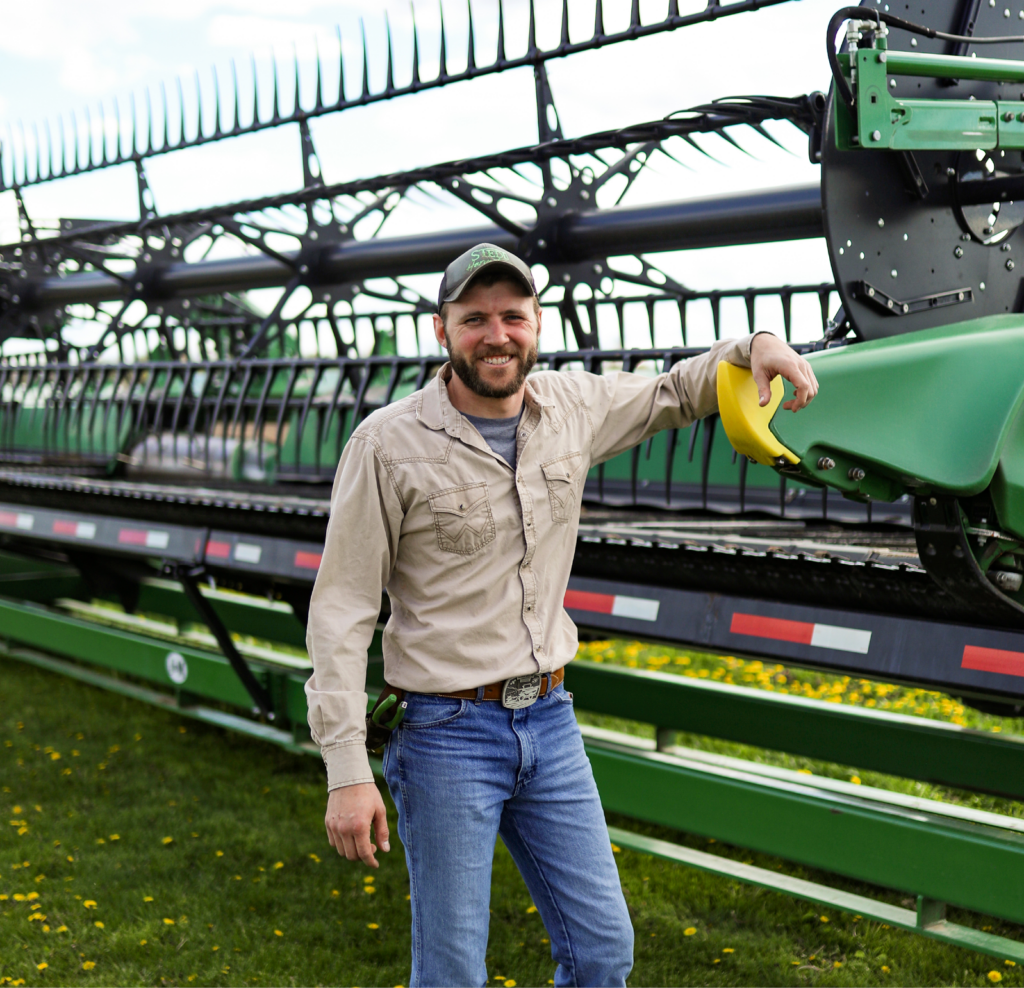
Matt Stedl grew up immersed in farm life. From an early age, he knew he would always have a lifelong connection to agriculture.
“I got my start by being strapped into the combine during fall harvest as a baby,” Matt laughed. His earliest memories of farming involve learning how to drive the tractor and being around the farm equipment as much as possible on his family’s cash crop farm in Seymour, Wisc.
Fueled by a Passion to Learn
Driven by his natural curiosity of learning how things work, he decided to pursue a career in engineering after high school. “My family was always supportive of whatever I wanted to do, even if it meant stepping away from the farm for a while. My dad encouraged me to go out and get experience to figure out what I really wanted to do.”
Matt attended the University of Wisconsin-Platteville where he studied agriculture business and engineering. It was only his second week on campus when he learned about a hands-on internship opportunity working with farm equipment at John Deere. “I think I realized then, there was actually an opportunity to pursue a career in what I enjoyed so much about working on the farm. I always enjoyed being around the equipment on my family’s farm, so it seemed like a natural fit for me.”
He didn’t get the internship right away but Matt remained persistent. The summer after his freshman year in college he joined a wheat harvest run that went through Oklahoma, Kansas, and Texas. Upon returning to school in the fall, he secured the internship with John Deere.
“I think after I had a little more experience, I was able to come back and show what I had learned by visiting other parts of the country and getting to know more about their farming practices,” he explained. The experience also introduced him to the world of custom harvest work, which would prove valuable as he grew in his career in agriculture.
Learning Agriculture Around the World
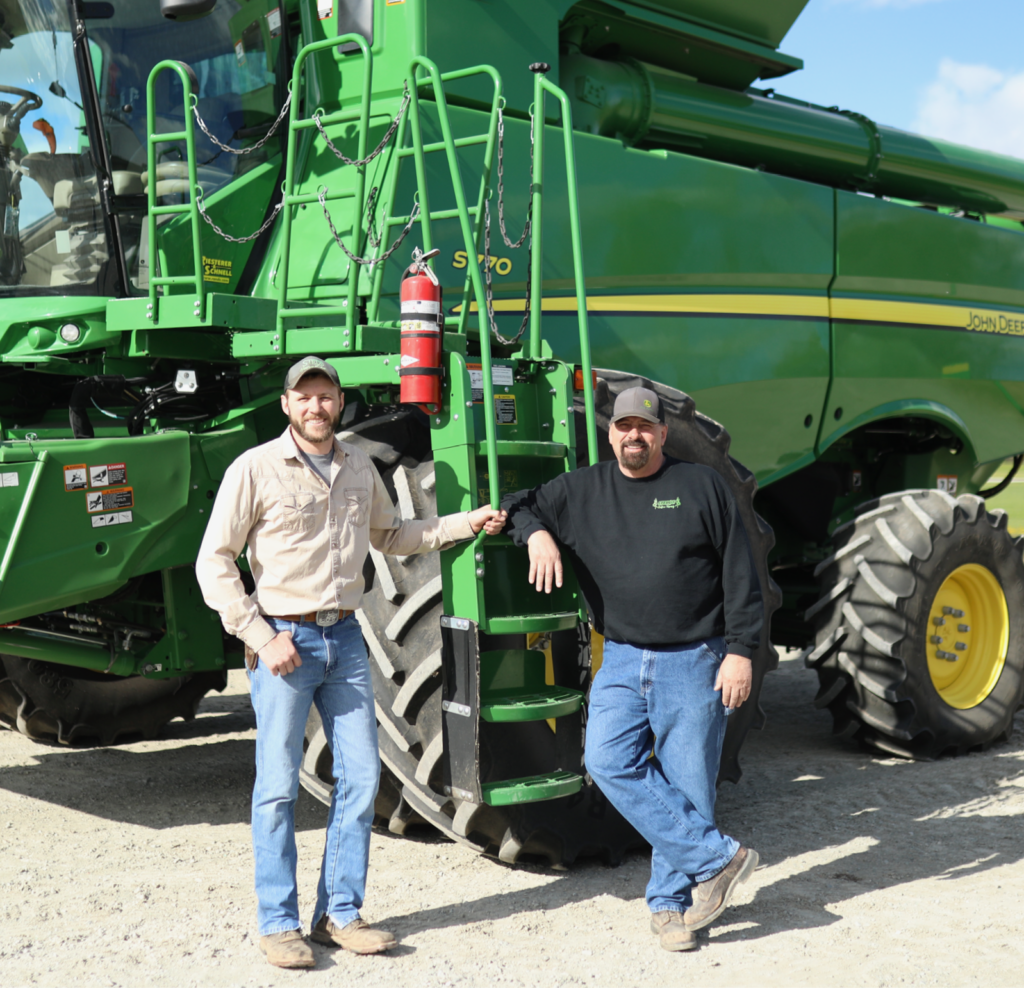
Matt went on to complete two internships with John Deere, before securing a position working in road testing and product development right out of college. After graduation, he spent five years traveling internationally across Brazil, Australia, Europe, and all throughout the U.S. and Canada gathering customer feedback and field-testing machinery.
“My favorite part of traveling was getting to see different farming practices from around the world. It was a really eye-opening experience seeing how diverse everything from the climate to the soil type, to the kind of equipment that works best for harvesting different crops in different regions can be. It really gave me a unique outlook on farming and the way it’s practiced throughout the world.”
Despite his busy schedule and time spent on the road, Matt made sure to take time off to return home to the family farm in Wisconsin to help out every planting season.
As the farm began to face a transition point, Matt realized his desire to build something of his own closer to home. In late 2023, he decided to return home to the farm full time in hopes to expand its operations and begin his own custom harvesting operation. That’s when his partnership with GreenStone really started to grow.
The Start of a New Partnership
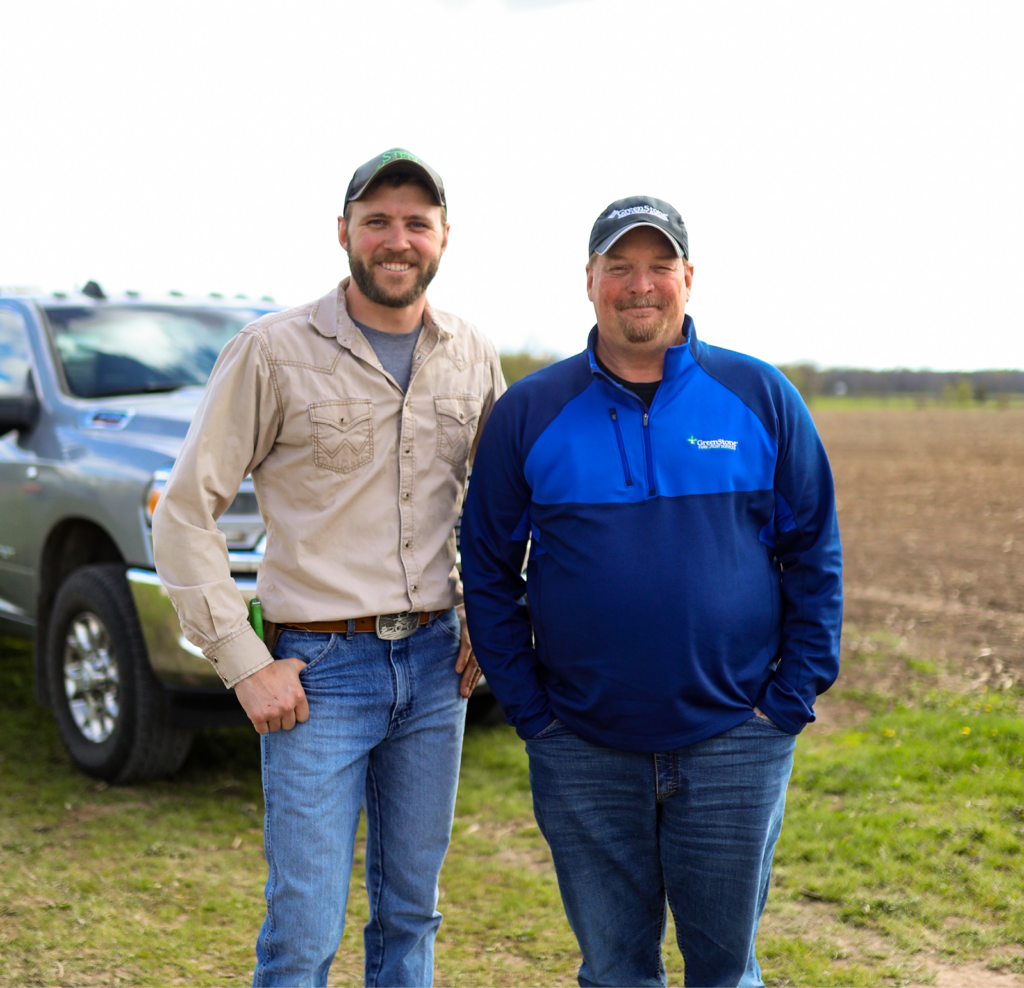
VP of Lending Corey Fanslau had heard about Matt – for years he had worked with Matt’s father, Rick Stedl, on the farm’s financing needs. He had heard stories of Matt’s travels and ambitions, and had communicated with him on and off when Matt expressed his interest in taking over operations on the family farm. When Corey learned he would be returning to the family farm as well as starting a new business, he was eager to support him in his new venture. “I encouraged Matt to take part in GreenStone’s CultivateGrowth conference so he could connect with other young and beginning farmers and learn from experienced producers.”
“That experience was really valuable to me because I got to talk to lot of younger businessmen and women from different industries and hear about their experiences and strategies for their operations,” Matt said. “There weren’t two people from the group that were doing the same thing with their operations, so it was nice to hear from all the different perspectives.”
After the conference, Matt continued to work with Corey on the details of his business plan for a custom harvesting operation. “He talked at length with me about my plans for launching the business, and even would recommend books on business for me to read,” remarked Matt.
Putting His Plan into Action
In early 2025, Matt was ready to put his plan into action. He joined his dad, Rick, at the Clintonville office on Patronage Day, GreenStone’s annual celebration when a portion of its profits are returned through checks back to members. He came prepared and shared both his projections and business plan to Corey and VP of Regional Credit Jeni Olson. With another season of custom harvest work under his belt from spending the previous summer out West, he was ready to move forward with establishing his own business, Stedl Harvesting, LLC.
“When Matt came in that day and we sat down to go over his financials, I got to know him even more. And he impressed me even more!” said Corey. “He sat down with us, and when he left, Jeni confirmed ‘he really knows what he’s doing.’”
Matt was able to partner with GreenStone on financing for new equipment for his custom harvesting business, as well as start an operating line of credit to help support the business’s daily operations.
This summer, Matt will be spending his time out West again doing custom wheat harvesting in Oklahoma, Kansas, and the Dakotas before returning home to Wisconsin in the fall with his dad to harvest soybeans and corn.
The Importance of Partnership
“Going forward my relationship with Corey and GreenStone is more critical than ever,” says Matt. “With rising costs and inflation, it’s really important to have someone in your corner who understands the challenges you face as a farmer and can help you adjust your plans if needed.”
A key benefit of Matt’s partnership with GreenStone is now receiving his own Patronage check as a member-owner of the cooperative. “It’s a huge benefit. Being able to apply it back to my equipment or operating loan can make a big difference,” explained Matt.
Another key benefit of operating his own business has been a better work-life balance and spending more time at home, even if he continues to spend his summers out West. “It’s one of the biggest benefits doing custom work has given me – the freedom of getting to choose where I spend my time and spend more time helping to grow our family farm.”
For Matt, one of the most important parts of a successful business plan is who you surround yourself with. “For me, it’s all about who you want to put at the table with you. Find a mentor and get a group of allies you can go into depth with on your plans, who you know are there to help you. For me, from the start that’s been my dad, and Corey.” “The sky is the limit on who you can partner with,” says Corey. “Working with young, agricultural entrepreneurs like Matt is just one of the reasons I love what I do here at GreenStone.”
To view the article in the online 2026 Summer Partners Magazine, click here.
Much can be said about tariffs and the effect upon agriculture production and growers.
Managing through the maze of effects is confounded by the fact that tariff refunds are now available under specific circumstances. It is worth finding out as much as possible with respect to tariffs that impact your agriculture business. Awareness can help you manage and influence your decision making.
To obtain a tariff refund from the U.S. government, you must navigate one of three primary procedures overseen by U.S. Customs and Border Protection (CBP): the CAPE Portal for the newly overturned emergency tariffs, a Post Summary Correction (PSC) for standard entry corrections, or a Duty Drawback for exported goods. Because CBP only issues refunds directly to the Importer of Record (IOR) or their authorized customs broker, secondary buyers—such as farmers purchasing equipment or retailers buying from domestic distributors—cannot apply directly and must request that their suppliers pass down the savings.
CAPE System (For Overturned 2025–2026 Emergency Tariffs)
Following the Supreme Court’s February 2026 decision declaring the 2025 emergency tariffs illegal, CBP launched the Consolidated Administration and Processing of Entries (CAPE) platform to return an estimated $166+ billion to U.S. businesses.
• Setup: The IOR must log into their ACE Secure Data Portal account and link their U.S. bank routing data for Automated Clearing House (ACH) direct deposit.
• Filing: The filer uploads a data sheet containing all eligible historical entry numbers directly into the CAPE interface.
• Processing: CBP removes the invalid tariff codes, recalculates the duty balance, adds accrued interest, and deposits the cash refund into the linked bank account.
• Timeline: Approved payouts generally take 60 to 90 days from the submission date.
• The Scenario: You directly imported a fleet of foreign-manufactured tractors, harvesting combines, or specialized grain drying systems during late 2025 or early 2026.
• The Refund: By submitting your past entry numbers via the ACE system, you receive a direct ACH deposit covering 100% of the illegal emergency tariff paid, plus interest.
Post Summary Correction & Protests (For Ongoing Trade Tariffs)
For ongoing standard duties, an IOR can amend an incorrect entry filing or retroactively apply a newly granted product exemption.
• Post Summary Correction (PSC): If the entry was filed recently, the customs broker must submit a PSC electronically via the ACE Portal. This must be completed within 300 days of the original import date and before the entry officially liquidates.
• Protest (CBP Form 19): If the entry has already been liquidated, the filer must lodge a formal dispute via CBP Form 19. This has a strict legal window of 180 days from the liquidation date.
• Timeline: Basic PSC claims pay out in roughly 3 to 6 months, while complex legal protests can take up to a year.
• The Scenario: You imported custom steel replacement parts or European drone components for crop monitoring, paying a 25% tariff at the border. Months later, the government officially approves a specific tariff exclusion for those exact part categories.
• The Refund: Your customs broker files a Post Summary Correction (PSC) within 300 days of the import date to retroactively apply the exclusion, triggering a cash refund for the overpaid duties.
Duty Drawback (For Imported Goods Later Exported)
If a business imports tariffed components or equipment and subsequently exports them or destroys them, they can reclaim up to 99% of the initial duty paid.
• Eligibility Check: The business gathers CBP Form 7501 Entry Summaries, commercial purchase invoices, and certified bills of lading proving the item exited the U.S.
• Privilege Application: The filer submits an optional advance application for “Accelerated Payment” privileges to bypass standard processing queues.
• Submission: The duty drawback claim is mapped (matching the import records to the export records) and transmitted through the ACE Drawback module.
• Timeline: Standard applications take 1 to 3 years to process; however, if approved for Accelerated Payment, refunds arrive in about 3 weeks.
• The Scenario: You import high-grade foreign fertilizers, chemical feeds, or specialized packaging materials and pay heavy tariffs. You use these inputs to grow crops or process bulk agricultural goods that you sell and export to buyers in Canada, Mexico, or Japan.
• The Refund: You file a Duty Drawback claim linking your original import customs forms with your export bills of lading. CBP returns up to 99% of the initial tariffs you paid on those inputs. As you assess tariffs and the effect on your operation, consider seeking experienced counsel or an individual who has endeavored to go through the process.
To view the article in the online 2026 Summer Partners Magazine, click here.
The agricultural legislative environment has been very active this Spring and moving into the summer months. In Washinton, D.C., Congress is actively moving through the Farm Bill process, and the many Farm Credit priorities were discussed and included! These accomplishments have been aided by the foresight to build relationships and provide financial support through our PACs.
The successful MI GreenStone PAC Patronage campaign was followed by deliberation on the recommendations for MI GreenStone PAC disbursements by the Board of Directors with input from Kelley Cawthorne, our lobbying and government relations partner, and the legislative outreach team at GreenStone. Over 40 individuals were identified to be recipients of funds based on their agriculture background, commitment to strengthening Michigan’s agriculture economy and rural communities, and leadership in the Michigan legislature.
In Wisconsin, the WI Farm Credit associations collaborated and decided what legislators to support with funds from the WI Farm Credit PAC. Focus has been placed on 10 legislators who have led policy efforts that are priorities for the WI Farm Credit legislative committee and understand the needs of our Wisconsin rural communities.
The Farm Credit PAC has also been delivering contributions to federally elected legislators both state-side and in Washington, D.C. The Federal delegation in both Michigan and Wisconsin continues to be thankful for the outreach and support. This outreach has helped strengthen relationships and elevate recognition of GreenStone, as well as the needs of Michigan and Wisconsin agriculture.
Your support makes this work possible! Thank you for your commitment to strengthening agriculture and rural communities across Michigan and Wisconsin.
To view the article in the online 2026 Summer Partners Magazine, click here.
After a mixed start to 2026, the U.S. Labor Economy has rebounded with an average of 172,000 jobs added in May, 179,000 jobs in April, and 214,000 in March. This is good news after losses in February and early expert predictions for job losses in April. Healthcare, transportation, leisure and hospitality, and warehousing led job gains while the federal government continued to shed jobs. Meanwhile, large tech layoffs did make headlines in early spring with Amazon, Meta, and GM announcing job cuts in technology departments, some specifically emphasizing automation due to AI. Overall, the unemployment rate remained steady at 4.3% in April and May despite AI concerns and a broader concern for the U.S. economy based on geopolitical factors that could lead to slowing economic growth.
The U.S. real GDP increased at an annual rate of 2.0% in the first quarter of 2026. This was a marked improvement from Q4 of 2025 at 0.5%. Increases were attributed to increased exports, government spending, and investments. Consumer spending slowed somewhat and imports increased during the same time.
Inflation hit a three-year high in April with an increase of 3.8% year over year and 0.6% over the past month. The headline grabbing news regarding inflation is in oil prices and the pain at the pump. The ongoing conflict between the U.S. and Iran has led to the closure of the Strait of Hormuz, a key shipping lane for oil and fertilizer. Not only has gasoline jumped, 28.4% for the year, but other prices have been on the rise of late as well. The BLS’ food at home index increased 2.9% over the past year.
Somewhat unsurprisingly after the latest inflation numbers, the Fed left the federal funds rate unchanged during their most recent meeting, in a range between 3.50% and 3.75%, citing economic uncertainty and rapidly increasing inflation as a reason not to continue immediate rate reductions. In fact, the likelihood of additional rate cuts this year may have been lessened after the recently released inflation data and disagreement among the FOMC during their last meeting. The Fed’s goal is an annual 2.0% inflation rate. The recent energy spikes have put to question whether inflation can be tempered by the currently established rates. Powell has described the jobs market as relatively balanced, which does allow inflation to be the main driver for interest rate discussions. Meetings will now be led by new Fed Chair, Kevin Warsh, confirmed by the Senate in May. Powell will stay on the board of governors for the time being to wrap up the investigation into the new building construction.
Corn and Soybeans
The May 2026 WASDE report points to a generally balanced outlook for corn and soybeans for the upcoming season. Corn production is expected to remain historically large at 16 billion bushels, the second largest on record behind 2025. Planted acres for the 2026 season are estimated at 95.3 million acres, down 3.5 million acres from the year prior. Demand for U.S. corn is expected to soften slightly due to lower feed use and a slight decline in exports however, the U.S. remains the largest exporter of corn by a wide margin ahead of Brazil and Ukraine. As a result, ending stocks are projected to tighten somewhat but remain at comfortable levels, keeping the market fundamentally stable. Prices are forecast to improve modestly to $4.40 per bushel, up $.25. Overall, the corn outlook remains neutral with ample supply cushioning the market.
In contrast, the soybean outlook appears more optimistic, with stronger demand and pricing. Soybean production is projected to increase 173 million bushels from last year based on higher acreage and yields. Demand, particularly from domestic crush use driven by biofuel demand, continues to outpace supply gains. Much of this biofuel demand is supported by the EPA’s Renewable Volume Obligations for 2026 and 2027. This stronger demand profile is expected to reduce ending stocks and tighten the stocks-to-use ratio, providing firmer price support. Soybean prices are forecast at $11.40 per bushel, up from the 2025/26 season average of $10.40, with soybean oil forecast at $.70 per pound, up $.07.
Taken together, the soybean market enters the year with more constructive fundamentals while corn remains well-supplied but not burdensome.
Dairy
After a slow January and February from a margin standpoint, producers’ income over feed costs using Dairy Margin Coverage (DMC) continued to improve through April, rising to $10.54/cwt., the highest mark since September 2025. Strong nonfat dry milk (NDM) and whey prices are boosting Class IV and Class III milk prices while feed costs have remained relatively low. The rise in the NDM price is being driven by a combination of tight supply and strong demand, particularly for dairy proteins. Dairy protein demand is reshaping the industry with growth in demand for dairy proteins used in ready-to-drink protein shakes, sports nutrition products, high protein yogurt, etc. As processors can often earn more by producing milk protein concentrates and related ingredients than by producing traditional nonfat dry milk, skim milk that historically would have become NDM is being diverted elsewhere, tightening supply. The U.S. is one of the world’s largest suppliers of NDM and demand from key importing countries in Latin America and Asia has remained strong. Mexico in particular continues to buy U.S. milk powder. The increase in price for NDM has played a key role in the jump in Class IV milk prices. Beef income from culling cows and selling crossbred calves continue to provide significant benefits to dairy producers’ bottom lines as well. After a fourth quarter decline in calf prices, crossbred calf prices continue to reach new highs and are nearing $2,000 per head.
Through April, dairy producers continue to add cows with the national dairy herd growing to 9.645 million head, the highest headcount since 1993 and 190,000 more than April 2025. On top of a larger herd, milk yields continue to increase. This growth in both milk yields and total cows will continue to require strength in the U.S. Dairy export markets.
Moderate feed costs, high beef revenue, and the recent surge in milk prices are providing economic incentives for producers to continue boosting milk output. The positive outlook and economics suggest milk output and growth will likely continue. Additional risk management enhancement opportunities are forthcoming with insurance products for dairy, specifically LGM-Dairy, LRP and DRP that will be welcomed to offset price risk of a growing milk supply.
Pork
While market hog prices have remained at profitable levels, continuing the trend per Iowa State’s farrow-to-finish profitability model, the margin opportunities provided by commodity prices during the Q1 and futures have decreased by early June. Break-even hog prices have increased based on feed costs and general inflation. While the CME Lean Hog Index has been rangebound between $90-$92/cwt., June-Aug lean hog futures markets have fallen by $12-$15/cwt. from the contract highs put in mid-March. Weaknesses in ham and belly prices have resulted in the Pork Cutout struggling to reach and stay above $100/cwt., down 5% from a year ago.
Disease, primarily PEDv and PRRS have greatly impacted weaned pig production this winter with weaned and feeder pig prices approaching 2014 highs in Q1. Prices have fallen in Q2 but are still well above historic averages. Cases of PEDv are up significantly nationally and well above the average of recent years. The production issues provide some optimism for higher hog prices for late Q2 and Q3 with expected lower hog slaughter volumes. However, carcass weights have been increasing given relatively stable feed costs and greater finishing capacity. Disease pressure has also resulted in increased sow farm depopulation and repopulation programs resulting in a 1.5% decrease in the U.S. sow herd from a year ago per the March 26 USDA Hogs and Pigs Report. This reflects the smallest U.S. sow herd reported in March since 2014 at 5.89 million.
Market hog inventories are up slightly from March 2025 but down from December levels. Pigs per litter from Dec-Feb continued an upward trend to 11.90, a 2% increase from last year, and well above expectations given widespread disease challenges. Imports of weaned pigs and feeder pigs from Canada have increased this year based on reduced domestic availability. Herd health continues to drive wide variance in production and profits across farms. With good farm health and stability or improvement of hog prices and feed costs, 2026 still provides opportunity for a good year for pork producers.
To view the rest of the 2026 Summer Partner articles please click here.
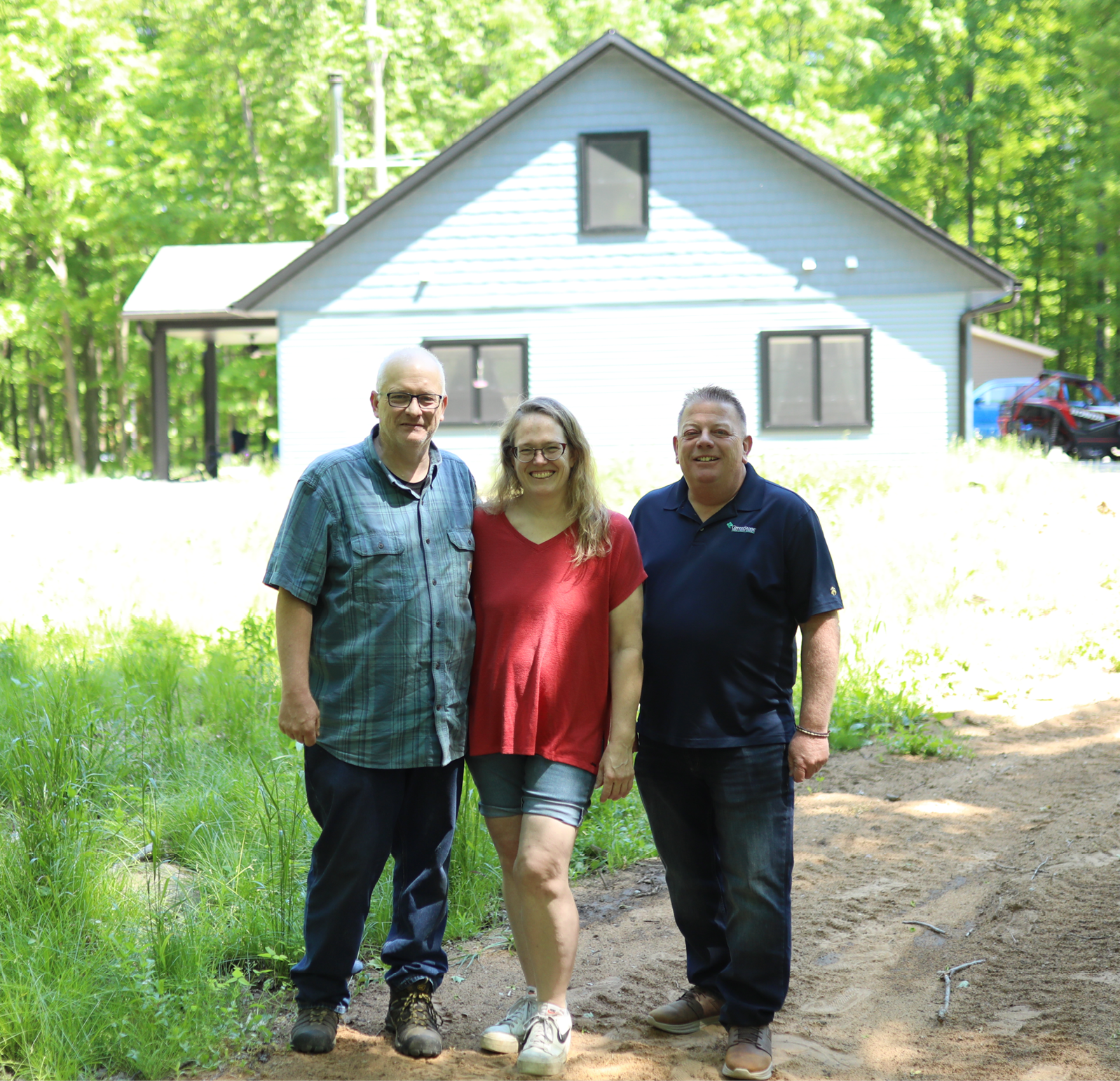
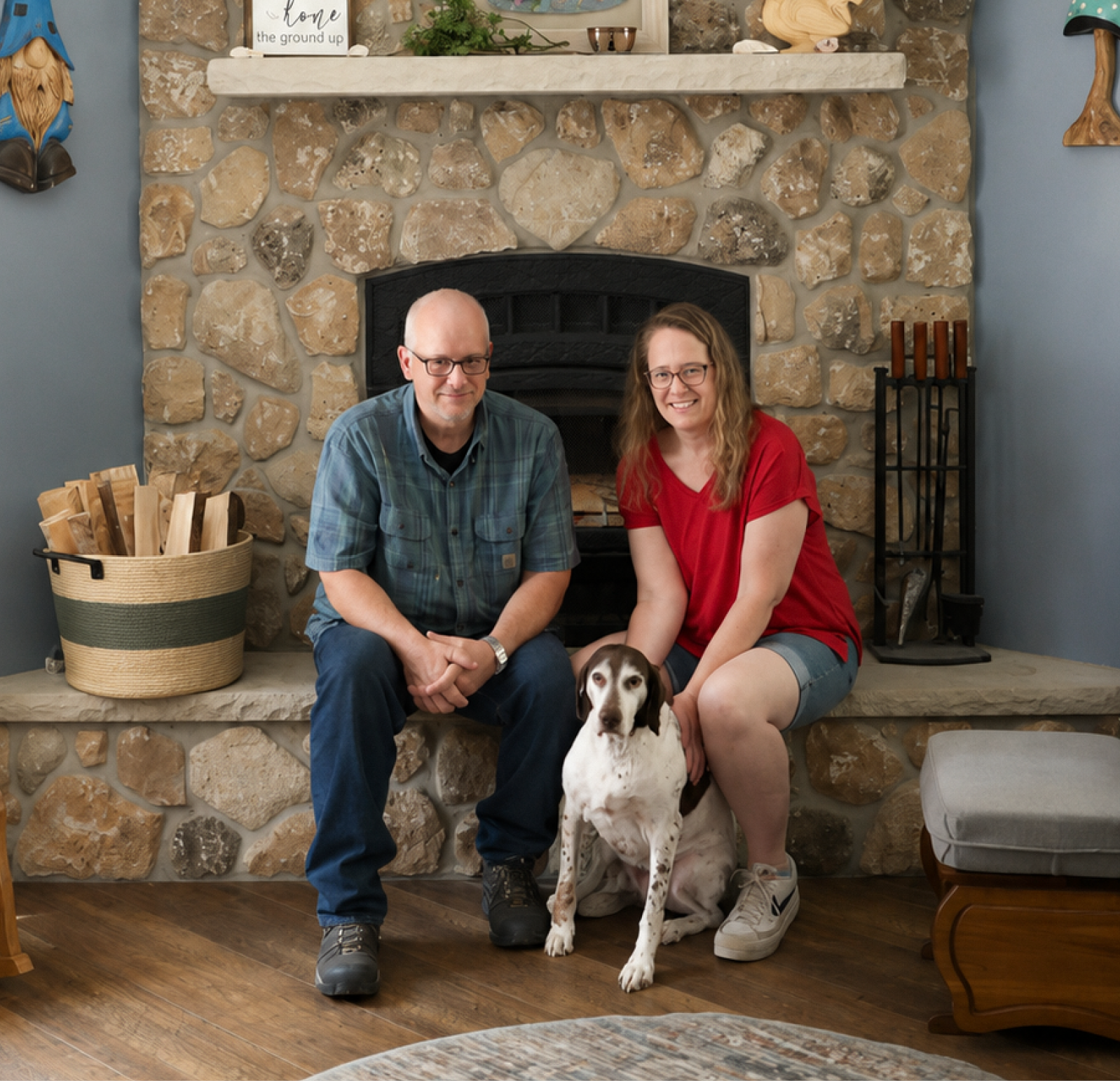
“It’s hard to leave here on Sunday nights,” smiled Denise Arneson while talking about the home her and her husband, Curt, completed construction on just last spring in Athelstane, Wisc. The couple originally purchased the 10-acre property almost 20 years ago through a recreational land loan with GreenStone and always envisioned building a home there to vacation in and one day retire to. After years of dreaming and planning, their vision is now a reality.
The Beginning of a Dream
It all started over two decades ago. Curt, a licensed clinical social worker, and Denise, a teacher from the Milwaukee, Wisc. area always enjoyed spending time outdoors and were eager to get away from the hustle and bustle of urban life.
“We started working with a local realtor when looking for land, and they recommended we work with GreenStone on the financing,” explained Curt. “Even back then when we first worked with GreenStone, we really felt like they offered the personal touch of a community lender, while still having specialized expertise,” said Denise.
The Arnesons began their search for property around Silver Cliff, Wisc., and fell in love with everything the area had to offer. With access to ATV and snowmobile trails, plenty of good hunting opportunities, and the quiet, rural setting, they knew it was the place they would one day call “home”.
In 2008, they secured their ideal 10-acre lot and began using the property as a weekend getaway. A few years later, they built a garage and began taking camping trips up to the property with their two children. They always envisioned building a home on the property but wanted to wait until it was the right time for them to build.
“GreenStone never rushed us to build on our property once we started financing the land,” said Denise. “They encouraged us to wait until we were truly ready, which we really appreciated.”
Bringing Their Vision to Life
Shortly after the Covid-19 pandemic, the Arnesons felt it was the right time for them to move forward with construction. “We reached out to GreenStone again to start the construction process. We were spending every weekend up there, so we were anxious to finally start building the home we had been thinking about for so many years,” said Curt. “What began as weekend visits with friends and family was about to become our future permanent residence.”
After choosing a builder, the Arnesons provided the floor plans to their Senior Financial Services Officer Jason Gengler. The home would have an open-concept layout with two bedrooms, one full bathroom and one half bath. The high-ceilings, patio entrance, and fireplace at the center of the living area were all designed with the Arnesons’ vision in mind: the perfect rural retreat for them, their family and friends, and their two large dogs to enjoy.
Construction began on the home in 2024, and as Curt explained, “I was expecting a much more complicated experience!”
“It was the easiest process ever,” agreed Denise. “Jason remained available to us throughout each phase and was in constant communication about the progress or if we had any questions. He worked with us through some of the delays we dealt with during the construction process,” she added. “He even helped us identify some discrepancies in a few of the invoices we received with our final numbers and worked with our builder on any questions they had on the financing too.”
“Curt and Denise were great to work with,” remarked Jason. “They were very helpful and enthusiastic, and I enjoyed being a part of the process of their dream home coming to life.”
A Home Worth the Wait
Construction took just under a year and was completed in June 2025. In addition to their original plans, the Arnesons’ son even contributed to the project to finish the upper level of the house to create additional living space so he could have his own place to stay when he visited – a true testament to how much the home and property mean to their entire family!
The home features a heated, attached garage, in-floor heating, and an overall cozy atmosphere thanks to the lavender-colored walls and fireplace. “Our mason incorporated stones in the shape of a heart into the fireplace, which is a really special touch,” Denise added.
Located at the end of the road with little traffic nearby, the property’s remote destination is the ideal place to enjoy some peace and quiet. The Arnesons have spent just about every weekend the past year there enjoying the home they dreamed about for so long. “We love that when we’re here, we’re here to relax,” explained Curt. “Whether we’re out here completing small projects around the house, enjoying the outdoors, or even just splitting firewood, we love that we can come here and escape the rush of everyday life.”
As they look to the future, Curt and Denise are excited to continue to improve the property through landscaping and terracing and plan to make other improvements like more outdoor spaces.
“We’re looking forward to one day making this our full-time residence in retirement, but for now, getting to spend our time here at the end of a long week is priceless,” they both agreed.
To view the rest of the 2026 Summer Partners articles please click here.
If the dictionary were looking for an image to illustrate the definition of “family business,” a photograph of the entrance of Ebels General Store in Falmouth, Mich., should be a strong contender.
From a horse-drawn wagon to 250 employees
Founded in 1920, Ebels began as a simple food and hardware delivery operation, using horse-drawn wagons to transport provisions to the local community. Over more than a century, that modest start has evolved through hard work, steady growth, strategic reinvestment, and a willingness to adapt. Today the Ebels family operates a diversified operation that remains deeply involved in the rural community where it all began.
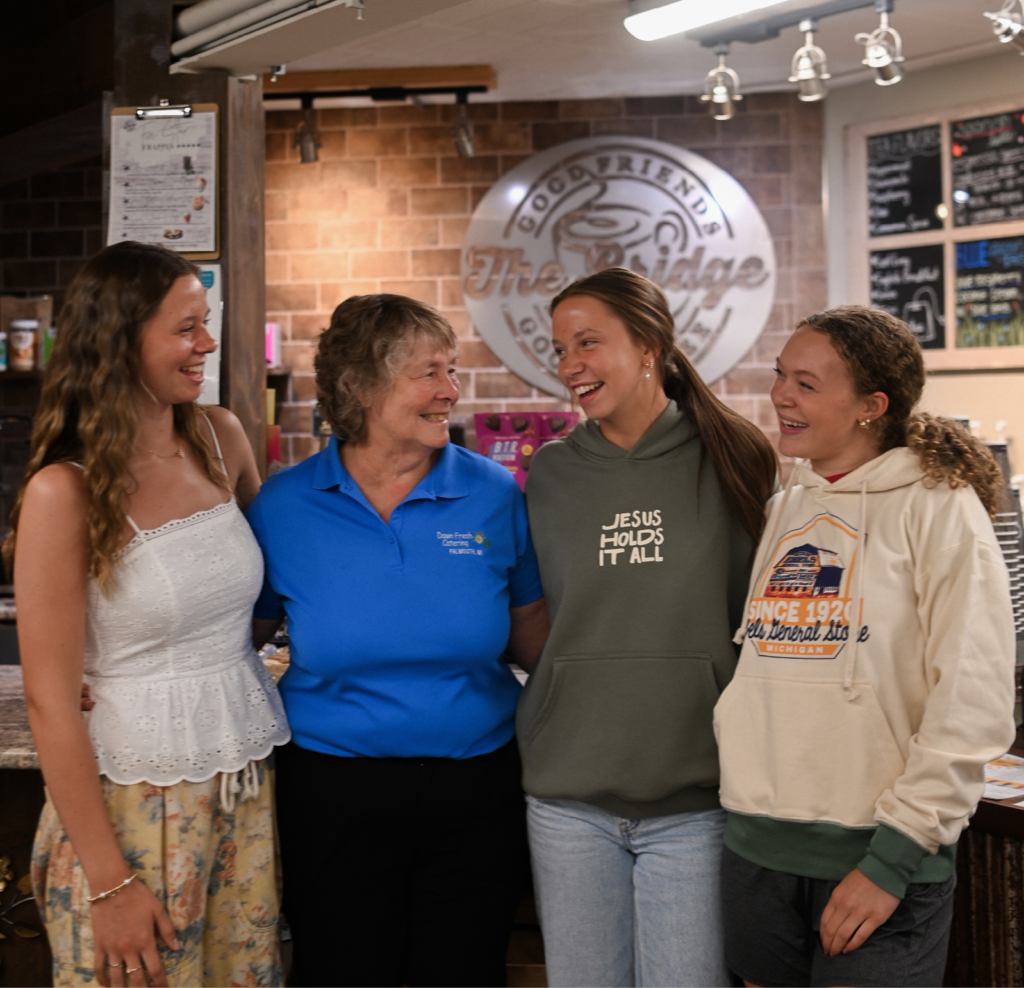
What started as a single store has grown into a network of interconnected businesses, including grocery stores in Falmouth, Mich., Reed City, Mich., and Evart, Mich., meat processing and packaging plants, a catering business, coffee shops, clothing stores, and more. Through its various operations, Ebels employs nearly 250 people, most of which work in Falmouth, a town of around 200 people.
“We’ve got a lot of different things going on here,” said Bob Ebels, general manager and chief financial officer of Ebels General Store and its various other operations, including Little Town Jerky Company. “People think, ‘they have a grocery store,’ but there’s a lot more to it than that.”
The growth of Ebels’ operation has not been accidental. Each generation has expanded the business in response to changing markets and local needs. In the 1980s, as big-box retailers began to disrupt small-town grocery models, the Ebels family pivoted. In 1994 they launched Little Town Jerky Company to meet the demand for smoked meat produced by Mark Ebels, fourth generation leader of the family business and Bob’s father. Mark receives much of the credit for having the vision to begin expanding the business beyond just grocery stores. Mark’s vision was important, but equally important was the systematic approach his wife, Dawn, brought to making that vision possible.
In 1989, the family founded Dawn Fresh Catering named for Dawn. Then in 2004, Ebels opened a federally inspected processing plant, positioning the business to serve both consumers and agricultural producers in new ways.
More recently, the family has continued to diversify and try new ventures. Ebels Clothing Department and The Bridge Coffee Shop now complement the retail experience, processing facilities and a trucking operation. Most recently, the local gas station in Falmouth was added to the list. Each addition reflects the family’s aim to invest in their community, solve local challenges, and provide products and services that serve customers from miles around.
“We kind of liken ourselves to a business incubator,” Bob said. “We start something because there’s a need, and then it grows from there.”
Today, Bob represents the fifth generation leading the business alongside his brother, Tom Ebels, and sister, Laura Bennett. Bob oversees finance and administration, Tom coordinates production, and Laura manages the clothing and coffee operations.
“It’s not just me,” Bob said. “Our broader family and talented team are what keep us moving forward.”
A Trusted Partner
In 2020, the Ebels family was ready to invest in expanding their operation, including opening new retail locations and adding more processing capacity. As they evaluated financing options, they turned to GreenStone—drawn initially by its strong reputation in agricultural lending.
“We had always heard about the terms and opportunities available through GreenStone,” Bob said. “When we were looking at expansion, we reached out to see what that might look like for us.”
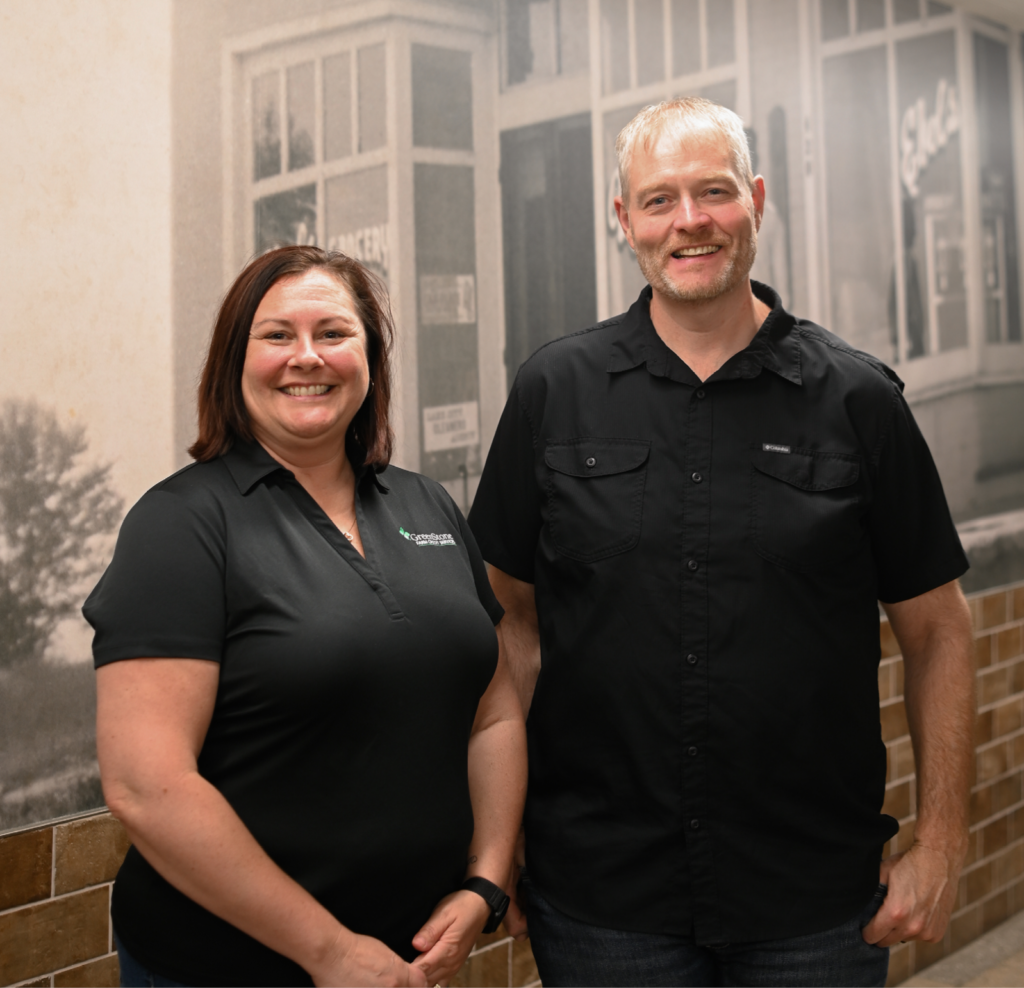
Sara Trattles, VP of agribusiness lending at GreenStone, serves as the Ebels’ financial services partner.
“There is so much good to say about the Ebels. They are such a hard-working family but so fun to work with too,” said Trattles. “They always have a lot going on but are very communicative in their plans. It is an honor to work with them to meet their goals and provide them with financing.”
Efficiency Through ‘One Umbrella’
After beginning their relationship with GreenStone on the lending side, the Ebels family soon recognized an opportunity to optimize their operations through additional partnership. By adding GreenStone’s tax and accounting services, the family created a more streamlined and coordinated system—one that fully supported the complexity of their business.
“It just made sense to move everything under one umbrella,” Bob explained. “Different departments, but all working together.”
One of the most immediate benefits of consolidating services with GreenStone was improved efficiency. Instead of coordinating between separate lenders and accountants, the Ebels family could now rely on a unified team that understood their entire operation.
“If our loan officer needs a tax return for one of our entities, they just pick up the phone and call internally,” Bob said. “It’s right there.”
That level of connectivity has eliminated delays and reduced administrative burden—freeing up time to focus on running and growing the business.
The consistency of working with the same team year after year has also made a difference. Over time, GreenStone’s tax and accounting professionals have built a deep understanding of the Ebels’ operation—something Bob says is difficult to replicate with traditional CPA firms.
“It’s just more efficient. … We’re not constantly having to bring new people up to speed on who we are and what we do,” Bob said. “There’s consistency there… They know what we need.”
“I truly enjoy working with the Ebels Family. Their commitment to their employees and the community is evident in everything they do. It’s incredibly rewarding to work with clients who value the work we do,” said Elizabeth Waldschmidt, tax and accounting manager at GreenStone.
A Relationship-Based Approach
Beyond efficiency, Bob points to the relational nature of the partnership as a key differentiator.
“It’s more of a relational—or even a familial—type situation,” he said. “Accessibility is always very good. … If we need to talk to someone, they’re there.”
That relationship extends across multiple areas of GreenStone, from lending and tax and accounting to credit analysis. Bob regularly works with a dedicated team of GreenStone experts that each bring a unique value while operating with shared insight into the Ebels’ business.
Turning Strategy into Action
One of the most significant impacts of GreenStone’s integrated tax and accounting services has been its role in supporting the Ebels’ strategic decision-making.
As the family explored a series of solar energy projects to support their energy-intensive operations, GreenStone’s tax and accounting team played a critical role in evaluating the opportunity.
“They put together an analysis showing projected energy costs, savings and tax implications,” Bob said. “That was integral to getting it all put together.”
The result is a series of solar installations across multiple locations, expected to reduce energy costs by 60% to 75%.
“Having that data makes the decision,” he said. “It shows you what it really looks like.”
This kind of forward-looking analysis goes beyond compliance—turning tax and accounting into a strategic tool for growth.
Supporting Growth for Generations to Come
From financing expansions to supporting operational efficiency through strategic support, the partnership with GreenStone has helped position the Ebels’ for continued success.
“It’s provided long-term stability for our companies,” Bob said. “And it’s helped us get the working capital we need to do what we do.”
Looking ahead, the family sees continued opportunities particularly in expanding their processing operations through Little Town Jerky Company and increasing overall capacity.
The family remains committed to the principles that have guided the business for more than a century: adaptability, community focus, and strong relationships.
For the Ebels’, success has always meant sharing their values with their local community, and all those that visit their stores or consume their products. With GreenStone as their trusted financial partner, they’re well positioned to grow today and for generations to come.
To view the article in the online 2026 Summer Partners Magazine, click here.
Most of us have more online accounts than we can easily remember: banking, email, shopping, insurance, utilities, social media, streaming services, farm management tools, school portals, and more. Each account asks for a password, and each password is supposed to be long, unique, and hard to guess.
That creates a real challenge. To cope, people often reuse passwords, slightly change old ones, or store them in a notebook, spreadsheet, or phone note. While convenient, these habits can make it easier for criminals to access multiple accounts.
A password keeper, also known as a password manager, can help solve that problem. Used correctly, it can make your online accounts safer and easier to manage.
What is a password keeper?
A password keeper is an app or service that stores your passwords in a protected vault. Instead of remembering dozens or hundreds of passwords, you remember one strong master password. The password keeper can create, save, and fill in strong passwords for your accounts.
This means your email can have one unique password, your bank account another, your shopping account another, and so on. If one company has a data breach and your password is exposed, criminals should not be able to use that same password to get into your other accounts.
That is one of the biggest benefits of using a password keeper: it helps stop one stolen password from becoming many stolen accounts.
Are password keepers safe?
For most people, a reputable password keeper is safer than reusing passwords or storing them in unsafe places. Cybersecurity agencies, including CISA (Use Strong Passwords, n.d.), recommend using long, random, unique passwords and storing them in a password manager. NIST guidance also emphasizes protecting authentication secrets and using stronger authentication methods when risk is higher (NIST 800-63B, 2025).
That does not mean password keepers are risk-free. No technology is perfect. A password keeper becomes an important account that must be protected carefully. If someone gets access to your password vault, the impact could be serious.
The safer way to think about it is this: a password keeper reduces many common password risks, but only if you secure the password keeper itself.
Why password reuse is so risky
Password reuse is one of the most common online safety problems. Here is how it can happen.
You create an account with an online store and use the same password you use for your email. Later, that store has a security breach. Criminals get a list of usernames and passwords. They know many people reuse passwords, so they try those same logins on email accounts, banking sites, payment apps, and social media.
This is called credential stuffing. It is automated, fast, and common. Criminals do not need to guess your password if they already found it somewhere else.
A password keeper helps because it can generate a different password for every account. You do not have to remember each one. The password keeper does that for you.
The one password you still need to remember
Even with a password keeper, you still need one very strong password: your master password.
This password protects the vault. It should be long, memorable for you, and hard for someone else to guess. A good approach is to use a passphrase, which is a string of unrelated words or a sentence-style phrase that only makes sense to you.
Avoid using names, birthdays, addresses, favorite teams, pets, common sayings, or anything someone could learn from social media. Also avoid using your master password anywhere else. It should be unique to the password keeper.
If your password keeper offers account recovery options, set them up carefully. Keep any recovery codes or emergency access instructions in a safe place, such as a locked file cabinet or another secure offline location.
Turn on multifactor authentication
A strong master password is important, but it should not be your only layer of protection. Turn on multifactor authentication, often called MFA or two-factor authentication, for your password keeper.
MFA requires an extra step when signing in, such as a code from an authenticator app, a security key, or a trusted device prompt. This can help protect your vault even if someone learns your master password. The Federal Trade Commission recommends strong passwords and two-factor authentication, and notes that authenticator apps and security keys are more secure options when available (Protect Your Personal Information From Hackers and Scammers, 2024).
NIST guidance also supports stronger authentication as methods for high-risk situations. In simple terms, MFA helps because a password alone should not be enough to access your accounts (NIST 800-63B, 2025).
When available, an authenticator app or hardware security key is usually stronger than a text message code. Text message codes are still better than no MFA, but they can be more exposed to phone number scams.
Be careful with autofill
Password keepers often include autofill, which automatically enters your username and password on websites or in apps. Autofill is convenient, but it should be used with care.
Before approving a login, check the website address. Criminals create fake websites that look like real ones. A password keeper may help spot this because it usually will not offer to fill in a saved password if the website address does not match. That can be a warning sign.
Still, do not rely only on autofill. Slow down when signing in to important accounts. Look for misspelled web addresses, unexpected login prompts, urgent messages, or pages that ask for more information than usual.
A password keeper can help, but it cannot stop every phishing attempt.
Keep the app updated
Like any software, password keepers can have security updates. Install updates for the password keeper app, browser extension, phone, computer, and web browser.
Updates often fix security weaknesses. Delaying updates may leave you exposed to issues that have already been corrected.
If you use a browser extension for your password keeper, make sure it comes from the official provider and that it stays updated. Remove extensions you no longer use.
Choose a reputable provider
There are many password keepers available. Some are free, and some charge a subscription fee. The right choice depends on your needs, comfort level, and the devices you use.
Well-known examples include 1Password, Bitwarden, Dashlane, Keeper, Apple Passwords, Google Password Manager, and Microsoft Authenticator/password management tools. This is not a complete list or an endorsement of any one provider, but these are examples of commonly used options from established companies.
Before choosing one, look for:
• Strong encryption and clear security practices.
• Multifactor authentication support.
• A good reputation and history of timely security updates.
• Easy-to-use apps for your phone, computer, and browser.
• Account recovery options that fit your comfort level.
• Family sharing options, if you want to safely share selected passwords with a spouse or trusted family member.
• Alerts for weak, reused, or exposed passwords.
Avoid unknown password apps with few reviews, unclear ownership, or vague security information. Also be cautious of fake password manager apps or browser extensions. Download directly from the provider’s official website or your device’s official app store.
Even with a reputable provider, remember that your password keeper needs strong protection. Use a unique master password, turn on multifactor authentication, and keep the app updated. Many providers publish security information about their encryption, account protection, recovery options, and platform features, which can help you compare options before choosing one.
What about saving passwords in your browser?
Most browsers can save passwords. This is better than reusing the same password everywhere, but a dedicated password keeper may offer stronger features, easier sharing, better cross-device support, and more security tools.
For some people, a browser-based password manager may be enough. For others, especially families, business owners, or anyone managing many important accounts, a dedicated password keeper may be a better fit.
The most important goal is to use unique passwords and protect the place where those passwords are stored.
Password keepers and family safety
Password keepers can also help families manage shared accounts more safely. For example, spouses may need access to utility accounts, insurance accounts, streaming services, or household financial tools. At any given time I have to manage hundreds of passwords for my wife and children.
Instead of texting passwords, writing them down, or using one shared password for everything, a family password manager can allow secure sharing of selected logins. Some also offer emergency access, which can help a trusted person get access if something happens to you.
This can be especially helpful for estate planning and household continuity. Consider keeping a simple list of key accounts and instructions in a secure place, without writing down every password.
What should not go in a password keeper?
Password keepers are commonly used to store passwords, secure notes, Wi-Fi passwords, recovery codes, and sometimes payment information. Whether you store extra information is a personal decision.
Be thoughtful about what you save. The more sensitive information you put in one place, the more important it is to protect that place well. For highly sensitive documents, financial records, or identity documents, consider whether they belong in the password keeper or in another secure storage method.
Do not store your master password inside the same password keeper. You need to know it separately.
What if your password keeper is involved in a security incident?
If your password keeper provider announces a security issue, do not panic. Read the provider’s official notice and follow its instructions.
Depending on the incident, recommended steps may include updating the app, changing your master password, reviewing account activity, rotating important passwords, or checking MFA settings.
Be alert for phishing after any publicized security event. Criminals may send fake emails claiming your vault is at risk and urging you to click a link. Go directly to the provider’s official website or app instead of clicking links in unexpected messages.
A simple way to get started
Switching to a password keeper does not have to happen all at once. Start with your most important accounts:
1. Email.
2. Online banking and payment apps.
3. Credit cards.
4. Retirement, insurance, and investment accounts.
5. Mobile phone account.
6. Shopping accounts that store payment information.
7. Social media accounts.
Your email account is especially important because it is often used to reset passwords for other accounts. Use a unique password and MFA for email as soon as possible.
After that, update other accounts over time. Many password keepers can identify reused or weak passwords and help you prioritize what to fix first.
Good security is about layers
A password keeper is not a complete security plan, but it is a strong step. Pair it with other safe habits:
• Use unique passwords for every account.
• Turn on MFA for important accounts.
• Keep devices and apps updated.
• Watch for phishing messages.
• Review account alerts and statements.
• Use trusted devices and secure networks for sensitive activity.
The goal is not perfection. The goal is to make it much harder for criminals to access your accounts.
Bottom line
Password keepers are a safe and practical tool when used correctly. They help you create and manage strong, unique passwords without having to memorize all of them.
The key is to protect the password keeper itself. Use a strong master password, turn on multifactor authentication, keep the app updated, and stay alert for phishing.
For many households, a password keeper can turn password security from a frustrating chore into a manageable habit.
To view the article in the online 2026 Summer Partners Magazine, click here.