

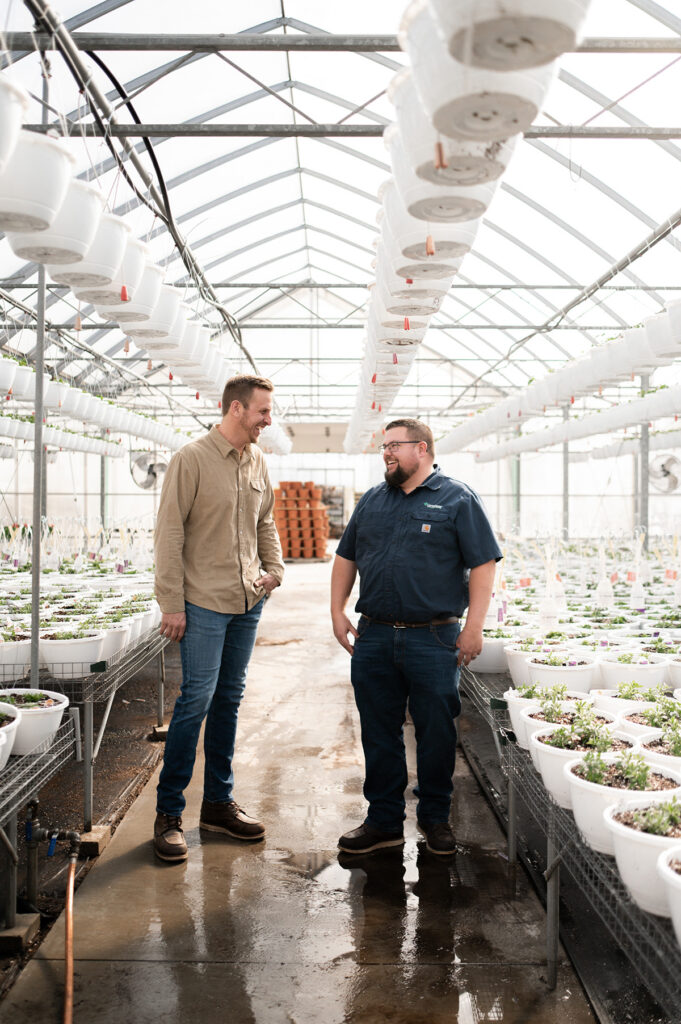

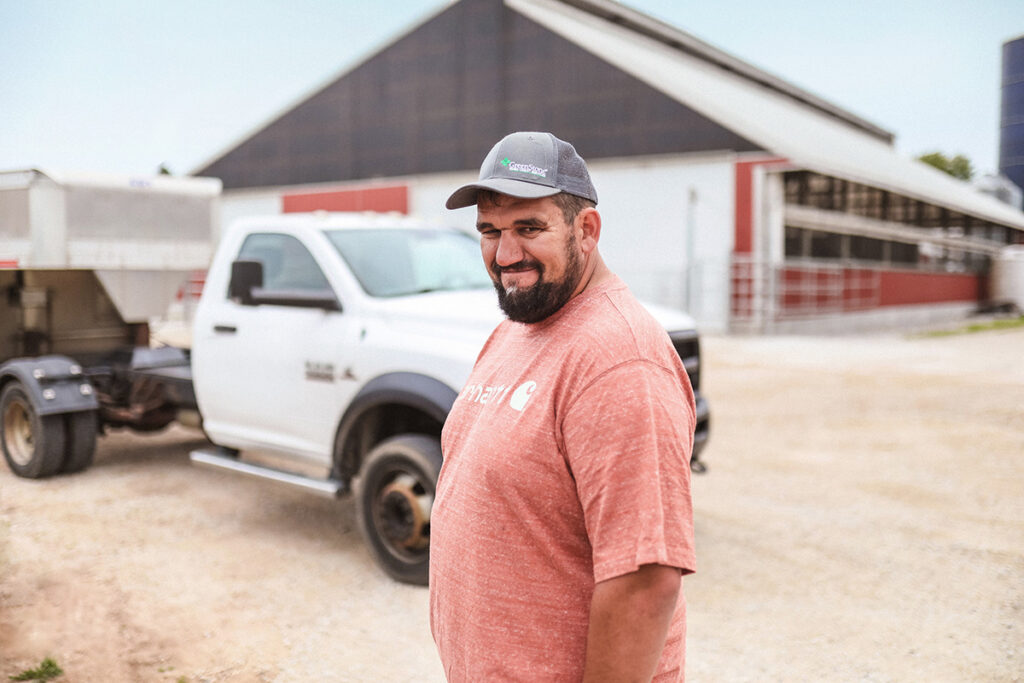
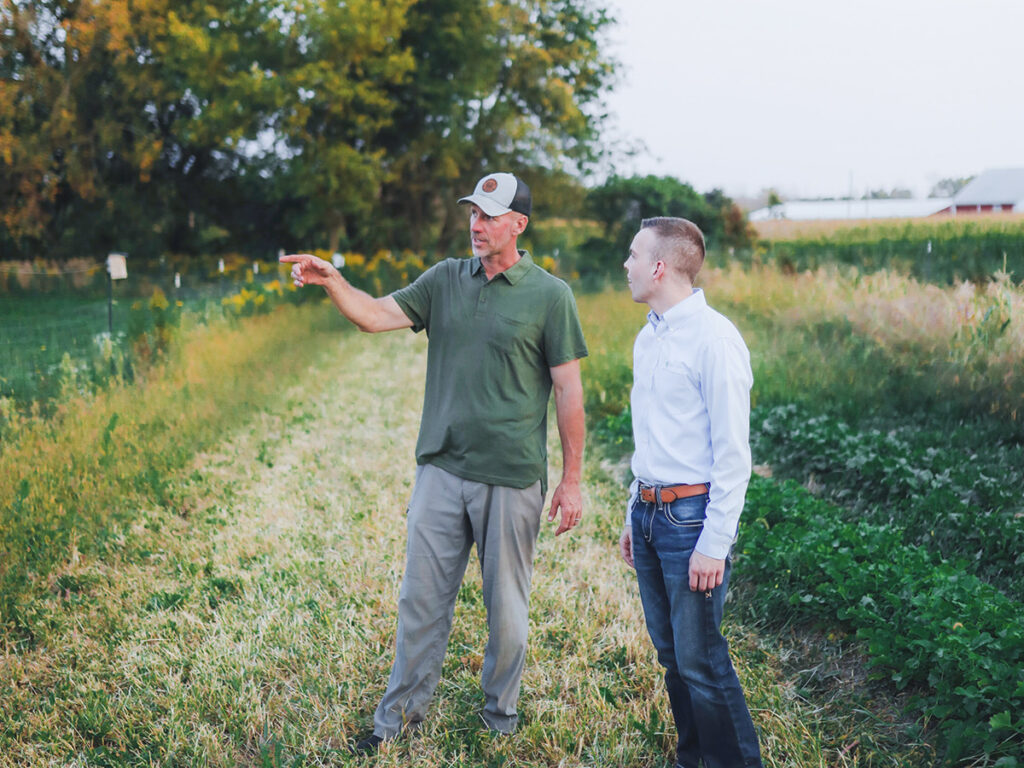
For Boyd and the Endsley family, ECO is more than just an insurance option—it’s a way to ensure the resilience and success of their farm for generations to come.
Navigating Risk in Modern Farming
As any farmer knows, managing risk is an essential part of running a successful operation. For Boyd Endsley, a livestock farmer in Barry County, Michigan, balancing risk and reward has been a constant focus in his family’s multigenerational farming business. When it came to mitigating price volatility in 2023, Boyd turned to GreenStone and an Enhanced Coverage Option (ECO) as a part of his crop insurance policy to help secure his farm’s financial stability.
“In 2023, we decided to add ECO coverage because we saw a lot of potential for crop prices to drop, which could trigger an ECO payment,” Boyd shared. “We wanted to manage that risk, and it ended up being a good decision for us.”
How ECO Provides Protection
ECO, an additional layer of crop insurance, provides coverage from 86% up to 95% of a county’s expected yield or revenue. Unlike traditional crop insurance policies, ECO is designed to protect against county-wide yield and revenue losses. With the subsidies for ECO increasing from 44% to 65% in 2025, this highly affordable option gained popularity among farmers who were looking to navigate an unpredictable agricultural market.
For the Endsleys’, 2023 demonstrated the value of ECO firsthand. While Barry County’s average yield for corn exceeded expectations at 166.1 bushels per acre—above the projected yield of 161.8—a significant drop in the harvest price, from $5.91 to $4.68 per bushel, triggered an ECO payment. This additional income proved invaluable in a year when commodity prices were down.
“In a year when our income was lower because of declining prices, the ECO payment provided critical support,” Boyd explained.
Trusted Guidance and Strategic Decisions
Boyd’s decision to adopt ECO came with the guidance of Kristen King, his crop insurance specialist at GreenStone. Kristen has worked closely with the Endsley family for more than a decade, helping them navigate the complexities of crop insurance and other financial tools to support their operation and mitigate risk.
“Kristen is incredibly knowledgeable and always on top of her game,” Boyd said. “She knows the products inside and out and can explain how they work in different scenarios. She’s great at making sure I have everything turned in on time and keeps me informed about all my options.”
For Kristen, Boyd’s approach to ECO exemplifies strategic risk management. “Boyd is an intelligent guy who really pays attention to the numbers,” she said. “He’s not someone who’s going to take ECO every year—he evaluates the market and decides based on the potential for price declines. That’s where ECO really shines. It’s highly subsidized and provides great coverage in years when there’s significant price risk.”
Balancing Coverage Across Crops
In 2024, Boyd opted to continue using ECO for his soybean crop, anticipating further price declines in that market, while choosing not to apply it to his corn, which he believed had less downside risk.
“Soybean prices looked like they might continue to decline, so we decided to keep ECO on that crop,” he said. “Corn, on the other hand, didn’t have as much room to drop, so it didn’t make as much sense to use ECO there this year.”
A Legacy of Resilience
The Endsley family’s farm is a true legacy operation, with Boyd working alongside his parents, Patricia and Gordon, to grow corn, soybeans and wheat, as well as manage a cattle herd that has been part of the farm since 1955. Boyd’s commitment to thoughtful risk management and strong partnerships has helped him carry on that legacy while adapting to the challenges of the modern agricultural climate.
The Future of ECO and Risk Management
Looking ahead, both Boyd and Kristen see ECO as a valuable tool for farmers who want to protect their operations against market uncertainty. “With the increased subsidies in 2025, ECO was even more affordable and attractive to farmers who anticipated price volatility,” Kristen said. “It’s a flexible option that can really make a difference in the right conditions.”
Boyd agrees. “For us, ECO provided stability in a year when we needed it,” he said. “We took ECO again in 2025, and will continue to see if it is an affordable long-term option to insure against the top 10% of our risk”
As GreenStone continues to offer ECO as part of its comprehensive risk management offerings, Boyd’s story highlights how strategic decisions and trusted partnerships can help farmers weather the ups and downs of the agricultural industry. For Boyd and the Endsley family, ECO is more than just an insurance option—it’s a way to ensure the resilience and success of their farm for generations to come.
To view the winter 2025 issue of Partners magazine in its entirety, click here.
Wisconsin businesses –
You can take comfort knowing this change is for Michigan businesses only.
Starting on February 21, 2025, every Michigan employer, regardless of size, must provide their employees with up to 72 hours of sick leave annually under Michigan’s new Earned Sick Time Act (ESTA) – this includes agriculture employers and employees! On November 12, 2024, several agricultural organizations, including GreenStone Farm Credit Services, wrote to the Michigan legislature with their concerns related to the ESTA’s impact to the state’s agriculture industry. The letter can be found here. Michigan employers have been administering a paid leave law for the last five years under the Michigan Paid Medical Leave Act (PMLA) – many were not impacted by this law because it only applied to employers with 50+ employees. However, on July 31, 2024 the Michigan Supreme Court reinstated a voter initiative known as the ESTA which drastically changes the landscape for Michigan employers to provide sick time to employees. The ESTA is the original version of a law adopted by the Michigan legislature that was immediately amended to create the PMLA, a more limited sick leave program applicable to many Michigan employers since 2019. By court order, the ESTA will take effect on February 21, 2025, replacing the PMLA and covering all Michigan employers.
This article provides a summary of the changes under ESTA, highlights answers to some frequently asked questions (FAQs) and outlines some items you should do now to ensure compliance when ESTA takes effect on February 21, 2025. Most of this information presented is taken from the State of Michigan’s Labor and Economic Opportunity (LEO) website on the ESTA. The website has many resources you should familiarize yourself with – including a link to the act, FAQs, posting requirements, brochures, etc. The website can be found here.
Who Is Covered Under the ESTA?
All Michigan employers, except the U.S. government, must adjust or implement policies to comply with ESTA requirements. ESTA applies, regardless of industry, to employers that employ one or more employees in Michigan – employers are split into “Small Business” and “All Other Employers” as defined by the LEO.
All employees are eligible, regardless of classification to receive earned sick time.
What is the accrual rate for earned sick time?
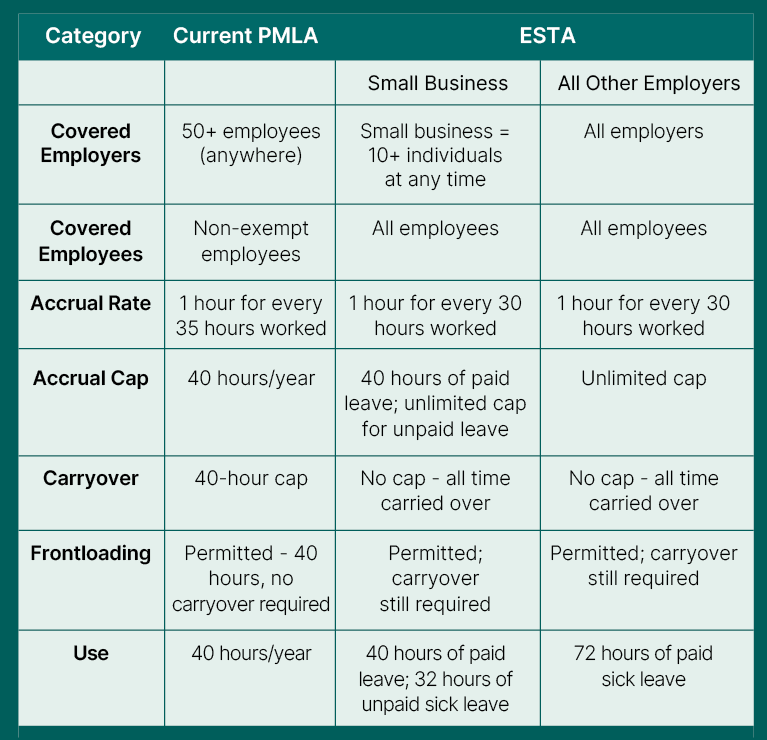
Beginning February 21, 2025, or upon the employee’s start date, whichever is later, employees will accrue 1 hour of sick time for every 30 hours worked. Employers may require new employees to wait 90 days after hire to use accrued sick time, but the accrual begins immediately upon hire.
How much earned sick time are employees entitled to?
Small businesses must provide up to 40 hours of paid earned sick time, with an additional 32 hours unpaid. All other employees must provide up to 72 hours of paid earned sick time per year. You should review the LEO website to determine if you are a small business or not.
Does earned sick time carry over?
Yes. All accrued and unused sick time must carry over to the following year. ESTA does not impose a cap on accrual or carryover.
Can employers frontload the earned sick time?
Yes. Employers may frontload the full year’s worth of sick time at the beginning of the benefit year. However, the frontloading method implemented must comply with the ESTA’s accrual, usage, carryover, and other provisions.
Does unused earned sick time have to be paid out at the end of a calendar year or employee termination?
No. ESTA does not require employers to payout unused time. Employers should check and confirm their written policies align with their desired practices concerning payout, as separate written agreements or policies may require employers to pay these amounts out.
As Agricultural Employers – What Should We Do Now?
Although the ESTA is not scheduled to go into effect until February 21, 2025, Michigan agriculture employers can mitigate their risk by taking steps now to make sure they are in compliance with the ESTA come the effective date. At a minimum, the following actions are recommended:
- Become familiar with the ESTA information on Michigan’s LEO website. Additionally, watch for new ESTA guidance and regulations on Michigan’s LEO website.
- Review and revise vacation, sick and other leave-related policies, including onboarding notices, timekeeping, and payroll mechanisms, to comply with the ESTA’s requirements.
- Ensure human resources personnel understand the rights and protections afforded to employees under the ESTA, including administration of all vacation, sick and other leave-related policies, notice and posting requirements, and recordkeeping obligations.
- Train all supervisor employees to avoid retaliating against an employee because the employee has exercised a right protected under the ESTA.
- Obtain and timely display copies of the required ESTA posters.
To view the winter 2025 issue of Partners magazine in its entirety, click here.
As we kick off the new year, it’s important to refresh ourselves on the cybersecurity topics we’ve explored over the last year – topics we hope provide you with practical, actionable advice to keep your family, finances, and operations safe. Cybersecurity can often feel intimidating or overly technical, which is why we provide these tech tips and work to break these subjects down into simple, human terms.
Whether we are discussing emerging threats such as AI-driven deepfakes, providing guidance on identifying financial scams, or shared recommendations on password management and multifactor authentication, the objective has remained the same: to make cybersecurity comprehensible and actionable for everyone.
AI and Deepfakes: The Threat Feels Like Science Fiction
Over the last 12 months, AI and deepfakes dominated the headlines and for good reason. Just a year ago, most of us were not even talking about deepfakes. Today? They are everywhere, just take OpenAI and their new tool Sora that can create hyper-realistic videos and audio clips that are so convincing they can fool even the sharpest eye. Imagine receiving a video call from someone who looks exactly like your trusted financial advisor, but it’s not really them.
In the Fall Partners Magazine titled The New Era of Financial Fraud – Deepfakes and AI, we shared, “Threat actors are using deepfakes and AI-generated content to manipulate communications, impersonate trusted individuals, and trick people into harmful financial decisions.”
It’s a terrifying reality, but there’s good news: you can take steps to protect yourself. Start by enabling multifactor authentication (MFA) on all your accounts. MFA adds an extra layer of protection, making it much harder for attackers to gain access, even if they trick you into revealing a password.
Mail Scams and Public Information: Too Real to Ignore
Have you ever received an official-looking letter in the mail about your mortgage, farm equipment, or property taxes that seemed a little… off? You are not alone. In Summer Partners Magazine, we covered this growing problem in Scammers and Public Information – Be Informed.
The short version? Cybercriminals are digging through public records—like court filings and property deeds—to send out fraudulent mail that looks incredibly legitimate. It might say you owe money, need to act quickly, or it could even offer tempting deals on equipment or loans.
Here’s what was suggested back then, and yet today: “Public records can be exploited to create mailers that mimic official correspondence, tricking recipients into taking action.”
So, what can you do?
- Trust but verify: Don’t act on any unsolicited mail until you confirm the sender’s identity.
- Shred sensitive documents before tossing them out.
- Use a locked mailbox to protect incoming mail.
And remember—if it feels rushed, urgent, or just too good to be true, pause. Scammers often use fear or excitement to push you into making hasty decisions.
Your Smartphone: A Double-Edged Sword
Let’s be honest—our smartphones are indispensable. They help manage farm operations, check finances, keep us connected—and yet, they are a goldmine for cybercriminals. If a bad actor gains access to your phone, they can grab everything: emails, passwords, bank info, you name it.
In the Spring Partners Magazine article, Five Tips to Secure Your Smartphone Now, these risks were explained: “Portability, constant connectivity, and access to sensitive information make smartphones a prime target for attackers.”
But do not worry, securing your phone is easier than you think. Start with these basics:
- Use strong authentication, like fingerprints or facial recognition.
- Regularly update your phone and apps—updates patch security holes.
- Be cautious about what you download. If an app looks sketchy, it probably is.
A few small tweaks can go a long way toward keeping your personal and financial information safe.
Looking Ahead throughout 2025
Cybersecurity is not about perfection—it’s about progress. The key is to take small steps, focus on what matters most, and build from there. Here are some recommendations worth starting in the new year:
- Passwords: Create unique, strong passwords for a few key accounts—like email and online banking. Once you get comfortable, a password manager can help you generate and store stronger passwords across more sites.
- Multifactor Authentication (MFA): Start with your most critical accounts and enable MFA. You’ll be surprised how much protection this simple step adds.
Thank you for continuing to join us on this cybersecurity journey. Our hope is that these tips have made you feel more confident and capable when it comes to protecting yourself. Here’s to staying vigilant—and ready—for whatever 2025 has in store.
To view the winter 2025 issue of Partners magazine in its entirety, click here.
Shelli and Paul Meulemans operate Wild Coyote Farm, where they are able to connect with their community and provide organic produce. They are both first generation agriculturalists who found their roots within farming. Wild Coyote Farm offers a customizable produce share throughout the harvest season. They service local homes and the Chicago area with their produce delivery and pickup program.
The Meulemans noted “We pride ourselves on the quality and affordability of the produce we sell, and the community has responded by supporting our farm.” Beyond their produce share, the Meulemans grow a diverse selection of vegetables, along with offering eggs, lamb meat, and wool to support their community.

The Meulemans Family
To continue providing for those around them, the Meulemans utilized GreenStone’s CultivateGrowth Grant. They were able to continue to expand their knowledge with the experience provided through the grant funds. “This grant allowed us to attend the Eco-Ag Conference & Trade Show, where spent time with like-minded growers and learned from luminaries in the field of soil health and regenerative agriculture.”
The conference consisted of a variety of panelists whose topics ranged from complex soil interactions of different chemicals and the value of balancing them, to a discussion around balancing minerals in the soil versus applying foliar chemicals. These presentations allowed the couple to network with many producers and expand their knowledge in the industry.
As Wild Coyote Farm reaches their eighth farming season, the Meulemans have strong goals moving forward, and said, “We would like to continue with aggressive growth in sales, following a trend we have been able to maintain since the farm started. In order to meet those goals, we must continue to expand our land base to continue to be a sustainable organic operation. We strive to have each acre of the farm to be in pasture for two years, then to be rotated back into vegetable production only when it is ready to grow the best possible produce.”
GreenStone is proud to support agriculturalists rooted in growth like Paul and Shelli. We work to provide the educational and financial resources needed to help grow your passion for your operation. To apply for a grant, visit CultivateGrowth Grant.
For many farmers and agribusinesses, securing a loan is a necessary part of managing a successful agricultural operation. Whether you’re looking to purchase farmland, upgrade machinery or build new infrastructure, financing can provide the resources to make it possible. However, a crucial decision lies in the length of your loan term. The choice between a 10, 20 or even 30-year loan can have significant financial implications on interest costs, monthly payments and overall financial flexibility.
Understanding the pros and cons of different loan terms helps you make informed decisions that align with your farm’s unique needs. Factors like interest rates, cash flow management and the life expectancy of your equipment can better position your business for long-term success.
Interest rates and loan terms: the basics
Loan terms and interest rates are closely linked. In general, shorter loan terms (such as 10 years) come with lower interest rates, while longer terms (like 20 or 30 years) have higher rates. Here’s why: when lenders offer loans with shorter terms, they’re taking on less risk, since the loan is expected to be paid off faster. As a result, they’re able to charge lower interest rates.
A shorter loan term may seem like an attractive option because of these lower rates. However, it’s essential to consider the trade-off. With a 10-year loan, your monthly payments will be significantly higher than with a 20 or 30-year loan, which can affect your cash flow and make it more challenging to manage expenses during lean months.
Comparing 10-year, 20-year and 30-year loan terms
Each loan term option comes with its own set of advantages and disadvantages. Here’s a closer look at what each term might mean for you:
10-year loan
- Pros: Lower interest rates and less interest paid over the life of the loan. The shorter term also means you’ll be debt-free sooner, freeing up capital for other investments.
- Cons: Higher monthly payments, which may put a strain on your cash flow, especially in years with lower yields or higher operational costs.
20-year loan
- Pros: A middle ground that balances manageable monthly payments with a relatively lower interest rate. This option can be a good compromise between saving on interest and maintaining cash flow.
- Cons: You’ll pay more in interest over the life of the loan than with a 10-year option, and you’ll remain in debt for twice as long.
30-year loan
- Pros: The lowest monthly payments, offering maximum flexibility with cash flow. This can help you manage other costs and save for unexpected expenses or future investments.
- Cons: Higher interest rates and more interest paid over the entire loan term. Additionally, with such a long-term loan, you’ll carry debt for a significant portion of your farming career, which may limit your future financial options.
Balancing cash flow and investment opportunities
Farms and agribusinesses often face a mix of predictable and unpredictable expenses. From seed purchases and equipment repairs to unforeseen challenges like extreme weather, maintaining a steady cash flow is vital. Opting for a longer loan term (20 or 30 years) can help ease monthly payments, allowing you to allocate funds for day-to-day operations and emergency expenses.
However, if you’re in a stable financial position and have a steady income, a shorter loan term could be beneficial in the long run. Lower interest rates and quicker loan payoff mean that over time, you’ll have more flexibility to invest in new opportunities, such as land acquisition, diversification or technology upgrades.
Consider the life expectancy of equipment and assets
A critical aspect of loan planning is matching the loan term to the lifespan of the assets being financed. Farm equipment, for example, generally has a shorter lifespan than land. Most tractors, combines and other machinery have an expected life of around 10-15 years, depending on usage and maintenance.
Why is this important?
If you take out a 20- or 30-year loan to finance equipment that only lasts 10 years, you could still be making payments on machinery that’s no longer operational or even depreciating in value. This scenario could leave you with outdated equipment and create a financial burden if you need to take out another loan for new equipment. In contrast, farmland and buildings can justify longer loan terms, as these assets retain value over time and are often usable for decades.
Planning for the future: flexibility vs. financial responsibility
Choosing the right loan length requires a balance between flexibility and financial responsibility. A 10-year loan may lead to quicker equity buildup, but a 30-year loan provides more breathing room for unexpected expenses or investments in your farm’s future. Here are some tips for deciding what’s best for your farm:
- Assess your current cash flow: Do you have sufficient income to cover a higher monthly payment? If not, a longer loan term may be a safer choice.
- Evaluate your business goals: Are you looking to grow your farm or make substantial investments in the next few years? A longer loan term could provide the financial room you need to do so without overextending yourself.
- Consider interest rate trends: Speak with a financial advisor or loan officer about current and projected interest rates. Sometimes, market conditions can make a shorter or longer loan term more favorable.
- Think about asset lifespan: Match your loan terms to the useful life of the asset you’re purchasing. Shorter loans are ideal for assets like machinery, while longer terms are more suitable for land and infrastructure investments.
- Work with a trusted lender: A lender who understands the agricultural industry, like GreenStone, can help tailor a loan to your unique circumstances and guide you through your options.
The right partnership
At GreenStone, we understand that every farm is different. We know the challenges and opportunities that come with running a farm or agribusiness, and we’re here to help you find a financing solution that aligns with your goals. Whether you’re considering a 10-year, 20-year or 30-year loan, our financial service officers can provide personalized guidance to help you make the best decision for your farm’s future.
Choosing the right loan length is about more than just monthly payments—it’s about planning for your business’s long-term health and growth. By considering factors like interest rates, asset lifespan and cash flow needs, you can set your farm up for success for years to come.
This blog was originally published in Michigan Farm News.
Ready to start building the home of your dreams but not sure where to begin?
Whether you’re looking for the perfect house to raise your growing family, a couple of dogs or a place to host gatherings with friends, GreenStone’s home construction loans can help make it happen. Our flexible country living financing includes both contracted construction projects and do-it-yourself home builds, allowing you to choose the process that best fits your busy lifestyle.
Before you get carried away planning your perfect kitchen and begin shopping for your dream backsplash, there are a few things you’ll want to consider first as you prepare for your build. Here are the top must-dos when preparing for a construction loan and home build:
Get a Pre-Qualification
Regardless of how early in the building process you may be, even if you don’t have a home site or a builder picked out, your first step is getting prequalified. Although it may seem premature to get pre-qualified months before you need the loan, a pre-qualification will help you and your loan officer do a check-up on your finances and determine your budget. That way, when you finally begin planning the construction process you will know exactly how much you can afford.
Another bonus to getting pre-qualified early is you’ll have time to take care of any surprise credit report items you weren’t aware of, so you can work on getting your credit in tip-top shape. It’s best to get pre-qualified 2-5 months before you plan on beginning the construction process.
For example, if you plan on building in the spring, you’ll want to meet with a local lender toward the end of the year to start discussing your financial plans and building goals.
Prepare Your Land
If you have not yet chosen your home site and need to begin the search for your ideal location, your next step is to get online or contact a realtor to start the process.
If you already own the land you plan to use for your future home site, take time to consider what needs to be done before the building can start. Preparing the land looks different for each project but typically consists of testing the soil to make sure it is suitable for building on, clearing trees or getting improvements started. It is crucial to do this step 2-3 months before you plan to build so when it’s time to begin building, the land is ready to go.
Decision Time: Contracted or DIY
Once you’ve decided on a build site, it’s time to decide which build option works best for you: working with a professional contractor or building your house yourself.
If you plan to work with a contractor, start researching builders in your area. Getting references, talking with the builder’s previous customers, and asking to see homes the builder has previously built will give you a sense of their style and their price-point, and can help ensure the house plans they offer align with your home goals.
If you plan to take the DIY route, there is other homework to be done. You should start by researching the items you will need and gather the costs for each. It’s important to keep in mind the costs could change between the time you prepare for the build and at the actual time of purchase, so crosschecking the prices for each item again at the time of your build is crucial.
Do Your Research and Ask Questions
The more homework and research you do up-front to prepare yourself for the construction process, the smoother home building will be and the less likely you are to run into project setbacks. Whether you’re doing a contracted construction build or taking the opportunity to do a DIY build, understanding the construction process is key and your lender is a valuable resource!
GreenStone’s team of experienced experts are ready to finance your home construction. Find our home construction loan options here.
When Emily Gandara was growing up, she felt she never had a clear vision of what career path she wanted to take. She has a degree in Web Development and Design, but said the passion wasn’t there. She had never felt like she knew what she wanted to be when she grew up. Facing this dilemma Emily, and her husband, Emmanuel, decided to start a new beginning.
“We purchased our farm in 2023 and with no farming experience, we dove right in,” Emily said. They started off that first year renovating their 1880 farmhouse, growing a cut flower garden and a fruit and vegetable garden, and raising pigs and chickens. All the produce was either sold at their farm stand or the local farmer’s market.
Wrapping up their first-year farming, the Gandaras’ had many goals to continue building, learning, and providing for their family and community.
“This first year on the farm is the first time that I feel like I’m right where I’m meant to be. Working on the farm centers me and sets my soul on fire all at the same time. So, at 35 years old and with 4 kids, I decided to head back to school.” Emily shared how fulfilled she is to have started this journey. To stick to her goals, she applied and received GreenStone’s CultivateGrowth Grant!
She used the grant to enroll in a program through Fox Valley Technical College on Agricultural Entrepreneurship. This program detailed the ins and outs of owning a farm operation. Emily noted she learned about business finances, farm equipment, crops, and animals. This course provided her with new knowledge as Harvest Moon Farm continues to grow and expand throughout the years.
In the coming years the Gandaras hope to dive deeper in their operation. “We want to provide our family and community with healthy, fresh food and beautiful flowers.” They also want to add more animals like turkeys, goats, and cows, as well as expand their flower garden and host pick-your-own flower events in 2025!
As the Harvest Moon Farm flourishes, GreenStone is proud to support agriculturalists like them. From the beginning we work to provide the educational and financial resources needed to help grow your passion for your operation. To apply for a grant, visit CultivateGrowth Grant.
As a cooperative, GreenStone is owned by its member stockholders and governed by an elected Board of Directors representing all areas of our territory. Our board meets throughout the year to provide direction and leadership oversight to our organization.
Before a member can be elected to the board, our Nominating Committee identifies, evaluates, and nominates a qualified slate of candidates for stockholder election. The Nominating Committee holds a very pivotal role in determining who provides leadership to our association. If you’re interested in furthering GreenStone’s role as an industry leader for agriculture and our rural communities, serving on the Nominating Committee might be a great opportunity for you!
Who Can Apply for the Nominating Committee?
The main duty of the Nominating Committee is to seek out and identify qualified individuals who are willing to serve as directors and nominating committee members.
To those interested in serving on the Committee, you must be a voting stockholder of the association, as well as have an outstanding loan balance with GreenStone. Those who are Directors, employees, or agents of GreenStone are not eligible to apply for the Nominating Committee. Those who are current candidates for the Board of Directors cannot serve on the Nominating Committee, however those who have served on the Board in the past are invited to apply for a position on the Committee. Finally, you must reside or have a headquarters within the association’s chartered territory. Nominating Committee members are elected for a one-year term with a maximum of serving for three-consecutive years.
What Makes a Good Candidate
The most important quality of a Nominating Committee member is their eagerness to get involved and advance the association forward. By putting the right people in place, GreenStone and our members both experience long-term growth that makes an impact. “Having direct involvement with your members is very important so you keep the direction of our association and Farm Credit Services moving forward”, says current Nominating Committee member William Lyn Uphaus.
Uphaus himself served on GreenStone’s Board of Directors before joining the Nominating Committee to help identify new members of the board. Nathan Girbach, who is a fifth-generation farmer and also currently serving on GreenStone’s Nominating Committee says, “A lot of the time farmers are so wrapped up in their own operations that it’s hard to remember the importance of being an advocate for the industry too. That’s why it’s so important to get out there and have your voice heard for the good of the industry.”
Responsibilities of the Nominating Committee
Elections to be on GreenStone’s Nominating Committee are held annually. Should you be elected to the Committee, meetings take place 1-3 times a year to review and approve the slate of director candidates. Starting in July, the Nominating Committee in a region with open director positions meet to review the expectations for sourcing and selecting candidates. Then in the fall that same Nominating Committee conducts formal interviews with the identified director candidates to determine who will appear on the ballot come May when the Board of Directors election takes place. The balance of the Nominating Committee members meet in December to select candidates to run for the next year’s open Nominating Committee positions.
Why Apply for the Nominating Committee?
“The whole process for me as a voting member has been very educational,” says Calby Garrison, GreenStone Nominating Committee member. “I would encourage anyone who’s looking to make a difference in this organization get involved.”
Are you a GreenStone member who’s passionate about finding the right people to represent our organization? Submit your application for the Nominating Committee below to be considered!
Nominating Committee Profile Form
As a farmer, the changing seasons bring both challenges and opportunities. Just as you plan your planting and harvest cycles, it’s essential to prepare financially for the year ahead. The new year is right around the corner, and by taking proactive steps now, you can build a solid foundation for a successful and sustainable farming operation in 2025 and beyond.
Here’s a breakdown of how you can ensure you’re ready for what the coming year will bring.
Review and Update Your Balance Sheet
Your farm’s balance sheet is more than just a financial document. It is a snapshot of your operation’s financial health at a specific point in time, often aligned with your tax year-end. A complete balance sheet includes everything your farm owns (assets) and everything your farm owes (liabilities), giving you a clear picture of your farm’s equity position.
Why it matters:
A well-maintained balance sheet helps you understand the financial strengths and weaknesses of your operation, guiding better decision-making for the future. Whether you’re considering a new equipment purchase or expanding your farm’s acreage, your balance sheet can provide the insight you need to proceed with confidence.
Action steps:
- Make it a priority to complete your balance sheet at least once a year. Your lender can provide a balance sheet template that will help you stay organized.
- Use the year-end as an opportunity to schedule an appointment to sit down with your loan officer and compare year-over-year (YOY) balance sheet trends. This review will highlight changes in your equity position and other key financial indicators.
- Examine liquidity—the assets you can easily turn into cash to cover current liabilities. For example, you sell your crop inventory sitting in the bin to pay for January’s loan payments. Strong liquidity will allow you to take advantage of opportunities or manage unexpected expenses.
Plan for Capital Improvements
Farming is an ever-evolving business, and in order to remain competitive and profitable, making capital improvements is often necessary. This could mean purchasing new equipment, overhauling equipment, completing major repairs, remodeling current structures or even acquiring additional land.
Why it matters:
Investing in the right capital improvements can significantly increase the efficiency and profitability of your operation. However, each investment comes with a cost, so it’s essential to assess whether the funds for these improvements will come from earnings or borrowed money.
Action steps:
- Evaluate the areas of your farm that would benefit most from capital improvements. Ask yourself: What will have the greatest impact on my operation’s efficiency and productivity?
- Consider how these improvements will be funded. Will you use your farm’s retained earnings, or will you need to explore loan options with your lender?
- Work closely with your loan officer to understand the best borrowing terms and rates available, ensuring that you balance the need for improvements with maintaining a healthy financial position.
Focus on Profit & Loss (P&L) Management
Your farm’s Profit & Loss statement (P&L) is another vital tool in understanding how well your operation is performing financially. This statement tracks your revenues and expenses over time, helping you evaluate profitability.
Why it matters:
While reviewing the P&L statement on an annual basis is important, keeping an eye on it throughout the year allows you to make adjustments in real-time. Understanding your revenue streams and cost structure ensures that you’re not just breaking even but generating healthy profits.
Action steps:
- Maintain detailed farm record books to track all income and expenses, ensuring that you have the most accurate data possible.
- Identify areas where you may be overspending or where you can reduce costs without sacrificing quality or productivity.
- Use the insights from your P&L statement to refine your budgeting and forecasting for the next year.
Build a Long-Term Plan for Growth
One of the biggest mistakes a farmer might make is to operate without a long-term plan. Each year offers opportunities to grow and improve, but without a clear roadmap, it’s easy to lose sight of your larger goals.
Why it matters:
Having a strategic plan in place will help you make decisions that align with your long-term vision for the farm. Whether you want to expand your operation, improve productivity or enhance sustainability practices, setting goals and milestones for the future is critical to success.
Action steps:
- Create an annual plan that includes both financial and operational objectives. What improvements will you make to the farm? How do you plan to increase efficiency or profitability?
- Review this plan regularly and make adjustments as needed, especially after reviewing your balance sheet, P&L and capital needs.
- Consult with your loan officer to ensure that your growth strategy is both realistic and financially sound.
Finding Support from Your Lender
It’s easy to feel overwhelmed when you’re managing a farm, especially when it comes to the financial side of things. However, you don’t have to navigate these challenges alone. Your lender can be one of many valuable partners, offering tools and insights to help you succeed.
Why it matters:
Working with your lender to understand your farm’s financial position and future opportunities can help you be prepared to face whatever challenges the coming year may bring.
Action steps:
- Schedule an annual meeting with your loan officer to review your financial statements and discuss upcoming capital improvements.
- Consider resources and support from your lender to help you make decisions that align with your goals.
By taking these proactive steps now, you can have your farming operation financially prepared for 2025. From maintaining a solid balance sheet to making strategic capital improvements, being intentional with your planning will allow you to overcome challenges and seize new opportunities as they arise.
This blog was originally published in Michigan Farm News.
Are you considering buying vacant land? Whether you are purchasing property for hunting, a place to build a future home, or even to expand your hobby farm, there are endless possibilities of how you can use your vacant land. One way to acquire this new dream property is through an auction. There are several auction companies throughout Michigan and Wisconsin that sell vacant land. If you are looking to purchase your vacant land through a land auction, here are some things to think about.
What do I need when buying land through an auction?
Before heading off to an auction, or logging into the auction website, work with a loan officer to get a prequalification and to help determine what your budget is going to be. When meeting with a loan officer there are a few things that you should come prepared with including financial statements, tax returns, and verified asset statements. This process will help instill confidence knowing you are going to purchase property that fits comfortably within your budget!
How can I buy land through an auction?
All auction companies have a set of rules and guidelines you have to take into consideration when buying vacant land. Some companies are cash only, or others require a closing within a certain amount of days. You’ll also want to know if the company requires an earnest money deposit, meaning if the auction requires you to put a certain amount down before closing to show that you are serious about the transaction. Earnest money deposits go towards your money down at closing as well. Making note of each of these guidelines ahead of time will help provide you the clarity to make the process easier for you to enjoy.
How can I be prepared for a land auction?
Before purchasing your desired property, do some research in the area, and if you are interested in building on the land, you should also double check the rules and regulations that come with potentially building. What are the specific permits you will need? Does the township have building requirements? Is the property accessible from the road? Do you need a legal easement to get to it and if so, are you working with a lender that will finance land-locked property like GreenStone does?
If you are looking to use the property for recreational use or doing some hobby farming, make sure to understand what is the average price per acre is in the area, how much is farm rent, and are there any agricultural affidavits or forestry to take into consider?
Having the answers to these types of questions will help you know if it is the right property for you!
Do I need to visit the property beforehand?
Although it is not required to visit the property before you buy it, it is suggested. What better way to get to know the area than to see it firsthand? Besides, it will be great to imagine where you might want to put your tree stand or build the cabin! If you are looking to use the property for farm ground, it will be valuable to see what the current state of crops looks like, what is planted there currently, how well they are growing, and are there any wet spots. This type of information will be important determining factors into whether or not you should purchase the property.
There are a few extra things to consider when purchasing vacant land when through an auction like auction guidelines, knowing your budget, and property research. Being prepared by doing some research and working with a lender will help you feel more confidence in the experience and make the process easier to purchase your dream property!
GreenStone’s team of experienced experts are ready to finance your land auction find. Find our recreational land loan options here.