
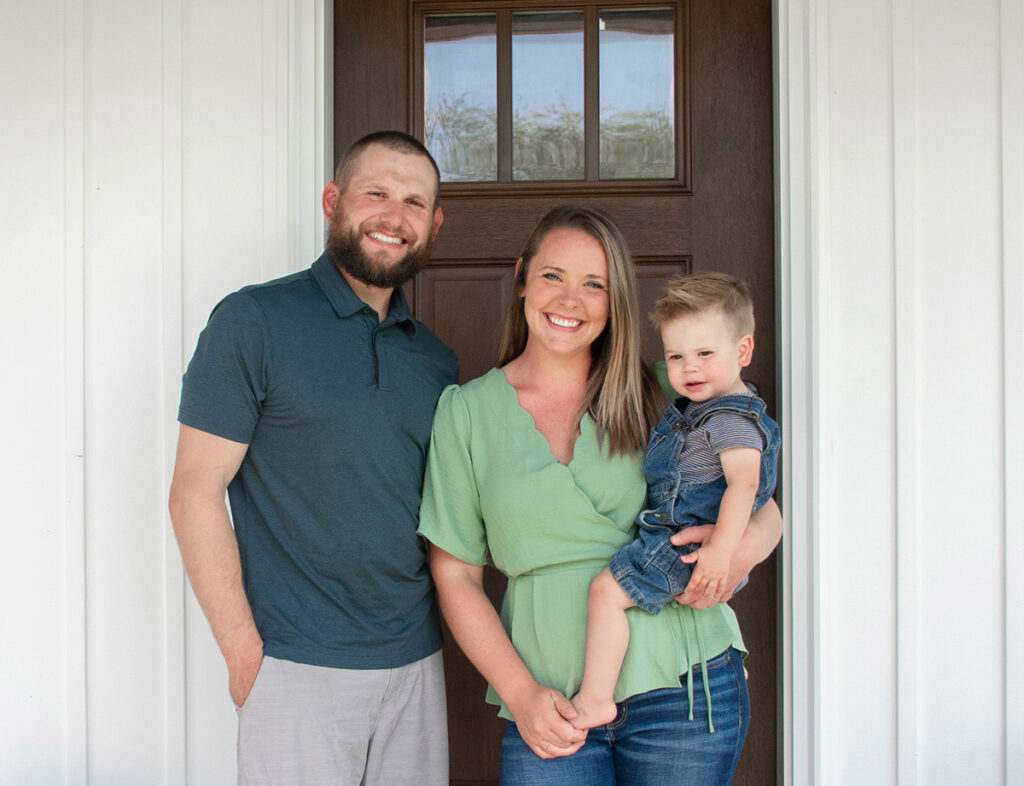
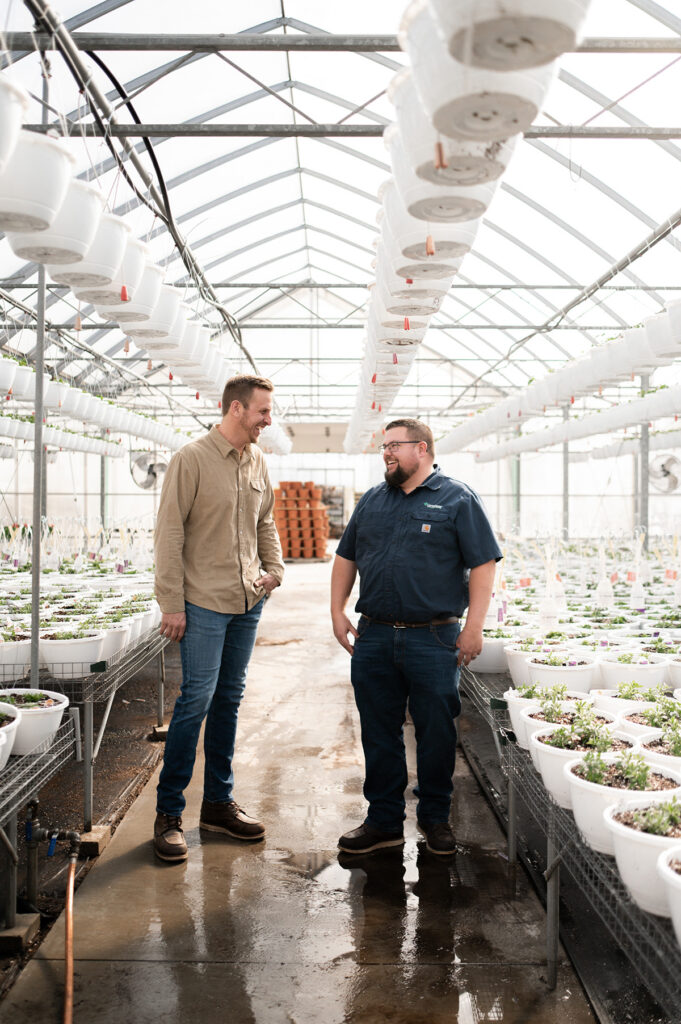

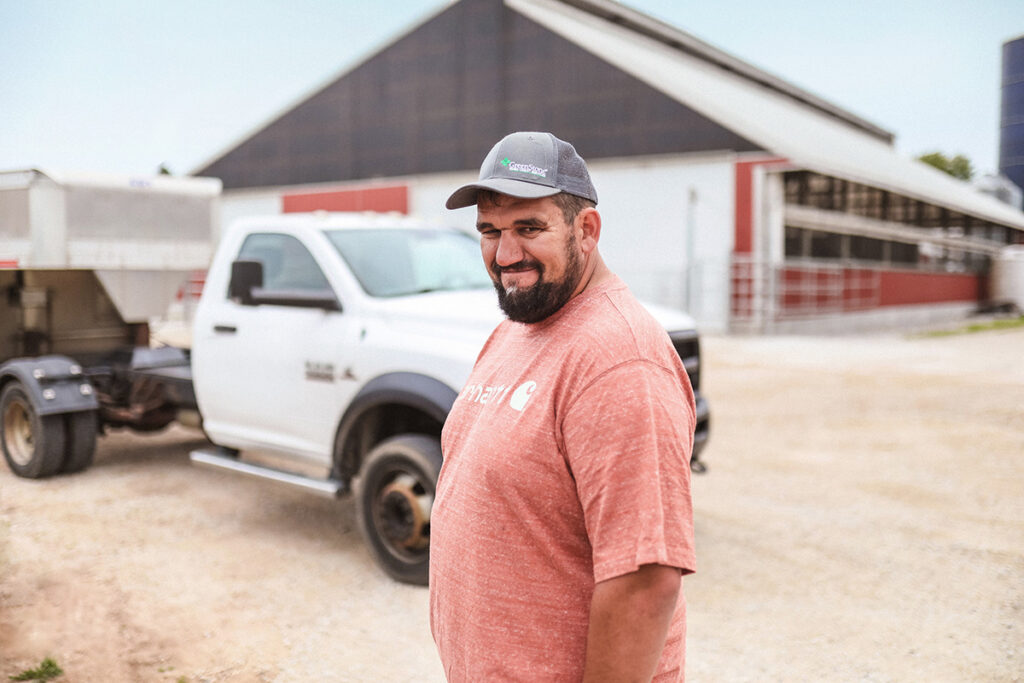
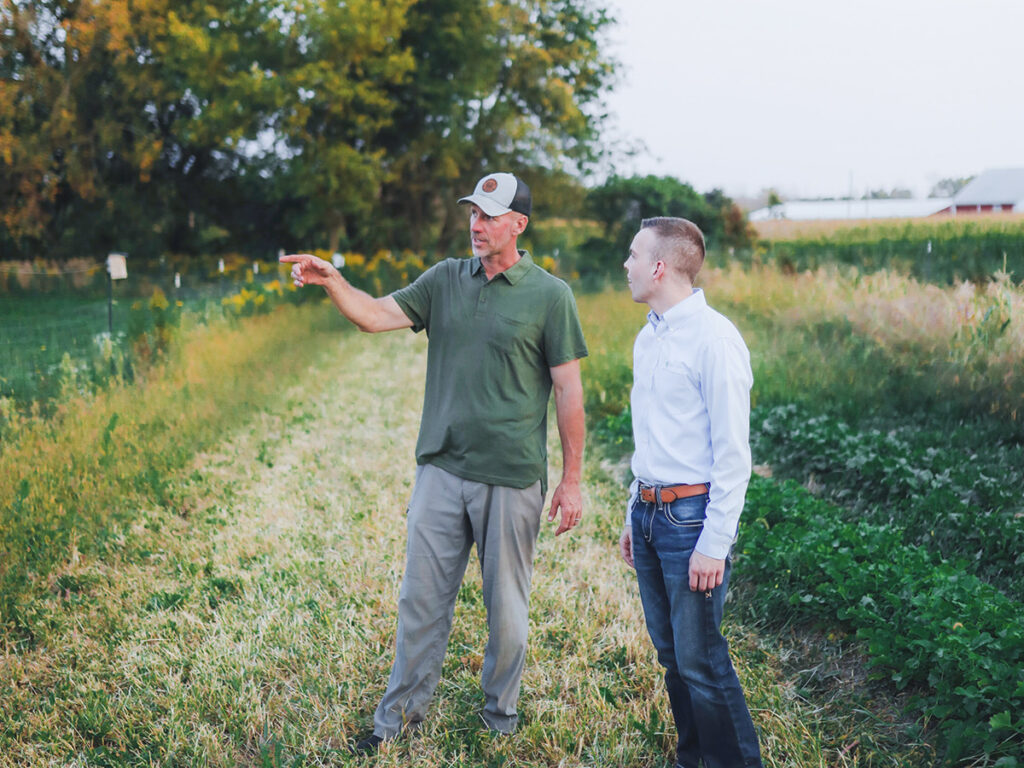
One on one relationships are key in personal relationships, but what about as a consumer? What if you were able to have a one-on-one relationship with the people growing and producing your products. That is a large part of Dandan Zhu’s operation. She and her husband, Adam, self-distribute all of their products to keep the one-on-one relationship with their customers.
The Zhu’s family operation consists of beef, pork, lamb, chickens, ducks, goats, turkeys, eggs, and flowers by season! Dana says they want “to show that a mid-scale, multi-species farm can be viable.” They first bought the farm in 2019, and in 2021 they started selling meat. When they bought the land, it had been fallow for 5-10 years and needed major improvements before being planted, but little by little they have been accomplishing their goals.
To continue to grow their operation, this year Dandan used the CultivateGrowth grant to attend the Make It In Michigan Seminar. This seminar is an MSU Sponsored conference for Michigan small scale food producers to network and meet distributors. When asked her favorite part it was “Meeting with passionate makers of specialty foods from the state. We have added a number the products of several other producers to our farm store.”
Their overall goals are “To be the trusted supplier of regeneratively produced animal proteins in northwest lower Michigan.” Regenerative agriculture is a food production system that uses and reuses farm resources to restore soil health, support the climate, water resources and biodiversity. Practices like cover crop rotation, keeping roots in the soil, rotational grazing, and using natural compost or animal byproducts to spread on soil allow them to waste less and utilize more opportunities in their farm.
The CultivateGrowth grant has allowed Dandan to realize how important it is to her to self-distribute their products and build that relationship with those around her. GreenStoneunderstands the importance of supporting education for young, beginning, and small farmers like Dandan. We work to provide the educational and financial resources needed to help establish a solid foundation. To apply for a grant, visit CultivateGrowth Grant.
How Land Value Benchmarks are Determined
Every year, annual land value trends are observed by GreenStone Farm Credit’s team of expert appraisers. These trends are measured by re-appraising the same thirteen plots of land representing unique market areas in Michigan and northeast Wisconsin. GreenStone evaluates these properties annually to give landowners and customers a picture of how the value of cropland, transitional land, recreational land, and dairy improvements have changed throughout the past year. Factors such as commodity prices, governmental regulation, tourism, and weather all help determine the market value of land within these regions. Reevaluating the same plots of land every year also eliminates any variance that could occur with other survey methods, leading our appraisals to the best representation of market value trends.
The Results are In
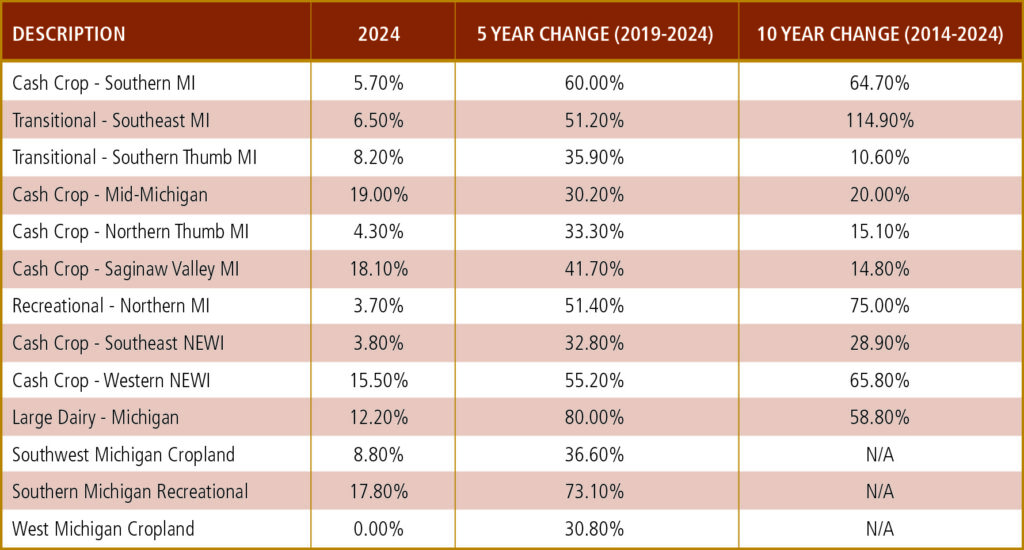
Overall, the results across all thirteen benchmarks grew again this year as you can see in the table below. For the fourth year in a row, land values only increased, ranging from a 3.7% increase all the way to 19%. For landowners, these results ring positive, but for those looking to acquire land, these rising prices continue to present challenges. Many aspiring landowners are now facing all-time-high land prices coupled with challenging commodity price outlooks. Despite these realities, demand for land remains high and inventory is scarce. With this competitive environment, it’s easy to see why we’re noting significant positive gains in value across the board for all thirteen land benchmarks.
Dairy and Cash Crop Summary
In 2023, our value benchmark representing a CAFO sized dairy operation saw a historic year-over-year increase in value due to rising construction costs and a thriving dairy market. That trend somewhat moderated but continued into 2024 with a 12.2% increase in value for large dairy operations in Michigan and Wisconsin. As this trend is heavily influenced by construction costs, the benchmark has nearly doubled in value over the past four years.
Land benchmarks for cash crops continued to hold steady in the northeastern Wisconsin region with a year-over year increase of 3.8%. The western part of northeast Wisconsin saw another spike in land value due to rising competition for limited land. This trend has been constant in the region over the past several years and appears it will remain the same going forward. In keeping with the trend, all Michigan cash crop value benchmarks also experienced steady increases in value.
Recreational and Transitional Summary
Recreational land and transitional land (agricultural land expected to be developed into another use in the future), continued to experience increases in value. However, that increase was not as significant as it has been in years prior. The period directly following the COVID-19 pandemic showed a widespread movement of people leaving urban areas to more rural destinations or purchasing recreational land. That trend seems to be leveling off, as the value of these land types has become more moderate in the past year. This trend can be seen across the land benchmarks in Michigan’s southeast and southern thumb regions, and northern Michigan. Increased interest rates, inflation, and other economic factors all play a role in the decreasing strength of land values.
It’s Still a Good Time to Own Land!
An unwavering fact from this year’s land benchmark results is the value of land continues to increase, and the good news for landowners is it’s very likely the value of your land has increased over the past year. Buying land continues to be a strong investment for your future!
GreenStone’s team of financial experts can help find a unique solution that’s tailored to you, whether that’s helping you secure your dream plot of vacant land or expanding your farming operation. Click here to learn more about the resources GreenStone provides when it comes to purchasing land.
This blog was originally published in Michigan Farm News.
As summer comes to an end and hunting season approaches, the idea of purchasing your own hunting land may be floating around in your mind. For any avid hunter, fisher, or outdoor enthusiast, owning your own land can make each trip even more enjoyable. When deciding to purchase your own hunting land, there are a few things to keep in mind.
How to Buy Hunting Land
Understanding the process of buying hunting land can help you decide if the purchase is right for you. Typically, buyers start with a prequalification process similar to the process of purchasing a home. If you’re thinking of purchasing your own hunting land, get prequalified early! Hunting land is in high demand and offers must be put in quickly to secure your dream property.
While going through the qualification process, keep in mind many lenders like GreenStone require a 20 percent down payment for hunting land. Another part of the loan conversation is interest rates and amortization schedules. The most common loan type for hunting land is a 30-year loan because it will keep the monthly payments lower.
After your purchase offer is accepted, your lender will conduct an appraisal and discuss various aspects of the property with you, such as if the property is wooded, if it has tillable areas, and ensure it has road legal access and necessary aspects required for financing.
We are here to help you every step of the way! You can always reach out to your local financial services officer with any questions you may have before, during, or after this process!
Benefits of Purchasing Hunting Land
Hunting land is becoming harder and harder to come by and having guaranteed access to leased land can also be hard to obtain. When using land owned by someone else you can run the risk of your access being denied. Unfortunately, leased property can change ownership at any time and imagine losing access to hunting land right before the season begins.
With your own land you are always in control! You never have to worry about missing a season and you can make all of the decisions for the use of the land. You can decide to develop habitats for wildlife, dig a pond, plant crops, or enroll in a state funded conservation reserve program. Whether it’s deer lures, or trout habitat, this control can help you improve the quality of wildlife on your land and raise the overall property value for future resale.
Historically, real estate value is continuously rising, meaning once bought you may have the opportunity to earn a return on your investment if you have a need to sell it later.
When you decide the time is right to make the purchase, we recommend speaking with a local realtor who specializes in hunting land. In this competitive industry, it is best to have someone who knows the area and can help you find your dream property. Remember to always tour the property, keep an eye out for environmental concerns, and make sure the land is perfect for all of your goals!
And when it comes to financing, visit one of our branches to speak with your local financial services officer and start working toward your dreams today!
If you grew up on the farm, you would know all about “harvesting” rocks out of the field. It’s a tedious task that never seems to stop, but why does it need to be done? The rocks, if left in the field, can do immense damage to harvesting or planting equipment. Grabbing even one rock out of the field can help the equipment become less damaged. Harvesting, or as some call picking, the rocks allow the operation to get better and more efficient each year.
Constant improvement is a goal of many farmers, and Ty Bodeis is no different. He grew up on his family farm and in high school his dad rented him his own field. Ty oversaw the field’s crop inputs and finances. This experience led him to pursue a degree of Crop and Soil Sciences from Michigan State University.
After college he started his own operation of corn, soybeans, white wheat, and black beans. Now he has over 120 acres himself, while still helping his dad on the family farm. Four years ago, Ty joined teams with GreenStone to secure more land, and since then has been consistently growing with the help of the CultivateGrowth program.
This year Ty focused on better managing his operation and he found a pathway through the CultivateGrowth Conference and grant program. He attended the conference this past February and has since been awarded the grant to help him with better management systems.
He currently is using an accounting software that allows him to get a full cost analysis field by field. Every input in the fields is different, so this allows him to keep track of all of his acreage finances and understand how he can better his farm each year.
Ty is familiar with harvesting rocks out of the field each year, and just like how that betters each field, he hopes to continue to use his education, the resources available to him through GreenStone’s CultivateGrowth program, and field management to continue to get better. Over the coming years Ty hopes to continue to expand his operation while helping out where his roots were grown on the family farm.
GreenStone understands the importance of supporting education for young, beginning, and small farmers like Ty. We work to provide the educational and financial resources needed to help establish a solid foundation. To apply for a grant, visit CultivateGrowth Grant.
Our interns had a busy summer, between intern events, job shadows, and work projects our interns had the chance to do it all! At GreenStone, our interns do real work and projects that help the company tremendously, and they even got the chance to share their experiences during the company-wide Intern Presentations.
These presentations encompassed each intern’s experience at GreenStone. Staff spent the morning learning about each of the 19 interns through their presentation where each discussed their background, projects they worked on, and overall takeaways. Many discussed the challenges they overcame and how much they learned working within their departments.
Many team members, executives, and managers came out to support the interns during the presentations, asking inquisitive questions and networking over lunch after the presentations. This allowed the interns to mingle with people from other departments and thank those that supported them.
As a GreenStone intern, each completed hands-on projects to help our teams tremendously. This presentation and networking opportunity allows GreenStone to recognize the interns for their hard work and learn more about each intern and what they have accomplished during their time at GreenStone.
The work day wrapped up after the presentations, but it wasn’t the end for the interns! Later that evening many of them headed to Jackson Field to watch the Lansing Lugnuts baseball game. They got to enjoy their last full day together as a cohort while enjoying food, the game, and their suite seats!
This was a wonderful way to wrap up summer and show how thankful GreenStone is for this year’s summer interns. It has been a summer full of growth, connections, and opportunities. We wish our 2024 summer interns best of luck in their next adventures. If you’re interested in learning more about our internship program, click here!
Here at GreenStone, we take great pride in getting to know our members and finding the right solutions for their unique needs. We know our customers’ success is our success, that’s why we’re proud to share for the second consecutive year we have achieved a customer satisfaction score of 96% on our annual customer satisfaction survey.
Despite fluctuating economic factors like rising interest rates, strengthening customer relationships and providing tailored financial services and solutions has been the driving force behind earning a record-high customer satisfaction rate for the second year in a row.
GreenStone has achieved a customer satisfaction score over 90% for the past 21 years.
“The relationship we have with our customers is the foundation of everything we do at GreenStone,” said President and CEO Travis Jones. “Understanding the unique needs of our members is very important to us so we can strive to provide the best service and expertise possible.”
More than ever, customers are seeking a financial partner they can trust. Responses from customers surveyed in both Michigan and Wisconsin indicated they felt a strong sense of support and partnership from GreenStone, and were highly satisfied with the attention to detail and level of service they received.
The customer satisfaction survey uses a seven-point scale ranging from being “very dissatisfied” to “very satisfied”, as well as measuring customers’ perception of GreenStone’s performance over the past year. This year, GreenStone’s “very satisfied” results met the record high 74% again from last year’s survey. Many customers (24%) even reported they felt GreenStone’s performance had improved and exceeded their expectations in 2024.
Other notable areas of high satisfaction included GreenStone’s financial soundness, clerical staff, loan officers, and being a lender that values customers. For the second year in a row, 98% of members surveyed answered GreenStone was a financially sound lender with funds readily available.
“These scores are a testament to how our staff continually goes above and beyond to find the right solutions for our customers,” said Jones. “We take great pride in serving the rural communities of Michigan and northeast Wisconsin, and we know our customers’ success is our success.”
Customers also commented on our Patronage program, which is an annual event in which GreenStone gives back a portion of its profits to members. This year alone another $120 million was given back to customers, who expressed their appreciation of the member benefit in the annual survey.
Overall, this year’s survey results have proven that customer success and the relationships we foster with our members continue to be the driving factor behind GreenStone’s reputation as a trusted financial partner.
A Lifestyle Worth Living
Tucked in the heart of Michigan blueberry country, just off the beaten path you’ll find a blueberry operation with family, hard work, and a whole lot of heart at the center of their operation.
“We’re doing the best thing we think we can do for the future, and for us that’s providing handpicked fresh fruit.” Scott Harris, owner of Harris Blueberries located in Bloomingdale, MI, radiates pride for his product, his operation, and his livelihood. Scott, along with his wife, Marcy, and his Uncle Al, started Harris Blueberries in the late 70s with a dream to grow a sustainable full-time blueberry operation. But for Scott, his dream of operating a blueberry farm started much sooner, back as a 12-year-old working for a local blueberry farmer. “He told me if I planted 10 acres of berries here, that’s all I would have to do, and I could retire on that. That’s what started it for me.”
Of course, Harris Blueberries has expanded well past 10 acres of farmland, and Scott and his family don’t show any signs of slowing down. Harris Blueberries now spans 265 acres, and they hand pick and pack over 1.2 million pounds of fresh blueberries a year. Uncle Al, a patriarch of the farm who is now in his 90’s, still eagerly manages the operation’s nursery, overseeing more than 80,000 new blueberry plants until they are mature and ready to be planted.
For the Harris family, raising and packing fresh blueberries is more than just a job. “This is our livelihood,” says Marcy. “A lot of people don’t realize this is more than a job. Farming is a lifestyle to us, and we wouldn’t have it any other way.” Marcy herself manages the farm’s food safety protocols and keeps the office operations running smoothly and efficiently.
Family First
Family is an obvious pillar in the Harrises’ operation, and it’s more than apparent in the part they each play in running a successful family business. The Harrises take great pride in their farm as well as the several multi-generational families they employ who are helping make their dream a reality. This strong foundation of families working together has played a key role in the success of the business and remains an important part of the operation.
The Challenges of Operating a Blueberry Farm
Michigan’s fair summers, lake effect weather, and sandy soil conditions prove to be the perfect atmosphere for producing blueberries. However, their growing season doesn’t come without its own set of challenges. Uncharacteristically hot and humid summers, unpredictable weather, sporadic temperature drops, and seasonal pests all affect the harvest and can take a toll on the yield of fruit they produce every year. In addition, the Harrises have found themselves adapting to changes in demand from consumers as well.
The ongoing challenge of supplying the market with new varieties can be a risky endeavor. “We’re seeing a demand now for larger, crispier berries,” says Scott. This means planting new proprietary varieties of berries, which take time to mature and develop, posing a potential risk that may not pay off in the end.
The Value of a Reliable Partnership
It’s these unique challenges of farming that make having a trusted financial partner in your corner so important. “GreenStone understands us, because they understand ag,” says Scott.
When the Harrises began considering taking their operation full time, they knew they needed the support of a trusted lender, and one who understood the agricultural landscape.
“GreenStone really allowed us the opportunity to take our operation from part time, as something we were doing on the side, to full time. Because of their ag knowledge, they were able to help us purchase land that we needed for investing in more plants, and we were able to go full time with the business a little over 20 years ago,” Scott recapped. “They believed in us, even with all the challenges that we faced along the way. They’ve been a big part of our growth, and it’s been a great partnership for Harris Blueberries.”
Miles Bowman, Senior Financial Services Officer at GreenStone adds “Working with Scott over the past three years has been a fantastic experience. The dedication and hard work he put into his operation is inspiring. At GreenStone our goal is to support farmers like Scott to continue to grow and innovate. His story is a great example of how GreenStone can work with our customers to facilitate growth.”
GreenStone possesses the experience and knowledge necessary to help farmers succeed in growing and developing their unique operations. Click here to learn more about the services we provide to farmers and rural communities in Michigan and northeast Wisconsin.
Can you imagine … a wide open space, completely private, and ready to host your relaxing weekend? GreenStone is your partner for making this a reality with recreational land loans.
Land is eligible for a recreational land loan if it is ten or more acres and used for outdoor adventure, not for building a home. It typically requires 20 percent down and offers 30-year amortization terms. Don’t worry – if plans for your land change in the future, you can also use GreenStone to secure a do-it-yourself or contracted construction loan or to make other improvements. Also, if you find a piece of land on less than ten acres out in the country, we have financing options for that, too.
Let’s look at the top three benefits to owning recreational land:
Outdoor activities
Hunting, fishing, hiking, riding ATVs, birdwatching, camping … the list goes on and on. The beauty of nature is right there for you, any time of the year. By owning your own rec land, you don’t have to worry about loud neighbors – the quiet land is yours to enjoy. Why not check out financing on that perfect piece of property?
GreenStone customer Scott Beckman from Niles in Berrian County, Michigan purchased 80 acres of recreational land in the Upper Peninsula of Michigan for hunting and ATV riding.
“We bought it for outdoor activities and as an investment,” he said of his land in Pickford. “This way, we don’t have to lease other land for hunting, and we can hunt waterfowl, deer, upland birds, grouse, and bear on our own property. I’m going to put food plots on it and develop it even more for wildlife.”
If you have family or friends who feel the same way, there’s also the option to buy as a group and take turns using the property. If you don’t want to shoulder the entire cost of the land, but you still want the opportunity to explore it alone, this is a viable compromise.
Security
As an added bonus, unlike if you’re on rented land, any improvements you make are yours to keep. Buying your own acres allows you to improve the habitat – which increases both the quantity and quality of wildlife on the land – without having to obtain permission.
Most importantly, you don’t have to worry that the parcel may be sold to someone else after you’ve spent time and money putting in food plots, planting trees, building wildlife ponds, and performing timber management. You can rest assured you will reap the benefits of your improvements for years to come.
Investment
Not only is it great to have your own land to spend time on, but it can also generate income. When you’re not using it, consider leasing your land for hunting or camping.
There’s never enough rec land to go around, so it’s possible to lease land for hunting during a season you aren’t using it. Land owners are also creating fishing ponds and then leasing access to fisherman. By doing this, you can build up some income to make loan payments, pay for more improvements, or even get started saving for that construction loan someday.
Leasing land for camping has also become more popular, especially as people are looking for more solitude on vacations. Rec land is perfectly suited for rustic camping, and people are willing to pay for the peace and quiet.
The resources of the land can also be monetized. Look into programs where trees can be harvested and replanted, so you can be sure that your forest remains a sustainable resource for future generations. Based on your financial goals, you have many options for using the land as an investment resource.
Other options include: Renting plots for a community garden, hosting beehives, growing custom flowers, selling firewood, offering storage, hosting outdoor classes, building a shooting range, putting up solar panels, and more.
To speak with one of GreenStone’s financial services officer about financing your dream property, stop by a GreenStone branch near you or apply now.
Whether you are hoping to settle down in a new home in the country, purchase a second home for weekend getaways or hunting season or are looking to buy an empty plot of land, there are five main things to consider when looking for the right lender.
As we dive into those five topics, it’s important to also recognize there are different types of loans based on the type of property you are seeking, which fall primarily into three categories: Primary residence, secondary residence and vacant land. The type of land you are purchasing will determine the stipulations and guidelines you will need to follow to secure the loan – and those guidelines vary based on what lender you choose.
Down Payment
In doing your research, find out from each lender what down payment percentage you will need to pay upfront to secure the loan. The amount you must put down up front diminishes your cash on hand, and therefore should be acknowledged early in your evaluation as you consider other projects you have in mind for the future. Oftentimes, the down payment depends on the type of loan – and that is based on the type of land you wish to purchase.
For example, if you are looking to purchase a home as your primary residence on a plot of land, GreenStone requires you pay a minimum of 5% of the purchase price as a down payment on the loan if you use private mortgage insurance (PMI). This number changes if you are purchasing a secondary residence or vacant land, or without PMI. Each lender will have different down payments for each type of loan. It is always important to ask how much you need to contribute right away to secure your loan.
Building Timeline
If your plan includes buying the land with a land loan and then construction of a home or pole barn, it is important to recognize that each lender could have different requirements for the amount of time you have to start, and complete, the building process. This is something to consider if you are purchasing a vacant piece of land with no home or building on the property currently. This could impact the type of loan – or loans – from your lender and what their process is for each.
GreenStone vacant land loans do not have time constraints as far as when you must build on your land, meaning you have as much time as you want to start building your dream home or vacation getaway on your land.
Fixed vs. Adjustable Rates
You should always consider the loan product a lender is offering – fixed or adjustable.
A fixed rate is a set rate of interest that does not change throughout the life of the loan. An adjustable rate rises and falls throughout the life of your loan based on market rates.
A third loan option some lenders may offer is a fixed rate that adjusts once after a certain number of years, called an adjustable-rate mortgage, or ARM. A common example GreenStone offers is an adjustable-rate mortgage 5/25-year loan. For a 5/25 loan, the interest rate will be fixed for the first 5 years then adjust once to the current 25-year fixed rate. Many people may choose this option if they are planning on building a home within the first five years as the rate is typically lower than a 30-year fixed rate.
You can learn more about which option may be best for you in this blog.
Size Matters
Some lenders may have a limit on how small or large your land can be. This typically goes by acreage.
Many lenders specialize in smaller parcels and may only be able to provide land loans for property up to 5 or 10 acres. Thanks to GreenStone’s more than a century of experience with rural properties, we have the expertise to evaluate and support all types of vacant land purchases from small lots to unlimited acreage parcels.
In The Zone
All property is zoned by local government for its primary use. Rural land often falls in either residential, recreational, or agricultural zoning. Many lenders will use how it is zoned to determine if you are eligible for certain types of loans. Some lenders might find issues if land is marked as agricultural as opposed to a residential zone.
GreenStone does not restrict loans based on the property’s zoning type. Our team’s experience also means we understand how specialized zoning, like conservation easements, work. This is where there are usually several stipulations on what the land can be used for and limited building sites or use opportunities for the land.
As a consumer, it’s hard to know all the considerations that go into a loan decision, that’s why our team of loan experts work with each customer to understand your unique plans to help us offer you financing options that best align with your goals. But no matter which lender you consider working with, it’s always important to do your research, ask questions and find the lender you are comfortable working with who can fulfill your specific needs.
When you are ready to apply for a country living loan, get started with GreenStone through our convenient online loan request here. You are also always welcome to call one of our offices throughout Michigan and northern Wisconsin to ask questions. Our knowledgeable financial services officers will be happy to answer any questions you may have!
The Benefits of Leasing Farm Facilities
You may already be using leasing as a financial tool to keep your equipment fleet up to date, reduce maintenance costs, and procure farm vehicles. But did you know that by leasing the buildings and facilities necessary to your operation you can avoid lengthy depreciable lifespans, preserve working capital, and keep facilities in the family business? Here are four benefits to leasing buildings you may not have considered:
Improved Cash Flow & Flexibility
One of the biggest benefits of leasing is the ability to put up a structure with limited cash flow. For those looking to free up cash flow, or who do not have the cash to build, leasing provides an option to complete the project in full without providing a hefty down payment. Since leasing provides 100% financing up front, you can use that cash you’d typically put down on the project to fund other parts of your business, or simply improve your working capital.
GreenStone offers lease options through Farm Credit leasing, where leases can be written with flexible terms to be paid off early, ended, or even refinanced. Leasing allows you to put up the structures you need to grow your business while staying profitable.
Avoid Lengthy Depreciable Lifespans
Lessees can also improve their cash flow by avoiding lengthy depreciable lifespans. For example, instead of waiting 20 years for a building to depreciate before writing it off, you could lease a building for 7 years with a 25% residual. The residual is the anticipated value left owed on the lease at the end of the lease period. If your lease payments are fully deductible (see your accountant for your specific information), 75% of the building’s value can be written off in 7 years and then purchased for 25% of the price it was originally valued at.
Take for example a customer who was looking to install a new truck wash for their operation. Since this is classified as a commercial structure, the depreciable lifespan of this building was 39.5 years. Instead of waiting nearly 40 years to write off this expense, the customer leased the truck wash for 12 years with a 30% residual. They were able to write off 70% of the structure after 12 years. Leasing provided them an opportunity to preserve working capital and stay profitable while growing their operation.
Easy Transfer of Assets to the Next Generation
When you’re ready to transfer ownership of livestock or dairy facilities, grain bins, or other farm structures to the next generation, leasing provides the most efficient option. A lease-to-buy plan allows you to transfer equity and keeps it off your estate taxes. When the residual on the leased building comes due, whoever is next in line can purchase that asset for the residual amount. This is a huge benefit for family-run farms, or for lessees who are looking forward to retirement in the near future.
Lower Your Tax Liability & Estate Tax
The two major benefits you have with leasing a building instead of financing it is keeping it off your estate taxes and lowering your overall tax liability. Lease payments can be fully deductible, offering immediate tax relief instead of a lengthy depreciation timespan. A lease-to-buy option, as mentioned previously, can also help keep assets from being included in your estate taxes when the building is purchased at the end of the lease.
When it comes to leasing new construction, you’ll want to work with your loan officer to ensure your lease starts before the building goes vertical, meaning any work that’s completed after groundwork and site prep. This establishes your lessor as the legal owner of the asset right from the start. Should you start your lease halfway through the project, it could trigger a transfer tax on the amount of the project that has already been completed, and that could add up depending on the kind of work that has already been done.
It’s important to have an expert in your corner when deciding what the best financial decisions are for you and your business.
GreenStone offers the expertise and knowledge backed by Farm Credit leasing to provide you with leasing services to help expand your business.
For more information on leasing, reach out to your local GreenStone branch today or visit our leasing page.
This blog was originally published in Michigan Farm News.