

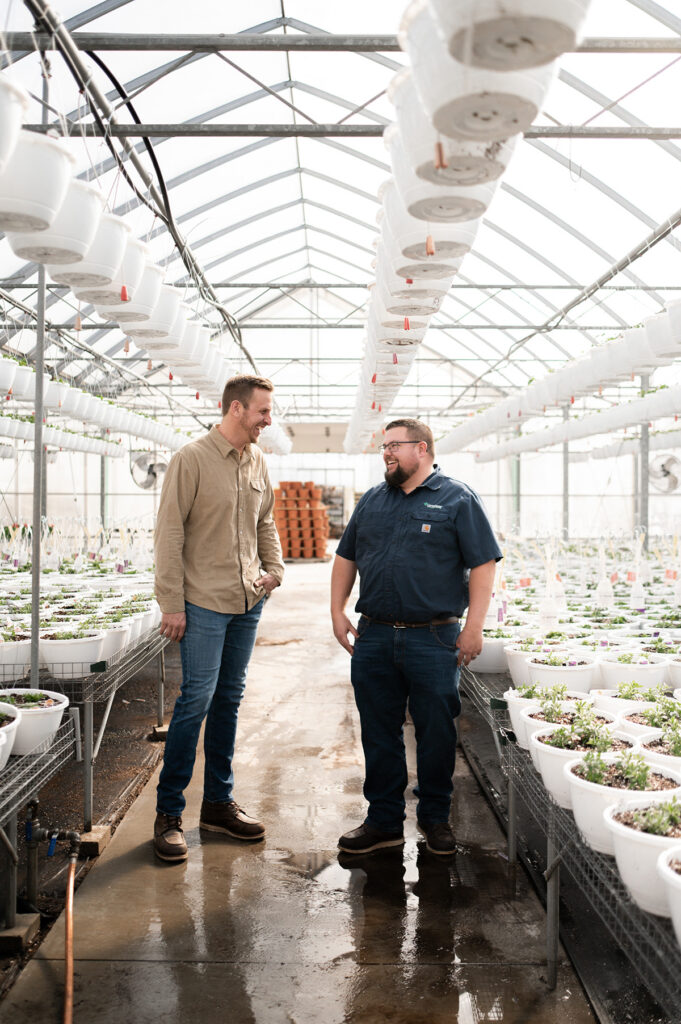

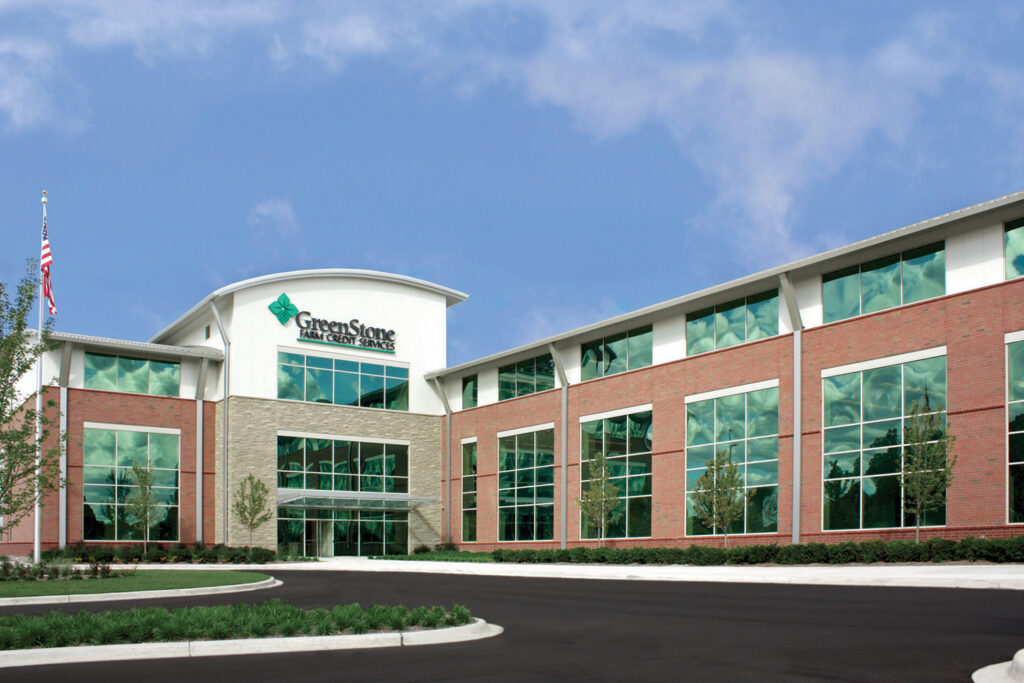
Recently, GreenStone’s human resources department showcased their career toolkit, etiquette, and presentation skills to the intern cohort to help them pave their pathway to success! This gave interns the opportunity to learn and develop skills necessary when applying for full-time roles.
What’s in our career toolkit? A self-assessment consisting of a reflection of their strengths and weaknesses, and a process of defining your career goals and setting short and long-term personal goals. The discussion continues from there into how to maintain your ‘personal brand’ and what that looks like with many different social media platforms. Most importantly in the toolkit, is a deep dive into the career search process. This involved what goes into writing a killer cover letter, resume, and best interview practices.
The discussion led to many different avenues, from how to wow the interview committee to questions on resumes to what would best be in their career toolkit. Overall, the pathway to success meeting included a thoughtful discussion in understanding what to expect when applying for full time roles.This gives our interns things to prepare for and skills necessary for a full-time career.
During lunch, there was a presentation discussing professional dining tips. The interns were joined by other GreenStone staff members to put their business dining etiquette skills to the test and make connections in other departments! This lunch allowed not only the interns to learn about which fork to use when but provided a stellar networking opportunity for all involved.
After lunch the day wrapped up with a presentation filled with tips and tricks to best reach your audience while giving a presentation. These tips included understanding your audience, making a connection with them, and adjusting based on their reactions and participation.This allows presenters to interact with the crowd in a way that is engaging and educational!
As part of a GreenStone internship, interns are asked to give an end of internship presentation showcasing what they have accomplished throughout the summer. The pathway to success event allowed the interns to not only become fully prepared for their future careers, but it gave them the skills that they will need to deliver an excellent presentation.
GreenStone takes pride in our intern cohorts, and we value the work they do. We wish them the best as they get ready for presentations and get prepared for their future careers. As an intern with GreenStone, we hope each and every intern has paved their way to success! If you want to learn more about our internship program, check out our website.
The purpose of a tree’s root system serves not only to help the tree survive via water, but also as a stable foundation for the growth that’s to come. Education provides a similar benefit to us; it serves as the foundation for our future growth as a person. A root system continues to develop as the tree ages, just how learning can be lifelong. Allowing ourselves to take opportunities that expand our foundation of education is crucial for growth. Ronna and Zach Wagner have taken that opportunity by charge!
Ronna and Zach are first-generation farmers who grew up surrounded by agriculture. They found so much passion in the industry they decided to branch out and start their own operation!
Ronna notes, “Throughout high school, FFA was a really big part of my development in agriculture and leadership skills.” She valued her agriculture education growing up, and it is something her and her husband planned to continue.
Each year the Great Lakes Crop Summit provides producers the opportunity to gain more knowledge on current research, market outputs, and new technology. This year they used GreenStone’s CultivateGrowth Grant to attend, and to make it even more special their daughter joined them!

The Wagner’s operation is over 3,000 acres and primarily row crops with corn, beans, wheat, and hay for cattle. With that farm under their leadership, they split up at the conference and hear from as many of the presenters as they could fit in. Ronna shared, “I really like seeing the new research that people are doing and what people are trying on their operations. It’s nice to see the data and that it’s proven.”
Not only did they learn from the expert presenters, but networking was also an important aspect of the Crop Summit. She says, “It’s like a reunion, everyone gets to catch up and talk about their year in their area and share things that they’re doing.”
“The Great Lakes Crop Summit serves as another opportunity for us to learn and grow,” Ronna concludes. As first-generation farmers, events like these are very beneficial for growing roots in the industry. Ronna and Zach are great examples of building an educational foundation for the future.
GreenStone understands the importance of supporting education for young, beginning, and small farmers like the Wagner’s. We work to provide the educational and financial resources needed to help establish a solid foundation. To apply for a grant, visit our CultivateGrowth Grant page.
No matter the size of your farming operation – whether it’s a sole proprietorship or a large-scale production operation – it is important to clearly define roles and responsibilities among those involved.
In a small operation, there may be one or two family members or colleagues handling the important roles. The farm size will dictate how the roles will be divided among individuals.
There are several key roles on a farm including:
- Business/Financial management: Consistent maintenance and review of farm financial records is a key role for a farm operation. Complete and accurate financials records will assist any sized farm operation in the decision-making process for all aspects of farming given the capital-intensive nature of agriculture.
- Production management: Who is in charge of the cropping, equipment, and livestock as well as the farming itself? There is a significant amount of care and decisions that go into the inputs being used for the particular year as well as the development of a farm plan.
- Marketing management: How are you going to market your agricultural products to get the most profit with what’s available? There are marketing tools to help manage the market and prices being offered, as well as risk management options, which can all be covered by this important role in the farming operation.
- Household management: Whether you’re a sole proprietorship or a large entity, it’s important to determine the role of who’s managing the household and how that’s managed along with the needs of the farm operation. While this isn’t always talked about, it’s an important piece of the puzzle to ensure success, especially in a small farming operation.
Why is it important to clarify roles?
Efficiency: Farms operate under tight schedules and with seasonal demands. When each person knows exactly what tasks he or she is responsible for, work can proceed smoothly without confusion or overlap. This helps in maximizing productivity and using resources effectively.
Accountability: Clear roles ensure each individual knows what they are accountable for. This accountability fosters a sense of ownership and encourages everyone to perform their tasks to the best of their abilities. It also makes it easier to identify and address any issues that may arise.
Coordination: Agriculture often involves complex processes that require coordination among various tasks and departments (such as planting, harvesting, animal care and maintenance). Defined roles enable better coordination between different teams or individuals, ensuring activities are synchronized and goals are achieved efficiently.
Specialization: It’s important to clarify the roles on your farm in order to best leverage where the strengths are on your team. When you identify those strengths, you can then dedicate that individual to a specific role in order to get consistent, efficient results from that activity. For instance, some children leave the farm to obtain a college education or work off farm. When they return, it’s important to leverage the skills they developed to help better the farm as a whole.
Succession Planning: On family farms or those aiming for long-term sustainability, clearly defined roles also aid in succession planning. It ensures that future generations or new team members understand their roles and responsibilities, facilitating smooth transitions and continuity in farm operations.
For example, some family farms have children who seek a college education, and some even gain off-farm work experience. When the time is right for succession to take place, these children have a desire to come back to the farm and be part of the farm operation.
Once they return, the farm might have someone with a finance background, equipment background and even agronomy or animal science background. The family can make moves to expand the farm to accommodate the children as up-and-coming owners, and in doing so, the children bring back skills sets that help the farm move the needle forward.
What happens if you don’t clarify roles?
Timing is crucial on a farm. If a role isn’t clearly identified, you may miss out on the right time to make decisions that have to be made quickly and timely throughout the farm season. If the roles are not clearly defined, things can become inconsistent, inefficient and you may miss important opportunities crucial to a farm operation.
Production agriculture has become more and more volatile as margins are compressed in the farm economy. Being efficient is crucial in these roles. Since farming has changed so much over the past few decades, you need to get ahead of trends and changes to be efficient and profitable.
In short, clear roles and responsibilities on a farm are essential for optimizing productivity, fostering accountability and enabling effective coordination and specialization among team members. This organizational clarity is fundamental to the overall success and sustainability of agricultural operations.
Beyond the roles of the farm employees are the roles of the farm team you rely on for expertise and consultation. GreenStone’s century of farm and financial experience brings a valued perspective to your team!
This blog was originally published in Michigan Farm News.
After much anticipation, the House Agriculture Committee passed their version of the Farm Bill: The Farm, Food and Security Act of 2024 on May 24, 2024. Though next steps are unclear, lawmakers will continue negotiations with the hope of bringing the legislation before the full House of Representatives before it expires on September 30, 2024.
It remains critically important that the agriculture community stay engaged, committed and communicative with their respective legislator and policy leaders that this Farm Bill needs to be completed.
The big next step for the Farm Credit System will be to activate its grassroots advocates through the Farm Credit System-Phone 2 Action. (You may register as an advocate by scanning the QR code at the end of this article).
This includes directors, employees and customers. We ask advocates to send a letter to Congress, acknowledging the good progress made and urging Congress to continue negotiations to pass a strong, bipartisan Farm Bill as soon as possible.
So, what are some of the highlights behind the curtain being drummed up by our friends, the wizards of the Farm Bill. The Farm Bill passed through the House Agriculture Committee includes several revisions to strengthen the farm income safety net for producers, including higher reference prices for the Price Loss Coverage Program, higher protection levels for the Agriculture Risk Coverage Program, and higher subsidy protection levels for the Supplemental Coverage Option insurance policy. The bill would also increase long-term funding for the broad portfolio of conservation programs and make other changes to federal farm policy, including some expansion of food assistance programs.
The revisions come with costs, and in the current budget framework of pay as you go, the funding comes from cuts or budget offsets in other parts of the bill. The proposed cuts are where most of the debate and partisan divide occurred among members of the Committee. The bill proposes a substantial cut in projected spending for the Supplemental Nutrition Assistance Program (SNAP), the primary food assistance program included in the farm bill. The proposed cut is not so much a cut in current benefits as it is a reduction in potential future increases in benefits because of future adjustments in something called the Thrifty Food Plan.
The Thrifty Food Plan is revised periodically to reflect what households are purchasing and eating as a basis for calculating SNAP benefits. Benefits are already adjusted for inflation, so food plan revisions might not be expected to have major cost impacts, but the revisions enacted by the current administration after the 2018 Farm Bill added more spending to the SNAP program than the rest of the Farm Bill combined.
Other changes to be aware of relate to climate-smart agriculture, conservation programs, and use of Commodity Credit Corporation funding resources. With respect to Farm Credit System key interests, all of which have been positively addressed, the following are items we are laser focused on:
- Strengthening the federal crop insurance program,
- Boosting development of critical rural community facilities,
- Modernizing the Farm Service Agency (FSA) loan programs to increase loan limits, and
- Providing more credit opportunities for the commercial fishing industry.
Senate Agriculture Committee Chair Debbie Stabenow, D-Mich., released her Farm Bill principles around the same time the House released its proposed language and argued against the funding changes the House was proposing, but has not released specific details or a clear picture of how she would pay for the changes she promises.
Years of hard work have gone into this process, and we are very pleased with the number of Farm Credit priorities included in this bill. We are very watchful of what will come out from behind the curtain.
To view the summer 2024 issue of Partners magazine in its entirety, click here.
Most of us have had the experience of thinking we understood only to realize after the fact that our knowledge wasn’t much deeper than corn roots grow into the ground. We asked a couple of your directors if they had that same experience when they became board members – expecting to have a pretty good understanding of GreenStone and what makes the cooperative function successfully, only to realize the roots go much deeper.
Here’s what two directors had to say – things they have realized while serving on the board, and now appreciate even more about the cooperative.
Michael Feight, Lenawee County, MI
Since I was elected to the board of GreenStone Farm Credit Services, I can honestly say I have not attended a function or meeting without learning something about the connection of the people who work under the GreenStone umbrella, the members, the services we offer to members and/or what it takes behind the scenes. I have come to realize the diverse portfolio GreenStone deals with gives each member an assurance that the employees have an understanding of whatever situation might arise specific to their needs.
Since being on the board of directors, I no longer think of what GreenStone does in relation to just my needs as a crop farmer, but what we do to facilitate those growing fruits and vegetables along the lakes, timber and housing up north, and all forms of livestock across all of the GreenStone territory. The employees representing you have an understanding that it is our dreams they are helping us accomplish.
I have been pleasantly surprised and much impressed when I have attended national meetings with other Farm Credit institutions; GreenStone is always very respected by others attending. As a member of GreenStone myself, it is easy to get caught up with what is going on in my corner of the world, but GreenStone employees are recognized throughout the Farm Credit industry for their excellence. Whether it is information technology, human resources, credit and lending, or legal, we are respected.
My final comment, although I could go on and on, would be that I now recognize the collaboration and respect the leadership team has toward the board and the same can be said for the board members toward leadership and on down through everyone that makes GreenStone what it is. As a board member and as a customer, I have witnessed the knowledge, dedication and professionalism required and demonstrated by GreenStone to help make our dreams come to fruition. Dream Big!
Ed Reed, Cass County, MI
I’ll go with the WOW factor – things that wow me about the cooperative that our members might not otherwise know, realize, or appreciate for what it really means to them as members.
Some things I think are WOW are that GreenStone is still paying Patronage during this high interest rate environment.
- WOW, GreenStone offers subsidized livestock risk protection (LRP) policies for hog and cattle producers.
- WOW, GreenStone will lock in the interest rate on your construction loan for your dream home and will help you through the construction lien process.
- WOW, GreenStone’s portfolio has reached a strong $14 billion. GreenStone benefits more than 28,000 members with this financial strength and support.
- WOW, GreenStone crop insurance professionals are protecting 1.2 million acres of crops in MI and WI.
- WOW, GreenStone’s portfolio is 25% dairy, balanced by many other industries.
- WOW, GreenStone finances the second most diverse portfolio in the Farm Credit System, behind California. Diversity helps create stability.
- WOW, GreenStone is a leader in the Farm Credit System, one of the largest associations throughout the nation – seventh largest, most fiscally responsible, and a leader in innovative advancements to best serve our customers.
- WOW, GreenStone employees have volunteered collectively more than 800 days to support our communities and neighbors in Michigan and Wisconsin where they live and work.
To view the summer 2024 issue of Partners in its entirety, click here.
Dedicated to nurturing leadership, personal growth, and career success among young individuals in agriculture, the Wisconsin FFA makes a lifelong difference in the lives of thousands of youth each year.
By providing educational opportunities, Wisconsin FFA equips its members with essential life skills and a passion for rural communities and agricultural sustainability, positioning them as future leaders and innovators.
GreenStone, recognizing the importance of organizations like Wisconsin FFA, proudly supports their mission of advancing agricultural education and community development. Beyond offering financial services, GreenStone actively invests in initiatives that promote agricultural excellence and youth education.
In June, GreenStone reaffirmed its commitment to Wisconsin FFA through the cooperative’s ongoing support at the recent 95th State Convention. GreenStone’s enduring partnership with Wisconsin FFA underscores the organization’s belief in the significant impact of nurturing future agricultural leaders. During the three-day convention, over 2,500 FFA members, advisors, and supporters came together for leadership workshops, general sessions, the expo, and more to celebrate the achievements of FFA students.
Rooted in rural communities, GreenStone values the importance of investing in youth and promoting leadership and innovation in agriculture. Their commitment extends beyond financial aid to active participation in local communities, ensuring the growth and prosperity of rural areas.
Looking ahead, GreenStone remains dedicated to collaborating with Wisconsin FFA and supporting the bright minds shaping the future of agriculture. Through their partnership, GreenStone and Wisconsin FFA are building a stronger, more vibrant future for agriculture and rural communities, one leader at a time.
To view the summer 2024 issue of Partners magazine in its entirety, click here.
Brent Voss
15 years of service
VP of Lending
How does your role help carry out GreenStone’s mission of supporting rural communities and agriculture?
I lend to people buying land and building homes in rural areas along with part time farmers for equipment.
What do you enjoy about your role?
Helping people purchase land, for home builds, recreational land and farming purposes, and also helping people to build their dream homes.
How does your portion of the loan process ensure great customer service?
I am the first point of contact to process their applications and collect all information needed to get a loan approved. I am very precise in what I get from customers to make sure they only have to send me all items at once and not send several things several times.
What do you enjoy in your free time?
I enjoy working out, fishing, and spending time with my family as my primary hobbies.
How has your work changed over the years?
I pretty much do the same thing as when I started, however being a seasoned employee of 15 years with GreenStone Farm Credit Services I also help train and guide new employees.
Tracy Jelinek
17 years of service
Senior Financial Services Officer
How does your role help carry out GreenStone’s mission of supporting rural communities and agriculture?
As a traditional loan officer, the bulk of my customer base has a direct tie to agriculture. I work with row crop farmers, greenhouses, orchards, beef cattle farms, vegetable growers, dairies, nursery production and lavender producers. The livelihood of all these operations is 100% entrenched in agriculture.
What do you enjoy about your role?
I enjoy the diversity of the portfolio of customers I work with. I enjoy working with families expanding their operation, planning, preparing and transitioning to the next generation. I like seeing there are still young people who want to get into farming. I am grateful to GreenStone for seeing the importance of working with young, beginning, and small farm operations.
How does your work ensure great customer service?
As a farm loan officer, we develop relationships and bonds with many of our customers. We are a partner and consultant for their operation and have frequent visits to their farm. They share information and look to us to guide and provide direction.
What do you enjoy in your free time?
Most of my “free time” is spent with my husband and our two adult sons on our grain and beef cattle farm. I also enjoy flower gardening.
How has your work changed over the years?
I have been with GreenStone Farm Credit Services for over 17 years, most of those years as a loan officer. The fundamentals of the job haven’t changed much, but the internal process has changed significantly. The technology of not only getting a loan from application to closing along with the digital tool options we use internally and provide to our customers, requires a lot of training and testing. Being asked to participate and advise has become a frequent ask of my job the past couple of years.
To view the summer 2024 issue of Partners magazine in its entirety, click here.
What has changed since July’s Partners article?
Update: As of December 3, 2024, you are no longer required to complete the CTA and BOI information by January 1, 2025. However, if you choose to you are still allowed to submit your reports. At a minimum, we recommend you closely monitor developments and have all of the information necessary to complete your filings so you can swiftly respond when a ruling has been made. Here’s what you need to know:
A federal district court in Texas has issued an order granting a nationwide, preliminary injunction that: (1) enjoins enforcement of the Corporate Transparency Act (CTA) and regulations implementing its beneficial ownership information (BOI) reporting requirements, and (2) stays all deadlines to comply with the CTA’s reporting requirements, including the January 1, 2025, deadline for reporting companies to submit their initial BOI report. The Department of Justice, on behalf of the Department of the Treasury, filed an appeal of the district court’s decision on December 5, 2024.
The Financial Crimes Enforcement Network (FinCEN) has responded that as long as the preliminary injunction remains in effect:
- reporting companies are not required to report BOI to FinCEN; and
- reporting companies will not be subject to liability for failing to report their BOI.
FinCEN also indicated that reporting companies may continue to voluntarily submit BOI reports.
What This Means for You:
Due to the stay, you are no longer required to complete the CTA and BOI information by January 1, 2025. However, if you choose to you are still allowed to submit your reports.
The future of the CTA and BOI reporting, including when reports need to be submitted, remains fluid and unpredictable. If the appeal upholds the CTA and BOI reporting requirements, you will need to report at a future date. We recommend that you closely monitor developments and be prepared to respond swiftly if necessary.
Check the FinCEN Beneficial Ownership Information Reporting page for more information.
For those of you that are loyal readers of this Partners magazine, you may be wondering – why another article on the Corporate Transparency Act (CTA)?
The answer is: it is new, there have been some updates to it, and many impacted business owners still do not understand it.
Near the end of 2023, the National Federation of Independent Business completed a survey in which 90% of small businesses responded that they were completely unaware of the new CTA Beneficial Ownership Information (BOI) requirements. 90%!
What is the purpose of the CTA?
The CTA was enacted as part of the Anti-Money Laundering Act in the 2021 National Defense Authorization Act. The CTA is intended to combat money laundering, terrorism financing, organized crime, and other financial crimes by requiring many corporations, limited liability companies (LLCs), and other entities formed or registered in the U.S. to timely report information about their beneficial owners and company applicants to the Financial Crimes Enforcement Network (FinCEN). The CTA authorizes FinCEN to maintain a centralized, nonpublic database of BOI, accessible to law enforcement agencies, national security agencies, and financial institutions.
Who is required to comply?
The CTA focuses on business entities that have:
- Fewer than 20 full-time employees
- An operating presence in the U.S.
- $5 million or less in gross receipts
Business entities that must report are defined as those “… created by the filing of a document with a Secretary of State or any similar office in the United States.” Businesses that need to comply with BOI include, but are not limited to:
- Limited Liability Companies, including single member LLCs
- S corporations
- C corporations
- Cooperatives
- Associations
- Limited Partnerships
- Certain trusts
What has changed since January’s Partners article?
On March 1, 2024, a federal district court in the Northern District of Alabama concluded that the CTA BOI reporting requirements were unconstitutional and urged FinCEN not to enforce the CTA against members of the National Small Business Association, the plaintiffs in the case. FinCEN indicated it would comply with the court order regarding members of the National Small Business Association. FinCEN did also file a notice of appeal in the case. More legal challenges are likely!
On April 3, 2024, the Association of International Certified Professional Accountants (AICPA) wrote a letter to the director of the FinCEN in which the Alabama court case was cited – requesting that the FinCEN suspend the enforcement actions of the CTA BOI until one year after the conclusion of the above-mentioned court case and any other related court cases.
At the end of April 2024, U.S. Representative Warren Davidson (OH-08) and U.S. Senator Tommy Tuberville (AL) introduced a bill to repeal the CTA.
On May 30, 2024, the House Small Business Committee was scheduled to hold a hearing on the CTA BOI.
Be wary!
FinCEN issued a warning that it was aware of fraudulent attempts to solicit information from individuals and entities who may be subject to reporting requirements under the CTA.
FinCEN noted that the fraudulent scams include:
- Correspondence requesting payment. There is NO fee to file BOI directly with FinCEN. FinCEN does NOT send correspondence requesting payment to file BOI. Do not send money in response to any mailing that claims to be from the FinCEN or another government agency.
- Correspondence that asks the recipient to click on a URL or to scan a QR code. Those e-mails or letters are likely fraudulent. Do not click any suspicious links or attachments or scan any QR codes in emails, on websites, or in any unsolicited mailings.
- Correspondence that references a “Form 4022,” or an “Important Compliance Notice.” This correspondence is fraudulent. FinCEN does not have a “Form 4022.” Do not send BOI to anyone by completing these forms.
- Correspondence or other documents referencing a “US Business Regulations Dept.” This correspondence is fraudulent; there is no government entity by this name.
Go directly to the FinCEN’s website to complete your BOI information. Only work with reputable service providers if you are receiving assistance in the BOI process. Be diligent with your personally identifiable information!
What Is Next?
Entities subject to the Jan. 1, 2025 filing date might wish to delay compliance with reporting until later in 2024 based on many of the pieces of information detailed in this article. However, all entities should work with their advisers to be prepared to comply by the due date.
You should target to completely understand what is necessary to complete the CTA BOI requirements and be ready to file as soon as possible, even if you do choose to wait until later in the year to complete the filing. Willful noncompliance with the CTA BOI reporting requirement still can result in criminal and civil penalties of $500 per day up to a maximum of $10,000, and up to two years of jail time.
Updated information about the CTA can always be found on the FinCen website at https://www.fincen.gov/.
To view the summer 2024 issue of Partners magazine in its entirety, click here.
These sunny summer days call for a cold, refreshing drink. Made with local ingredients, you’ll want to pour yourself a glass of this savory honey lavender lemonade from Indigo Lavender Farms! Read about their lavender story in our summer Partners magazine.
Prep time: 20 minutes
- 1 cup raw honey
- 5 cups purified water
- 1 tablespoon dried, organic culinary lavender (or ¼ cup fresh lavender blossoms, crushed)
- 1 cup lemon juice (fresh squeezed)
- 2-3 sprigs lavender (for garnish)
Instructions:
- Bring 2 ½ cups purified water to boil in a medium pan.
- Remove from heat and add honey, stirring to dissolve.
- Add the lavender to the honey water, cover, and let steep at least 20 minutes or up to several hours, to taste. You can put the lavender into a tea infuser or reusable tea bag for easier clean up.
- Strain mixture and compost/discard lavender.
- Pour infusion into a glass pitcher.
- Add lemon juice and approximately another 2 ½ cups of cold water, to taste. Stir well.
- Refrigerate until ready to use, or sit on the porch and pour into tall glasses half-filled with ice to enjoy!
Makes 4 servings
To view the summer 2024 issue of Partners magazine in its entirety, click here.
Are you one that likes to take the road less traveled, or at least less traveled by vehicles? Off roading has become a popular recreational activity throughout the summer months.
In Michigan and northeast Wisconsin there are thousands of off roading trails you and your outdoor enthusiast crew can explore!
While the adventure of two tracks is fun it can also be dangerous, but here are a few tips to help make sure the fun is also safe.
Know your Trail and Limits:
Some trails can be full of multiple surprises, make sure you do your research before hitting the trail. It is suggested to only ride the trails that you can handle. Doing your research beforehand will help you know what kind of terrain to prepare for and the capabilities you and your vehicle can handle. It is also important to check the weather before you plan to ride, if the trails are muddy make sure you have a winch and someone to help pull you out!
Don’t go Alone:
It’s often more fun to make memories when you have friends with you, but going alone on the trails can also be dangerous. Many of these destinations do not have the proper cellphone service to call for help. In case your off-road vehicle gets stuck it is best to have someone else there to pull you out, or if you both get stuck it is better to not walk alone!
Stay on the Trail:
Although creating your own path may seem fun, it can damage the land around you and leave ruts that will remain there for a long time. Without knowing the terrain, you could also hit rocks or terrain that could damage your vehicle, or cause injury to yourself. Choosing a path that has been previously used will help save you unnecessary worry, costs, and time.
Equipment Check:
Before you and your crew head out onto the trails for the day make sure you look over your equipment to see the current condition. Checking things like oil, gas, and tire pressure can be essential beforehand to make sure you are prepared for the day.
Safety Kit:
It is better to be prepared than unprepared. Not only should you bring a proper first aid kit with bandages and pain reliever, but having things like a tow strap, portable air compressor, tire repair kit, flashlight, jumper cables, and few tools will help you be prepared for anything! While the goal is to never have to use any of these, chances are you may run into someone else who could use the help.
Be prepared so you can have a fun and safe summer in the outdoors!
To view the summer 2024 issue of Partners magazine in its entirety, click here.