
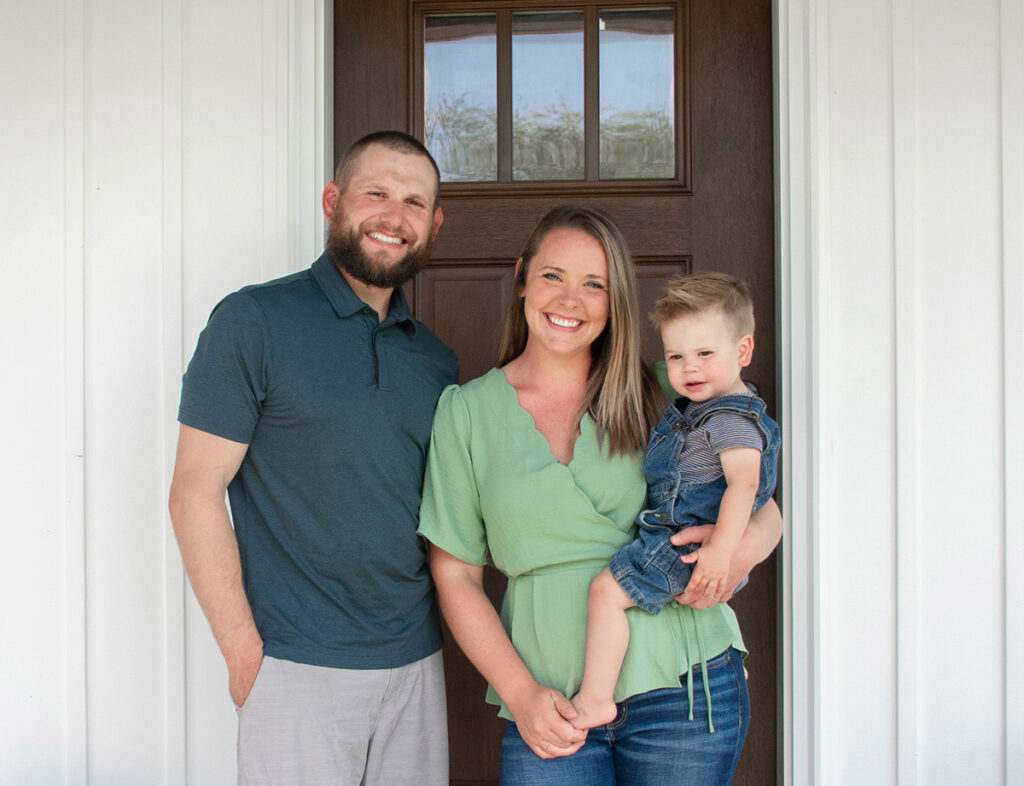
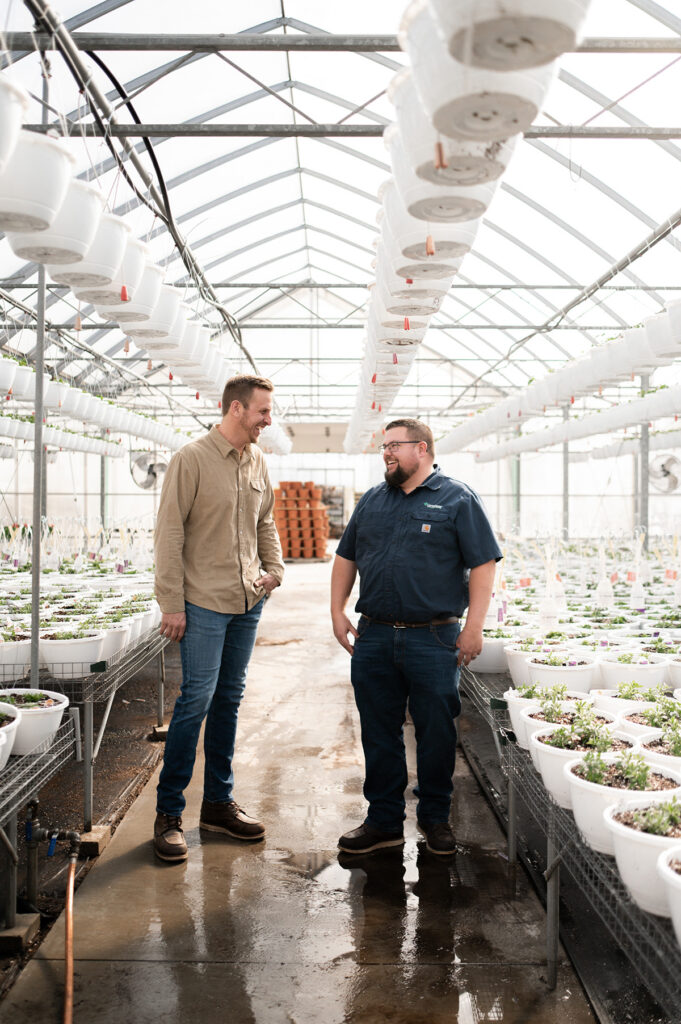

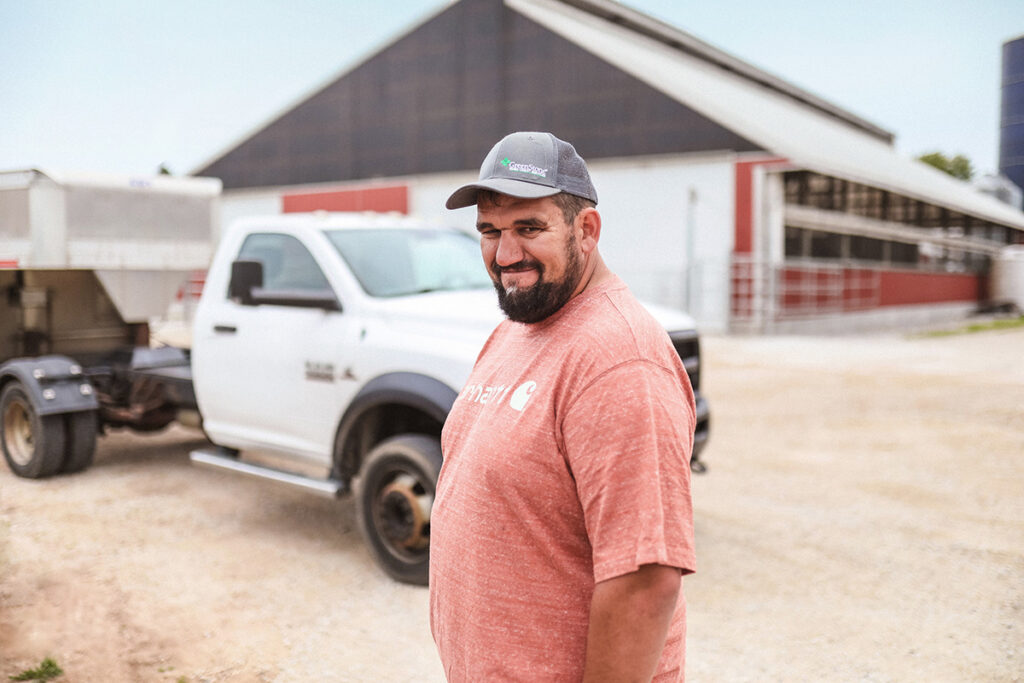
Four current board members have been re-elected to the GreenStone Farm Credit Services Board of Directors: Ron Lucas, Peter Maxwell, David McConnachie, and Scott Roggenbuck.
Ron Lucas of Alpena County, Michigan and Peter Maxwell of Gladwin County, Michigan were reelected to four-year terms representing voting region 1, covering northern Michigan. Lucas, a dairy farmer, has been a member of the GreenStone board for 11 years, currently serving on the Audit Committee. Maxwell, a cash crop farmer, has been a member of the GreenStone board for 8 years and serves as the board’s Vice Chair and serves on the Executive and Compensation Committees.
David McConnachie of Sanilac County, Michigan and Scott Roggenbuck of Huron County, Michigan were also reelected for four-year terms representing voting region 2, covering Michigan’s thumb area. McConnachie a cash crop farmer, has been a member of the GreenStone board for 20 years, and most recently serving on the Finance Committee. Roggenbuck, also a cash crop farmer, has served on the board for 17 years and serves on the Audit Committee.
“GreenStone is a member-owned cooperative governed by our members who understand that our success is their success,” said Travis Jones, President and CEO. “All four of our re-elected board members continue to make GreenStone their first choice. They have been outstanding representatives and leaders. I look forward to continue working with them and our entire 16-person board in meeting our mission of promoting the business success of our customers and the rural communities in Michigan and northeast Wisconsin.”
Along with the board positions, GreenStone’s 28,000 members elected individuals to serve on the cooperative’s 2025 nominating committee. The nominating committee is comprised of GreenStone members from throughout the organization’s territory who are tasked with recruiting candidates for next year’s board elections and nominating committee. The 2025 nominating committee includes:
Region 1 – Nathan Clarke (Midland County, MI), and Deidre Iciek (Gladwin County, MI)
Region 2 – John Ferkowicz (Lapeer County, MI), and Darrin Wolschleger (Huron County, MI)
Region 3 – Calby Garrison (Lenawee County, MI), Nathan Girbach (Washtenaw County, MI), and Jason Winter (Monroe County, MI)
Region 4 – Matthew Ashbrook (Van Buren County, MI), and Matthew Hamlin (Allegan County, MI)
Region 5 – Michelle Nitengale (Montcalm County, MI), and Matthew Oesch (Kent County, MI)
Region 6 – Damien Miller (Shiawassee County, MI), and Eric Voisinet (Clinton County, MI)
Region 7 – Johna Brock (Oconto County, WI), and Jason Walechka (Kewaunee County, WI)
Get Involved – You Own It!
As a member of GreenStone, you not only benefit from the association’s services but also play a crucial role in its governance. GreenStone is owned and governed by its members, who have a vested interest in the prosperity of rural communities and agriculture. Your voice and participation are essential in steering the cooperative toward continued success.
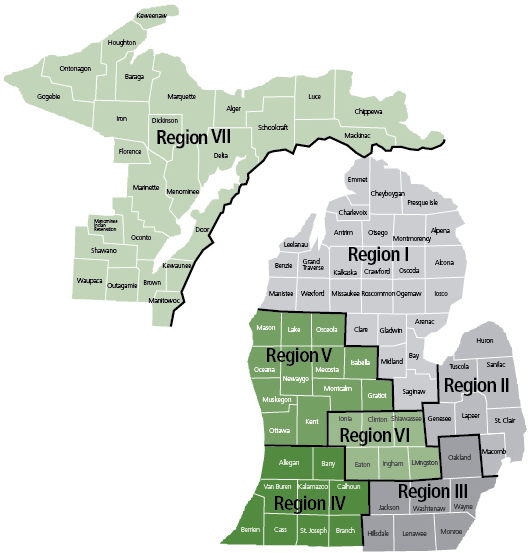
Members from GreenStone’s voting region 3 will gather in August to find candidates for open director and nominating committee positions for 2025’s elections. The remaining regions will meet in December to choose candidates for their nominating committee positions. This is your opportunity to take an active role in your cooperative’s future. We encourage you to consider participating in the governance process and submit your interest today!
The Nominating Committee: A Gateway to Leadership
Serving on the Nominating Committee is an excellent introduction to the governance process. This one-year commitment offers an in-depth look at the cooperative’s inner workings. It typically requires one day of your time, except in regions with open director positions for the following year, which may require up to three days.
Ready to Get Involved?
To learn more about the nominating and director roles, visit www.greenstonefcs.com/about-us/board-of-directors/governance-overview/. Complete a profile to express your interest or contact our corporate governance coordinator, Cheryl Motz at [email protected] or 517-318-9557, for more information.
Your involvement ensures GreenStone continues to thrive and serve the agricultural community effectively. Don’t miss this chance to make a difference!
Having farmed with my family in the past, I understand that sometimes situations may arise that may require you to have difficult conversations with your financial lender regarding cash flow and payments. It’s impossible to predict the future, and tough times are likely to happen at some point. During rough patches, farmers should work closely with their financial lenders to navigate financial challenges and find appropriate solutions.
As lenders, we work with customers to ease the burden when times are tough. However, the customer also must be involved. It’s important for customers to be prepared with a plan and detailed information to help us find the right solution for each unique situation.
Plan and Communicate
The most important component of working with your lender through tough times is to have open lines of communication. Maintain transparent and honest communication with your lender and inform them promptly if you anticipate financial difficulties or if there are any changes in your farming operation. When you want to communicate with your lender and think you have a problem, the earlier you reach out to them, the better. Waiting for things to worsen will make the condition even more challenging to work through.
Next, have a potential plan in mind for how to navigate the situation. Be upfront with what you think the issue is going to be and come with a plan as a starting point for you and your lender. It’s best to come prepared with a game plan. This may involve adjusting repayment schedules, restructuring loans or exploring other financial options.
Options
Throughout my 14 years in lending, I’ve witnessed many different scenarios. In some instances, it’s an idea the customer brings to the table that ultimately is the best solution for their situation. If there’s a short-term cash flow issue, perhaps exploring interest-only payments for a brief period could be a better option than rebalancing their loans.
In addition to cash flow, timing is critical in agriculture lending. You may have the cash flow at a future time, such as within the next couple of months, but you’re foreseeing a possibility of not being able to make the payment right now and need an extension. When communicating with your lender, having your projections ready can help determine the best options, such as adjusting your loan payment schedule to align with when you have cash coming in from selling your commodity.
When finding a solution with your lender, be prepared to provide documentation. Know what your cash flow and financial plan is over the next six months to a year. Be prepared to provide documents that support your financial situation, such as cash flow projections, production records and market analysis. This will help your lender better understand your circumstances and make informed decisions.
Lastly, be sure to monitor progress. Stay actively engaged in monitoring the progress of your financial plan, and regularly communicate with your lender to provide updates on your situation. Be prepared to adjust your plan as needed based on changing circumstances.
Building a positive relationship with your lender is essential to overcoming challenges and working to find solutions. It may be worthwhile to schedule biannual or quarterly calls with your lender to discuss your current situation and stay on top of any upcoming challenges that may arise. By working collaboratively with your financial lender and taking proactive steps to address financial challenges, farmers can increase their chances of successfully navigating tough times and securing the support they need to sustain their operations.
This blog was originally published in Michigan Farm News.
Depending on whether you are looking to purchase land to build on, hunt, or use as recreational property with the family, there are some things you should consider before buying.
Know What You Are Buying
Know exactly the boundaries of what you are going to be purchasing. Make sure that there is a current survey on file for the property. Take the time to gain a strong understanding of what you are buying. If possible, ask the seller to walk you around and flag the corners to clearly mark the property lines.
Depending on whether you are looking to build on the property or use it strictly as a recreational property, you will want to understand what the consistency of the land is. When it comes to zoning, this can dictate what can and cannot be done with the property. You can start this research by going to your local assessor’s office or looking up this information online. The local assessor can also tell you about the property taxes, in addition to the zoning of the property.
Plan Ahead for Building
If you are planning to build on the property, you will want to make sure the property is able to be developed. In many cases, this means attaining a flood certificate, making sure the land is zoned correctly, and determining if sewer, water, and electrical hook ups are attainable.
You will also need to make sure the property has passed a perc test. Ask the property sellers, or seller’s agent if one has already been done. If not, you may want to consider adding a perc test as a contingency to your offer, especially if your sole purpose for purchasing the property is to build on it.
Additionally, you’ll want to ensure there is legal access to your property. One of the major issues that often is discovered when the title search comes back are mysterious access issues. All easements must be legally documented and recorded with a title company or register of deeds before or at closing. The title company, real estate agent, or lawyer will be able to assist you with executing this. This is important because this will legally give you access to your property. In most cases, your lender cannot give you a loan if you do not have legal access to your property.
Know Your Surroundings and the Future Plans
Depending on whether you will be using this property for hunting or to build your new home, you will want to know who your neighbors are, and what surrounds your property. It is helpful to educate yourself on the future plans for the properties surrounding yours. This could potentially change the way you want to use your land and could impact the value of your property. Depending on your own plans for your land, these findings could encourage you or deter you. In both cases doing the research before you buy will help you be informed.
Prepare Your Finances
Before you approach the seller with a possible price to purchase the property, it is important to know what you can afford. Give your local GreenStone loan officer a call and let them know what type of property you are looking to purchase, and they will provide you with an application package to secure pre-approval. You can use this pre-approval to gain leverage with the sellers. If you have proof that you can secure a loan, a seller is often more likely to come to an agreed upon price.
Draft an Offer to Purchase
When you have gained a good understanding of the property that you are purchasing, work with the seller or an agent to draft an offer to purchase. You can obtain a copy of an offer to purchase on several websites. If you are comfortable drafting one between the two parties, you can do that. If not, call a local realtor, attorney or title company to help you put your offer in writing. Either way, it is important to put the agreement in writing to avoid any issues that could delay closing.
The best advice when buying recreational, hunting, or land to build on is to work with a lender that is an expert with these types of properties. They can help you through the process in addition to fitting you with the right product and term for your loan. To speak with one of GreenStone’s financial services officer about your dream property and how you can finance it, visit a GreenStone branch near you.
Happy land shopping!
This summer, 21 students took the opportunity to grow with GreenStone’s team through an internship program that takes place across multiple locations. They are already well underway in their various departments and roles!
As a GreenStone intern, these students are gaining exposure to professional projects and experiences that align with their career goals. During the program, interns spend their summer working closely with the professionals in their departments, while also participating in job shadows, branch visits, industry events, and volunteer opportunities. Get to know this summer’s class of interns below!
Josie Sonnenberg
Crop Insurance Intern
College: Michigan State University with a major in Agribusiness Management.
What drew you to intern with GreenStone? The opportunity to learn more about crop insurance and have a better understanding of the insurance side of the process.
Allie Blanchard
Crop Insurance Intern
College: Michigan State University with a major in Agribusiness Management.
What drew you to intern with GreenStone? I chose to intern with GreenStone to deepen my understanding in crop insurance. I like GreenStone’s reputation for serving farmers and their commitment to doing work in rural communities.
Valerio Bello-Munoz
Appraisal Intern
College: Cornerstone University with a double major in Finance and Economics.
What drew you to intern with GreenStone? I really enjoyed the values of the company and how the people make sure they are carried out with every interaction.
Bailee Crandall
Human Resources Intern
College: Michigan State University pursuing a Master’s of Human Resources and Labor Relations.
What drew you to intern with GreenStone? The people I met during my interview and how passionate they were about working here.
Robert Southwood
Credit Intern
College: Grand Valley State University with a major in Finance.
What drew you to intern with GreenStone? It seemed like a great company, with plenty of benefits, and there’s a lot of good people working here.
Eric Gumz
Credit Intern
College: University of Alabama pursuing a Master’s of Business Administration.
What drew you to intern with GreenStone? I wanted to work for a company that is deeply invested in agriculture and shares my values.
Matthew DeLuca
Accounting and Finance Intern
College: Michigan State University with a major in Accounting.
What drew you to intern with GreenStone? Learn more about farm credit and how it works.
John Welp
Legal Intern
College: Indiana University with a major in Information Systems and a minor in Law, Ethics, and Decision-Making.
What drew you to intern with GreenStone? The sense of family in the office and the feeling of interconnectedness between employees.
Mike Metzger
Information Security Intern
College: Central Michigan University with a double major in Computer Science and Information Technology.
What drew you to intern with GreenStone? Great learning opportunity within the agricultural industry and information security field.
Eric Faber
Client Support Intern
College: Central Michigan University with a major in Computer Science and minors in Information Technology and Business Administration.
What drew you to intern with GreenStone? Everyone during the interview process spoke very well of the company and talked about how much they liked working there.
Ben Blanchard
Quality Engineering Intern
College: Michigan State University with a major in Computer Science and a minor in Business.
What drew you to intern with GreenStone? The opportunity to gain experience from professionals while working on projects that support my community drew me to GreenStone.
Jarret Johnson
Business System Analyst Intern
College: Michigan State University with a major in Finance and minors in Financial Planning and Wealth Management.
What drew you to intern with GreenStone? I was drawn to GreenStone due to the positive influence they have on agriculture in Michigan.
Ally Tishler
Service Desk Intern
College: Michigan State University with a major in Information Science and a minor in Information Technology.
What drew you to intern with GreenStone? Since my degree is geared toward human-centered technologies and design, I saw this internship as an opportunity to improve my technical skills.
Brian Toscano
Client Support Intern
College: Michigan State University with a major in Information Science.
What drew you to intern with GreenStone? I heard good things, I was told this was a company that cares about their employees.
Charlie Chambers
Business System Analyst Intern
College: Michigan State University with a major in Finance.
What drew you to intern with GreenStone? I had heard great things about the company, and I’d love to be able to serve the farming industry.
Zoran Brickey
Business System Analyst Intern
College: Western Michigan State University with a major in Finance.
What drew you to intern with GreenStone? The collaborative environment created for the interns.
Camden Cook
Project Manager Intern
College: Northwood University with a major in Business Management.
What drew you to intern with GreenStone? I have heard that Greenstone is a great company to work for and that they also have a great internship program.
Olivia Shown
Business Systems Analyst Intern
College: Grand Valley State University with a major in Information Technology.
What drew you to intern with GreenStone? The staff are really kind and inviting.
Dakota Spink
Marketing and Writing Intern
College: Michigan State University with a major in Agriculture, Food, and Natural Resources Education and a minor in Environmental Sustainability Studies.
What drew you to intern with GreenStone? I love working for a company with the same values as mine; advocating for agriculture is my biggest passion.
Sam Lyons
Graphic Design Intern
College: Grand Valley State University with a major in Graphic Design.
What drew you to intern with GreenStone? The internship program seemed very organized, and I really enjoy structure. I was also drawn to all the opportunities to learn that the internship provides.
Pictured above are GreenStone Financial Services Officer Joe Schlies and scholarship recipients Aaron Wavrunek and Julie Koeppel.
GreenStone Farm Credit Services is proud to announce the recipients of both the GreenStone Scholarship Program and the Dave Armstrong Scholarship Program in 2024, totaling $60,000 in educational support awarded to exceptional students. Since 2010, GreenStone has awarded $500,000 in scholarships to students preparing to make a positive impact in the agriculture industry.
The GreenStone Scholarship Program selected 23 high school seniors who demonstrated outstanding dedication to coursework, extracurricular activities, leadership, and a strong commitment to pursuing careers in agriculture. Recipients received either a $2,000 or $1,000 award to support their education.
The 2024 awardees for the GreenStone Scholarship Program are: Aaron Wavrunek (Denmark, WI), Abby Thelen (St. Johns, MI), Alexis Ewing (Jonesville, MI), Anna Woller (Montague, MI), Blake Barr (Yale, MI), Briar Albaugh (Manitowoc, WI), Bryant Janetzke (Saranac, MI), Chloe Steiner (Mecosta, MI), Dori Stuever (Capac, MI), Helen McBroom (Dickinson County, MI), Jaqueline Maye (Wausaukee, WI), Jocelyn Cerveny (Gresham, WI), Joshua Tomlinson (Baroda, MI), Julie Geiger (Harbor Beach, MI), Julie Koeppel (Two Rivers, WI), Karlee Whitmore (Ithaca , MI), Makaila Cantrell (Ruth, MI), Ross Kelsey (Blanchard, MI), Sophia Barnum (Leslie, MI), Talan Hiemstra (Marcellus, MI), Tyler Buckland (Armada, MI), Wyatt Epple (Watervliet, MI), and Zoe VanRijin (Deford, MI).
In addition, four outstanding college students were awarded the Dave Armstrong Scholarship, named after GreenStone’s former CEO who dedicated 41 years to advancing agricultural innovation and stewardship. This prestigious scholarship, $5,000 each, aims to recognize and support students pursuing careers in agriculture, timber, and natural resources.
The 2024 awardees for the Dave Armstrong Scholarship Program are: Amy Kern (Saginaw, MI), Clarissa Ulness (Manitowoc, WI), Laken DuRussel (Bay, MI) and Tyler Zelinko (Saginaw, MI).
“At GreenStone, we have a deep commitment to investing in the future of agriculture by empowering the next generation of leaders,” expressed Travis Jones, President and CEO. “By providing financial support to these students, we not only enable them to pursue their dreams but also instill hope and inspiration for a brighter future in agriculture. Their passion and dedication truly contribute to the heart and soul of our industry.”
Each student selected for either of GreenStone’s scholarship programs met specific criteria, including residency within GreenStone’s territory in Michigan or northeast Wisconsin, competitive GPA, and plans to pursue an agriculture or natural resources-related field. Additionally, awardees demonstrated active community involvement, leadership in school, and a passion for agriculture.
Applications for the 2025 scholarship will be available on the GreenStone website later this year, providing another opportunity for aspiring agricultural leaders to apply for financial support.
“Get outside your bubble and be open minded when listening to other farmers’ stories,” Sara Matchett says while giving advice to other young, beginning, small farmers. “Don’t be intimidated by the idealistic and unreachable standards that you may see in agriculture. Focus on what you can do, and how you can do it better.”
Matchett is a young farmer who was raised on a farm in Holland, but moved to the Charlevoix area two years ago when she married her husband, Noah. Together they operate his family farm of 900 acres of land and 1,600 ewes.
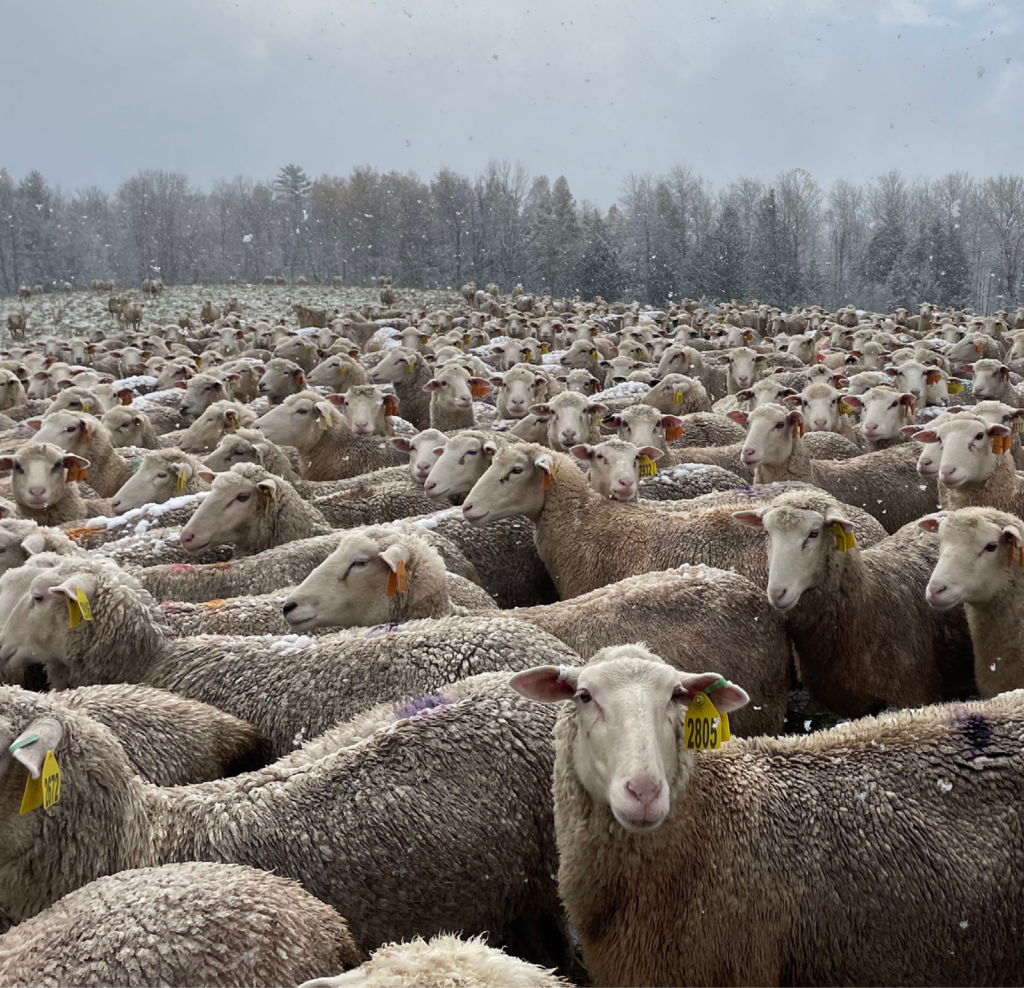
Matchett’s family farm in Holland was very different from the one she and her husband run now. With her diverse background, she is able to bring different perspectives to the table at the Matchett farm.
In February, Matchett attended the Underground Innovations conference in Frankenmuth, Michigan. She was able to listen to multiple guest speakers talk about their farms and how they came to be.
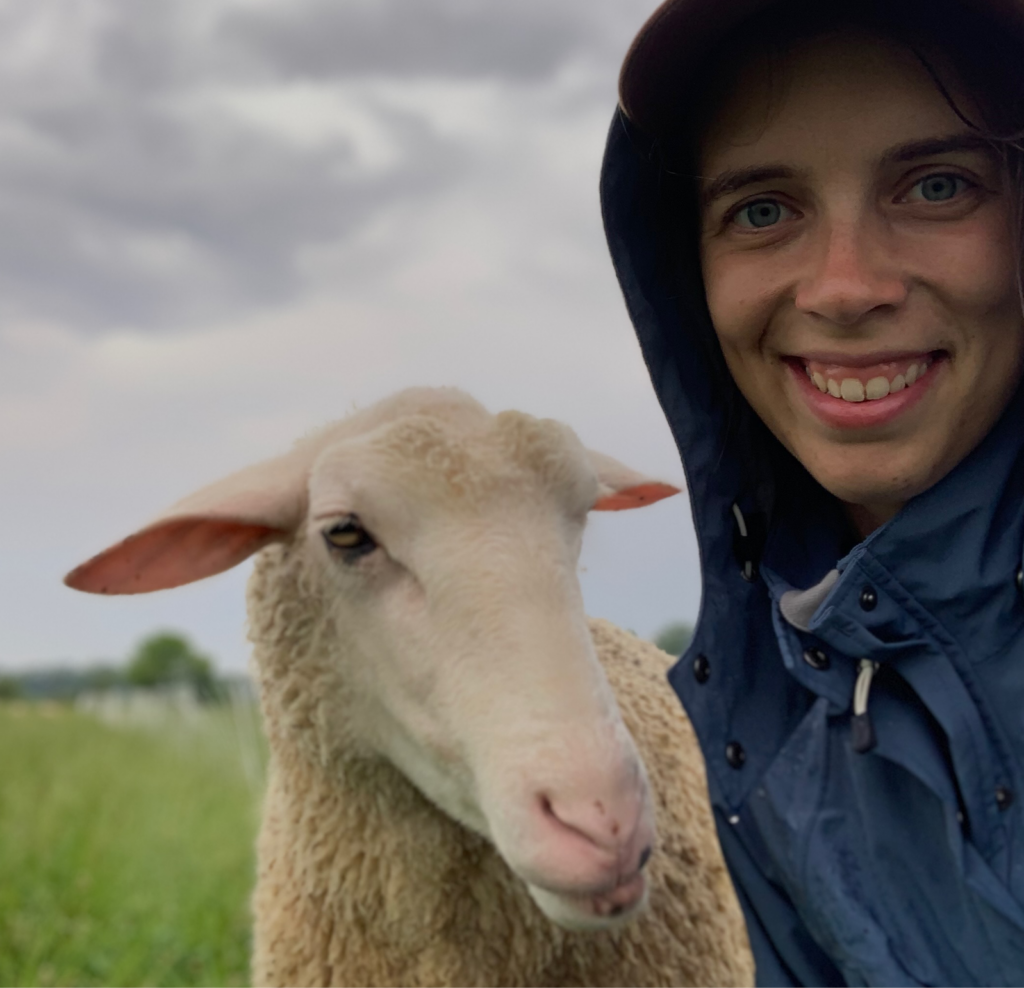
While listening, Matchett was inspired by the experiences they shared. “It was inspiring to see the different farmers and the ways that they are implementing very different practices but still reaching the same goal. And for me it was more of a shift in perspective,” Matchett reflects.
Charlevoix growing season is very short compared to southern Michigan, so Matchett and her husband have had to adjust their farming techniques based on the growing season. “Like the amazing things that are being done with double cropping and cover cropping, that doesn’t really work up here. But the idea of finding something that works for us, such as conservation tillage or rotational grazing, we are improving our efficiency and conservation,” Matchett mentions.
With the help from GreenStone’s CultivateGrowth grant, Matchett was able to continue to diversify her portfolio and gain knowledge of different perspectives in farming by attending the Underground Innovations conference. This will help her and her husband on their farm to think about the different ways they could improve farming techniques.
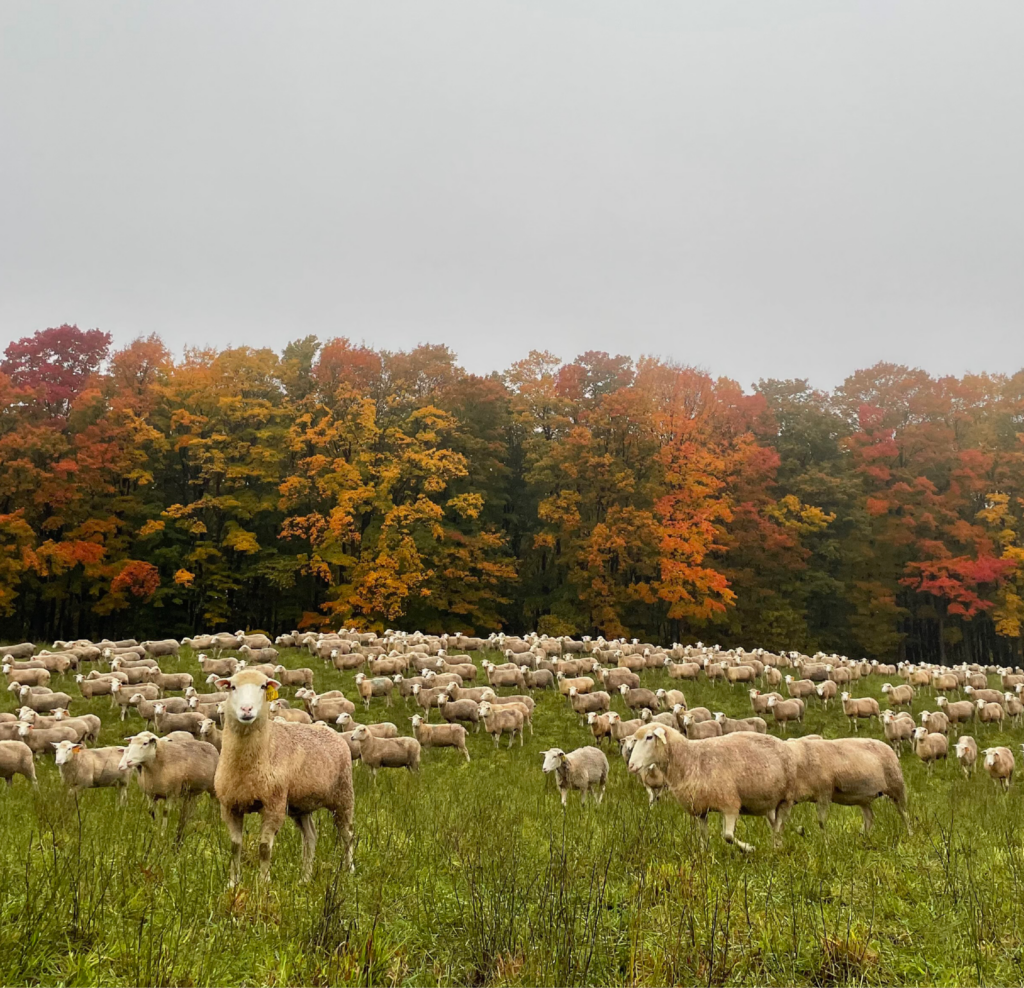
“Honestly, the financial support was essential for me to get down there. It was quite a ways away to attend a meeting in Frankenmuth and so to have the cost of the meeting covered it just took away that barrier of the finances. So, the fact that GreenStone was able to cover that was very helpful,” Matchett smiles.
With the help that the CultivateGrowth grant, Matchett is able to gain a different perspective of her and her husband’s farm. GreenStone understands the importance of advancing education for young, beginning, and small farmers. We work to provide the educational and financial resources needed to help establish a solid foundation. To apply for a grant, visit CultivateGrowth Grant.
Build a solid business plan
When people are looking to make a move from part-time to full-time farming, the most important thing to consider is their business plan. Since there are probably not any historical financials or financials from the operation, a lender’s appetite to lend is most focused on what a customer is able to present.
A business plan is crucial and should be based on market analysis, how similar operations are performing in the industry, financial projections and best- and worst-case scenarios.
Be sure your business plan answers important questions such as:
- What’s the current market like?
- What are my long-term goals and objectives?
- What is a feasible level of initial investment I can make?
- What ongoing costs will I incur?
- How much revenue can I generate from the operation?
- What is the anticipated yield or output?
- How will I promote the farm and its products?
There are resources available to assist with building a solid business plan including the Developing and Educating Managers and New Decision-makers (DEMaND) program through Michigan State University Extension. The program helps the next generation of farm operators develop into managers and decision-makers on the farm by learning about financial and business management strategies.
Create a realistic budget
Another factor to help guide new farm operators is being realistic with your living expenses. Moving to full-time farming means relying solely on your farm income for you and your family’s livelihood. Ensure you have a solid financial plan in place to cover living expenses, farm maintenance costs and unexpected expenses.
Consider the profitability of your farming enterprise and create a realistic budget. Those who have had the most success have run projections based on existing businesses or have worked for an established farmer to learn from them.
Consider crop insurance
Risk management is another important thing to consider for up-and-coming farm operators. Farming is inherently risky, as it is heavily influenced by unpredictable factors such as weather, pests and market fluctuations.
Crop insurance provides a safety net against losses due to these risks, allowing farmers to manage their financial exposure and plan for the future more effectively.
Crop insurance is also a good way to hedge a market that depends on Mother Nature for revenue. You can even get a certain percentage in subsidies off your insurance premium because you’re just starting out. Be sure to talk to a crop insurance specialist who can help create a safety net for long-term stability.
Benefit from resources
Farming takes courage and resources — both the tangible like financing and the intangible like education and networks. Several organizations offer support for the intangible needs, like the DEMaND series noted above.
At GreenStone, our mission is focused on both through our CultivateGrowth Program for those who have been farming for 10 year or less, who have a farm income below $350,000, or are 35 years of age or younger.
There are several components of the CultivateGrowth program including to provide funding, networking, education and unique financing models to serve young and beginning farmers’ individual needs:
- Supporting continued education and personal growth by offering up to $40,000 in CultivateGrowth Grants.
- Offering new or young farmers unique learning and networking opportunities by working with an experienced farmer through CultivateGrowth Mentorship.
- Providing financing for unique and individualized situations through relaxed underwriting standards often based on projections, rather than historical records.
- Partnering with FSA to provide joint financing options, which can offer lower interest rates and/or require lower down payments.
Farming is not always an easy road — it can be a costly investment with much uncertainty. However, if you take these things into consideration, you’ll set yourself up for success and be ready for growth next season.
This blog was originally published in Michigan Farm News.
Are you considering purchasing a new home? Before you begin your next adventure of house hunting, add these few things to your checklist to make sure you purchase the best home for you!
Neighborhood
Choosing the right neighborhood for you is key. The average homeowner lives in their house for about eight years, so you want to make sure you enjoy the area! Ask yourself, do you prefer your neighbors to be cattle and crop land, or do you prefer human neighbors to be a little closer to you in town? How far would you like to drive to things like gas stations, grocery stores, work, or schools? If you have kids, or plan to have kids, what does the school system look like?
Know What You Can Afford
Knowing what you can afford will help you determine your price limit, so you can focus your search on houses within an acceptable range. Think about how much you would like to put down for a down payment, or how much you would like to use for remodels. Talk with a loan officer first about getting preapproved, loan terms, and interest rates. The market can be tough, so be prepared for any negotiations when putting an offer in on a house.
Fixer Upper or Move-In Ready
Knowing the style of home you want is something to think about when creating your house hunting checklist. Are you a handy person that would like a fixer upper, or are you looking for something that is more move-in ready? How many acres would you like? What size of house would you like? Is having a basement important to you? How many bedrooms and bathrooms would you like?
Once you find your perfect house, whether it is a fixer upper or move-in ready, make sure you do a home inspection before closing. A home inspection will help you know what you are getting into. Remember, not everything needs to fixed at closing, but the inspection gives you an idea of what there is to fix or update.
Looking at different houses can be intimidating. Before you jump in, make sure you create your house hunting checklist knowing what kind of neighborhood you want, how much you can afford, and what style you want.
GreenStone’s team of experienced experts are ready to finance your new home. Find our home mortgage loan options here.
Now offering DRP customers weekly dairy marketing calls to help them stay abreast of the latest industry trends and plan for anticipated market changes.
GreenStone is pleased to provide dairy producers with a trio of specialized services that work together to protect and assist their businesses.
Our crop insurance professionals, combined with one of the dairy industry’s leading experts, have developed personalized risk management opportunities for dairy farmers that go beyond insuring product to actively help dairy operations succeed. With an analyzer tool that tracks and compares data for budgeting and forecasting, and online presentations highlighting the latest dairy trends, GreenStone customers have insider access to a solid line-up of support. In addition, for ease-of-use, the Livestock Insurance Analyzer tool is available as a mobile app.
1. Dairy Revenue Protection (DRP) is a federally subsidized insurance product and a dairy farmer’s first line of defense against unexpected declines in quarterly milk sales revenue, relative to a guaranteed coverage level. The expected revenue is based on futures prices for milk and dairy commodities, and the amount of covered milk production elected by the dairy producer. Offered through GreenStone, DRP protects dairy farmers against losses incurred by market fluctuations beyond their control, providing a safety net for unforeseen challenges.
2. The Livestock Insurance Analyzer is an exclusive product designed expressly for members who have signed a Dairy Revenue Protection application with GreenStone’s crop insurance team. The Analyzer enables customers to follow live daily tracking of producer endorsements and to develop operational projections based on production and revenue floors. The dairy industry comes with an array of seasonal variables; this tool allows side-by-side comparisons of coverage details unique to each farmer’s operation, including tracking income, calculated loss probability and personalized risk management based on actual quarterly statistics. Ease of use, instant reports and GreenStone’s ongoing development adding extra features and benefits make the Livestock Insurance Analyzer an invaluable peace-of-mind tool for planning.
3. Dairy Marketing Calls with dairy expert Dr. Marin Bozic, are invaluable add-ons for GreenStone’s DRP customers. These free, weekly video calls cover topics such as DRP sales, premium levels vs. risk ahead, key drivers of dairy prices and market uncertainty over the next several months. Dr. Bozic is an assistant professor in the department of applied economics at the University of Minnesota. His research program in dairy economics focuses on dairy policy, risk management, demand for dairy foods and economics of dairy food processing technologies. A leading contributor to the Dairy Revenue Protection program, Dr. Bozic is also the creator of the Livestock Insurance Analyzer. His shared expertise during Dairy Marketing Calls will give our DRP customers the trending insight they need to make knowledgeable decisions for their dairy farms.
Let GreenStone support your success
We can help you remove guesswork from forecasting and budgeting, while protecting your revenue from potentially devastating market lows. Contact a GreenStone crop insurance specialist by calling 800-968-0061.
Farms come in all shapes and sizes, from small urban farms in the cities, to the large acres that roll on into the countryside. Each farm is unique from each other, but they all have a passion for agriculture, and they all started from somewhere.
Each farmer started as a young, beginning, or small farmer, and they each faced several different challenges while getting started. Challenges like land barriers, lack of knowledge, and marketing obstacles are all things that Katie Brandt has seen throughout her years of teaching at Michigan State University.
In college, Brandt jumped into the agricultural industry and started working for a local farm. Later in 2006 she started her own organic vegetable farm. After gaining eleven years of organic farming experience she transitioned to working at MSU by teaching the Organic Farmer Training Program and Transition to Organic Partnership Program.
The Organic Farmer Training Program helps young, beginning, and small farmers break the barriers they face through seminars, guest speakers, on-farm visits, and field trips. “Our goal is to give people hands on skills to help them figure out what their short-term and long-term goals are for their farm,” Brandt says.
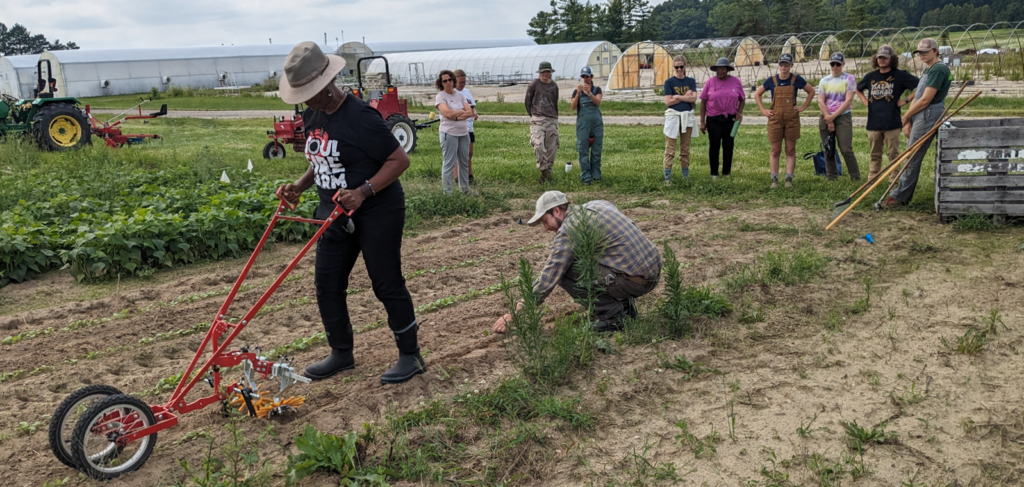
During the 38-week program participants learn a variety of skills that fit specifically into their operations, from soil testing to seed transplanting. They also learn the importance of equipment and produce safety. Each skill they learn will help them get started or grow their operation.
The fundamental skills of farming are not the only skills participants graduate with, they also network with each other and make connections across Michigan. “People can learn from each other within the group. They can network and make friends and allies that can help them as they’re getting started farming, scaling up, or shifting the focus of their farm,” Brandt mentions.
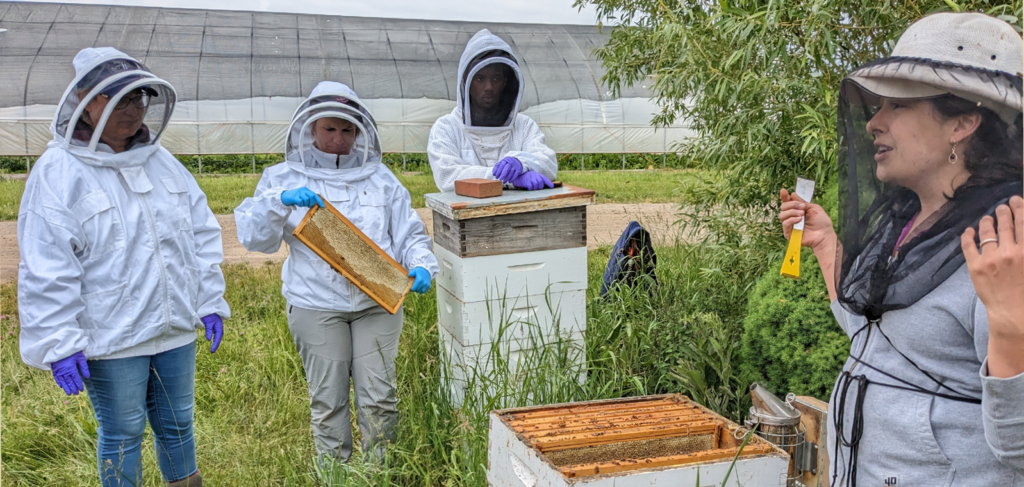
Over the years GreenStone has supported numerous farmers who attend the MSU Organic Farmers Training Program through our CultivateGrowth grants.
“I am so thankful for the GreenStone CultivateGrowth program,” Brandt says. “The grant really helps people because they are getting $500 or $1,000 off the total, and that could be what makes it possible for people to participate.”
GreenStone understands the importance of advancing education for young, beginning, and small farmers. We work to provide the educational and financial resources needed to help establish a solid foundation. To apply for a grant, visit CultivateGrowth Grant.