

A vision is the plan for the future, a declaration of what is being sought through wisdom and purpose. Each of our 28,000 members hold a vision – whether verbalized or held in their heart – and our vision at GreenStone is to be their partner through it all…to be rural America’s first choice for financial services.
This report provides an annual opportunity to highlight our steps toward that commitment, and while there’s plenty to commend our members and teammates for over the last 365 days, our vision remains and propels us forward with a solid foundation rooted in members, teammates and financial vigor to continue building onward.
A strong 2023 was possible as a result of those deep roots; it was another important year to not only celebrate being your first choice, but our efforts to continue to be here for years to come. GreenStone ended with $285.0 million in net income for 2023, just above 2022’s record of $284.6 million. This is the result of new members choosing GreenStone as their financial services provider and joining with existing members who choose to continue to work with GreenStone, all together producing owned and managed loan growth of nearly 8% next to a solid, profitable year for both crop insurance and tax and accounting services. That growth comes alongside equally important strong credit quality and operating efficiency rates.
While you could consider these numbers important all on their own – because they are outstanding – they are only a part of what makes this cooperative your first choice.
These results are what provide the ability of your cooperative to continue to deliver back to you patronage matching last year’s record! $120 million of that profit, just over 40%, is put right back in our members’ hands through our Patronage program. It is a significant benefit of choosing GreenStone as your first choice, but it’s only one reason our members feel extremely satisfied with their cooperative – 96% satisfaction to be exact. As highlighted in the coming pages from just a few member representatives, the reason for that satisfaction is different for everyone. In the end, we believe our culture of people first is what not only drives people to GreenStone, but more importantly, what provides that superior experience and makes them want to continue to choose GreenStone as their first choice partner.
The people in that culture aren’t just our customers; we have always believed that to be our customer’s first choice, we first need to be our employees’ first choice. We strive to provide a culture of inclusion and engagement, along with the support and challenge in a career backed with recognition and compensation. Just as the needs and desires of our members evolve, the way we preserve and mature that culture to motivate and accommodate our employees must adapt as well. For some, GreenStone had always been their vision for first choice employment, for others, it’s been a welcomed surprise, and with an employee engagement score that rivals the 90th percentile of all companies, it’s an important aspect we credit for helping make your cooperative special.
Our employees aren’t just important partners to our members. They bring important contributions to the hundreds of communities and organizations around us that positively impact our members. Focused on pillars of education and support for youth, members, and the communities where both our members and employees live, thousands of hours and dollars combine to be a first choice resource for farmers and consumers alike. We began 2023 with the same vigor to achieving our vision as we hold onto today. Our commitment to you is to remain steadfast on our values and mission, all aligned to keep growing in our vision of being rural America’s first choice – your first choice – for financial services! Thank you for your partnership!
Best wishes for the remainder of 2024,
Edward L. Reed Travis D. Jones
Chair of the Board Chief Executive Officer
This article was originally published in GreenStone’s 2023 annual report. You can view the annual report in its entirety here.
The experienced team at GreenStone understands two very important things: agriculture is the backbone of a sustainable society, and that the hardworking people living on the side streets and backroads of America make an important contribution to society. That’s why it’s important that we provide financial solutions and support to rural residents and farmers alike.
It’s people like Rod Bednaryczk, who works tirelessly on his multi-generational row crop farm in Marlette, Michigan, who keep America fed. And it’s families like Michael and Lynda Bredeweg who built their country home adjacent to the family Christmas tree farm in Stevensville, Michigan who keep local economies thriving and communities tight knit. We are proud to call them, along with all 28,000 members, part of the GreenStone cooperative.
Pride and Heritage
Rod Bednaryczk works from sunrise to sunset behind the wheel of his combine. The 3,000 acres of soybeans, sugar beets and corn are fields that he knows very well. Growing up on the family farm, agriculture is in his blood.
“I thought since I was little, I was going to farm,” Rod said. “As early as I was able to walk, I was involved with the farm. I was pitching hay, feeding livestock and cleaning manure.”
Feeding cattle and cleaning manure turned into planting crops and managing harvest when Rod decided to turn the family dairy farm into a full-time row crop operation 25 years ago.
Since that transition, Rod, his father, brother, and son have worked hard to expand the operation.
That’s right – his son! Rod is elated that his 22-year-old son Isaac is learning to take over the ropes of the farm – keeping it in the family.
“It’s very cool. I wanted to pass the farm along to him to be able to make decisions quicker than I was able to. We give him a lot of control at this point.”
One of those decisions: making sure their farm is protected with a crop insurance plan to fit their unique needs. For that, the farm turns to GreenStone. The cooperative has been a first choice resource for the farm for years – working with GreenStone’s lending team to secure land and operating loans, and most recently, the crop insurance team to protect the year’s production.
“For as long as I have been a part of the farm’s management team, we have been working with GreenStone,” said Rod. “It was natural that we started using crop insurance through GreenStone because we were already banking with them.”
In 2023, after a large storm that just missed his farm and looking at the projected forecast for the remainder of the season, Rod gave Crop Insurance Specialist Nicole Lindke a call.
“Up until this past year, we always utilized a bare minimum insurance plan,” Rod explained. “We sat down with Nicole and she walked me through the best choice for our money. I decided to put hail insurance onto my plan,” Rod explained.
And thank goodness he did. Later that season, many of their crops took a hit from a large hailstorm – and Rod was covered.
“It feels good to help farmers secure that protection,” said Nicole. “A lot of people think crop insurance is another added expense, but it’s that one guarantee you can rely on. When you have a disastrous year, it’s a tool for your operation.”
A tool that Rod plans to keep in his back pocket moving forward.
“I was extremely happy to have something that covers the damage of the hail storm,” Rod reflected.
Rod plans to continue working with his family to expand the farm when he can, and when that time comes, GreenStone will continue to be a trusted partner.
“Farmers just have a special way about them where they’re so easy to talk to,” said Nicole. “I wanted to be able to help them in this aspect of their farming operation.”
“Farming takes determination and drive. You have to really want it,” Rod explained.
Determination and Drive
Determination and drive are common themes among GreenStone members. It was those two virtues that put people like Mike and Lynda Bredeweg on the path to building their cozy modern farmhouse in Stevensville, Michigan.
It was a do-it-yourself home build that all started with a simple idea.
“One day I had an idea,” said Lynda. “I told Mike we should buy the piece of property next to his parents’ Christmas tree farm and build a house there.”
And that they did. The two spent nearly a year clearing the land of trees and debris for a home build in 2018, and in the meantime, searched for financing. After other lending institutions turned them away, the two connected with GreenStone Financial Services, who greenlit their do-it-yourself dream.
Once all of the papers were signed, and GreenStone became the first choice lender for Mike and Lynda, the two broke ground on what would become their cozy country home one year later.
The building process was just that: a process. Never building a home before, there were plenty of things to learn, and decisions to make along the way. Leaning on experts like contractors and builders, Mike and Lynda were able to acquire the knowledge and expertise to tackle the project head-on.
“This was our first time building anything,” said Lynda. “We really did do it by ourselves. We had a lot of mentoring. We had to ask for a lot of advice. We had to connect with the people around us who were able to help us make decisions.”
“Lynda really acted as the designer and she would make decisions around what she wanted it to look like,” Mike explained. “I tried to live that out and build what she wanted it to look like.”
The long hours and hard work of building and designing paid off when the couple moved into their eclectic modern farmhouse in 2020. The home, equipped with four bedrooms, two and a half baths and an open floor concept is the perfect place to relax with friends and family – after so many of those family and friends helped make the dream a reality.
“We had so many people who helped cut down trees and put up trim,” said Mike. “It ended up being a family and friends project. It was a whole community of people we couldn’t have done it without.”
Some of those trees even make up the home – in the form of flooring and trim, which are just a few examples of the unique and personal features throughout the 2,300 square foot home.
When asked if they would build again, Lynda had a simple answer.
“We don’t need to. I would never want to move out of this house because we built our dream house.”
For the team at GreenStone, it’s helping create those dreams that make it all worth it – whether it’s a brand new home, financial solutions for farmers feeding America, risk management strategies – and everything in between. For GreenStone staff, this partnership comes naturally.
“Agriculture is my background. My husband is a farmer. My grandparents had a dairy operation, and I was always on their farm, so I just gravitate toward the farming life,” said Nicole. “I look forward to continuing to grow my relationships with my customers and helping them with their crop insurance needs.”
Above all, it’s the passion our members bring to the table that fuels our success.
“As I look over the experience, we couldn’t have done this without GreenStone. Their belief that people can accomplish a home build on their own made all the difference for us,” said Mike.
“I don’t think there’s any better legacy to leave behind than farming,” said Rod. “It’s a way of life. It gives you a lot of pride.”
This article was originally published in GreenStone’s 2023 annual report. You can view the annual report in its entirety here.
GreenStone’s group of dedicated employees not only bring a wealth of experience to the table to service the needs of rural America, but a deep passion for what they do – many choosing GreenStone because of their roots in agriculture and upbringing in the country.
Sarah King
Sarah joined GreenStone more than seven years ago and serves as a regional operations manager in west Michigan. Prior to this role, Sarah worked on GreenStone’s crop insurance team. She grew up on a cattle and hog farm and became involved with 4-H by showing cows at state fairs and local shows. Since then, she has stayed involved in agriculture and loves serving customers in rural America.
Emily Kropf
Emily has worked for GreenStone for four years, currently serving as an associate crop insurance specialist working out of the Grand Rapids, Michigan branch. Prior to this role, Emily started as a learning and development intern in GreenStone’s human resources department, and later as a sales intern for GreenStone. Growing up around agriculture, Emily became extremely involved in Future Farmers of America (FFA) in high school, and recently participated in the United States NextGen Apple Fellowship. In her free time, Emily serves as a youth group leader for young women at her local church.
Joe Schlies
Joe has been with GreenStone since 2023 and has hit the ground running as a financial services officer in the Manitowoc, Wisconsin branch. Growing up on a farm and being a long-time member of the FFA, Joe brings an enthusiastic passion for serving customers in agriculture. Joe had dreamed of working for GreenStone since high school and made that dream a reality straight out of college. In his free time, Joe mentors FFA state officers and assists them with professional development.
One GreenStone
The dedicated team at GreenStone takes “service with a smile” to new levels. Each of our 630+ staff members bring an unwavering passion to their positions. For many, that passion is rooted in their love for rural America.
Joe Schlies, a financial services officer in GreenStone’s Manitowoc, Wisconsin branch, has aspired to join team GreenStone since high school. That dream became an exciting reality in July when he came aboard.
“It’s very crazy to think. It’s kind of surreal,” Joe recalled. “I remember getting the job offer from GreenStone, and I couldn’t believe it was true. When you’re young, you think that 20 years down the line you’ll find your dream job. Next thing I knew, it was here.”
Growing up on his family farm and participating in FFA for years, Joe has a deep respect for the agricultural community. Joe’s commitment to FFA landed him a spot as a State FFA Officer following high school, taking on the role of State President in Wisconsin.
“FFA allowed me to develop the soft skills that college didn’t teach me. Things like critical thinking, basic communication skills and working with others in a professional manner – those are skills that I learned through FFA that prepared me for my role at GreenStone.”
That role includes working with customers and helping them secure the financing they need to run their operations.
Emily Kropf, an associate crop insurance specialist at GreenStone, is also no stranger to FFA. She joined her home chapter in Lowell, Michigan in high school, and now dedicates her time to help mentor students involved in the program.
A product of rural America, Emily began her journey with GreenStone as a learning and development intern in the human resources department after her freshman year, and later went on to intern with GreenStone’s sales department. Following graduation from Michigan State University, Emily says the unmatched positive culture at GreenStone made her want to stay – and that she did.
In Emily’s role, she is able to assist GreenStone’s team of crop insurance specialists to help customers find the best risk mitigation plan for their operations.
“When I was first looking into first-time jobs, I put all my eggs in one basket and only applied for GreenStone,” Emily explained. “My family understood why because of the success I had as an intern. The culture is amazing, and it rules my decision to be here. I can’t think of anywhere else I’d want to work.”
The culture at GreenStone can’t be produced just from the top but is a testament to the hearts and dedication of people on all levels; people like Sarah King who serves as a regional operations manager in west Michigan. Sarah is in charge of onboarding many teammates, helping role out new systems internally to better serve our customers and manages the customer service and loan processing teams—among many other tasks.
“Working in agriculture was something I’ve always wanted to do,” said Sarah. “It’s a passion I have. I’ve been fortunate to always have worked in agriculture in different facets. Now, I’m not riding on a combine, but I’m helping farmers build their dreams and expand their businesses. It’s very rewarding.”
Starting out in GreenStone’s crop insurance team before transitioning to her current role, Sarah loves to be able to serve our customers both one-on-one and by creating a better customer experience behind the scenes.
“They’re helping feed the world, and that’s something to be proud of,” Sarah remarked.
That pride is felt by all across the company. GreenStone’s team doesn’t just set out to serve with a smile, but rather to serve with a passion, and that passion comes from within. It’s that passion that makes GreenStone a first choice career for employees like Sarah, Emily, and Joe, along with the rest of GreenStone’s dedicated team.
This article was originally published in GreenStone’s 2023 annual report. You can view the annual report in its entirety here.
Rachel and David Barnard met when they worked together in supply chain management in Kalamazoo, Michigan. They each worked in the corporate world close to seven years before they packed up their stuff and moved to Rachel’s family’s hometown of Traverse City, Michigan.
“After a weekend visit to local orchards and cideries in the area, we fell in love with what northern Michigan had to offer! We decided that we wanted to call this place our future home and start building something with our hands from the ground up,” David says.
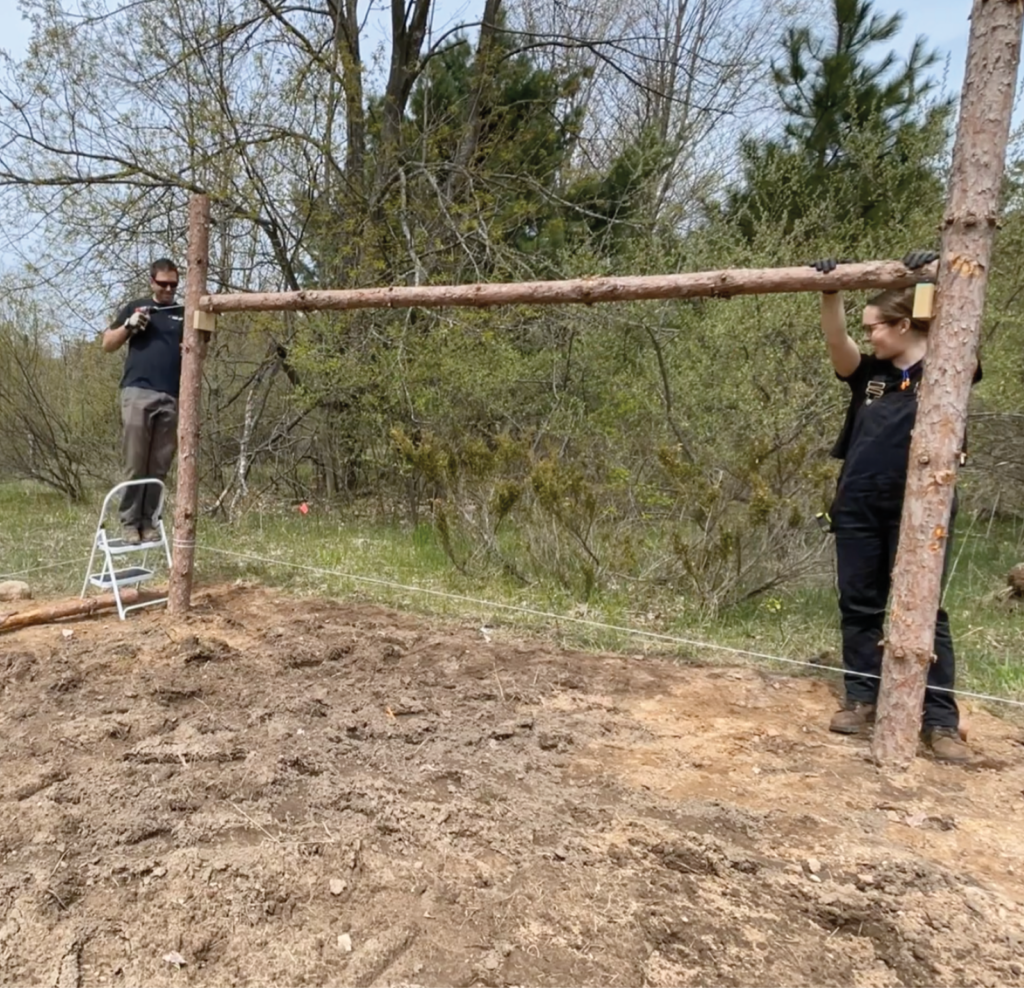
Early in 2022 the Barnard’s found 10 acres of land just to the west of downtown Traverse City. This is where they planned to start the next step in their lives and grow their own apple trees.
They spent last summer improving the land to help prepare them for planting this spring. Included in those improvements was an eight-foot-tall deer fence around the property to protect their crops from any damage the deer may cause. The couple also added in ten-foot trellis poles that will help support the trees as they grow older and allow them to produce fruit earlier than non-trellised trees.
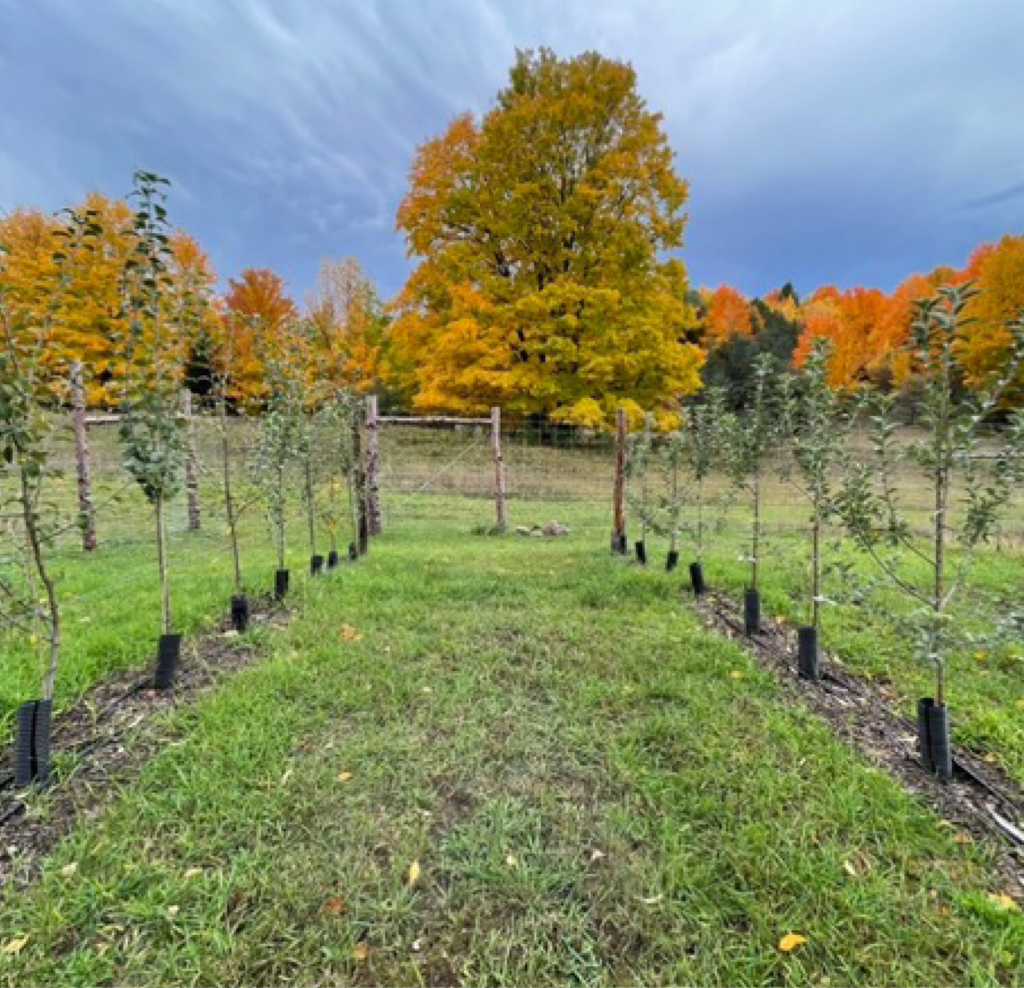
In April they plan to plant 2,000 apple trees, and currently have thirty trees planted at their house to help get them started on their operation.
“We are ready to plant those 2,000 trees here in the next few months! The land is prepared, we have purchased all of the necessary irrigation equipment, and we are actively working on the well and incoming power. In the meantime, we did plant thirty trees at home last year, this allowed us to gain first-hand experience with IPM management, soil testing and water treatment before our large order arrives in what seems like a few short weeks” David laughs.
You may be wondering why the Barnard’s left their corporate lifestyle to become first-generation apple farmers, and Rachel says it best, “we just wanted a change of pace from the corporate day-to-day. I’ve been coming up here for years and years, ever since I was a little kid. We got married here two years ago and we even had a little baby girl last year. We’re excited to raise her outside in the orchard and teach her the blood, sweat, and tears of the operation. We want to show her the hard work and work ethic that comes with orcharding and farming.”
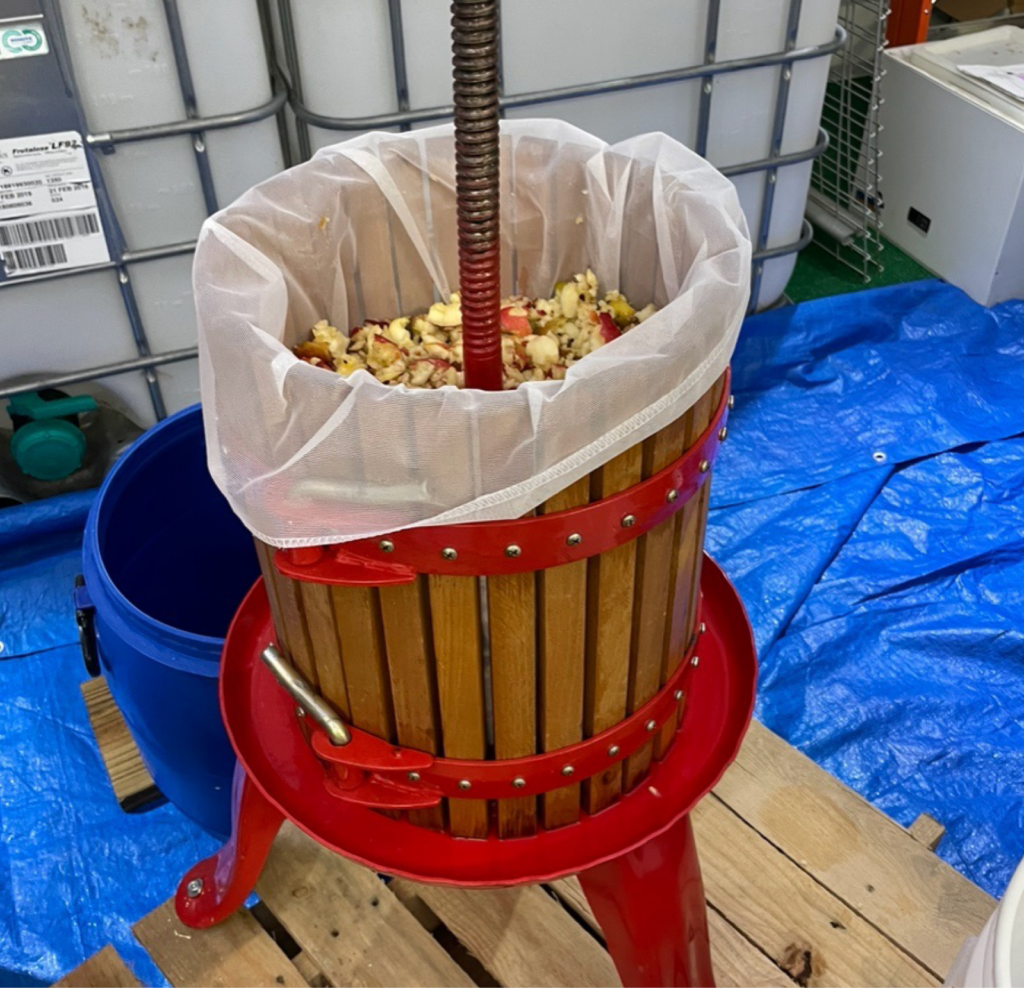
Since the couple lacked knowledge about the cider industry and all the challenges that may occur with the operation, they participated in the Cider Institute of North America’s – Cider & Perry Production Foundation online course. With help from GreenStone’s CultivateGrowth grant, they were able to offset a portion of the course fees and focus more on increasing their knowledge of the apple cider industry.
“I don’t think we both would have taken the course if it were not for the grant,” Rachel explains. “David and I have different business responsibilities, so this gave us the opportunity to learn from the production perspective as well as the customer experience standpoint.”
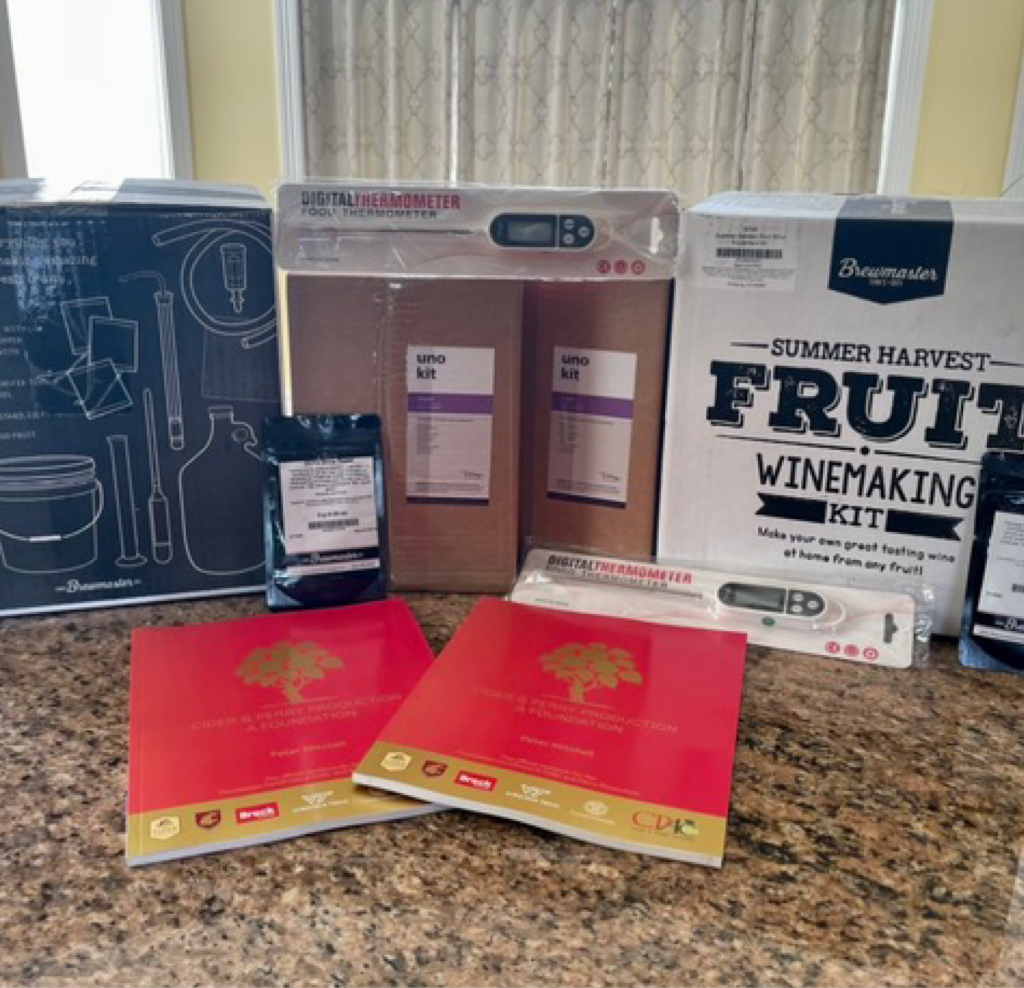
During their 12-week course, they were able to gain an understanding of how cider production works from tree to consumer. The course offered different sessions on orcharding, apple pressing, cider making, and cellar hygiene. The couple soaked up all the knowledge they could during the course and achieved their certification in production.
In addition to weekly discussions, there were virtual tours such as a tour of an orchard at Cornell University, one of the leading educational institutions in the apple industry. The host offered a wealth of knowledge and answered all of the questions the group had during the experience.
“We were able to ask them specifically about their irrigation system, what sort of drip lines they used, and how they had their well set up. The openness of the educators on this virtual tour was one of the biggest takeaways from the course in particular,” David reflects.
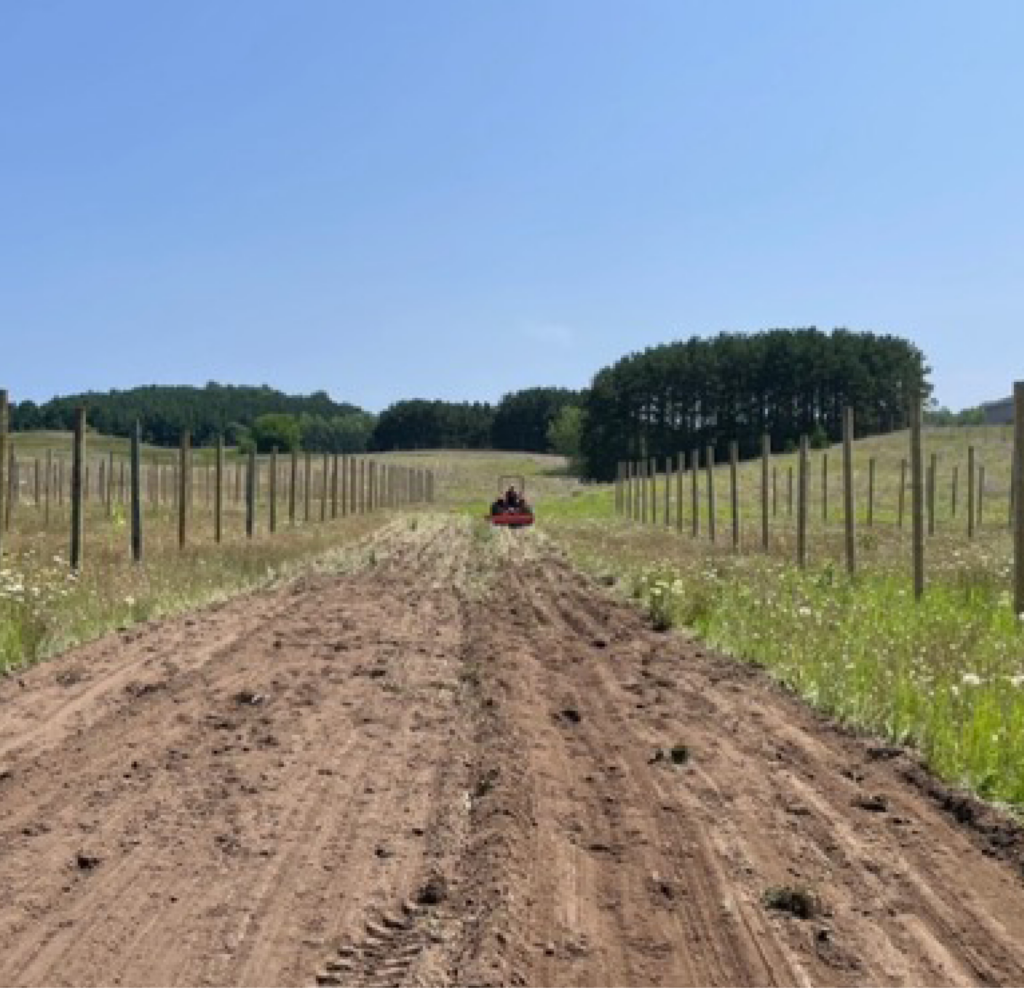
The Barnard’s are still working on growing their operation each day. In addition to the trees they’ll be planting this spring, this summer they also plan to begin construction for their storefront with hopes of opening their Cidery in 2025! You can follow their journey at heartwoodciders.com.
With the help that the CultivateGrowth Grant provided, the Barnard’s are now another step closer to opening up their Cidery. GreenStone understands the importance of advancing education for young, beginning, and small farmers. We work to provide the educational and financial resources needed to help establish a solid foundation. To apply for a grant, visit CultivateGrowth Grant.
Setting Business Goals
Having clear and planned business goals helps you set targets to reach so you are able to expand, grow and improve your operation. Goals can help you measure your efficiency and define if there’s something you need to change.
A farm operation is a business, and any business, big or small, new or old, whether producing raw products or end products, needs a well-thought-out plan as a jumpstart to the next step. A business plan will help you identify your vision and the tools you need to fulfill your goals.
How do you set goals? Set realistic business goals using the SMART goals approach. Your business goals should be:
- Specific: You should know the who, what, where, why and how of the goal.
- Measurable: The goal should have an objective or measurement that is clear to everyone involved.
- Attainable: The goal should be challenging, but still possible by putting in the hard work.
- Relevant: This goal should help you achieve larger objectives of your mission and make sense for the direction your operation is going in.
- Timely: Set a deadline for your goal so you can track the progress.
Always keep an open mind in case any pre-determined goals need to be adjusted or scratched completely as situations change. Not all goals are built the same. Some may take several years to achieve, while others may be shorter in length. Remember that slow growth is better than no growth and setting SMART goals (specific, measurable, attainable, realistic, timely) can lead to long-term success. It’s important to look at your business goals regularly to track your progress and make any necessary adjustments.
Utilizing Marketing Tactics
Marketing your operation and developing name and brand recognition is important in scoring sales, whether you’re a business-to-business operation, or a business-to-consumer farm. It’s important to set business goals to know the best approach to how you market yourself.
For example, if you’re a business-to-business operation, your marketing plan may focus more on logic, analytics and pricing, where business-to-consumer marketing might focus more on awareness, simple messaging and appealing to emotions. No matter your business strategy, there is an inherent benefit in connecting with those around you to educate consumers, advocate for yourself and the agricultural industry, or garner customers.
Telling your Story
Here’s a few simple ways to begin building those connections and work toward achieving your goals.
Telling your farm story and keeping the content personal is a great way to connect authentically, and attract new business – if that’s your goal. Consumers appreciate knowing where their products come from, and the backstory of your operation! Think about these kind of questions to help paint your picture for others:
- What’s your farm history – how long has it been in operation, who’s been a part of it, how has it changed, etc.
- How did you get started in farming?
- Why are you passionate about what you do?
- Is your family involved in your farm?
Where do you tell your story? One great avenue is social media. Platforms like Facebook, X and Instagram allow you to share your story real-time by posting examples of your day-to-day life as a farmer. There are some rules of thumb when it comes to social media marketing:
- Post routinely and stay consistent even if you don’t see immediate growth
- Use a consistent username across all platforms if possible
- Take and post photos or short videos while you work to make the most of your time and to show the authenticity of you and your farm
- Engage with comments and answer questions
- Use those comments and questions to generate new content to answer them
Another great way to get the word out is by getting involved in the community. Consider joining local community groups, hosting a farm tour or field trips, or attending farmer’s markets. When you host an event, be sure to gather contact information from attendees so you can circle back with them in the future.
If you plan to put dollars behind your marketing plan, some affordable options include social media ads, advertising in the local newspaper, and by sponsoring local events whether monetarily or by donating a product.
Get Started
Establishing business and marketing goals can be overwhelming, but by leaning on the experts around you and starting small, you can help build big success in the long run.
This blog was originally published in Michigan Farm News.
Whether you’re planning to build or buy your dream home, there are plenty of decisions that go into what you want out of a house, but it’s also important to consider your surroundings. Finding the right community for you and your family is important in shaping your experience in that home, and there are some things you should consider before renting the moving truck.
Access to Services
Understanding your proximity to police, fire and medical services can play a major factor in your comfortability in a home. Doing a quick map search will allow you to see where the closest police station, fire station and hospital is to you, and how quickly these services will be able to get to you in an emergency situation.
Additionally, you may consider looking into where the closest healthcare providers are including family physicians, dentists and optometrists, and if you are willing to drive that distance to use these services.
Access to Utilities
It’s also important to know if the water source is through the local municipality, or an individual well. This is especially important if you are building a home on a piece of land and have to dig a well. If water is accessible through the local city or town, you should research if it comes with a cost or is included in the property taxes.
You also want to ask about things like electricity and gas hookup. You can do this by calling the local utility companies and asking what they need from you before they can provide access to services.
Wi-Fi and Cable
If you are working with a realtor, they should be able to shed some light on the access to internet and cable television in a community. Wifi access is especially important if you plan to work remotely or on a hybrid schedule and need high-speed internet. By doing your own research online, you will also be able to check pricing for the internet and cable resources available in the area.
Property Taxes and HOA Fees
On top of your loan payment for a new home, it’s also important to consider other costs including property taxes and homeowners association fees. For most communities, you can find property tax information online. Additionally, if you are moving into an area with a homeowner’s association, that is communicated to you from a realtor, and those fees and benefits are laid out far in advance. You may consider asking neighbors in the area if HOA fees typically rise each year.
School System
If you have school-aged children or plan to have children in the future, understanding the landscape of available schools in the area is important. You can search online and read reviews about local school districts, attend school board meetings or community events held by the district to get a pulse on the district’s priorities and set up meetings with district leaders to ask questions. If you know somebody with children in the district, consider asking them questions about the district to see if it’s the best fit for you.
Family-Friendly and Safety
If you have a family or hope to start one, it’s important that your community is family-friendly, and that may mean different things for different people. For example, family-friendly for one person may mean making sure there are a number of community events throughout the year to attend, while for someone else, it may mean a low-traffic area to keep children safe. Checking out the local events calendar also gives you an understanding of when you may see higher traffic times in the community.
Additionally, you want to make sure the community you’re choosing is safe to live in. You can find crime statistics for communities throughout the country on the FBI’s portal here.
Recreation, Sports and the Arts
Are you really into tennis? Do you spend your weekends hitting the trails on your ATV? Do you enjoy seeing local musicals? If you have hobbies in sports, recreation or the arts, make sure your city offers this type of entertainment nearby. You can easily do this by checking out what state parks are nearby by doing an online search, looking at the local events calendar on your community’s website and seeing what sports complexes are nearby by doing a map search.
Get to Know the Area!
At the end of the day, the easiest way to get an understanding of a community is by visiting and spending the day there. Drive around the area, take a look at what businesses are around, stop into a local coffee shop, see what outdoor activities you can find and ask plenty of questions to people in and around the community while you’re out and about. If you know the address of the home or land you are looking into, see if any nearby neighbors are outside to ask if they have any insight on the community, or even the land or home you’re looking at.
Additionally, checking out the specific area gives you an idea of how loud nearby traffic is, how busy the community is during the day and if you would be able to handle the level of noise.
Buying or building your dream home is an exciting time, but scoring friendly neighbors and a supportive community makes the experience even better.
GreenStone’s team of experienced experts are ready to finance your dream home. Find our home mortgage, home construction and vacant land loan options here.
Earlier this month GreenStone hosted their second annual CultivateGrowth Conference for young, beginning, and small farmers. As part of GreenStone’s CultivateGrowth program, these farmers were invited to network and learn with other young, beginning, small farmers about various business strategies.
Brady Brecht, a local beef farmer in Gratiot County, attended the conference last year and noticed an appreciable difference!
In Brecht’s review from the 2023 conference, he mentioned that he would have liked to have seen more cattle industry focused sessions throughout the conference. This year, he was appreciative to find just that – an industry specific break out session for different operations like cash crop, dairy and livestock, and agritourism.
“After seeing the changes that were made, it felt like our opinion matters,” Brecht says. “It was a good learning experience on where the industry is going and where it is now.”

The CulivateGrowth Conference not only offered industry specific sessions, but also sessions on business planning, accounting practices, ways to market farms, and transitional planning.
“This year’s conference was better then last years for sure. Being in the smaller break outs helped because you are moving seats in different rooms with different people,” says Bj Benkovsky, another second-year attendee. Benkovsky is a dairy farmer in Eaton County. “We don’t have a plan for the future, so attending some of the transition and planning sessions helped us realize what the next steps are and what we need to do to prepare for the future.”
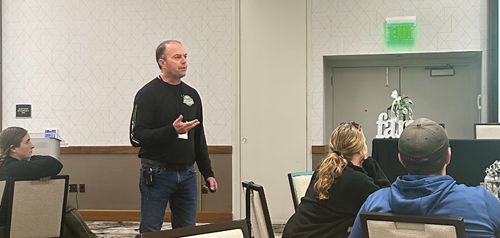
One of the biggest reasons GreenStone offers a conference like this is for the participants to network and learn from each other. Since the program is designed uniquely for those within the age, years of farming, or farm sales criteria, these participants are often just starting out in the agricultural industry and face challenges beyond the production side of farming. Being able to reap other perspectives from people in similar situations helps them grow through each other.
“It has been nice networking with other people my age. Most farmers in my community are older, so it has been nice to get to know people that are in the same situation as me,” Autumn Tait, cash crop and livestock farmer in Huron County, says.
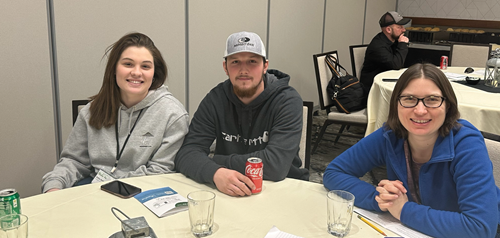
GreenStone’s CultivateGrowth program is all about giving young, beginning, and small farmers the opportunity to educate themselves and network with others, which is exactly what the conference was all about! For more information on GreenStone’s CultivateGrowth program please visit here.
You work hard, and staying on top of your operation’s finances can be a hassle. GreenStone is happy to provide a number of tools to help manage your business’ bills and income in the palm of your hand. We understand not every tool is one-size-fits-all, so we provide a suite of options to best fit your needs.
Online Banking Mobile App and Mobile Deposit: Banking at your fingertips
We know you’re busy, and stopping into a branch or pulling out your laptop isn’t always an option. GreenStone’s online banking app allows you to manage your account in the palm of your hands.
The app allows you to make a payment from your linked bank account, deposit checks into your operating loan account, transfer funds between accounts, make or schedule disbursements and monitor account balances and upcoming deadlines.
Bill Pay: Manage all of your bills in one place
If you have a My Access account with GreenStone, you can take advantage of our new bill pay feature!
This service allows you to set up automatic payments for bills – so you can focus on your day-to-day operations, and not worry about due dates. This enables you to manage your payments to all your vendors in one place to make it easier to track what has and has not been paid.
Check Scanners: Deposit on the go
If you are depositing multiple checks per week, a check scanner may be a good option for you!
Remote check deposit only allows a certain amount of deposits per day and other traditional methods for depositing checks like visiting your local bank branch can be time-consuming; A check scanner allows you to process multiple checks in just moments.
Physical check deposits are full of inconsistent costs like labor, transportation and mileage. A check scanner’s initial equipment fee can be easily worked into your operation’s budget.
This option is ideal for retail businesses, seed dealerships, retail greenhouses and agrotourism businesses.
Payee Positive Pay: Keeping your bottom line protected.
Enter information on check drafts you issue against your account and have them compared against the drafts presented for payment. If a draft is presented that does not match the issue information you provided (payee, loan number, draft number, and amount), the item is considered an exception item and is presented to you for review before clearing.
Advanced ACH: Manage your payments
Create and maintain participants, such as vendors or employees. These participants are included in payment batches, which may be initiated individually or set up on a recurring basis, such as payroll. You also have the ability to approve or reject batches that are being handled by their secondary user(s), such as payroll or bookkeeping services. Business level ACH eliminates the need for external account recipient(s) to confirm micro-deposit receipt; bank pre-notification messaging is used instead. This makes setup easier when adding multiple recipients, such as payroll batches.
Wires: Transfer funds
Easily transfer funds to an external account without first setting it up as an external account. Wire transfers are best used for a one-time transfer, as opposed to recurring payments. Please be advised a $10 fee will be charged for the wire initiation. If you agree to the fee, the wire will be released same day if requested prior to 3pm CST/4pm EST.
Farm Cash Management: Short term investments, long term success.
Integrating your operating loans with short-term investments through a Farm Cash Management account gives you the dual benefit of easy access to operating funds while potentially minimizing your net interest costs.
When you have available cash in your Farm Cash Management account, your operating loan is paid first. Any excess funds are then invested in an account of short-term investment bonds. You’re then paid a return, similar to a money market account.
Paperless Bills and Statements, and eConsent: Secure and sustainable
GreenStone’s paperless bill and statement option provides a secure, sustainable and convenient way to receive information about your account. Opting into paperless bills and statements allows you to view your bill and statement in the palm of your hand through GreenStone’s mobile app or your My Access account.
Signing up for eConsent allows us to provide necessary documents and disclosures to you electronically, including those requiring a signature using DocuSign. We can email you the eConsent form for electronic signature or you can access it on My Access.
Convenience Starts Now
GreenStone is proud to offer these convenient options to save you time and help take your operation to the next level. Finding the best online tools for your business can open more doors for you – so let us help!
If you would like to discuss what tools may be best suited for you, reach out to your local branch today.
Applying for a loan can be an overwhelming experience, especially for first-time loan applicants and beginning or young farmers. The ambiguity of the process can be intimidating and you may not know where to begin – until now!
GreenStone and the Michigan Good Food Fund teamed up to provide an informational webinar series to guide farmers through the process of applying for a loan. During the webinar series, Loan Preparation For New and Beginning Farmers, GreenStone shared an overview of what to expect when applying for a loan as a beginning farmer, the importance of having up-to-date accounting, and the resources our Young, Beginning and Small Farmer program provides to support the next generation of agriculture.
Jennifer Whitford, VP of Lending, and Chad Zagar, VP & Managing Director of Tax & Accounting, discussed what you can expect during the loan application process and tips for beginning farmers. Watch the full webinar recording or check out these five lender-approved tips to prepare you for your first loan!
1. Stay organized. Whether or not you’re in need of a loan, when it comes to operating any business, it’s vital to have updated and reliable recordkeeping. Staying organized year-round allows you to make better decisions for your farm, and when it is time to apply, makes the loan prep work much simpler.
2. Separate farm from home. Regardless of your operation’s size or location, combining your farm and personal finances will eventually lead to unnecessary confusion and stress- especially during tax time. Even if your farm is located on your primary residence or you’re just starting out, keeping your finances separate will give you a better idea of your operation’s overall performance.
3. Prepare your financials. When applying for any typical loan, you’ll need to provide pay stubs, past W-2s, bank account statements and personal information. The same goes for applying for a farm loan, in addition to having an updated balance sheet or personal financial statement and a business plan. Keep in mind your business plan should have realistic goals that are within reach and reflect your farm’s previous performance or that of similar farms in the area.
4. Communicate with your lender. Once your information is gathered, sit down with your lender to discuss your farm’s goals. Having a strong and open relationship with your lender is crucial to ensure you are both on the same page and that the expectations of your farm align. Your lender is a great resource of information. Having a good relationship with your lender will only benefit you later down the road as your farm grows and your operation becomes more diversified.
5. Be patient. The loan application process doesn’t happen overnight, especially operating and land loans. The closing time for a loan can range from 2-6 weeks and is different for everyone. Have patience and ask your lender directly what you can expect if time is of the essence.
Getting financing for your farm is a detailed process unique to each individual’s scenario with one common factor: a financial services officer working in partnership with you to help find the best solution. Experts like them are a great resource who are ready to answer any questions you have. Using the five tips above and your lender as a guide will make your experience that much smoother.
To connect with a local GreenStone financial services officer, find a branch near you or learn more on our website about GreenStone’s flexible farm financing for young, beginning and small farmers.
Kelly Vallelunga, owner and operator of Long Valley Farms in Kalamazoo, Michigan got hooked on farming back in 2005. Vallelunga originally planned to use her biology degree in fish and wildlife, but life had other plans for her. She had just moved back to Michigan and started volunteering at a local farm; immediately she knew her future goals had changed!
Almost twenty years later, Vallelunga runs a small farm growing different fresh market vegetables like tomatoes, radishes, and carrots. With two large high tent greenhouses on her property, she is able to provide fresh produce all year around to her local community!
“I offer a CSA subscription and sell at the farmers markets here in Kalamazoo. About once a month I donate extra produce to our local food bank,” Vallelunga said.
Long Valley Farms is a very unique operation because it is almost all farmed by hand! They do use a tractor to prepare the garden beds, but they still harvest the acre of produce – which is equivalent to a football field – by hand! The farm’s goal is to create a healthier ecosystem for all.
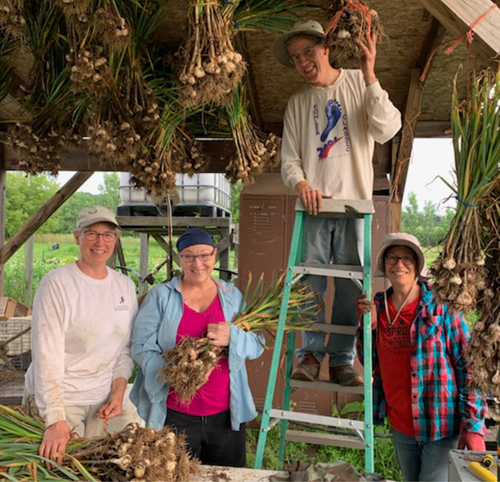
Vallelunga used the CultivateGrowth Grant to attend the 2023 Great Lakes Fruit, Vegetable and Farm Market Expo where she was able to sit in on a variety of seminars and further her knowledge in the fresh vegetable market. There was one seminar that caught her eye, and it was about tomatoes. “There was an instructor that talked about the tomatoes and had great suggestions on different spraying regimes that I had not been doing. He showed us when it is a good time to spray, what the plant needs and when,” Vallelunga says.
Learning about different spraying techniques for tomatoes was not the only thing that Vallelunga enjoyed about the conference. She also enjoyed just getting other people’s perspective on how they do things on their own farms.
Vallelunga mentions, “It is hard to get out in the warmer weather to see other people’s operations since that is our prime season. I just like going to these classes and getting to know their perspective. It gives me new ideas when I go back to my own farm and think I can do somethings that I may not have thought of before.”
Thanks to the help the CultivateGrowth Grant provided, Vallelunga is now able to use the different techniques and perspectives that she learned from the conference to help grow her farm! GreenStone understands the importance of advancing education for young, beginning, and small farmers. We work to provide the educational and financial resources needed to help establish a solid foundation. To apply for a grant, visit CultivateGrowth Grant.