

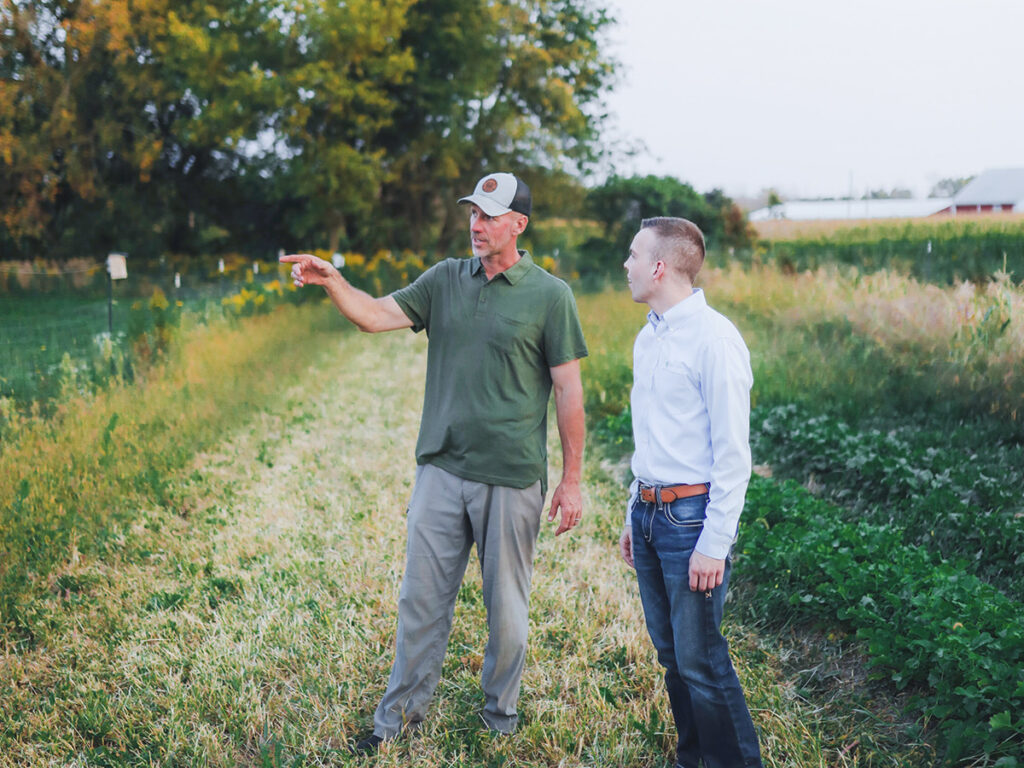
Applying for a loan can be an overwhelming experience, especially for first-time loan applicants and beginning or young farmers. The ambiguity of the process can be intimidating and you may not know where to begin – until now!
GreenStone and the Michigan Good Food Fund teamed up to provide an informational webinar series to guide farmers through the process of applying for a loan. During the webinar series, Loan Preparation For New and Beginning Farmers, GreenStone shared an overview of what to expect when applying for a loan as a beginning farmer, the importance of having up-to-date accounting, and the resources our Young, Beginning and Small Farmer program provides to support the next generation of agriculture.
Jennifer Whitford, VP of Lending, and Chad Zagar, VP & Managing Director of Tax & Accounting, discussed what you can expect during the loan application process and tips for beginning farmers. Watch the full webinar recording or check out these five lender-approved tips to prepare you for your first loan!
1. Stay organized. Whether or not you’re in need of a loan, when it comes to operating any business, it’s vital to have updated and reliable recordkeeping. Staying organized year-round allows you to make better decisions for your farm, and when it is time to apply, makes the loan prep work much simpler.
2. Separate farm from home. Regardless of your operation’s size or location, combining your farm and personal finances will eventually lead to unnecessary confusion and stress- especially during tax time. Even if your farm is located on your primary residence or you’re just starting out, keeping your finances separate will give you a better idea of your operation’s overall performance.
3. Prepare your financials. When applying for any typical loan, you’ll need to provide pay stubs, past W-2s, bank account statements and personal information. The same goes for applying for a farm loan, in addition to having an updated balance sheet or personal financial statement and a business plan. Keep in mind your business plan should have realistic goals that are within reach and reflect your farm’s previous performance or that of similar farms in the area.
4. Communicate with your lender. Once your information is gathered, sit down with your lender to discuss your farm’s goals. Having a strong and open relationship with your lender is crucial to ensure you are both on the same page and that the expectations of your farm align. Your lender is a great resource of information. Having a good relationship with your lender will only benefit you later down the road as your farm grows and your operation becomes more diversified.
5. Be patient. The loan application process doesn’t happen overnight, especially operating and land loans. The closing time for a loan can range from 2-6 weeks and is different for everyone. Have patience and ask your lender directly what you can expect if time is of the essence.
Getting financing for your farm is a detailed process unique to each individual’s scenario with one common factor: a financial services officer working in partnership with you to help find the best solution. Experts like them are a great resource who are ready to answer any questions you have. Using the five tips above and your lender as a guide will make your experience that much smoother.
To connect with a local GreenStone financial services officer, find a branch near you or learn more on our website about GreenStone’s flexible farm financing for young, beginning and small farmers.
Kelly Vallelunga, owner and operator of Long Valley Farms in Kalamazoo, Michigan got hooked on farming back in 2005. Vallelunga originally planned to use her biology degree in fish and wildlife, but life had other plans for her. She had just moved back to Michigan and started volunteering at a local farm; immediately she knew her future goals had changed!
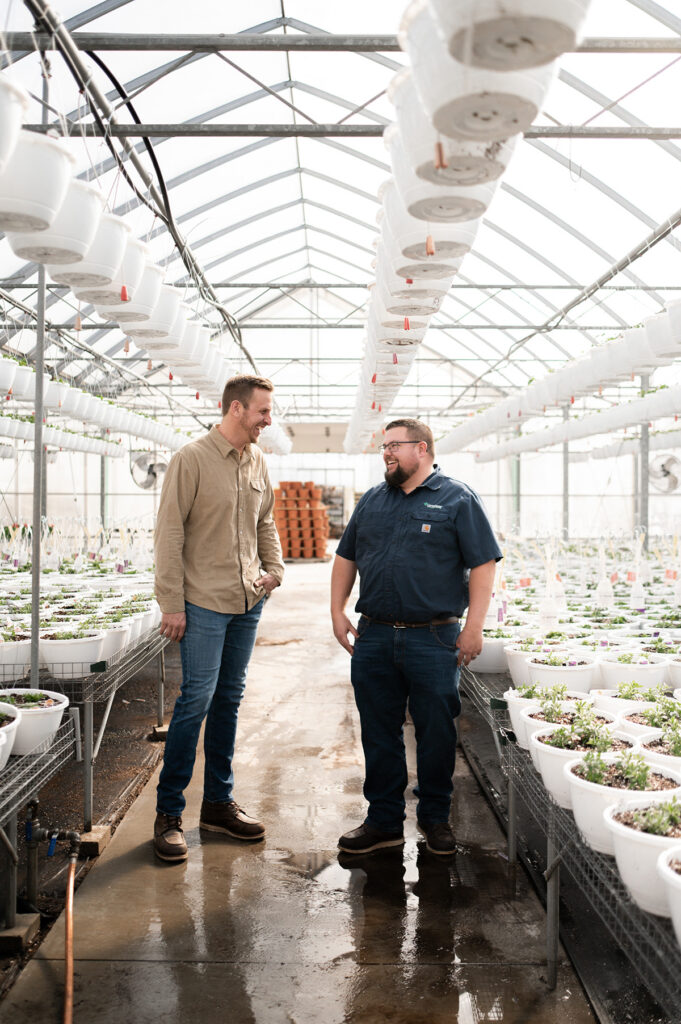
Almost twenty years later, Vallelunga runs a small farm growing different fresh market vegetables like tomatoes, radishes, and carrots. With two large high tent greenhouses on her property, she is able to provide fresh produce all year around to her local community!
“I offer a CSA subscription and sell at the farmers markets here in Kalamazoo. About once a month I donate extra produce to our local food bank,” Vallelunga said.
Long Valley Farms is a very unique operation because it is almost all farmed by hand! They do use a tractor to prepare the garden beds, but they still harvest the acre of produce – which is equivalent to a football field – by hand! The farm’s goal is to create a healthier ecosystem for all.
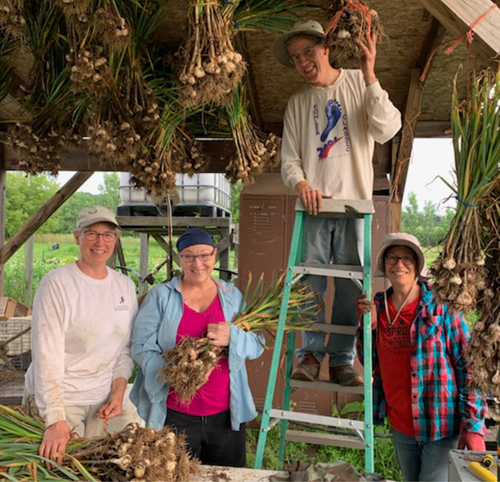
Vallelunga used the CultivateGrowth Grant to attend the 2023 Great Lakes Fruit, Vegetable and Farm Market Expo where she was able to sit in on a variety of seminars and further her knowledge in the fresh vegetable market. There was one seminar that caught her eye, and it was about tomatoes. “There was an instructor that talked about the tomatoes and had great suggestions on different spraying regimes that I had not been doing. He showed us when it is a good time to spray, what the plant needs and when,” Vallelunga says.
Learning about different spraying techniques for tomatoes was not the only thing that Vallelunga enjoyed about the conference. She also enjoyed just getting other people’s perspective on how they do things on their own farms.
Vallelunga mentions, “It is hard to get out in the warmer weather to see other people’s operations since that is our prime season. I just like going to these classes and getting to know their perspective. It gives me new ideas when I go back to my own farm and think I can do somethings that I may not have thought of before.”
Thanks to the help the CultivateGrowth Grant provided, Vallelunga is now able to use the different techniques and perspectives that she learned from the conference to help grow her farm! GreenStone understands the importance of advancing education for young, beginning, and small farmers. We work to provide the educational and financial resources needed to help establish a solid foundation. To apply for a grant, visit CultivateGrowth Grant.
Now that the holiday season is over, and we may have splurged a bit on new holiday decorations and gifts, it is time to set our budgets back on track to reach 2024’s financial goals! Here are some tips to help.
Create a Goal
What is your financial goal in 2024? Are you looking to save up money for a house? A wedding? Or a vacation? Align your goal with your values, and clearly define what would you like to save up for this year.
Create a Budget
Take time to sit down and review last month’s income and expenses. Create a list of wants and needs – that might mean considering that it might be cheaper to make coffee at home instead of buying it at a coffee shop and you may need to adjust your “want” purchases to accomplish your goal. While you are creating your budget, remember to set aside some extra money for any unexpected expenses, like car repairs or the furnace going out.
Review your Subscriptions
Remember that subscription to Jelly of the Month club you thought you were going to use, but forgot about? Maybe it time to review it and decide if it is worth keeping.
Limit Credit Card Use
Credit card debt can be pretty easy to get wrapped up in. You’re budget should help you to only spend as much as you can payoff each month, and pay on time. If you can pay it off a couple days before the due date to avoid risking a late payment fee, that is even better!
Hold Yourself Accountable
Set a reminder at the end of each month to check your spending habits! Financial planning can be hard sometimes and takes time to adjust habits, so don’t get down on yourself if you didn’t save as much as you planned. Don’t give up; review and adjust, and keep working toward your goal!
To view the winter 2024 issue of Partners magazine in its entirety, click here.
GreenStone strives to provide excellent, high-quality service, while creating a pleasant experience for our borrowers. One way GreenStone has been doing this is by identifying the appropriate business partners in the marketplace which includes select title companies to work with for our members’ real estate loan transactions.
Title Insurance is a vital component as it provides protection to both the buyer and lender, which is exactly why GreenStone has chosen to work with a select number of title companies for our member’s transactions. After thoroughly examining public records to ensure the buyer has legal access to and ownership of the land, the title company issues the title insurance policy. Title insurance protects against potential defects and unknown risks that could arise after the buyer has purchased the property. Title companies can issue both owner’s and lender’s policies: the owner’s policy protects the owner’s interest in the property, and similarly, the lender’s policy protects the lender’s interest in the property.
GreenStone maintains close relationships with each selected title company and is able to closely monitor the service provided to our borrowers and staff. Each title company must pass cyber security and compliance requirements, as well as agree to uphold title insurance standards set by GreenStone.
In 2019, GreenStone formed a joint venture with ATA National Title Group to create FCS Title Agency to streamline the loan process while providing high quality service and contributing to the financial return to our members. Title insurance is centralized within FCS Title Agency to help ensure a smooth, consistent, and efficient process. ATA National Title Group offices assist in closing the loans and performing settlement services, making it convenient for our customers as there are over 25 locations throughout Michigan.
By utilizing this joint venture, GreenStone customers see instantaneous savings in lower closing costs. In addition, GreenStone can give back more to our customers in the form of Patronage as a result of this joint venture being used, as opposed to paying an outside title company for these services.
GreenStone encourages all our members to use FCS Title for their next real estate transaction in order to benefit from the partnership GreenStone has established to support our members. GreenStone continues to evaluate the title service process to ensure we provide top-tier service. We value our borrowers’ opinions, and encourage you to provide feedback to your financial services officer or local branch!
To view the article in the online 2024 Winter Partners Magazine, click here.
This year, a total of $120 million will be returned to our loan customers through Patronage dividend checks.
Each Patronage-earning member will receive a notification letter in mid-February outlining the amount of your check. That letter will include a personal invitation to join in on a celebration on March 12 at your local branch. Enjoy refreshments, a celebration of you, and of course, the opportunity to pick up your check.
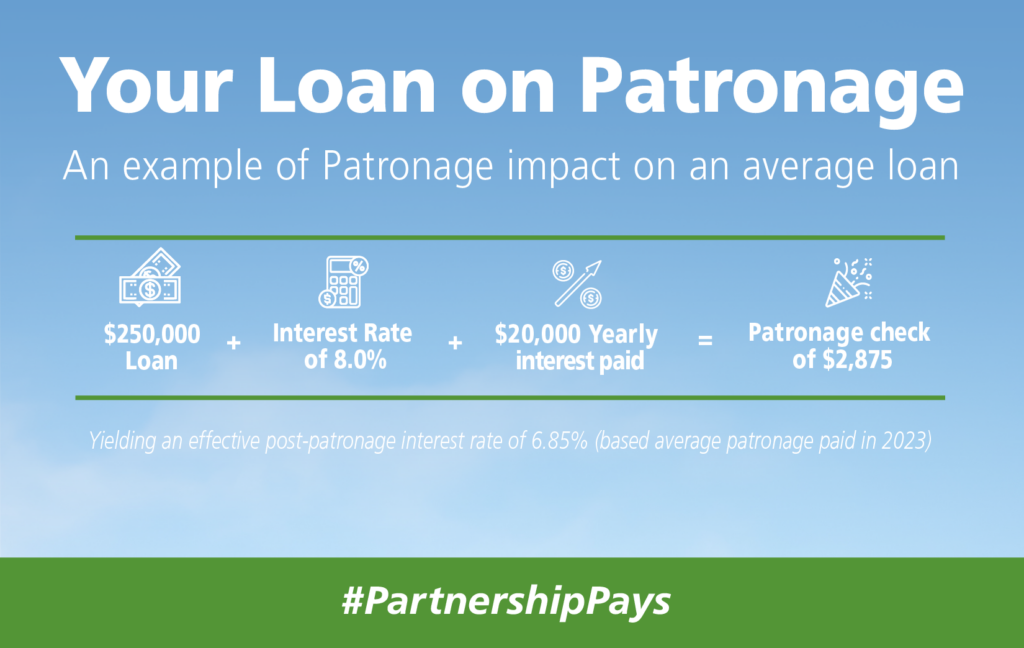
Our ability to give back to you, our member-owners, is the direct result of your success and your trust in GreenStone. This partnership reflects our commitment to do all we can to assist our members through unprecedented times, seasons of profit and cycles of challenges.
As a financial cooperative, it is necessary for GreenStone to generate strong earnings and maintain adequate capital levels to help ensure we remain a dependable source of credit for years to come. In support of its members, the cooperative continues to build and grow for the future. Patronage, earnings, and capital, combined with strong loan growth in 2023 and solid customer satisfaction and employee engagement are just a few key reasons our partnership with members will be prosperous long-term.
Personal relationships and partnerships with our members are at the core of our values. We hope you’ll join us on March 12 to celebrate you and all the ways it pays to partner!
Have a question about Patronage? Check out the detailed FAQ section on our Patronage page.
To view the article in the online 2024 Winter Partners Magazine, click here.
Your MI GreenStone PAC and WI Farm Credit PAC had a successful 2023. Disbursements were completed with meetings and checks being delivered to both Senate, House of Representatives, and Assembly legislators! The meetings were productive as connections were made and the cooperative structure of our borrower-owned lending association was communicated.
At the Federal level, the legislative activities have been very dynamic from agricultural labor, to FSA loan program limits, to the Farm Bill. The Farm Credit System, through individual associations and the Farm Credit Council, has been able to provide prospective as called upon. None of this would be possible without your engagement and commitment to raise legislative awareness of rural communities, agriculture, GreenStone, and the Farm Credit System.
GreenStone was also privileged to host a retirement celebration for Senator Debbie Stabenow who is retiring at the end of her current term in 2024. The Farm Credit PAC contributions over the years allowed us to financially support her as she worked tirelessly for the agriculture industry. The celebration was time for GreenStone to say thank you and join with other agricultural organizations to recognize her lifetime of service. In her honor the organizations made contributions to Michigan 4-H and Michigan FFA that she has long been an advocate of for as they help train the next generation that with join the agriculture industry.

GreenStone looks forward to continuing to build relationships and strengthen the recognition of our members, communities, and industry. The overall value and role of rural communities and the agriculture industry to our economies, and Farm Credit’s vital role in that, will continue to be the focus. Your continued support is commended and we look forward to involving members in delivering these messages!
To view the article in the online 2024 Winter Partners Magazine, click here.
Planting and harvest seasons receive a lot of attention and deservedly so. The execution of placing seeds in the soil with all the necessary support, care and feed to bring forth a productive result makes all the difference when measuring the success of a harvest.
The intensity, timing, rigor and efficiency of a harvest which grows out of the planting season makes all the difference for success. But maybe even more important than those two seasons is how we prepare for those seasons in the winter. In the mix of our preparation is learning and understanding what legislation is being fomented to change everything.
Key to winter activities mixed with holiday celebrations, industry meetings and taking a bit of a deep breath with thankfulness and recognition of blessings to be able to go another year, are other important thoughtful actions. Mindfulness of legislation being developed by actors that do not have the necessary deep understanding of farming and science our farmers have, can cast a shadow on the blessings and lead to yet another reason for prayer.
Reviewing and assessing your farms operation finances includes strategizing how they will be used to meet next year’s goals. Whether it is tax evaluation, cash flow, budgeting, prebuying inputs and other expenses, a sharp mind and pencil are important. Examining market prices, demand and trends to make projections involves wise reflection and minimizing guessing. All this reviewing, analysis and assessment must be made with an understanding of the public policy and programs. This can be complex. It is certainly worthy of reflective time.
Following that reflective time, turning a wrench on equipment maintenance to assure being “ready to roll” is likely to bring a smile after thinking about the politics of anything. So as we get to that mechanical work or enhancing winter preparations for animal safety during the cold season, keep in mind that a visit with legislators might make a difference in educating someone who took a different role in life – legislate. They need us to assist them, and if we don’t show up in some way, they will decide things without us.
Government leaders must come to value connecting our country’s agriculture to family farm ownership, all elements of science and geography as they make policies and programs. We need to use these winter months for all the above, and not forget about how important our voices are to assist our leaders in learning to know what they don’t know. These legislative and program decisions will shape the sustainability of our farms and how people are fed for generations to come.
Key on the legislative agenda is the next Farm Bill. It seems the journey never ends on making the Bill and it must be made in a manner that will allow for the continuation of diversified farm operations based on science and respective geographies. Congress passed an extension of the 2018 Farm Bill in November 2023. This keeps the current Farm Bill in place through September 2024. While this bill averts a government shut down for the time being, it was an important vehicle to fund some farm programs that would have lost funding on January 1, 2024. This extension makes it essential to have lively conversations about the necessary mechanics of this next Farm Bill in the first half of 2024 so our farms can produce plenty in the future.
We cannot have success and prosperity in our planting and harvest without these important winter exercises. As preparations are made to plant and harvest, appreciation for the other parts of farming need to be embraced to include communication with legislative leaders.
To view the article in the online 2024 Winter Partners Magazine, click here.
Established in 1986, Michigan State University’s Upper Peninsula Forestry Innovation Center in Escanaba, Michigan is a hub for all-things forestry research. Recently, a group of GreenStone employees had the opportunity to peek behind the curtain and learn about the important work the center is doing.
The center’s new state-of-the-art sugar shack focuses its research primarily on maple syrup and Christmas trees. The research is performed not only at the zero-waste center in Escanaba, but at forestry sites in Sault St. Marie, Michigan and Chatham, Michigan. The main center in Escanaba has 3,000 tree taps alone – funded fully by donations and grants.
New to the center is a CDL evaporator and reverse osmosis system that will be used for the 2024 season.
Jesse Randall, the center’s director, shared with us that there is a deficit of maple syrup in the world market, and there are several state and federal grants available to producers already in the business or interested in starting. You can read more about grant programs through the USDA here.
Michigan State University is one of the only universities in the country putting resources behind forestry research, putting this facility at the forefront of forestry.
To view the winter 2024 issue of Partners magazine in its entirety, click here.
As the holiday season winds down it is important to keep spending time with family. Here are five ways to make your cozy nights with your family more exciting this winter!
1. Game night
Pull out your favorite game from when you were a kid and teach your children how to play! Whether it is Twister or Euchre, family game night is a great way to laugh and have fun with the family!
2. Pizza night
Clear off the table or the countertop and roll out the dough – make it from scratch and watch it rise, or take the easy route and buy it from the grocery store. Have everyone decorate their own pizza with whatever toppings they like.
3. Movie night
Blow up the old air mattress, and grab the blankets and popcorn for family movie night. Pick out your favorite movie and relax as a family together watching it!
4. Build a Snowman
Bring Olaf to life this winter while building a snowman! Don’t forget the carrot nose and hat, or get creative with your accessories! Cap off the fun by making some hot chocolate to complete the full snow experience.
5. Talent Show
Turn your living room into a stage for your family talent show! Show off your dance moves or sing your favorite song to your kids and encourage them to express their talents.
Time together trying new and old things provide memories for a lifetime. Make the most of the season and enjoy those around you!
To view the winter 2024 issue of Partners magazine in its entirety, click here.
In November, a group of GreenStone board members and staff traveled to Washington, D.C. to represent GreenStone and our 28,000 members as part of the nationwide Farm Credit Fly-In. The time in D.C. was filled by conversations and interactions all centered around creating dialogue, providing education, and raising awareness with legislators and their staff. Three of your directors share their perspective of some of those opportunities from throughout their time in D.C., and offer their thoughts how each provided a unique and important opportunity to advocate for our members!
Dale Wagner
Over a hundred years ago Congress had the foresight to charter the Farm Credit System with a mission to provide safe and consistent credit and financial services to American farmers and ranchers. There has been enormous change since then, but our mission remains as important as ever. Today there is a tremendous amount of political “noise” so I feel it’s necessary to be a part of the conversation.
Farm Credit was in Washington, D.C. with farmers and ranchers from across the country and I was lucky enough to be a part of more than 800 participants. I had the opportunity to share some time with my senators and representatives or in many cases their congressional aides who have a significant impact on the information our lawmakers use when considering legislation. We had very candid conversation and discussion about many things affecting agriculture and rural America. Obviously much of the conversation was centered around the Farm Bill and the need to get it passed. Coincidently, while we were in D.C. the one-year extension did pass, but the message was still clearly conveyed for the importance of getting the five-year Farm Bill passed to give producers a better sense of security.
Other topics included crop insurance, the ability to finance young, beginning, and small farmers, and their concerns over impacts of increasing land values and interest rates. We voiced our concern about overreaching regulation and how those additional costs have to be absorbed by our member owners. Another topic we approached centered around the need to help finance rural infrastructure, including housing, healthcare facilities, utilities, etc. and the ability to partner with community banks for the improvement of small towns.
I have the realization that we were talking to politicians in Washington, D.C., yet somehow I feel our message was well received. I believe our attempts to educate and voice our concerns were, in some small way, successful! I think communication and building these relationships is vitally important to the strength of agriculture, our rural communities and our country, and am grateful to be a part of the GreenStone team advocating for and representing our members on the Hill!
Troy Sellen
Occasionally I find myself so wrapped up in micromanaging the details of our farming operation that I can control that I forget to consider the “big picture”. I suspect this can also be the case for the 600,000+ patrons Farm Credit serves nationally. Thankfully, opportunities like GreenStone’s Legislative Breakfast, which we held in D.C. in conjunction with the Farm Credit Fly-In, creates a chance for us to get one-on-one time with some of our Michigan and Wisconsin Congressional delegates to facilitate discussions about these big picture issues.
While Farm Credit has a strong presence on Capitol Hill, this event brought our representatives and their staff out of their high-paced offices and into a relaxed environment. With less concern for time and schedules, meaningful and in-depth conversations were had around legislative issues that impact the bigger picture fundamentals that hit home for all of us in some way.
What I really appreciated about this event was the sincerity of the conversations. Whether it was talking about the need for a comprehensive Farm Bill or asking for support to allow Farm Credit to partner with rural communities in building vital infrastructure, these discussions took on a much more personable tone than the usual legislative office visits. I feel a huge amount of credit needs to be given to our staff at GreenStone for being creative and unique to other Farm Credit institutions by planning this event. Feedback from those who attended has been very positive with many inquiring as to whether there will be another breakfast during the next Fly-In.
By leveraging the power in numbers of our patrons, you can be confident that GreenStone and Farm Credit are creating direct conduits to the Capitol by which our concerns and needs are being heard.
Terri Hawbaker
Possibly the most valuable follow up to our in-person meetings with our legislators was the Farm Credit Marketplace Reception held at the conclusion of the Fly-In. Using the theme and ambiance of a community farmers’ market, associations like GreenStone from around the country bring and share product from their region and their customers to be given to legislators and their staff as they “shop” as a representation of the broad and diverse industry we are a part of.
While the in-person visits with legislators are vital to encouraging things like a Farm Bill that benefits our customers, the Marketplace Reception brings our words to life as they shake hands with the growers, producers, and lenders that the Farm Bill will directly impact. The participants get to use, taste and enjoy both food and nonfood items from all regions of Farm Credit customers.
We all too often read of and discuss the current disconnect between consumers and farmers or ranchers -the Marketplace Reception helps bridge that gap with the very people who will decide how our customers will be impacted with upcoming legislation. For many of them, it might be the first time they meet an actual farmer. Even greater than that, it just might alter their buying decisions as they join family over the holidays or host winter gatherings.
Andy Hertzfeld is quoted saying, “You show me a great program and I’ll show you a passionate individual somewhere behind it.” While it’s certainly more than one person behind the success of the Farm Credit Fly-In and Marketplace Reception, the passion for American agriculture was hard to hide!
To view the article in the online 2024 Winter Partners Magazine, click here.