

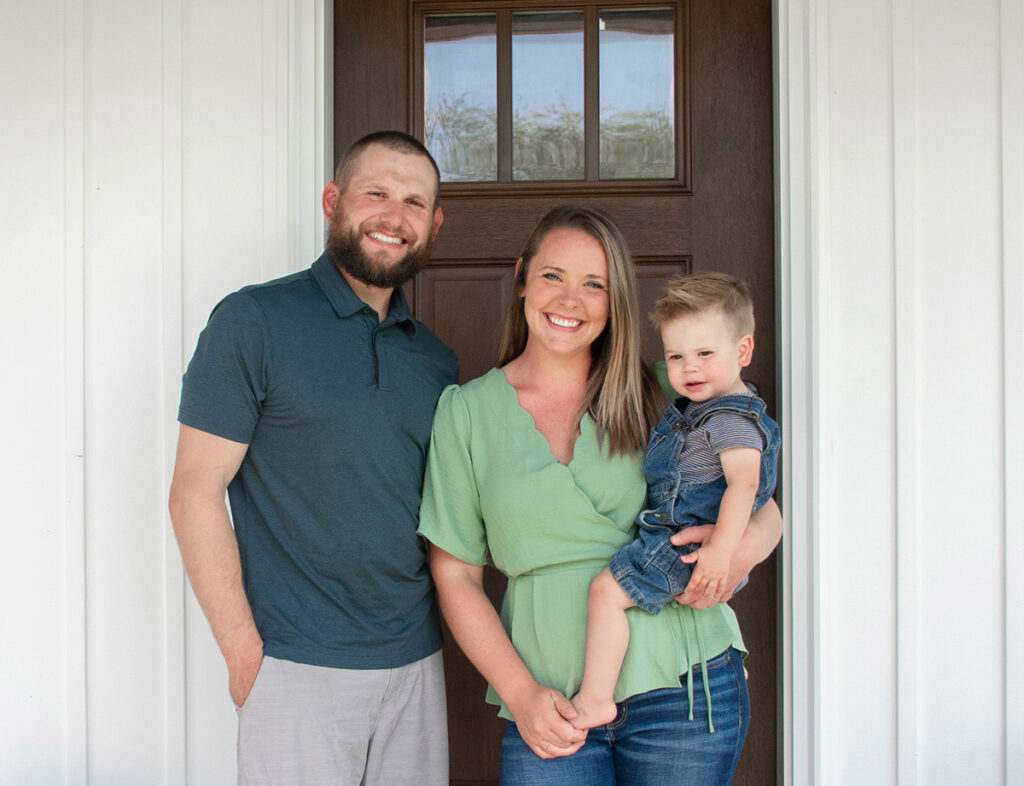
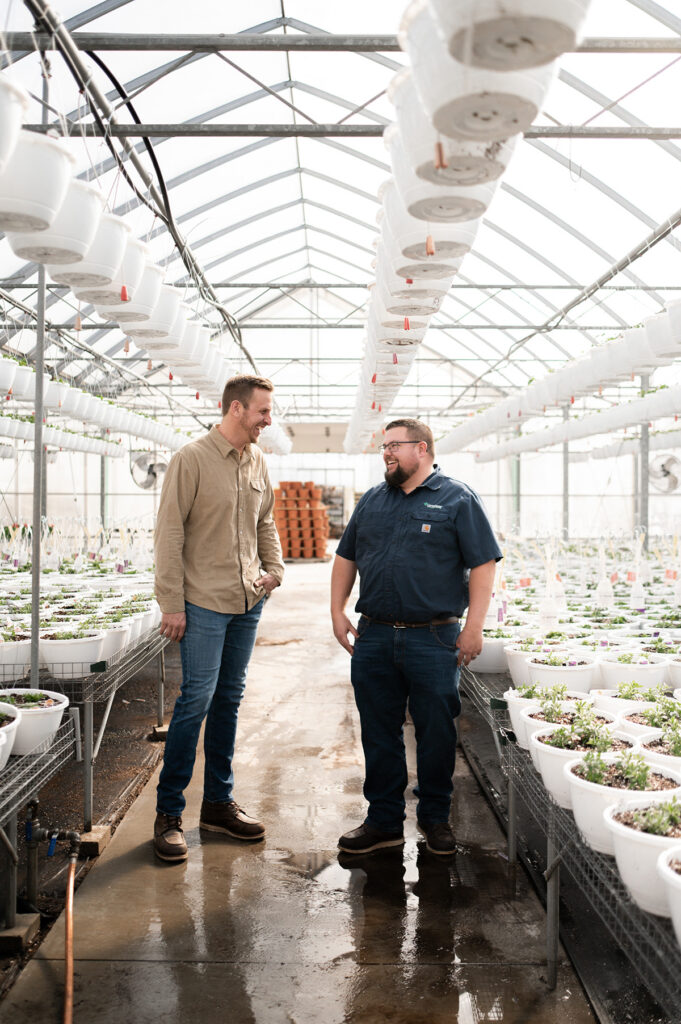

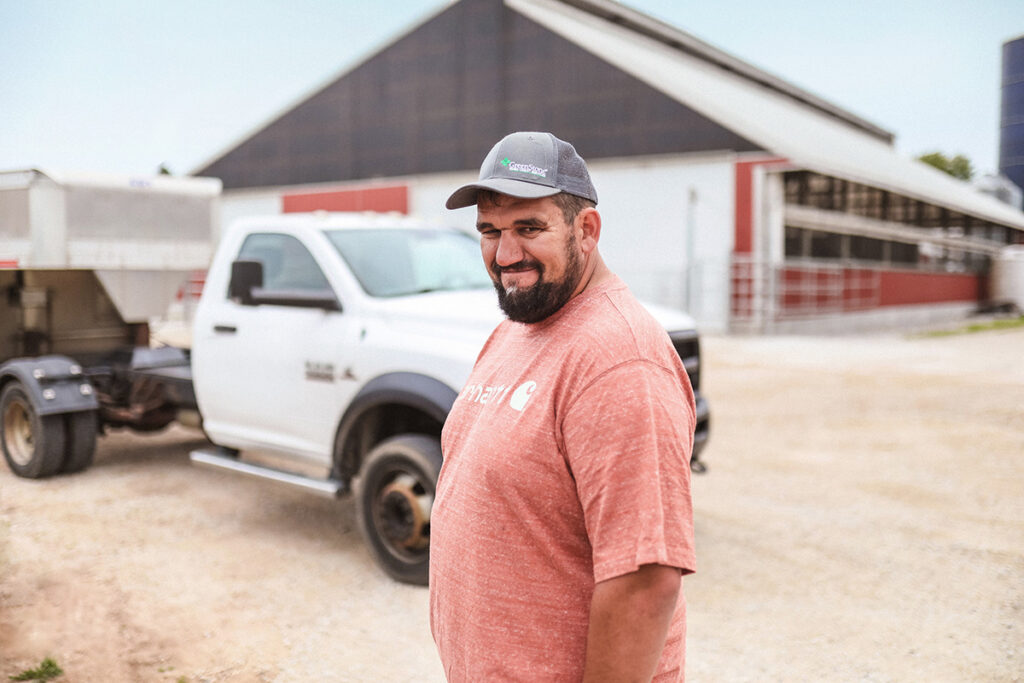
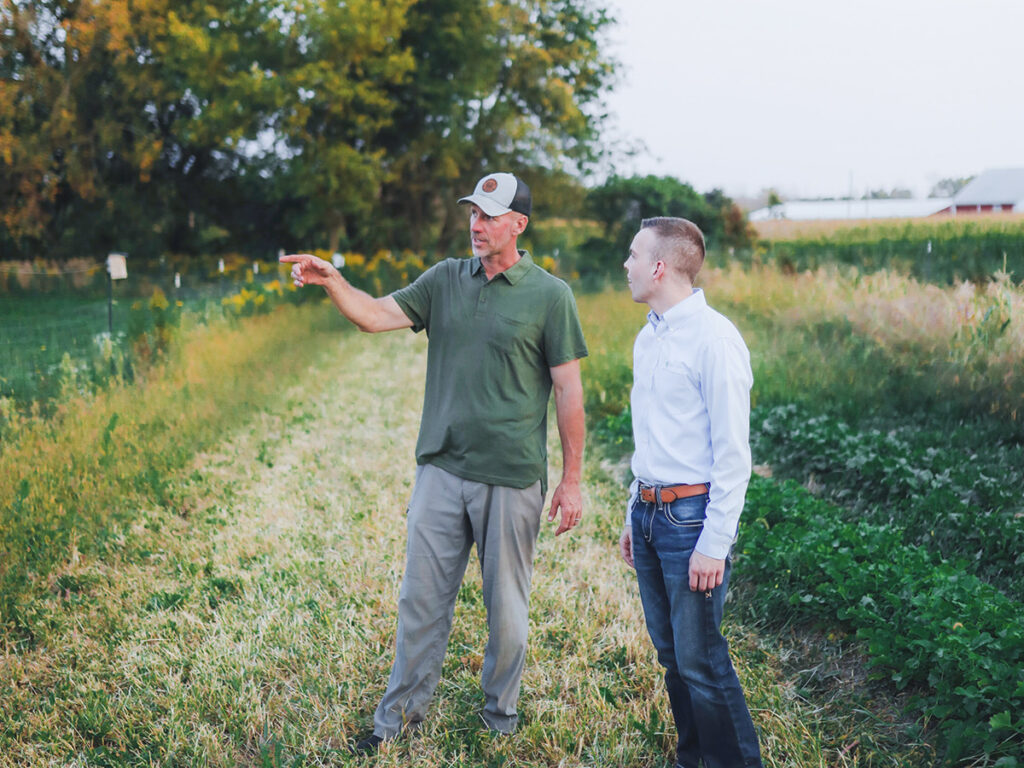
As a young farmer running a row crop operation, along with a custom spraying business, Zac Soltvedt knows the secret to success in agriculture is having a strong work ethic, grit and curiosity.
He learned those values growing up around his grandfather’s farm in Seymour, Wisconsin.
Originally going to school to be a machinist, Zac knew his real two passions were crops and the outdoors.
In 2015, after the passing of his grandfather, Zac followed his heart, and with the support of his wife Amber, took over the family farm and didn’t look back.
“I didn’t like to be cooped up in a building on nice days,” Zac explained. “Honestly, I don’t even like being cooped up on rainy days. I have always liked being outside, running machinery and making business decisions.”
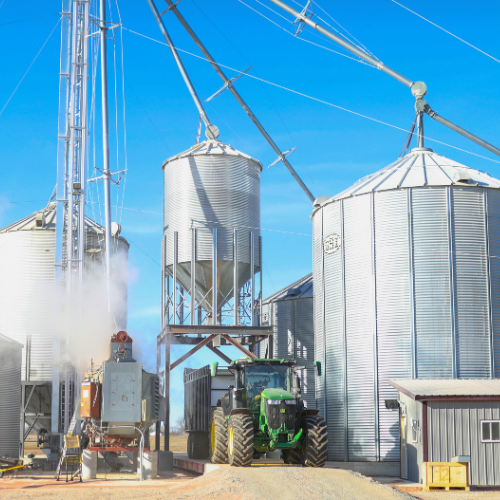
When making those decisions, Zac has a simple philosophy.
“In everything I do, I always try to do better than the year before no matter what the challenges are. Some years, that’s easier said than done, but that’s always the goal.”
The other part of that philosophy: leaning on others with experience in the business.
After working with another bank to help finance his farm, Zac wanted a lender that had more experience in the agricultural sector. He made his way to GreenStone, and now works with Financial Services Officer Corey Fanslau, who brings a wealth of knowledge in agriculture and lending.
“GreenStone understands agriculture,” said Zac. “It’s really nice to have a banking institution that understands that a farmer’s financial records are going to look a lot different than a traditional business. I bounce ideas off Corey all the time and it’s nice to have him as a sounding board and as another tool in my toolbox.”
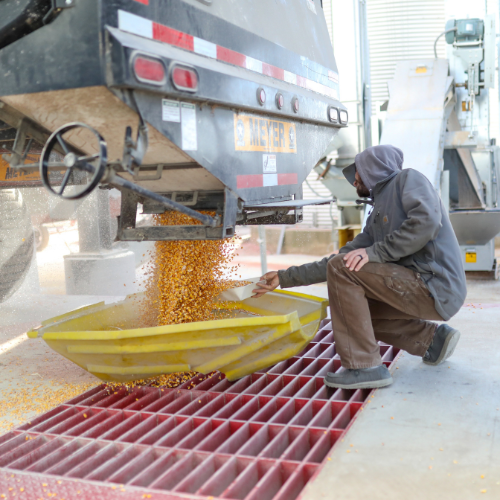
Corey shares the excitement of this partnership.
“It’s been a good relationship,” said Corey. “Zac, for being a young farmer, has shown a lot of vision for where he wants his operation to go. He’s supporting himself with a good nucleus of teammates to achieve his goals and become more profitable.”
Zac takes advantage of GreenStone’s CultivateGrowth program that provides flexible loan terms and resources for young, beginning and small farmers. One perk of CultivateGrowth is the mentorship program. It matches fellow young, beginning and small farmers with veteran farmers to share advice and strategies.
Zac’s experience in the mentorship program is a testament to why it exists – to forge important connections and share experiences.
“I was paired with a large grain operation,” said Zac. “They were very nice guys. It was nice to be able to ask questions. They were forward-thinking like I am. It was nice to get opinions on what does and doesn’t work for them.”
As if farming 500 acres of corn, soybeans and wheat is not enough, Zac also spends his time running a custom spraying business. It was a passion he picked up early on in his farming career.
“I started going out and working with customers my grandfather had worked with in the past,” explained Zac. “Then, by word of mouth, the business grew larger. I try to always be straightforward with what growers actually need and what chemicals they can go without.”
Right now, Zac’s custom spraying business is covering 10,000 acres, and he says it will most likely stay around that number.
“I value quality over quantity,” said Zac. “Before I take on more work, I need to make sure I can handle it and won’t be doing insufficient work.”
Aside from growing crops, Zac’s future plans involve growing his operation. He’s currently looking at ways to acquire more land and weighing expansion options.
“We’re always looking at trying to expand if we can manage it, as long as we can still do a good job,” said Zac. “I always want to do more to hone in on the bottom dollar and take a look at what I can cut and what I can expand to get better margins. I want to fine tune our portfolio and figure out where it is we need to excel in.”
Corey is always happy to assist in weighing those options.
“Zac has been good at looking to the future and he has not been afraid to embrace new things,” said Corey. “He wants to control what he has now and as he moves forward, he will be able to acquire more land and control more land. His ultimate goal is to grow his operation.”
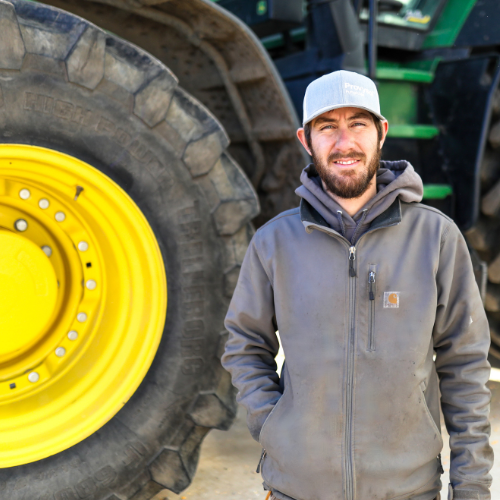
With the resources of GreenStone and his mentors at his side, the future looks plentiful for his operation.
“He’s asking questions and looking for other folks to help him,” said Corey. “He educates himself and seeks good counsel when he moves forward so I think he will be successful as long as he keeps doing that.”
And as someone who now has some years under his belt, he offers this advice to anybody considering a career in agriculture:
“Don’t be afraid to work hard and get out there and do it. That’s the mindset of our business operation. You have to work hard. A lot of people just want to dream, and don’t want to do, but you have to do a little of both.”
To view the winter 2024 issue of Partners magazine in its entirety, click here.
Looking for a way to sweeten up your New Year’s Resolution? Just add maple syrup! It adds an all-natural, unrefined sweetness that you just can’t get with regular table sugar, and it can be used for more than just pancakes! Here is a way to include this sugar alternative in your salad dressing to make the perfect balance of sweet, savory, and tangy all at the same time.
Prep time: 5 minutes
- 2 tablespoons maple syrup
- 1 tablespoon Dijon mustard
- 1 clove of garlic minced
- 2 tablespoons apple cider vinegar or red wine vinegar
- ¼ cup olive oil
- ½ teaspoon kosher salt
- ¼ teaspoon black pepper
Instructions:
- Whisk together maple syrup, Dijon mustard, minced garlic, apple cider vinegar, olive oil, salt and black pepper in a small bowl or in a mason jar.
- Taste for seasoning and add in more if necessary.
- Before serving, give it a whisk (or a vigorous shake).
Notes:
- This recipe makes a little less than 1/2 cup maple Dijon salad dressing.
- Store it in a jar with a tight-fitting lid in the fridge for up to a week.
- Use it in green leafy salads, grain bowls, and more.
- Make into a Mape Dijon Sauce: Double the amount of maple syrup and Dijon mustard and use half the amount of olive oil with the rest of the ingredients being the same.
Recipe from Doodle’s Sugarbush, LLC.
To view the winter 2024 issue of Partners magazine in its entirety, click here.
What has changed since January’s Partners article?
Update: As of December 3, 2024, you are no longer required to complete the CTA and BOI information by January 1, 2025. However, if you choose to you are still allowed to submit your reports. At a minimum, we recommend you closely monitor developments and have all of the information necessary to complete your filings so you can swiftly respond when a ruling has been made. Here’s what you need to know:
A federal district court in Texas has issued an order granting a nationwide, preliminary injunction that: (1) enjoins enforcement of the Corporate Transparency Act (CTA) and regulations implementing its beneficial ownership information (BOI) reporting requirements, and (2) stays all deadlines to comply with the CTA’s reporting requirements, including the January 1, 2025, deadline for reporting companies to submit their initial BOI report. The Department of Justice, on behalf of the Department of the Treasury, filed an appeal of the district court’s decision on December 5, 2024.
The Financial Crimes Enforcement Network (FinCEN) has responded that as long as the preliminary injunction remains in effect:
- reporting companies are not required to report BOI to FinCEN; and
- reporting companies will not be subject to liability for failing to report their BOI.
FinCEN also indicated that reporting companies may continue to voluntarily submit BOI reports.
What This Means for You:
Due to the stay, you are no longer required to complete the CTA and BOI information by January 1, 2025. However, if you choose to you are still allowed to submit your reports.
The future of the CTA and BOI reporting, including when reports need to be submitted, remains fluid and unpredictable. If the appeal upholds the CTA and BOI reporting requirements, you will need to report at a future date. We recommend that you closely monitor developments and be prepared to respond swiftly if necessary.
Check the FinCEN Beneficial Ownership Information Reporting page for more information.
As you prepare for the new year ahead, there’s a new reporting requirement that could impact you – the Corporate Transparency Act (CTA)!
What is the CTA? The CTA is an anti-money laundering law passed by Congress in 2021. The CTA requires defined businesses to report what’s called Beneficial Ownership Information (BOI). The new BOI reporting requirements aim to provide the government with resources to crack down on shell companies used by money launderers, criminals and others trying to illegally hide assets. It’s estimated that over 30 million business entities will be required to report BOI – including many types of farm businesses.
Failure to comply with the reporting requirements can lead to civil and criminal penalties! The Financial Crimes Enforcement Network (FinCEN), the agency enforcing the CTA, is taking this very seriously. A failure to report could result in up to $500 a day in civil penalties until corrected. Additionally, criminal penalties of up to two years imprisonment and $10,000 could result. These penalties apply to fraudulent reporting as well, for example providing a fraudulent ID for a beneficial owner.
Am I required to report my business’s BOI? Most companies that are business entities will need to report. The rule is that any business entity “… created by the filing of a document with a Secretary of State or any similar office in the United States” must report. Businesses that need to comply with BOI include, but not limited to:
- Limited Liability Companies, including single member LLCs
- S corporations
- C corporations
- Cooperatives
- Associations
- Limited Partnerships
- Certain trusts
If you are questioning whether or not you need to report, you should lean towards reporting. If an individual owns or controls 25% or more of a reporting company, they should file.
Who doesn’t have to report their business’s BOI? Sole proprietors and husband/wife proprietor businesses will not need to report. This is because proprietorship businesses are not separate entities from their owners, so no filing is necessary to create them. Other exceptions from reporting include:
- Heavily regulated companies (banks, credit unions, public utilities)
- 501(c)3 tax-exempt entities under the Internal Revenue Code
- Large companies that have:
- More than 20 full-time employees that are employed in the United States AND
- More than $5,000,000 in gross receipts or sales from sources within the United States on its previous-year’s tax return
For more details on reporting and a complete list of exceptions, see the Small Entity Compliance Guide (Beneficial Ownership Information Reporting | FinCEN.gov) and the FAQ’s (Beneficial Ownership Information Reporting | FinCEN.gov) on the FinCEN’s website.
What is a beneficial owner? A beneficial owner is an individual who either 1) has substantial control over a company or 2) owns 25% or more of the ownership interests of the company. Substantial control can be direct, including senior officers and any individual with the ability to appoint or remove a senior officer. However, substantial control can also be indirect. Someone will be considered a beneficial owner if they are an important decision maker for the company.
The regulations seek to identify the people having control and influence over decisions, regardless of whether or not those people have their names on the shareholder list.
When do we need to file and where will filing occur? Filing will be done online via FinCEN’s website. There will be no fee. As of the writing of this article, the form is still under development. Information about the form will eventually be posted on the FinCEN website (Beneficial Ownership Information Reporting | FinCEN.gov).
For businesses in existence as of December 31, 2023, the BOI filing can be made starting January 1, 2024. The deadline to file is by January 1, 2025. This gives current companies one full year to make their initial BOI filing.
Companies that are created on or after January 1, 2024 must file within 90 days of receiving notice that they are registered.
The AICPA and over 50 affiliated organizations recommended in a letter to the Treasury’s FinCEN that the agency extend the effective date for reporting by one year to help smooth out the filing process as it gets underway. On December 12, 2023, the House of Representatives passed a bill that would approve these items – the bill is now in front of the Senate awaiting further Congressional consideration.
Important to note is that after the initial BOI report is made, any changes to beneficial ownership information need to be filed within 30 days after the date of the change. Changes that need to be reported include appointing a new CEO, or someone acquiring more than 25% of the company through a sale or gift.
What information will I need to report? The information that will need to be reported is:
- The company’s legal name any trade names (“doing business as” and “assumed.03s
- An identifying number from an accepted ID document (passport, U.S. driver’s license), name of the issuing state or jurisdiction, and an image of the ID document
Companies that are registered on or after January 1, 2024, will additionally need to supply information about the company applicants. Company applicants are individuals who directly filed the document to register the company (often attorneys) and the individual primarily responsible for directing the filing.
Closing: The CTA’s reporting requirements will impact many companies and will likely require a significant amount of information gathering and analysis. We recommend that you consult with your legal counsel to determine your reporting obligations.
GreenStone’s tax and accounting team at your local branch is also available to answer questions. GreenStone offers a full array of accounting services for farmers and other business owners, and we are ready to assist you with your year-end reporting needs!
* Please note that some dates can vary by County, especially in Wisconsin. Please check with your Specialist for specific dates if you are unsure.
To view the winter 2024 issue of Partners magazine in its entirety, click here.
Based on a recent study conducted by IBM, the “average cost of a data breach for an organization exceeded $4.45 million in 2023, the highest average on record, this is an increase of 2.3% from 2023”.
While significant advancements were made in security technologies like Artificial Intelligence (AI), malicious actors remained a persistent threat, constantly adapting their tactics and exploiting newly discovered vulnerabilities. This piece explores some of the more significant cybersecurity events of 2023 and provides practical tips to help you strengthen your cybersecurity posture in 2024.
AI Revolutionizes Threat Detection:
AI systems such as Google Bard and ChatGPT have achieved remarkable advancements in functionality. While these technologies offer immense potential for good, they are also accessible to malicious actors. Thankfully, AI has also revolutionized threat detection, enabling organizations to analyze vast amounts of data in real-time and identify malicious patterns that might elude traditional methods. These AI-driven algorithms can detect anomalies and predict potential attacks before they occur, allowing for faster and more effective response.
Enhanced Collaboration: Building a Collective Defense
Collaboration and information sharing are crucial components in countering cyber threats. Organizations are increasingly participating in the exchange of threat intelligence, which allows for the swift identification and neutralization of threats. By learning from each other’s experiences and sharing knowledge, organizations can develop a stronger collective defense against cyberattacks.
The White House’s National Cybersecurity Strategy (The White House, 2023) and CISA’s “Shields Up” campaign (Cybersecurity & Infrastructure Security Agency , n.d.) reinforce this approach by advocating for coordinated efforts and resource sharing to enhance cybersecurity resilience across various sectors. These initiatives underscore the importance of a unified and proactive stance in addressing the evolving challenges within the cyber landscape.
Evolving Cyber Attacks and Breaches
2023 was marked by a series of high-profile incidents around the world, demonstrating the ever-evolving nature of cyber threats, including the sophisticated rise of deepfakes. Here’s a highlight some of the more notable cyber events that took place in 2023:
- The year began with Royal Mail, a major British postal and courier company, experienced a major operational disruption due to a ransomware attack by LockBit, a ransomware gang linked with ties to Russia (Cyber Management Alliance, 2023). The attack halted international shipping and raised alarms about the readiness against such threats.
- Then in June, a software vulnerability in a popular file transfer product MOVEit was exploited by the ransomware gang CloP to attack hundreds of organizations, including universities, banks, and major multinational corporations (Vasquez & Vicens, 2023).
- In July, Storm-0058’s a Chinese state-linked hacking group, breached Microsoft’s email platform that led to the extraction of tens of thousands of emails from U.S. State Department accounts, primarily involving personnel working on Indo-Pacific diplomacy (Pearson, 223).
- Then in October, identity and authentication giant Okta suffered a breach in its customer support department, with hackers gaining access to the customer support case management system and stealing sensitive data. This breach was first reported to only have affected 1% of their customers but later revised that it impacted all of there customer (Krebs, 2023).
Deepfakes: The Rise of a New Threat
2023 also saw a significant sophistication of deepfakes, synthetic media created using artificial intelligence. These advancements have raised concerns about potential abuse in various digital spaces, including phishing attacks, disinformation campaigns and social engineering. Deepfakes pose a significant challenge due to their ability to convincingly mimic real people, making it difficult for individuals and organizations to discern genuine content from malicious attempts. Advanced detection technologies and awareness campaigns are crucial to combat this emerging threat.
These varied incidents and technological advancements illustrate the escalating scale and sophistication of cyber threats. The year 2023 saw nearly 6 billion compromised records (Ford, 2023), emphasizing the urgent need for robust, proactive cybersecurity strategies on a global scale.
Protecting Yourself in 2024
While the cyber threat landscape may seem daunting, individuals need to continue to take proactive steps to enhance their cybersecurity posture.
Here are some key actions you can implement:
- Embrace strong passwords: Move beyond easily guessable passwords. Utilize strong, unique passwords for all your accounts and enable multi-factor authentication wherever possible. Consider using a password manager for enhanced password management.
- Beware of phishing scams: Be cautious of suspicious emails, links, and attachments. Always verify the sender’s identity before clicking on any links or downloading attachments. If something seems too good to be true, it probably is. Check the “red flag” list for actions that should cause you to stop and verify.
- Update regularly: Regularly update the operating systems, applications, and firmware on all your devices (smartphones, tablets, computers) to install the latest security patches.
- Backup is key: Regularly back up your important data to a secure location. This will provide a safety net in case of a cyberattack or accidental data loss.
- Secure your home network: Use strong passwords for your Wi-Fi network and enable encryption to protect your data while online. Avoid using public Wi-Fi for sensitive activities.
Looking Ahead: A Collaborative Future
Combating cyber threats effectively requires a collaborative effort. Individuals, organizations, and policymakers must continue to work together to create a more secure digital environment. By taking these steps and staying vigilant, you can navigate the ever-evolving threat landscape with confidence!
Be Alert! Watch for these red flags and always verify before you send…
- Change in payment information, such as changes to wire directions, check details, or ACH directions
- Urgency in the request or last-minute changes without notice
- Change in your point person for business in process, such as your loan officer, title agency contact, or dealer representative
- Change in payment type, such as requiring you to wire money instead of provide a check
- Requests for payments for unexpected things, or by someone who wouldn’t normally contact you for money
- Unexpected email, text or phone call, or communications where the contact information doesn’t match what you normally use for that individual, such as a different email address or phone number
To view the winter 2024 issue of Partners magazine in its entirety, click here.
In this behind the scenes, three GreenStone employees share how their role allows them to support rural communities and agriculture.
Ashley Deloney
6 Years of Service
Loan Post Closing Manager

How does your role help carry out GreenStone’s mission of supporting rural communities and agriculture?
My team reviews loan documentation and title work post close. We ensure documents have been properly completed, and the title work issued is accurate and provides proper protection for both our borrowers and for GreenStone. In my specific role, I work with our approved title companies to ensure they are upholding the standards they have agreed to in regard to title insurance, customer service, compliance, and cyber security. I also work with our sales and operations teams to help improve processes and documentation.
What do you enjoy about your role?
The most enjoyable part about my job at GreenStone is getting to interact with so many people with various backgrounds and goals. Everyone is different and it’s always fun and interesting to understand people’s personal goals and then to watch them accomplish them.
How does your portion of the loan process ensure great customer service?
We make sure that our borrowers are properly insured and protected. By doing this, our customers can breathe easy knowing they have a free and clear title, and proper access to their land.
What do you enjoy in your free time?
I love spending time with my husband and daughter, baking, and knitting (a new hobby!).
How has your work changed over the years?
The legal department has restructured in order to create specialization. Each team within the department has a specific set of duties that ensure we and our borrowers are properly protected. We have pre-close, post-close, and servicing teams – allowing for each team to be experts in their respective roles.
Amy King
6 Years of Service
Compliance Manager

How does your role help carry out GreenStone’s mission of supporting rural communities and agriculture?
As a legal compliance group, my team and I function as internal support to other departments within GreenStone. We work together to deliver quality loans to our customers so they are better equipped to support their way of life and help feed the world.
What do you enjoy about your role?
I enjoy collaborating with individuals from other departments within the GreenStone. I find I am continually learning something new about myself or the industry through our collaborations.
How does your work ensure great customer service?
The legal process at GreenStone provides both a pre-close and post-close review of loans. Through the legal review process, the team works diligently to ensure all applicable regulatory procedures are being followed, assist in identifying intervening liens prior to close, and certify the completed or booked loan can be pledged to AgriBank.
What do you enjoy in your free time?
I enjoy being outdoors, spending time with family, and traveling.
How has your work changed over the years?
While the legal review and title review process has generally stayed the same over the last several years, we are always looking for new efficiencies in the review process and additional ways the Legal Department can be a continued resource to our customers.
Sherry Vasser
1 Year of Service
Loan Certification Specialist

How does your role help carry out GreenStone’s mission of supporting rural communities and agriculture?
As a certification specialist, I support GreenStone’s mission by ensuring each loan in its final stage has been completed with the necessary review standards that will allow our customer a smooth process going forward.
What do you enjoy about your role?
I enjoy that every day that I will learn something new, and this will enable me to be the best I can be.
How does your role ensure great customer service?
The legal process at GreenStone ensures that each customer’s loan transaction has a professional legal review within the loan process from the start to the finish.The team works diligently within the legal review process to ensure all applicable regulatory procedures are being met and assist in identifying intervening liens prior to the closing of the loan. The final review then certifies that the completed loan can be pledged to AgriBank.
What do you enjoy in your free time?
I love to spend time with my grandchildren and passing along some traditions of the past that I also learned from my family mentors. I also enjoy movies, great food, and reading a book.
How has your work changed over the years?
Technology has changed everything and has made processes faster and more efficient with less paper involved.
To view the winter 2024 issue of Partners magazine in its entirety, click here.
After a cold and snowy December morning of deer hunting, Daniel Krug joins his wife Jennifer to enjoy a cup of coffee by the warmth of their fireplace in their newly-built barndominium-style home.
It’s the kind of peace and quiet you can only get on the backroads of Holly, Michigan. Although originally hesitant to move to such a large plot of land, coming from living in the suburbs, Jennifer now appreciates this newfound serenity.
“It was during COVID and the lockdowns when we decided we didn’t want to be in the suburban areas anymore,” Jennifer explained. “I wanted to downsize our home now that we are empty nesters, but I knew Dan’s dream was 40 acres.”
That 40-acre dream turned into a 65-acre reality after Daniel and Jennifer toured the plot of land they now call home.
“When I first heard 65 acres, I was wondering who needed that much. Now, I realize I like it. There’s nice trails to walk through the woods. I feel like I’ve visited all corners of the properties,” said Jennifer.
The two worked with GreenStone Financial Services Officer Miranda Kelle to secure a land loan and buy the property. Soon after, they called up Miranda again to finance a home construction.
“Everybody was awesome at GreenStone. We were happy to work with a local lender who understands exactly what we want,” said Jennifer. “Our builders loved working with GreenStone, too. It was a natural choice to go with GreenStone.”
“With it being a unique type of build and the size of the property, we knew it was up our alley to finance it,” explained Miranda.
By August 2022, their two builders broke ground on the home while Daniel and Jennifer lived in a temporary building on the property they refer to as the “glamping tent.”
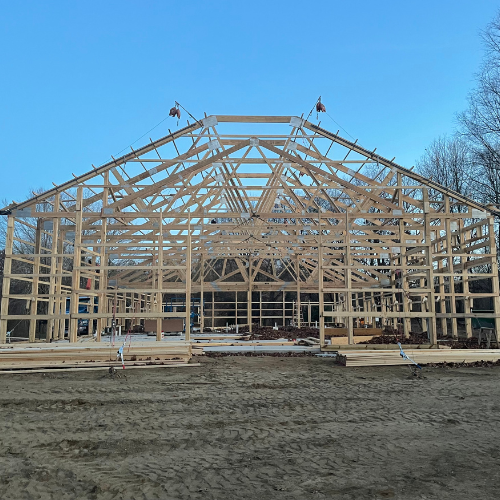
After a cozy full year in the small structure, Daniel and Jennifer, along with their two dogs Ziva and Ellie, were finally able to move into their new, state-of-the-art barndominium – even hosting a large Thanksgiving for family this past November.
“Daniel told me that Thanksgiving in the new house was amazing,” said Miranda. “That meant a lot to me because it’s a great example of the meaning of our job. We get to help make those big moments happen.”
“It’s nice to have the kids and grandkids here,” Daniel explained. “Everyone felt at home by the end of the day Thanksgiving.”
It’s difficult not to feel a sense of home in their cozy rural setting. The home is equipped with a large kitchen, 2540-square-foot garage, and plenty of living space for their seven grandchildren to enjoy.
“I like the open design and the big fireplace,” Daniel pointed out.

“The vaulted ceiling and the beams in the ceiling were things I always wanted,” Jennifer reflected. “The big island and large pantry are also very cool for me.”
There are even some personal touches that remind Daniel and Jennifer of friendships they have developed along the way.
“We had a friend that had a milking barn that unfortunately was flattened in a storm,” Daniel said. “We bought the wood and used it for a beam in the kitchen, the fireplace mantle and two vanities.”

Daniel and Jennifer say it didn’t take long to adjust to the lifestyle change from the city to the country.
“I used to have a suit and a BMW, and now I have a cowboy hat and a truck,” Daniel joked.
“I would just tell anyone that if they are looking for a switch in lifestyle, it’s a lot of work but it’s very rewarding,” said Jennifer.
The home build may be complete, but they are just getting started on this property. Next on their agenda: raise some horses.
“We have an equestrian barn to put together,” said Daniel.
If anyone knows how to take a big idea and turn it into reality, it’s certainly Daniel and Jennifer, and the team at GreenStone will be there every step of the way.
“It’s exciting to see what else they can do, especially with this size of property,” said Miranda. “We keep the relationship open and wherever their ideas go, we know we are a resource for them.”
In the meantime, they will continue enjoying fresh coffee, the fireside ambiance, and the endless possibilities of this new home and lifestyle.
“One of my favorite parts of the job is being able to see people’s dreams come to life and being able to help them do that,” said Miranda. “This isn’t just about financials, it’s about getting people in their dream home.”
“I do believe that God led us here, and I know God is going to continue to provide as long as we follow Him,” said Jennifer.
To view the winter 2024 issue of Partners magazine in its entirety, click here.
Geert Van den Goor has been measuring in acres instead of miles for as long as he can remember. Growing up on a farm in the Netherlands, agriculture has always been in his blood, and when he graduated from school in 1983, he pursued that passion and began farming with his brother.
Eighteen years later, Geert and his wife Gertie were looking for more opportunities to expand their farming operation, and when country regulations got in the way, they decided to move to the United States. There, Goma Dairy Farms was born in Marlette, Michigan.
If you visit their property now, you will find a wide-scale dairy operation, but it hasn’t always been this way.
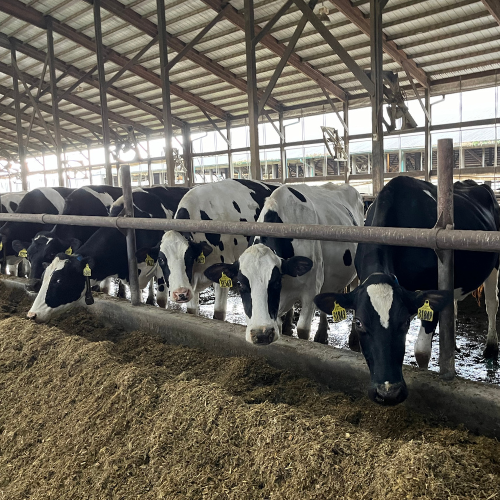
“We started in 1999 with 250 cows and 350 acres,” Geert reflected. “By the second year, we built a new barn for 600 cows.”
And by 2006, Geert and Gertie had a brand-new parlor. As the years went on, the farm grew to 3,500 cows.
A New Direction
Knowing their three children were not taking over the farm upon their eventual retirement, in 2015 Geert and Gertie began to evaluate the future of Goma Dairy Farms.
Brent Robinson, a dairy farmer in neighboring town Caro, Michigan, worked as a nutritionist on Goma Dairy Farms in the past, and formed a friendship with Geert and Gertie. When he found that they were searching for the future operator of their farm, he threw out the idea for himself, along with his business partner, Brent Moyer, to eventually take it over.
“One weekend we were out around the campfire, and Brent asked if we had ever thought of them,” Geert recalled. “Two years later, we put a plan together on how we were going to do it.”
By 2019, Brent and Brent’s farm, Paramount Enterprises Dairy merged with Goma Dairy to be known publicly as Green Point Dairy.
Geert says the secret to the success is leaning on everyone’s individual expertise.
“Everybody respects the qualities of each other,” said Geert. “We use each other’s qualities very wisely.”
GreenStone VP of Agribusiness Lending Tara Parr, who has been instrumental in the financial side of the merger, couldn’t agree more.
“Geert and Gertie are very proactive and good decision makers, and Brent and Brent are a breath of fresh air,” said Tara. “The merging of the two companies was pretty seamless.”
Going Green
One of the largest decisions made by Green Point Dairy was the addition of an anaerobic digester on the farm’s Marlette, Michigan property. Energy companies SJI and REV LNG installed and run the digester that turns cow manure into methane gas.
“The company showed up, and it was the first time a salesperson talked a normal language and had something we actually wanted to learn more about,” Geert explained.
The addition of the digester comes after the farm already installed a machine that separates manure from the sand used for the cow’s bedding. It also cleans the sand to be continually reused for the cows. This machine paved the way for the digester – because manure cannot be turned into gas unless the sand is first removed.
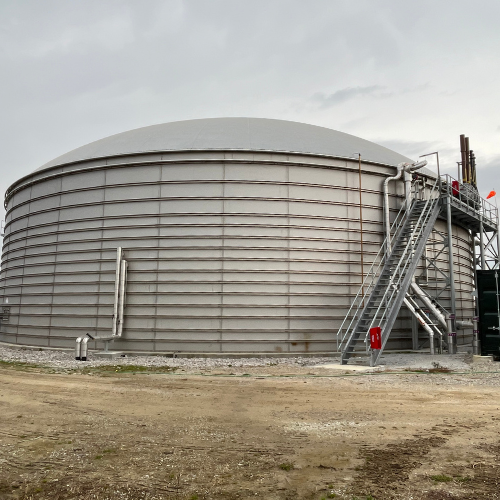
Geert and Gertie, along with Brent and Brent, believe that a step toward sustainable farm practices is beneficial for everyone.
“The future of agriculture is going to revolve and evolve around sustainability,” explained Brent Robinson. “Creating a new system that functions with business models and biological models working together to create an ecosystem that can work long-term for the planet and people are the first steps toward this.”
Recently, GreenStone President and CEO Travis Jones, joined other members of GreenStone’s staff on a visit to the farm to check out the sand separating machine and the digester to learn more about how they work.
“It says a lot about GreenStone that Travis visits these operations,” said Tara. “He wants to be involved at all levels.”
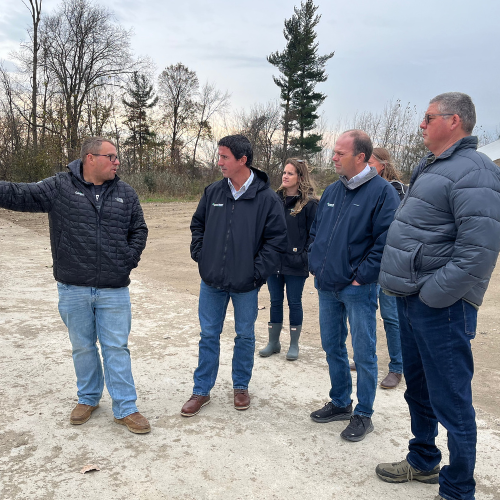
This visit was especially special for Geert and Gertie, who have worked with GreenStone since they came to the United States almost 25 years ago.
“It was exciting that the CEO was interested in visiting us,” said Geert.
Sitting around the table with hot coffee topped off with farm-fresh milk in hand, Geert explained that GreenStone has helped on a number of projects and expansions over the years, and he’s thankful for the rural-focus of the cooperative.
“In 2005, when we did a big expansion, we got the best package for what we needed with GreenStone,” said Geert. “We have a lot of qualified people around us at GreenStone.”
For GreenStone employees like Tara, it’s just another day doing what she loves – supporting agriculture.
“The best part of my job is the people. I get to build a lot of relationships,” Tara explained. “This is not a transactional business. Understanding the business and family dynamics is all part of building that relationship.”
Moving Forward
Brent and Brent’s plans for the future of Green Point Dairy are already underway with the construction of a state-of-the-art heifer facility. Once finished, it will be able to house heifers, securing a successful future for the farm – allowing Geert and Gertie to rest easier knowing as they inch closer to retirement, the future is bright for the operation they helped build.
As the years go on, GreenStone will be there to support what’s in store.
To view the article in the online 2024 Winter Partners Magazine, click here.
Steve and Lynette Henson bought an Amish farm in Blanchard, Michigan back in 1998 with one goal in mind: enjoy the peace and serenity of living in the country.
What they didn’t expect is that the farm would give them a brand-new hobby-turned-booming business.
The farm’s former resident left tree tapping supplies behind, so when Steve and Lynette moved in and got settled, they gave it a go, and loved it! Soon, they began producing more and more maple syrup – eventually deciding to sell it.
“It was kind of a hobby at first, and then we enjoyed making it and had fun,” said Lynette. “There were a lot of maple syrup producers around us when we started, so there wasn’t a huge market. We had to go to Detroit to sell our products.”
Fast forward to more than 25 years later, and their business, Doodle’s Sugarbush, LLC, has taken the market by storm. You can find their syrup in more than 200 grocery stores and restaurants across the state and country – something that took years of hard work and networking to accomplish.
“You have to get in front of these stores for them to believe in your product,” said Steve. “It can be hard to do.”
Doodle’s Sugarbush, LLC isn’t just known for their wide variety of syrups, but also maple-based products like maple cream, maple coffee and maple pancake mixes.
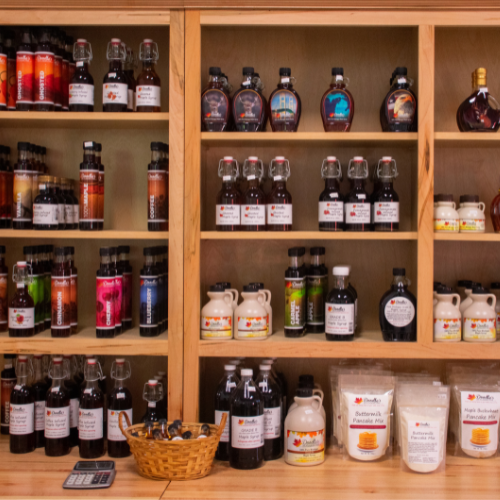
“Mostly everything we do is made from maple syrup,” Lynette explained. “Maple syrup is a healthy sweetener; it’s a good sugar source. As we’ve grown through the years, we just keep expanding and adding more products. There’s lots of things that you can make with maple syrup.”
The operation is difficult to forget – not only from its unique product line, but from its memorable name as well.
“Doodle is Steve’s childhood nickname,” explained Lynette. “We decided to go with it for our business name to honor that.”
It’s so memorable that they often see different generations of families stop by to support the business.
“I take great pride in selling to people in the community, and then years later, selling to their kids and grandkids. We get to see families from the past.”
And GreenStone takes pride in being a part of their team, as well. Steve and Lynette have been able to utilize farm real estate loans, operating loans and equipment loans through GreenStone to help in the expansion of their business.
“Traditional banks hadn’t always wanted to give us a loan for a maple syrup farm,” said Lynette. “GreenStone took us seriously and knew we had a full-fledged business. GreenStone has been really great to work with to help us pursue our dream of helping make it bigger and better.”
GreenStone Financial Services Officer John Grassley works with Doodle’s to find finance options to help grow the business – something that excites him.
“They have been great to work with,” said John. “They have a passion for their business, and you can tell that when you meet them. They put their all into their products, and they’re loving what they do. They’re taking something from nature and turning it into a product. It’s a unique product, and you can see it and taste it right at their farm.”
Tasting that product is what the community will continue to do as Doodle’s makes improvements to their facility and pushes out more products.
“It feels really good to help them achieve their goals,” said John. “They want to continue to be more efficient. They just set up a new packaging line that will help them achieve that.”
“There’s a huge market now,” said Lynette. “People love to support local and support Michigan.”
As far as the future, this hardworking duo has no plans to slow down any time soon. With the support of their daughter Eliazbeth who helps when she’s home from college, there’s no limit to how much success they can tap into.
“We hope to continue to increase our products and continue to grow. We hope to keep reaching out further from Michigan and across the United States,” said Steve.
“As a husband and wife operation, it’s awesome to see the family dynamic and the dedication that they have,” said John.
To view the winter 2024 issue of Partners magazine in its entirety, click here.
Deer camp. Those are two words that can lite a fire in many Michigan hunters of a certain age. What age you may ask? Good question. I have given that quite a bit of thought over the last several years.
My dad, who is now 80, is still drawn by the allure of deer camp. The sad fact is, physically he can’t navigate getting to and from deer camp on his own any longer. A stroke robbed him of that gift several years ago, but the spark and the memories still smolder. The question is, are the traditions of deer hunting being passed down? Is deer camp still a thing? Well, the answer is a resounding yes…and no.
I have the extreme honor of having the job as host of Michigan Out of Doors TV. That little camera has given me a pass into many deer camps around our great state over my 26 years of working for the show. I have been to many a cabin, tent, house, camper, home and hotel all doing their part to host a deer camp. At every camp, it seems like there’s a couple of different age classes of hunters, starting with the old guard.
By that I mean, folks in their 60s, 70s, and 80s. They tell the best stories, and if you’re lucky enough to go back year after year, the stories usually get better and better over time. These guys still like to hunt, but aren’t too concerned about filling a tag. They’re still the first ones up, but not usually the first ones out the door.
Then there’s the guys in there 30s, 40s, and 50s. Some are still pretty hard core, hunt hard, and are very into all that goes into the hunt. They run a ton of trail cams, have full scent control, and can name all the bucks on their property. However, many in this age range have started to transition to a bit more of a casual hunter. They only sit until 10 or so, don’t scout much, don’t know what grain bullet they shoot, and they are more into what the dinner plan is then who is sitting in what blind.
Then we have the up-and-coming hunters, the young ones. It’s these that I am worried about, and I have two of them in my own house. For some of them, they have gotten bit by the hunting bug and can’t wait to hit the woods! They love the allure of the outdoors. They love hunting deer, ducks, big bass, or whatever else they can chase! These young hunters will hopefully take our sport into the future. There are also many, like my two boys, who each shot a few deer and really like it but haven’t fallen in love with it yet. They will always support it, will go from time to time, but haven’t yet made it a priority in their lives.
Deer camp is the place that all of these folks can and should come together. The teenager, the hardcore 30 year old, the casual hunting 45 year old, and the 70 year old story teller. If our sport is to grow, and thrive, I believe that keeping deer camps part of the hunting landscape is crucial. The memories, the stories, and the deer on the pole are all an important part of making the tradition of deer hunting continue. The world would be a better place if we all went to deer camp.
To view the winter 2024 issue of Partners magazine in its entirety, click here.
Timber is a different business than any other. Timber professionals need to purchase before they make a profit, their equipment depreciates at a rapid rate, and every step has to be done keeping the health of the regenerative product in mind. GreenStone recognized this, dove in and learned it, and now has a long history of working in this industry. As a result, we understand the specific needs for operating loans, equipment loans, leases, mortgages, and letters of credit.
Application process
One of the biggest questions prospective members have is about the application process. Most of the time, timber financing deals require traditional underwriting, three years of complete tax returns, and a complete balance sheet. For new prospects, we have found it beneficial to them to walk them through all the documentation that is needed.
At GreenStone we’re able to do this both virtually and in person. We know this is a detailed process, particularly for new members. We help them through the application, which helps them understand why things are needed and makes it easier to know what to expect the next time they apply. There are five main items applicants need:
- Certificate of Authorized Representative (for borrowers with legal entities)
- Signed and dated application
- Copies of drivers’ licenses
- Three years of Federal and State Tax Returns along with depreciation schedules
- A complete market-based balance sheet for all entities and individuals co-signing or guaranteeing the loan(s)
Underwriting and depreciation
Customers also want to know about GreenStone’s underwriting standards and how depreciation plays into them. Due to the intense wear and tear timber equipment experiences, it depreciates more quickly than standard farm equipment. For example, in a matter of three years, a piece of equipment can go from being worth $700,000 to $375,000. Since we’re familiar with the intense replacement schedule loggers are on, we like to work with our customers to make the best choices on financing equipment – whether it be regarding term of loans or down payment.
GreenStone has four core underwriting standards as it pertains to timber:
- Repayment history (captured by credit bureau details)
- Owner equity
- Repayment capacity
- LTV (loan-to-appraised value)
For young or beginning operators, GreenStone also has more flexible standards to accommodate those who we see as the lifeblood of the industry moving forward.
Letters of credit
Timber operators commonly are asked to put up a cash bond on sales before they cut the wood on the property, and many don’t want to tie their cash up in those deals. To assist them, a timber operator can pledge collateral, and GreenStone will write them a letter of credit. This is a service we provide that differentiates us from many other financial institutions. As a bonus, our Irrevocable Letters of Credit do not typically accrue interest, can be originated with a reasonable fee, can be written for up to seven years, and are renewable. Many of our timber customers use them and like the business opportunities they afford them by preserving their cash position.
Real estate
Timber operators buy land with the purpose of harvesting the timber. When they require financing for the purchase, GreenStone requires 65% LTV on vacant timberland as we expect borrowers to select-cut the property at some point during the course of the note and we want to protect their equity position as well as GreenStone’s collateral position. In many circumstances, members will resell the land after a cut and regrowth period as either recreational land (e.g., for hunting) or as residential property tracts for rural homes. This practice – if done responsibly – is both a good way to maintain healthy forests and promote tourism and rural living across GreenStone’s territory.
Sustainable Forestry Initiative (SFI) Training
Timber professionals must complete eight hour of SFI training to satisfy wood-procurement and harvesting requirements of many SFI-certified wood purchasing companies. The training covers Fiber Sourcing Standards, MIOSHA Safety, Best Management Practices, climate adaptation, Invasive species ID and control and more.