


Wire fraud is costing people and organizations billions annually. CertifID identified $1.4 billion (about $4 per person in the US) in suspected wire fraud attempts during 2022. That is an increase of 181% from 2017 to 2021 (CertifID, 2022).
This is an urgent issue affecting both businesses and our customers alike. The allure of quick and convenient money transfers is undeniable, but it comes with its own set of risks. The ease and speed that make wire transfers attractive are the same factors that make them a prime target for fraudsters. Fraud like fake invoices, and real estate fraud often exploit the urgency and lack of scrutiny in wire transfer processes. Here are some tips to help keep you safe!
Common Scams: Wire fraud is a serious crime that can have a devastating impact on victims. Here are just a few of the most common wire fraud tactics and what to look for:
- Fake Invoices: Scammers send counterfeit invoices that look like they are from legitimate vendors. They may ask you to wire money to a fraudulent account.
- Real Estate Fraud: Scammers trick you into sending money to a fake account during a property transaction, often by hacking into an individual or business email account. They may pose as a real estate agent or lawyer.
- Personal Impersonation: Scammers pose as a distressed family member or friend in need of emergency funds. They may ask you to wire money to a fraudulent account.
- Overpayment Scams: Scammers send you a check for more than the amount owed and ask you to wire back the difference. The initial check will eventually bounce, leaving you out of pocket.
- Business email compromise (BEC): Scammers hack into a business’s email account and send fraudulent emails to employees, requesting wire transfers. The emails may appear to be from a legitimate sender, such as a CEO or CFO.
Spotting Red Flags: Awareness is your first line of defense against wire fraud. Scammers are constantly evolving their tactics, so it is important to be aware of the latest red flags. Here are a few things to look for:
- Last-Minute Changes: Sudden changes in account details are a glaring red flag. Always verify added details through a trusted channel.
- Compromised Emails: A compromised email account can leak deal-specific information. Always double-check any unusual email activity.
- Unusual Urgency: Scammers use urgency to cloud your judgment. Always question why a transaction needs to be rushed.
Proactive Steps: Wire fraud is a serious crime, but there are steps you can take to protect yourself. Here are a few proactive steps you can take:
- Voice Verification: Always verbally confirm transaction details using a verified and trusted number. Never call the number provided in an email message, and always ask questions to confirm the identity of the individual on the other end of the conversation to avoid voice modification scammers.
- Secure Your Email: Strengthen email security by using robust passwords and two-factor authentication. If you think your email account has been compromised, you should review inbox rules that might have been created by the attacker to obfuscate their malicious actions – such as auto forwarding actions.
- Regular Monitoring: Keep an eye on your bank statements and flag any unauthorized transactions immediately.
What to Do If You are a Victim: Wire transfers are immediate, and this makes it difficult to recover funds. However, there are still steps you can take if you are a victim of wire fraud. Here is what you should do:
- Contact your bank immediately: Tell them that you have been the victim of wire fraud and ask them to stop the wire transfer if possible. They may also be able to assist the authorities in tracing the money.
- Report the fraud to the authorities: You can file a complaint with the FBI’s Internet Crime Complaint Center (IC3) at https://www.ic3.gov/. You can also contact your local law enforcement to report a crime.
- Keep records of all communication with the scammers: This includes emails, text messages, and phone calls. These records could be helpful to the authorities in their investigation.
Your Role: The Final Safeguard
While GreenStone and other financial institutions take measures to help secure wire transactions, the ultimate responsibility lies with you. You are the final safeguard against wire fraud. By being aware of the risks, being vigilant, and taking proactive steps, you can significantly reduce your risk of falling prey to wire fraud.
- Be aware of the latest wire fraud: Scammers are constantly evolving their tactics, so it is important to stay up to date on the latest frauds.
- Be vigilant: Do not rush into sending money. If something does not seem right, it is not.
- Take proactive steps: Do not wait for something to happen. Take steps to protect yourself, such as verifying the recipient’s information carefully and using a secure payment method.
By following these tips, you can help to protect yourself from wire fraud. Remember, you are the final safeguard.
References
- CertifID. (2022). State of Wire Fraud: 2022 Trends and Industry Forecasts. Retrieved from https://www.certifid.com/state-of-wire-fraud-2022
To view the article in the online 2023 Fall Partners Magazine, click here.
Whether your roots run deep in the field, or you’re establishing roots in a new home, we’re here to help make your dreams a reality.
Maybe you’re looking to build a home for your family to settle in the country, a hardworking farmer getting ready for harvest, or on the hunt for recreational land ahead of deer season. There’s one thing you should know: GreenStone has you covered.
It’s our vision to be rural America’s first choice for financial services, and we live that vision each and every day by offering a wide range of financing options for farmers and rural residents in Michigan and northeast Wisconsin.
Helping You Establish Roots: Loan Options for a Country Home
- Home loans: You can count on our expertise in rural homes to provide you the best financing possible for your dream home in the country.
- Home construction: Whether you’re doing it yourself or hiring a team of builders, we can help you finance your dream home build in the country.
- Home site vacant land: When you find the perfect location for your new home, we can structure the financing to align with your building plans.
- Recreational vacant land loans: Owning your own special place to hunt, fish, hike or simply enjoy time outdoors with family and friend is possible with a recreational land loan.
Your Roots Run Deep: Loan Options for Farmers
- Farm operating loans: A readily-accessible line of credit to give you the flexibility and stability to manage your business – from planting season, to harvest, and everything in between.
- Farm real estate loans: We have the expertise to provide farmers of all sizes the right land loan package to fit your needs.
- Farm construction: With the option to fully-contract construction work or do-it-yourself, we have loan programs to fit your unique situation.
- Farm equipment: We provide loans for equipment, livestock and facilities with terms up to seven years with customizable repayment options and interest rates.
- Farm leasing: The option to lease provides significant advantages over owning as it can be an excellent way to reduce costs, improve cash flow, avoid equipment obsolescence, free up capital and maximize tax advantages.
- Agribusiness: Our team of experts will work with you to design a financing program or provide services to meet your business needs.
- CultivateGrowth: We provide flexible loan terms for young, beginning and small farmers to build a foundation to flourish in their agricultural aspirations.Part-time farm: We understand the specialized nature of part-time farming and will work with you to meet your unique financial needs.
Get Started!
Our team of experts in agriculture and rural home and land financing are ready to make your dream a reality.
Get started, apply now or reach out to your local branch to connect with a financial services officer, today!
Taking the leap into home ownership is a big decision, and there are many factors to consider before going on the hunt for the perfect homestead. When you are ready to make that leap, you will quickly realize there are many benefits to owning a home. Here, we outline some reasons to consider taking that leap!
Building Equity and Credit
A home is not only an investment in your quality of life and future, but also your financial stability. Unlike renting, your monthly payment doesn’t go towards someone else’s investment, it goes toward your own. Owning a home allows you to build equity over time. Equity is the difference between your home’s value and the remaining loan balance. As you pay down your loan, your equity will typically go up over time.
Making full, on-time payments towards your home loan can also help boost your credit score. A high credit score can help with future finance opportunities. Oftentimes, rent payments are not reported to credit bureaus and therefore, do not count towards a credit score.
Stability and Security
Home ownership provides a space of stability. You as the owner have full control over the living space. You can make any modifications or renovate it to your liking, without the limitations that typically come with a rental space.
This ownership also brings a sense of security. If you have a fixed-rate mortgage, you can count on a consistent monthly payment for the life of the loan. When you rent, your rent rate will be evaluated at the end of each lease agreement and could potentially go up.
Tax Advantages
- Home mortgage interest is tax deductible, which could mean a reduction in the amount of federal taxes you owe.
- Mortgage insurance premiums may also be tax deductible, depending on your income.
- Property taxes can also be deducted up to $10,000 if you’re single or married filing taxes together. The deduction limit goes down to 5,000 if you’re married but filing separately.
Building Pride and Roots
Owning a home and being part of a community brings a sense of pride. Not only do you have the freedom to personalize your space that reflects your style, more importantly, you are building roots and a foundation to build on. When you buy a home and settle down in a community, you can engage with neighbors, make friends, and host the next family gathering.
Get Started
Whether you plan to purchase a home or put on the hard hat to build your dream house, GreenStone is here with flexible financing options to fit your needs.
To get started on a loan application, click here, or have a conversation about your next steps by reaching out to your local branch today!
Coming from two different backgrounds, Cassie Eadie and her husband Andrew’s ag expertise varied drastically. Andrew grew up on the family dairy farm in Ottawa county and running an operation was second nature. However for Cassie, this was a whole new world. After beginning the transition and purchase of E-D Farms from Andrew’s parents, she knew she needed to get up to speed quickly.
For new farmers like Cassie, GreenStone’s CultivateGrowth Mentorship provides a way for industry leaders to share their lifetime of these lessons and expertise with young, beginning, and small farmers. The current 2022-2024 mentorship class which Cassie is a part of, is underway and both mentors and mentees have already benefited from the friendships formed.
Cassie joined the mentorship program to connect specifically with a female farmer who has a similar human resources role in managing employees of varying demographics and cultural differences. Cassie knew having a mentor in a similar position would help advanced her operation by getting guidance on the current operational challenges she’s facing. With her specific goals in mind, GreenStone paired Cassie with mentor Anna Link, a part-owner of Swiss Dairy Farms in Kent County that currently milks over 5,000 cows.
GreenStone’s program began with an in-person kick-off event and throughout the 18-month program, participants are expected to connect often and meet in-person at least quarterly. Pairs are encouraged to meet more often to maximize both the mentor and mentee’s program experience – something Anna and Cassie have certainly taken advantage of. The two have stayed on track by meeting right away to review Cassie’s goals and tour each other’s operation. They now meet in-person monthly and have weekly calls to connect and ensure those goals are on track.
“Anna’s been helping me with my five-year business plan, implementing HR management plans that our farm has been in need of and helping me to do ‘coaching vs. warning’ with employees,” Cassie says. “She gives me book recommendations on enterprises or how to run a profitable business and shares updates from her operation for ideas on what we could be doing.”
Since the mentorship program, Cassie has implemented a multitude of enhancements on her operation to improve efficiency and better her own leadership skills. One change Cassie focuses on is adding more coaching into her operation with her employees. If an employee has attendance issues, rather than giving them warnings prior to termination, Cassie has redirected her approach to focus on how she can better understand her customers and what might be the real problem.
“If an employee shows up late three days, why give them a written warning when instead we can work together to figure out what’s going on? There might be something personal going on and we can help coach them through that,” Cassie explains. “My goal is to help my employees be better people, along with myself through this program.”
Cassie isn’t the only one benefiting from her mentorship with Anna. As her father-in-law, Arden, continues the transition process, Anna has shared her experience in the transition their own operation previously underwent. This has helped Arden, Cassie and Andrew get on a similar page with the succession plan.
“This is really beneficial for young farmers who are going into farming, especially people like me, who married into it,” Cassie says. “It’s very different for me, I didn’t grow up in this like Anna did and just having a mentor be there to guide and listen is a huge thing!”
The next class of mentees and mentors will kick off fall 2024 but interested farmers can apply online now.
Eric Vandivier
10 years of service
Senior Tax Accountant
Little Chute, WI

How does your role carry out GreenStone’s mission of supporting rural communities and agriculture?
My role as a tax accountant is crucial for our customers, particularly as they approach year-end or look to make changes in their business (creating, selling, expanding, transitioning, etc.). I try to take the knowledge I have in tax, accounting and payroll law and pass that on to customers so that they can make the best financial decisions for their particular situation.
What do you enjoy about your role?
I enjoy being the go-to person for one of the most complicated issues our customers deal with. Taxes aren’t fun but they don’t have to be the headache that some people think they are. Tax accountants can be as trusted of an advisor as doctors or therapists. I enjoy building that personal relationship with my customers as well.
What changes have been incorporated to meet evolving customer needs?
Tax laws and regulations change on an almost annual basis. So, no tax year is ever the same. My role requires me to stay on top of all these changes so I can educate and serve my customers to the best of my ability.
How do you see GreenStone moving forward?
Our department has gone through a good deal of changes since I started back in 2013, but every change has been made to make our lives as tax accountants, and the lives of our customers, easier. We’ve used automation in our software to allow us to provide better financial reports in a timelier fashion to our customers. We’ve educated ourselves on ever-changing financial programs like PPP loans and Employee Retention Credits to try to get as much money back in our customers pockets as possible. We’ve used better technology to streamline how information flows back and forth between our department and our customers.
What do you enjoy doing in your free time?
I most enjoy spending time with my family. My wife and I recently welcomed our second child, Tristan, to the world back in November. With my 2-year-old daughter, Addison, loving her role as big sister, we spend as much time as possible making irreplaceable memories. Of course, when there is a moment to catch our breath as parents you might find us golfing, at our cabin up north or relaxing and watching a movie.
Mark Buuck
20 years of service
VP of Lending
Adrian, MI
How does your role carry out GreenStone’s mission of supporting rural communities and agriculture?
In my role, I’m able to provide reliable products and services to farmers that assist them in running an efficient and profitable business. Their success is GreenStone’s success, giving me the opportunity give back through donations and volunteering to support the rural community and be involved in local agriculture.
What do you enjoy about your role?
What I enjoy about being a part of GreenStone is the people I get to work with and the people we serve together. Whether it’s buying a piece of farmland or receipting a loan payment, it’s all of us working together towards a common goal.
What changes have been incorporated to meet evolving customer needs?
Improvements in technology have allowed me to be more flexible in my role. It also allows me to be more accessible to customers, and improving our ability to meet their needs that much faster.
How do you see GreenStone moving forward?
Moving forward at GreenStone, I’m in a position to grow with our customers in good times and in times of stress. Building strong relationships with customers and being involved in the rural community positions me to be a reliable resource that understands what is happening on a local level.
What do you enjoy doing in your free time?
I enjoy spending time with my family, whether at our kids sporting and school events, or going to the lake.
To view the article in the online 2023 Summer Partners Magazine, click here.
For Gary and Roxanne Pedersen, family means everything. After spending years in their Houghton Lake, Michigan home located closer to the center of town, they were ready for something more private.
After another financial institution was unable to help Gary and Roxanne, they made their way to GreenStone where, now retired, Financial Services Officer Brian Peariso was ready to help.
“They came to me back at the beginning of 2018 to inquire about doing a self-build. When you’re able to help someone after they haven’t had success with another financial institution, it’s very rewarding. We were able to appraise it and move forward,” said Brian.
And move forward, they did. The two broke ground on a new piece of property in West Branch, Michigan which would soon become their brand-new four-bedroom paradise.
Gary has a background in construction, but this was the first time his wife Roxanne has worked with him on a build.
“Gary is a handyman so it’s always awesome to work with people who have a background in construction,” said Brian.
A learning curve for her, the two made the most out of the experience together.
“I worked for a builder to put me through college, but this is the first time Rox and I worked on something together,” Gary explained.
“I pretty much learned on the fly, but I had a good teacher,” said Roxanne.
Gary and Roxanne had some help from contractors, but built about fifty percent of the home entirely on their own. Roxanne jokes that being able to go to her job during the day and only work on the house in the evening is what kept her going.
“He worked day and night on this place, but I had the luxury to go to work during the day,” said Roxanne.
As expected, there were some compromises along the way.
“One of the best decisions we made was on the back porch,” Roxanne explained. “It’s half covered. I get to be in the sun and he gets to be in the shade.”
That compromise was important – because of their work arrangements.
“I work outside, and she works in the office, so we flip-flop when we get home,” said Gary.
Among many of their projects, one thing Roxanne is happy to show off is their beautiful stone fireplace.

“That was a fun project,” Roxanne remarked. “It was like playing Tetris because I got to pick out the rocks and he got to place them together.”
But the thing they’re most proud of is having a space where they can host their family.
“It’s a house built for a family of twelve, but there’s two of us,” Roxanne joked. “It’s awesome because when our granddaughter comes up to visit, there’s room to play.”
That extra room was the goal all along.
“We always hosted family, but now, we actually have the room,” said Gary. “The kids can go outside during the winter time. During the summer, there’s a slip-and-slide going down the hills. There’s a little creek out back to cool off. There’s plenty of room depending on where you want to visit at.”
Gary and Roxanne said this would not have been possible without the help of Brian and GreenStone.
“GreenStone has been really easy to work with,” said Gary. “Everyone requires certain amounts of documents, but GreenStone makes it easy. It’s nice that they are family-oriented and blue-collar-oriented.”
Gary also appreciates GreenStone’s commitment to giving back to our member-owners through our Patronage program. In 2023 alone, GreenStone returned $120 million of profits to our members.
“The Patronage program helps out,” said Gary. “It’s awesome to get a bonus check in March to get caught back up in the winter.”
Gary and Roxanne enjoyed their experience with GreenStone so much that when they decided to put up another building on their property, they knew exactly who to call.
“Gary called me not too long ago, and said they wanted to build a barn,” said Brian. “We had such a good relationship with them, and I was happy to assist them.”
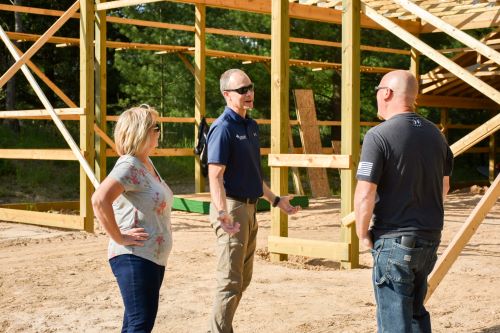
After a quick process, Gary and Roxanne were able to begin building their dream barn.
“The construction loan was pretty darn easy. Everything went smoothly,” said Gary.
The barn will be used for storage, a game room, and Gary and Roxanne’s newfound passion – his woodworking business.
“It’s kind of a hobby and a stress reliever, and I thought we could make some money at it, and we have.”
If that business ever needs an expansion, Gary knows exactly who to reach out to.
“I’m not just a number at my branch, they know my name,” said Gary. “We tell everyone to call GreenStone.”
And our staff, like Brian, will always be ready to take that call. “If something sounds like a solid plan, GreenStone will try to make it work.”
To view the article in the online 2023 Summer Partners Magazine, click here.
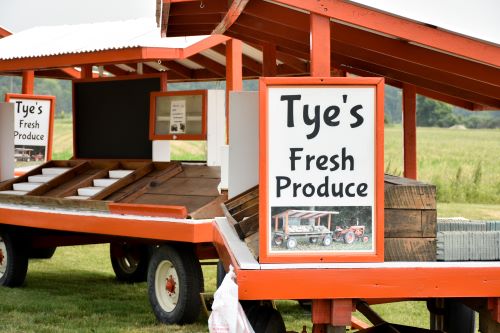
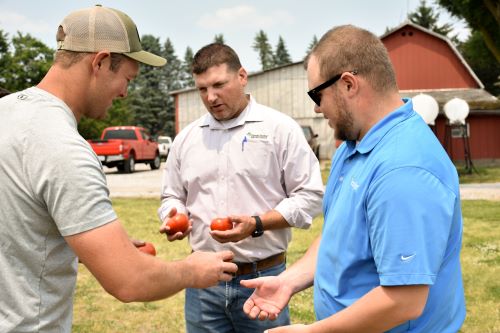
During the summer months in southeast Michigan, you can count on at least one thing: four bright orange produce stands in Dundee, Ida, Milan, and Maybee will be stocked with fresh vegetables ready to feed a community on the honor system.
The man behind the stands is Tye Thompson – but his story starts long before these stands attracted lines of people waiting for their fix of his popular produce.
Tye didn’t grow up on a farm, but he always knew that being in the fields is right where he belonged. Many of Tye’s neighbors and family friends who babysat him were farmers, and watching the tractors and combines from his window sparked his childhood curiosity.
“For as long as I can remember, I have always liked growing plants and watching farmers in the field harvesting crops,” said Tye. “From the time I was a kid, I always wanted to farm.”
That curiosity turned into a drive to get started. By the time Tye was an early teenager, he was kickstarting his career in agriculture by working on his neighbor’s farm. When he realized that his neighbor had an acre he wasn’t using, Tye asked if he could rent it out and grow some crops.
From that point, Tye began to grow produce to sell – and he hasn’t stopped since.
“I rented that acre from him, built a little greenhouse, grew some plants, and bought my first tractor for $600,” said Tye.
That tractor was a bright orange Allis-Chalmers B — the inspiration behind the orange produce carts he still uses today.
“My first sale was a quart of jalapeños and a quart of banana peppers,” Tye recalls proudly.
When Tye was finishing up his senior year of high school, he knew he still had more to learn about agriculture before tackling it fulltime. He decided to pursue a degree in horticulture at Michigan State University. During his time there, he continued his farm operation on the side selling produce out of his stand.
After receiving his diploma in 2019, he began his dream of farming fulltime.
From Dreams to Reality
As a young farmer, Tye worked with GreenStone to secure financing to expand his operation – so he could turn a profit and remain a full-time farmer long-term. He worked with Rich Dubke, who, at the time, served as a financial services officer in GreenStone’s Monroe branch.
Rich already knew of Tye because of his signature orange produce stands, and he was excited to work with a young farmer ready to grow his operation.
“His work ethic is second to none,” Rich explained. “He asks the right questions, and he puts the right people around him. The presence he has in the community is huge. You have a hard time not seeing multiple cars lined up at his produce carts in the summer.”
“It has been nice to talk to Rich and hear about different options he has for me,” Tye explained. “He has helped me weigh the pros and cons of buying things.”
Rich was able to utilize GreenStone’s CultivateGrowth resources to assist Tye in expanding his operation. The CultivateGrowth program provides flexibility in the loan approval process for young, beginning, and small farmers.
“GreenStone has really helped out a lot, especially when I was starting out on my farm,” said Tye. “They have been there to help me make improvements on my property.”
Tye has expanded from one produce cart to four – all bright orange, of course. He now has four greenhouses and 39 acres of farmland. His popularity has also expanded – as he became a staple in the community.
“It’s a hard job, so for the community to be so appreciative, it’s really nice,” said Tye.
Producing the Next Generation
Because so many people helped Tye follow his dreams in agriculture, he now gives back by investing in even younger aspiring agriculturalists. Aside from farming full-time, Tye began working in the classroom fulltime in 2021 at Dundee Community Schools teaching classes like agriculture business, botany, and zoology as part of their agriscience program at the school and leading their FFA Chapter as the advisor.
“It makes life extremely busy, but I enjoy teaching and I enjoy the kids. I like helping expand their knowledge on agriculture,” said Tye.
“I know Tye is aware of how important young farmers are, as an agriculture educator himself,” said Rich.
Recently, his students helped open a greenhouse at the school for a full hands-on experience. Tye hopes to continue in the field of agriculture education in hopes to inspire more people to get into the field.
Tackling Transition
Tye and Rich have built a close relationship working together. GreenStone takes great pride in the type of quality service we provide our members. That’s why when Rich recently made the choice to move from GreenStone’s Monroe branch to the Ann Arbor branch, he didn’t make that decision lightly.
“The hardest decision I’ve made in my six years at GreenStone was moving on to a new opportunity knowing that I’m leaving my customers, but I know they’re in good hands with Mark, so it made that decision easier,” said Rich.
When these transitions happen, customers like Tye are certainly not left in the dark. GreenStone’s leadership team thoughtfully considers the right partnership and communicates those staffing changes with any affected customers.
Long time Financial Services Officer Mark Buuck now works with Tye to help him continue growing his popular operation. It’s a transition that Rich and Mark have worked together on to make sure these vital relationships with our customers remain informed and strong.
“I’ve talked to Rich almost every day during the transition to make sure there are no hiccups,” said Mark. “When I take on new customers, I like to get on their farm, answer questions about the transition, and ask questions about their operation.”
As far as working with Tye, Mark is more than ready to get started.
“I know the success he has had, and I’m looking forward to working with him on his next steps,” said Mark.
A Bright Future
Tye’s future is as bright as his produce stands. He has a long list of goals he wants to accomplish including the addition of a farm store and dipping his toes into agri-tourism.
He also hopes to add a pole barn and more greenhouses in the future to be sure he’s able to provide produce even when the weather outside is unfavorable.
“Every year, I always try to expand in some way. I believe if you’re not growing, you’re dying,” said Tye.
“People like Tye are the future of agriculture,” said Rich.
Through it all, GreenStone will be there to help him grow.
To view the article in the online 2023 Summer Partners Magazine, click here.
In GreenStone’s 2022 annual report released earlier this year, we explored the ways our customers and co-op alike are moving forward to meet the needs of our farms, families and customers.
Here, three GreenStone directors take a minute to reflect on where they see the focus of GreenStone moving forward, and how they themselves are embracing the future on their own farms. Together, we are moving forward for a strong future!
Bruce Lewis
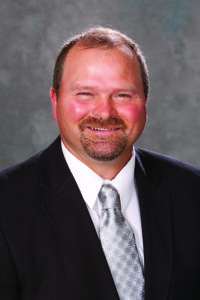
As we think about the future of GreenStone, there are many things that come to mind. We need to continue to build relationships between GreenStone and our membership, and between GreenStone and other Farm Credit associations. The personal engagement between GreenStone’s staff and the customer is what I value most in working with GreenStone. They know me and my farm, my priorities and future goals, and they are always ready to stop by and help me explore options. That’s something GreenStone will continue to provide as we move forward. That same relationship is just as important when we think of our peers across the Farm Credit System. Being able to brainstorm and collaborate together creates even better results. And having those existing relationships makes future transitions of associations even stronger.
We need to continue to be advancing the ease of use for members, from DocuSign for electronic document sending and signatures to online banking for customers to have instant access any time, and securely doing business digitally. As we leverage technology, we must be mindful of the efficiencies we can create.
When we look to the future, GreenStone must remain a reliable and consistent source of credit for our customers now and in the future.

Ed Reed
GreenStone is moving forward with a new CEO! Travis Jones has been leading the management team for almost a year now; it feels and looks like the same team with a few new teammates. Our goal was a seamless transition and I am confident we are accomplishing just that.
Farmers are a tough bunch, I can say that now that I’ve just turned 60. I am optimistic about the future of agriculture, and the next generation of farmers who have grown up using technology. We are retrofitting hog buildings with a distributed control system and internet connection allowing us to control all facets of the barn in real time. Irrigations have electronic valves and can be changed and started all from your phone. With advanced vision technology, it has been demonstrated with AI the ability to score the health of animals. Michael Bloomberg couldn’t be more wrong with his take on how a modern farm works.
This technology comes with a cost and GreenStone is here to assist with all your capital needs. I see a much different agricultural industry; we are doing more with less. Human capital is a limiting factor on most operations, we must embrace technology to maximize returns on our operation’s assets. I can’t wait to see what AI programs like ChatGPT and Watson will provide agriculture.
Let’s move forward!
Scott Roggenbuck
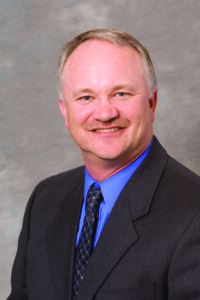
In this fast paced ever changing world we live in, few things change as fast as agriculture. And GreenStone is “moving forward” to meet the needs of our members. GreenStone’s hardworking and talented information services team has recently launched Journey+, a cloud based loan origination system; your board and management team just entered into a capital markets collaboration with three other Farm Credit associations – AgHeritage Farm Credit Services, Farm Credit Services of Mandan, and Farm Credit of Western Arkansas. These are only two examples, as our team works hard to stay ahead of change and continue to move forward.
Your board is always working diligently with management to monitor credit quality, loan growth, hold positions and adjusting to the ever changing regulatory environment.
We are moving forward on our own farm also. We, like many of you, have enjoyed several years of good commodity prices and low interest rates. We have put some of this away having learned some hard lessons back in the 80s.
Yes, I have learned some lessons over the last 40 years in this business we love. Good times don’t last for ever, neither do bad times. Get strong when you can, to weather the storms ahead. Keep good books – you don’t want to be the last one to find out the money’s gone. Never stop building relationships, you never know when you will need them, and people that trust you will have your back. And finally, don’t let pride get in the way of making the right decision, that’s why football teams have punters.
To view the article in the online 2023 Summer Partners Magazine, click here.
As a GreenStone intern, students gain exposure to real-world projects and experiences aligning with their career goals.
Jourdyn Armstrong
Real Estate Appraisal Intern
College: Attending Central Michigan University with a major in Business Administration.
What do you look forward to in your internship? I enjoy going out on the farm and doing construction inspections. I like having a first look into real estate and land values. I find it interesting to watch those markets and I like having that knowledge.
Jason Juengel
Appraisal Intern
College: Attending Oakland University with a major in Business Economics and a minor in Business Analytics.
What do you look forward to in your internship? I’m most looking forward to farm inspections.
Jaxson Gray
Business Analyst Intern
College: Attending Michigan State University with a major in Finance and a minor in Information Technology.
What do you look forward to in your internship? Learning about the corporate world.
David Rocendo
Client Support Intern
College: Attending Michigan State University with a major in Information Science.
What do you look forward to in your internship? Develop skills, network and job shadow other roles.
Harshil Chaudhary
Client Support Intern
College: Attending Michigan State University with a major in Data Science.
What do you look forward to in your internship? I look most forward to working closely with likeminded people while learning from one another and gaining knowledge that will continue to help me throughout my life and career.
Ali Willenborg
Credit Intern
College: Attending Murray State University with a major in AgriScience Technology and a minor in Finance.
What do you look forward to in your internship? I’m mostly look forward to learning more about every department and networking with other interns throughout the summer. I am also excited to see all the different aspects of agriculture that Michigan has to offer.
Dakota Spink
Credit Intern
College: Attending Michigan State University with a major in Agriculture, Food, and Natural Resources Education.
What do you look forward to in your internship? Learning more about the agriculture industry and more specifically farm credit and understanding how ag professionals can expand their operations.
Eric Gumz
Credit Intern
College: Attending the University of Alabama with a major in Finance and a concentration in Banking & Financial Services.
What do you look forward to in your internship? I am most looking forward to having the opportunity to speak with customers about their specific experiences and operations, because every farm or business is different in ways that are often not represented on their financial statements.
Luke Harry
Credit Intern
College: Attending Northwood University with a major in Finance.
What do you look forward to in your internship? Learning from experienced professionals and applying knowledge learned in the classroom to something that has an impact.
Holly Lashua
Crop Insurance Intern
College: Attending UW-River Falls with a major in Agribusiness and a minor in Crop Science.
What do you look forward to in your internship? I look forward to applying what I know from my agricultural background at GreenStone.
Kirsten Langmaack
Crop Insurance Intern
College: Attending Olivet College with a major in Insurance and Risk Management and a minor in Claims Investigations.
What do you look forward to in your internship? Learning how to do crop insurance and what crop insurance consists of.
Haniah Kring
Data Analyst Intern
College: Attending Hope College with a major in Computer Science.
What do you look forward to in your internship? Being able to work with messy data which I can transform using my skills into useful insights and analysis for the company.
Alexander Shaltry
Finance & Accounting Intern
College: Attending Northwood University with a major in Accounting.
What do you look forward to in your internship? I look forward to learning from everyone I work with. We have many people who have been in the accounting profession for a long time so being able to tap into their knowledge is something I think will really benefit me.
Ashby Henderson
Human Resources Intern
College: Attending Michigan State University with a major in Human Capital and Society and a minor in Leadership of Organization.
What do you look forward to in your internship? I most look forward to learning about the functions of Human Resources outside of school, and networking with the other interns and departments.
Tomas Ruiz
Information Security Intern
College: Attending Michigan State University with a major in Computer Science and minor in Philosophy.
What do you look forward to in your internship? Learning a lot with cybersecurity and learning how to protect not just an organization but to learn the craft and be able to teach others how to protect themselves.
Grace Hull
Legal Intern
College: Attending Michigan State University with a major in Agribusiness Management and a minor in Agronomy.
What do you look forward to in your internship? To continue learning more about the different sides of farm credit.
Mia Vander Hoff
Marketing, Events, & Sales Intern
College: Attending Michigan State University with a major in Agribusiness Management and minor in Food Industry Management.
What do you look forward to in your internship? I look forward to learning from and working with everyone in both the marketing and sales departments.
Olivia Gallt
Marketing & Graphic Design Intern
College: Attending Lansing Community College with a major in Graphic Design.
What do you look forward to in your internship? I most look forward to making connections within this internship and gaining knowledge about agriculture.
Samuel Koresky
Project Management Intern
College: Attending Arizona State University with a major in Organizational Leadership Project Management.
What do you look forward to in your internship? Learning how other project managers work and execute projects within the Farm Credit System.
Alex Rolls
Quality Engineering Intern
College: Attending Davenport University with a major in Computer Science.
What do you look forward to in your internship? Gaining valuable real-world experience in software development.
Pratham Pradhan
Service Desk Intern
College: Attending Michigan State University with a major in Computational Data Science.
What do you look forward to in your internship? Assisting in projects that can ultimately change the interactions between the employees and technology for the better.
Andrew McGovern
System Administrator Intern
College: Attending Illinois State University with a major in Computer System Technology.
What do you look forward to in your internship? All the learning and meeting cool people.
Brian Lapetina
Tax & Accounting Intern
College: Attending Western Michigan University with a major in Accounting.
What do you look forward to in your internship? Experiencing what summer work is like as a Tax Accountant, and how it differs from busy season.
To view the article in the online 2023 Summer Partners Magazine, click here.
160 years ago, the Natzke family wanted to make a difference in their community. They broke ground on the development of Zion Lutheran Church in Greenleaf, Wisconsin, while at the same time, starting a farming operation that is known today as Wayside Dairy.
It’s that passion for agriculture and faith in God that has helped them become the community staple they are, all these years later. Through hard work and a passion to serve, their continued success is inevitable.
Equipped with four generations of knowledge, Dan Natzke shares the farm with the fifth generation, his children, Jeremy and Jenna. After growing up watching their father have a passion for the trade, they knew they wanted to do this important work as well – working full-time on the farm.
“I personally like the challenge,” Jeremy explained. “No two days are ever the same. You start your day off with an agenda, and it doesn’t always go according to plan, but it turns out a different way and that’s not always a bad thing.”
“It’s something different every day, and that’s what makes it exciting,” Jenna agreed.
A Turning Point
Every farmer knows that life in agriculture is far from simple, and some days are tougher to bare than others. In 2001, when the farm was milking 400 cows every day, they suffered a barn fire depleting most of their facility.
Their cows were moved to an off-site facility for six weeks as they fixed up what they had left. Although a stressful and defeating situation, Dan keeps a positive spin on that fateful day.
“That was one of the worst days, but also one of the best days for us to start over and modernize,” said Dan.
And that’s exactly what they did. Today, the farm milks 2,200 cattle and harvests 3,200 acres of crops including alfalfa, corn for silage and wheat – much of which is used for feed. Nearly 211,000 pounds of milk per day is produced on the farm.
Crunching the Numbers
Between the crops and a full-scale dairy operation, managing the books and making sure the farm’s 35 employees are paid is a full-time job. Jenna works in the office and handles day-to-day accounting and payroll with the help of her GreenStone tax accountant, Eric Vandivier.

“They’re fantastic to work with and very down-to-earth people,” said Eric.
Eric handles the farm’s personal and business tax returns, quarterly payroll duties, year-end payroll and monthly accounting. Eric’s favorite part of helping the farm manage their books is getting to see them grow in real time.
“It’s always fun to see where they were at financially 12 months ago and compare that to where they are now,” said Eric. It’s fun to be a small part of a successful farm like this.”
That’s the kind of can-do attitude that Eric likes to deliver to all of his customers.
“Not a lot of people like talking about taxes, but I try to keep it as simple as possible for customers to understand what it all entails. I can help them plan for the future and give them information that helps them make the best business decisions possible.”
The farm doesn’t just lean on GreenStone for help with tax and accounting services, but also loans and crop insurance. Dan enjoys the one-stop-shop convenience that GreenStone offers.
“We’ve worked with GreenStone for more than 20 years, and through the years, GreenStone has been there,” said Dan. “They’ve helped us with loans, building projects, accounting, and crop insurance. It’s a great place to get all of that done at once. They have people handling all of those accounts. It makes it fun doing business with them.”
Another person on team Wayside, their GreenStone financial services officer, Michelle Backhaus. Michelle loves assisting the farm with new projects because she knows the energy she puts into the Natzke family benefits the entire community.
“They are a very community-based farm and family,” said Michelle. “They are very involved with the church. It has been fun to get to know how they give back to the community.”
Going Green
Not only is Wayside Dairy passionate about giving back to the community, but they value giving back to the earth, as well.
Wayside Dairy began a digester project where there are able to collect methane from manure waste on the farm and turn it into natural gas.
Leading the pack on this project is family friend Jesse Dvorachek, who grew up seven miles down the road from the farm. Soon, Jesse will have a share of the farm, after working on manure management for the operation for years.
“I know this family very well,” Jesse explains. “When the fire broke out in 2001, I was a little kid helping wrangle the cows running around.”
Jesse also explained that the farm has moved away from sand as bedding for cattle and is using dried manure solids. This helps prevent truckloads of manure from leaving the farm reducing risk of pollution and saves them tens of thousands of dollars on sand.
“We started producing the solids and we have a separator,” said Jesse. “We’re running the solids through an infrared dryer. We took out the sand and started putting in the dried manure solids. We transitioned all the cattle to this in about seven weeks.”

The farm is also hoping to plant cover crops regularly after each harvest season to use as feed and keep the soil fertile and sustainable.
“We know large farms aren’t always well received, but if we can have grain fields that are good for the soils, it’s the right thing environmentally,” said Dan.
The Road Ahead
Between working to make the farm more sustainable and making sure the next generation is inspired to continue the family legacy, the Natzke family is busy planning for the future.
“We hope to get our kids involved,” said Jenna. “They could be our sixth generation. We hope they get excited about things here and eventually want to join.”
From generation to generation, GreenStone will be there to help keep their crops protected, keep their books balanced and help make their ideas a reality.
“They just want to be the best operation they can be,” said Eric.
“I value the relationship we have created together,” said Michelle. “I like to help them be a part of their day-to-day operations and a part of their success. Watching them climb the ladder is the most rewarding for me.”
To view the article in the online 2023 Summer Partners Magazine, click here.