
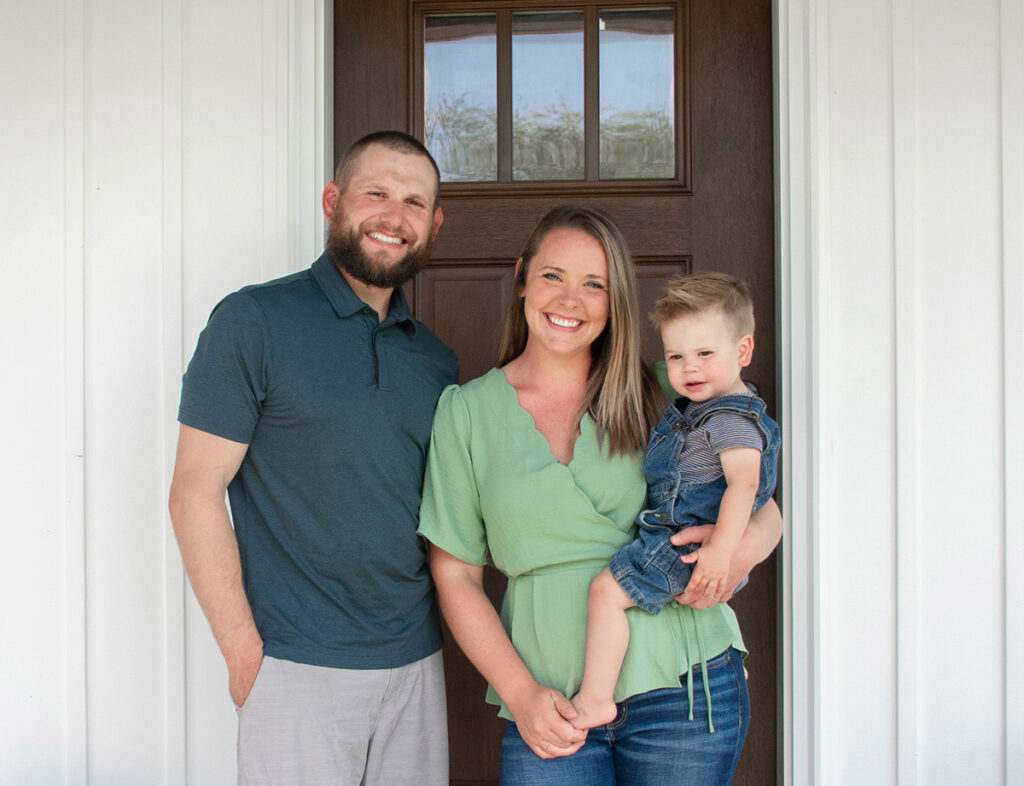
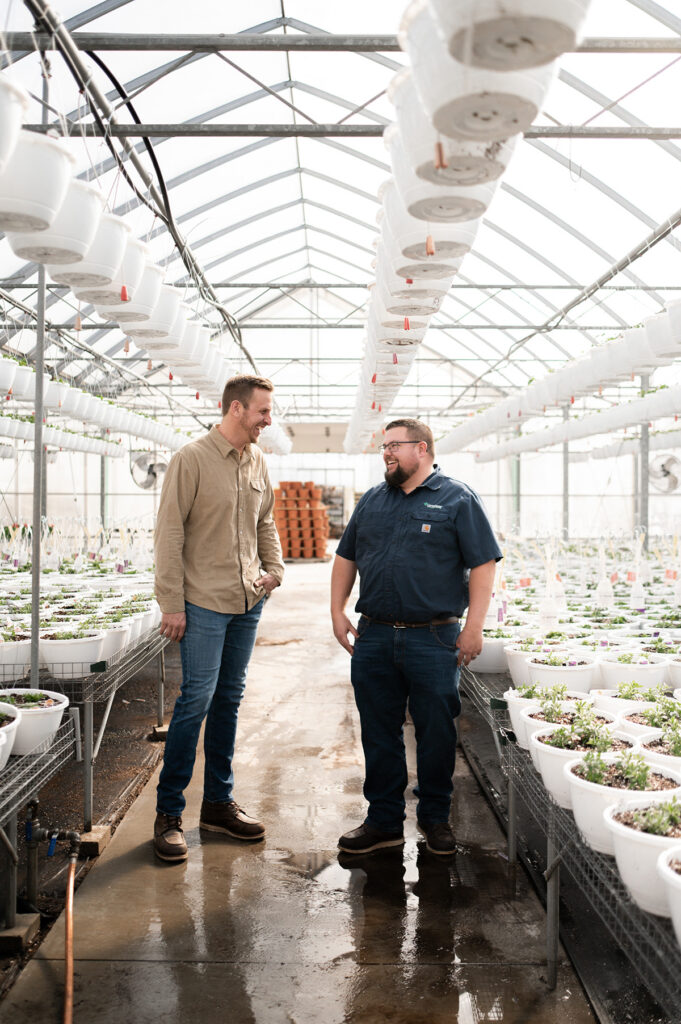

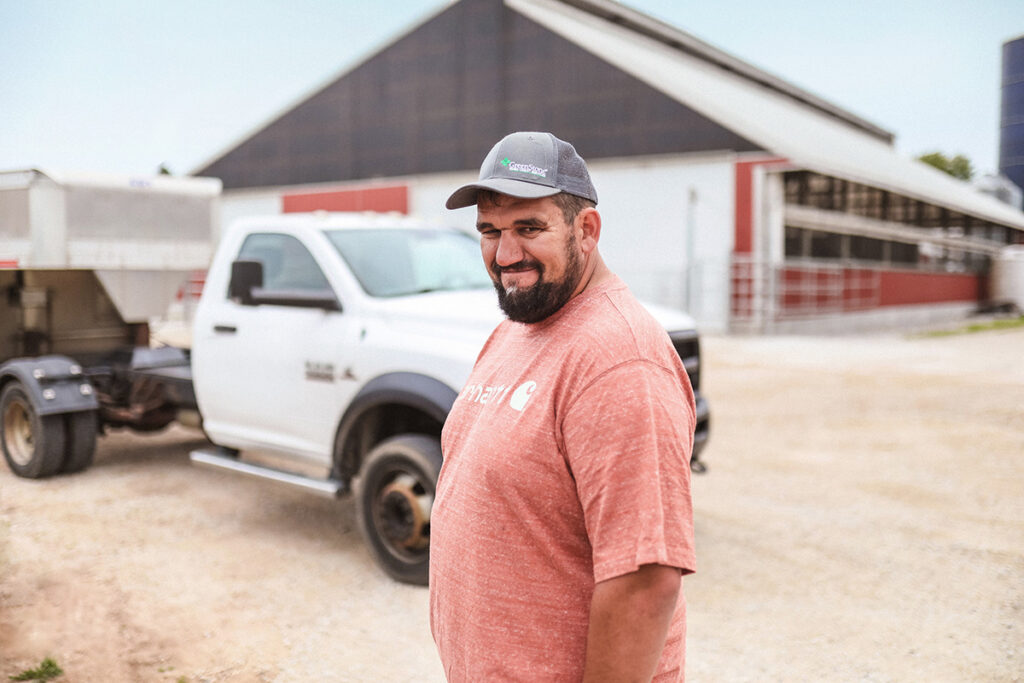
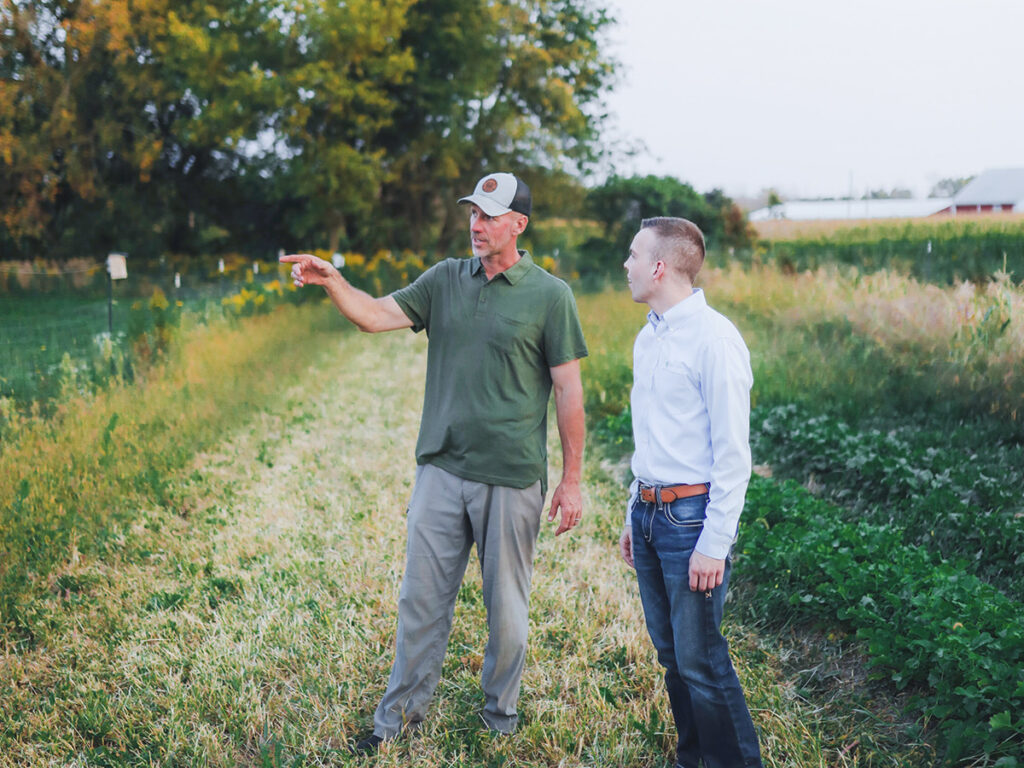
In this behind the scenes, two GreenStone employees share how their role allows them to support rural communities and agriculture.
Collin Nurenberg
Financial Services Officer
Ionia, MI
5 Years of service
Describe how your role carries out the GreenStone mission of supporting rural communities and agriculture.
As a financial service officer, my role allows me to help provide products and services that allow our customers to succeed in both their operational and family goals.
What do you enjoy about your role?
The thing I enjoy the most about my role is the people I get to work with every day, both customers and coworkers.
What changes have been incorporated in your role to meet evolving customer needs?
A lot has changed over the past few years, but the biggest changes are probably the technology and increased flexibility. Both have allowed GreenStone to serve our customers better and in a more timely fashion.
What do you enjoy doing in your free time?
Spending time with family and friends, as well as working on our family farm.
Joel Norkus
Vice President of Lending
Grand Rapids, MI
5 Years of service
Describe how your role carries out the GreenStone mission of supporting rural communities and agriculture:
Most clients that I help fall into one of 2 categories. The first category is clients who are looking to purchase a specialized property (such as agricultural or recreational land), and they have been told that financing is unavailable by their residential lender. A big part of this group are clients who’s dream it is to build their own house in the country for their families and future generations to enjoy. The second category is current GreenStone customers who know and trust us for all of their financing needs. We are usually their first call if they ever need anything. Both types of clients are focused on preserving the agricultural and outdoor recreational culture in Michigan.
What do you enjoy about your role?
I really don’t know where to start! I’ve never been a part of an organization with such a loyal customer base. However, given GreenStone’s company culture, I am certainly not surprised. Our company research and surveys consistently show the highest levels of employee satisfaction, and this absolutely filters through to our clients. GreenStone has the best team that I’ve ever worked with. My time here has given me a real appreciation for Michigan agriculture and the outdoors.
In our current environment of consistently being surrounded by technology, it is extremely satisfying to assist clients with achieving their goals to be able to acquire an asset that allows them to ‘disconnect’, and enjoy time with their families in the beautiful outdoors. Almost every client expresses their wish to keep these properties in their family to be used for future generations, and this makes me truly appreciate the services I provide for them.
As I mentioned, many of my new clients are referred to me by other real estate professionals (realtors and lenders), and I’ve been fortunate enough to have created a local network that refers these clients directly to me when the situation arises. Instead of competing for business with other lenders, I find that they will refer clients to me when they know a GreenStone loan is a better fit.
What changes have been incorporated in your role to meet evolving customer needs?
A good number of my clients who are purchasing land now express a desire to build a home in the future. In these cases, I do my best to describe how construction loans work and what a construction loan might look like for them, even if the build won’t happen for years. Clients appreciate the education and helps them set personal financial goals in order to get to that point.
What do you enjoy doing in your free time?
Mainly, I love spending time with my family (Wife Amy, daughter Lilli, and son Jonah). As far as hobbies go, I have to admit that my main outdoor hobby consists of spending time on many of Michigan’s golf courses. In my spare time, I play guitar and have put together a pretty decent collection of guitars and amps. This year, I’ve even connected with an old high school friend to start a band. However, I don’t think I’ll be quitting my day job anytime soon!
To view the article in the online 2023 Spring Partners Magazine, click here.
Matt Ostapowicz has spent nearly three decades fighting crime as a member of the Grand Rapids Police Department.
Now, he’s turning in his badge to enjoy a much-deserved retirement filled with his family and the great outdoors. Retiring as a captain, Matt has served in a number of roles with the department including overseeing the Special Operations Division and SWAT team along with serving as a lieutenant.
Serving in law enforcement was always his dream after growing up and watching his father and brother also serve on the Grand Rapids Police Department.
After his years of dedicated service, Matt is ready for some relaxation, and he has the perfect place to do it – his new outdoor getaway just outside of Lake City, Michigan.
Matt has known for years that, when he retired, he wanted a cabin up north to escape to. He looked for years to find the perfect paradise where he could both hunt and lay back, but nothing felt quite right until he found this renovated cabin on more than forty acres of land in August 2022.
“My sons Tyler and Braden have been hunting their whole life, it’s something we love to do together, so we wanted to have a place where we had our own piece of property to hunt on,” said Matt. “It was also important for it to be a place for my wife Amy to just hang out, not just a place for us to spend deer season. We found this place and it checked all of the boxes.”
The place has everything he was looking for including a pole barn and a garage.
A Familiar Face
When Matt made the decision to buy it, he worked with GreenStone to secure the funding he needed to make it his own. Little did he know that the help he would get from GreenStone was from a neighbor and former high school acquaintance living half a mile down the road – Financial Services Office Joel Norkus.
“I reached out to GreenStone and soon realized I was going to be working with someone I already knew from high school,” said Matt. “I thought that was pretty cool.”
That professional partnership soon turned into a friendship.
“It was kind of a funny initial call because I remembered the name from high school,” said Joel. “We didn’t know each other well back then, but we have certainly become friends over this process.”
Joel was thorough and used his resources to help Matt get this dream property.
“The cool thing was that he was very creative as far as figuring out the easiest way to secure the loan,” said Matt. “He was very responsive. I could text him a quick question and he always emailed over the options we have. He made it comfortable, as scary as it is buying another property.”
A Cabin Filled with Family Love
By October, Matt closed on the property and has spent several weekends there already.
“Since we bought it, I think we have been up there almost weekly. I spent a lot of time there during hunting season,” said Matt. “My sons have been up there this winter riding snowmobiles with their friends.”
In January, Matt’s family surprised him with a celebration at the cabin with all three of his children, including his daughter Calli who lives in Nashville, Tennessee.
“That was the first time we were all there together,” said Matt. “That was awesome to have my whole family up there.”
An Outdoor Paradise for Years to Come
And Matt is glad that his family enjoys this outdoor getaway because that was always the goal – to keep this property in the family.
“His big plan was to have a getaway place with lots of land where his family could hang for generations, and I was happy to help him do that,” said Joel.
That’s why Joel loves being a part of the GreenStone team – because many of his customers aren’t looking for a temporary place to hang their hat, but rather a long-term family heirloom.
“I’ve been in the business for 25 years, and before I got to GreenStone, it was always about buying a house that people would be in for a few years. GreenStone clientele is noticeably different where they are trying to buy an asset that hopefully stays in the family for a long time, if not forever. Knowing I can help someone do that is extremely rewarding,” Joel reflected.
And there’s not many people more rewarding than someone like Matt and his family. As far as the future, he hopes to spend even more time up north, now that he’s officially retired, and he has some other ideas in mind that could help his bottom line.
“I’m just happy it’s a place we can spend a long weekend. My wife can even work remotely there, so we like to go up on a Thursday and come home on Sunday or Monday,” said Matt. “I’m considering taking some timber from the land, and hopefully improving the habitat a little for hunting, too.”
Matt knows that if he ever decides to expand his retirement getaway, his friend Joel at GreenStone will be there to help him every step of the way.
“There are a lot of benefits of my job, but helping the members will always be my favorite part of this gig,” said Joel.
To view the article in the online 2023 Spring Partners Magazine, click here.
If you’re traveling down the backroads of southern Westphalia, Michigan, you’ll come across K&K Dairy Farms. There are barns of cows and equipment, rows upon rows of crops including corn, soybeans, wheat and alfalfa, and the farmhouse where Kristi and Matt Keilen are raising their three small children. They have been at the head of this operation for almost ten years.
After working with GreenStone to purchase the farm from Matt’s father in 2014, Kristi and Matt became the fourth generation to own and operate the farm. Although it’s the farm Matt grew up on, Kristi’s involvement in agriculture started a lot later in life. She doesn’t come from a strong agriculture background, but raising rabbits and chickens for 4-H as a child sparked her interest. That interest turned into a career when she decided to study animal science at Michigan State University. Now, she’s farming full-time with her husband taking care of cows and crops – and she wouldn’t have it any other way.
Taking Over
Before Kristi and Matt were handed the keys to K&K Dairy Farms, they had to secure the funding they needed to take over the land. They met with GreenStone Financial Services Officer Collin Nurenberg. Because they are young and beginning farmers, Collin was able to use some of GreenStone’s CultivateGrowth resources like Farm Service Agency guarantees to offer them approval for the financing they needed.
“It is great working with Kristi,” said Collin. “She’s very organized and has her numbers in line. She knows her goals and it makes our job a lot easier. She knows what she wants and asks our opinion and it truly is a good partnership.”
Starting the farm came with some learning curves, though. Kristi studied agriculture and Matt grew up on a farm, so it wasn’t the dairy and beef operation or planting the seeds that proved tough – it was things like crunching the numbers and taking care of taxes.
“One of the things I didn’t realize is the business end of it,” said Kristi. “We’re really good farmers and know farming, but the business side of things has been difficult. I’m not an accountant, but now I do accounting. That’s something we had to learn.”
Along the way, Kristi said they started doing things a little differently than the people around them, and it helped their farm become stronger. “We’re not afraid to think outside the box which is super important,” said Kristi. “It seems a lot of people like to be cookie cutter, but we’re not afraid to kind of do our own thing even if it’s not what our neighbor is doing.”
Making a Change
And thinking outside of the box is exactly what they did. When Kristi and Matt bought the farm, it was a large dairy operation. The barns were filled with 450 cows, being milked conventional-parlor style three times a day, and the farm employed fifteen people to keep up with that demand. After taking a look at what direction they wanted to go in, they decided to make a change and scale back the dairy operation.
Now, they house 250 dairy cattle and have two employees. They also worked with GreenStone to finance robotic milkers so they are able to focus on other areas of their farm like their beef cattle and cash crops.
Even when this vision seemed like a reach, GreenStone was there to help it become a reality.
“Collin was great about getting all of the resources together and helping us through the tough decisions and conversations and making sure we had everything thought through before we went forward with everything,” said Kristi. “He helped every little step of the way, helping with the FSA side of things. He was really looking out for us and our operation. He knew our goal, too, which was really important.”
Supporting Neighbors in Agriculture
Now that the two have made these big changes on their farm, they don’t foresee any other big changes in the near future, but she is starting to look forward to what’s next for the farm. “It is time to start thinking about what the next generation is going to look like and how to get my kids involved,” said Kristi.
In the meantime, she hopes to help and encourage other young people in agriculture by sharing her story.
In March, Kristi shared her expertise at GreenStone’s inaugural CultivateGrowth conference. She sat on a panel outlining some of the successes and obstacles she faced as a beginning farmer.
“She’s very active in the agriculture community which is cool to see,” said Collin. “She’s always networking and is very active in that aspect.”
Kristi wants others starting out to know that although it’s not always easy, it’s more than worth it when you see your farm succeed.
“One of the biggest things we have learned is to not give up. Keep pushing forward. There are always going to be good times and bad times but keep pushing forward,” she advised. And Collin is sure glad that Kristi and Matt continue to do just that.
“The best part of my job is working with the people and helping them. I love seeing what their goal is and where they want to be five years down the road and helping them achieve those goals, especially the younger people. They’re the future. They are whom we are going to grow with,” Collin concluded.
To view the spring 2023 issue of Partners magazine in its entirety, click here.
Like many of our farm members experience, winter is simultaneous with meeting season – taking advantage of some down time on the farm to connect with others, learn, and gain inspiration for the next cycle of feeding and fueling America.
During this time, the GreenStone Board of Directors are not only attending their commodity and industry specific meetings, but they are also representing GreenStone’s 28,000 members at the annual Farm Credit meetings. Two of those are the Farm Credit Annual Meeting with all 60+ Farm Credit associations from across the nation, and the AgriBank Annual Meeting with the 12 associations that are members of AgriBank’s district within the Farm Credit System. Three of your GreenStone Directors’ share their perspective on these two gatherings, and provide insight into the purpose and the value the gatherings provide to GreenStone.
Terri Hawbaker, Clinton County, MI
Farm Credit System meetings are key in cultivating collaboration among the entire cooperative system and encourages exploration of issues facing our industry. The Farm Credit Annual Meeting allows the pooling of resources to provide educational opportunities and updates on the farm economy, legislative issues, and future challenges through experts that each individual association may not be able to secure on their own. It also creates a space to share ideas and thoughts from across the nation in one room, enlightening and challenging every participant’s viewpoint.
The AgriBank Annual Meeting is where the voice of each association who uses AgriBank as their funding bank can be heard through the election of the AgriBank board members, and where director-to-director discussions are prominent. The AgriBank meeting allows for issues to be discussed that are region specific, whereas the national meetings allow us to join together and create one voice to present to leadership in Washington D.C. on policy that benefits all members, including the Farm Credit System itself.
Dale Wagner, Manitowoc County, WI
Each year board members have the opportunity to attend several meetings besides our regular board meetings. This year, several of us attended the Farm Credit Annual Meeting. This meeting includes directors and management from the associations across the country and the four District Banks. Presenters shared insight from topics such as geopolitical issues, international demographics, the Federal debt, regulation, commodity prices, and rising interest rates. Why does this matter? Because these all can have some impact on each and every one of our farms, and the businesses we depend on for supplies, feed, fuel, fertilizer, parts and the cost and availability of the capital. Although we have limited control on many of these, I feel it is important to try to minimize the negative threats and maximize any potential opportunities.
Most of our GreenStone Board of Directors were also able to attend the AgriBank Annual Meeting. Again, there were several excellent speakers with the highlight being keynote speaker, former President George W. Bush. He shared with us some of his thoughts on his time in the Oval Office as well as the current political environment. He even gave us a little advice for life in general!
We had the chance to network with others. There were many conversations about our own operations but a lot of time was spent sharing thoughts about potential risks, discussing the need for collaboration between associations and the funding banks, and the concern over the current interest rate increases. One common denominator that I feel came through is that whether talking to a staff member, a CEO, an association director, or a bank director we are all driven by a common goal: To do what will create the best outcome for our farm and rural consumer members.
The most important part of the AgriBank meeting however was to elect the directors to represent GreenStone and the other associations on the AgriBank Board. This is similar to the elections coming up for the GreenStone board. I believe one of the greatest assets of Farm Credit is our self-governance.
Jed Welder, Montcalm County, MI
The recent AgriBank Annual Meeting was an incredible time to network with directors from other Farm Credit institutions across the county. We were able to see firsthand how GreenStone performed in comparison to co-ops that are both much bigger and smaller than ours. It was great to see it confirmed that GreenStone consistently ranks in the very top of farm lending by every measure.
One take away from this meeting was the time spent with our keynote speaker, former President George W. Bush. He shared with us that you never know what you can do until you try. At age 70 he took up painting and took his creativity in an entirely new direction. His story is inspiration for all of us at any age!
To view the article in the online 2023 Spring Partners Magazine, click here.
For as long as he can remember, Drew Richard has loved the hustle and bustle of working on a farm. His grandpa and uncle have been farmers his entire life, and even from a young age, he would climb up on their laps and ride the fields in a combine.
“When I was little, at just six years old, I wanted to run the equipment,” said Drew. “Ever since then, I was really fascinated with large equipment.”
In high school, he worked on his friend’s dairy farm during the summer where he was able to gain experience driving tractors and running machinery every day.
Even now, that passion hasn’t waned.
“That job just got me hooked even more,” said Drew. “It just got into my blood and I’ve never lost interest in it.”
For the past decade, Drew has worked at Cremer Farms in Williamston doing everything from planting, harvesting, and working in the office.
Building a Future
In 2020, Drew decided it was time to get a stake in the game and decided to buy 55 acres of Cremer Farms, including a home and some farm buildings.
“This is a good starting point of owning some land and getting involved in the operation more than just as an employee,” said Drew.
He worked with GreenStone Financial Services Officer Stevan Stoutenburg to make this big step a reality.
“It’s a good relationship and Stevan treated me really well and helped me with any issues,” said Drew.
But this wasn’t their first time meeting. Stevan met Drew when he was selling fertilizer at a previous job, and he was excited to work with him to secure his land loan at GreenStone.
“It’s really fun working with a young guy that wants to grow and that’s extremely passionate about agriculture,” said Stevan.
Drew was able to take advantage of GreenStone’s CultivateGrowth program, which is set up to help simplify the financing process through relaxed requirements for young, beginning and small farmers who may not have the capital normally needed to start farming.
Stevan was happy to walk Drew through these benefits – things like the CultivateGrowth mentorship and grant program and other educational resources.
“We are happy to help them get their foot in the door. If we don’t do it, who is going to help them? It’s not only the right thing to do, it’s part of our mission to help younger generations get started,” said Stevan. “The future is young farmers!”
For the past two harvests, Drew has had his own corn, soybean, and winter wheat crops.
“He’s one of those guys that can run the farm and can operate the equipment. He’s hands-on, cleaning the combine, he’s calling the seed representatives,” said Stevan. “He’s not just calling the shots in a managerial position. He’s very smart.”
Leaning on a Community
In order to navigate the world of agriculture as a young farmer, you need support. Aside from his family and coworkers, Drew has found a community of other young farmers in Michigan.
“He’s friends with a lot of the younger and older farmers in the area,” said Stevan.
He uses social media to connect with other young farmers who may be experiencing similar things.
“Every young guy has there own set of ideas that they may want to change or do different,” said Drew. “I’m in a Snapchat group with the next generation of upcoming farmers in the area. I’m also on Twitter a lot where I’m able to network with farmers my age about the same battles.”
Drew said he is able to have conversations with farmers in these groups about what has and has not worked on their farms.
Looking Ahead
Drew is future-focused and plans on purchasing more land from the farm as the generational transition evolves. He also hopes to upgrade some technology on the farm and keep improving efficiency.
“My big picture plan is to keep the farm whole as it is,” said Drew. “I’d like to think that over the ten years I’ve been here, I’ve helped build the farm as it is. My hope is to keep the farm thriving.”
GreenStone is ready to continue helping Drew make his farming dreams come true.
“It’s really fun to work with a guy who wants to grow,” said Stevan.
This article was originally published in GreenStone’s 2022 annual report. You can view the annual report in its entirety here.
Oftentimes when you think about retirement, there’s a lot of relaxation in the mix, but for David and Joanna Uhl of Dundee, Michigan, it’s a whole new chapter of keeping busy.
The couple is enjoying this new stage of life in their beautiful home on their new cattle farm.
David and Joanna are no strangers to the trials and tribulations of raising cattle, though. They have been in the farm business since 1990.
Since then, they have traveled to different cattle shows, they have bred cows, and their two sons grew up raising cattle for 4-H.
When they retired, they decided it was the perfect time to kick their cattle business into high gear. To do so, they needed a bigger property to accommodate their dreams.
In 2021, they began pursuing a large piece of land just around the corner from their home.
“We had a family meeting and decided we wanted to grow. I had always been looking at this piece of property around the corner,” said David. “I knew the gentleman that owned it. I think he just got tired of me bugging him and decided to sell it to me.”
Developing a Plan
From that point on, they began drawing up a plan to include a custom home and two large barns.
To make it happen, they reached out to GreenStone and began working with Financial Services Officer Stephanie Lundy. Because of COVID-19 protocols, their first meeting was by video chat, but that didn’t stop an important relationship from blossoming.
“Our first meeting had to be on Zoom, and still, her warmth and her ability to communicate clearly regardless of the setting set us at ease immediately and we have enjoyed working with her from that moment on,” said Joanna. “She’s accessible and knowledgeable.”
“They were really great people to talk with and their project was cool. I was really excited about it,” said Stephanie.
That cool project included heated barns with enough space to accommodate about 80 cattle, a room for family parties in one of the barns, and a large barnyard for the cattle to roam.
After the property was complete and COVID-19 settled down, Stephanie was able to visit the farm and see that plan come to life.
“I’ve never had anyone actually come out to any place we’ve bought,” said David. “Nobody ever came out and she has made it clear to us that GreenStone is in it for the long haul. She wants us to be successful.”
Giving Back to the Community
As if a retirement filled with wrangling cattle isn’t enough, David and Joanna are committed to working in public service.
David is the Economic Development and Public Safety Director for French Town Charter Township. Public safety is in his blood after his 35 years with the Monroe County Sheriff’s Department and when he started a police force from scratch for the Village of Dundee where he worked as police chief for four years.
“I’ve been in public service my whole life. My wife has, too. We are very committed to our communities and giving back to our communities, and we think it’s very important to be in the position where we can help,” said David.
Joanna is on her 22nd year as the Dundee Township Supervisor, which is only half as long as her nearly 40-year career in teaching at Plymouth Canton schools.
As a longtime teacher, she knows the best way to keep children in line is to give them something to do. Raising her two boys is a big reason they went into farming in the first place.
“Since the boys were young, we thought it was a great way to instill responsibility and keep the boys busy and it has worked out really well,” said Joanna. “They are very hardworking individuals.”
Looking to the Future
And with the help of those two hardworking sons, they hope to expand even more. Right now, David and Joanna have about thirty cattle, but they’re ready to welcome more soon.
Eventually, they hope to open a shop on their land.
“We’d also like to put up a little building on our property where people could come and buy local produce and our meat,” said David. “People tell us they can’t afford to buy an entire cow, but they want to buy pieces of it, so we want to move in that direction.”
And they’re leaning on GreenStone to make all future expansions happen – that’s something that Stephanie is excited about.
“At GreenStone, we’re in a unique space where people who want to live on larger parcels, that’s our niche. That’s what we’re made to do.”
This article was originally published in GreenStone’s 2022 annual report. You can view the annual report in its entirety here.
GreenStone Farm Credit Services is proud to announce the co-op has promoted two leaders as new Regional Vice Presidents of Sales and Customer Relations in West and Southeast Michigan. Matt Alt, who has been with GreenStone for a decade, will serve in the role covering western Michigan, and Mike Niesyto, who has been with GreenStone for twelve years, will serve in the role for southeastern Michigan.
Matt Alt: Regional Vice President of Sales and Customer Relations, West Michigan
Matt Alt has worked hard during his tenure with GreenStone serving in a number of roles. His journey began as an intern on GreenStone’s sales team in 2013. After graduating from Michigan State University in 2014, Alt joined the team full-time as a Financial Services Officer in GreenStone’s Hart location. Most recently, he served as the VP of Lending for GreenStone’s agricultural customers based out of the Grand Rapids branch.
“There’s no doubt that Matt works hard and goes above and beyond to develop his leadership skills, but one of his best qualities is his ability to work on a team and uplift those around him,” said Melissa Humphrey, Senior Vice President of Regional Sales. “With the experience and motivation he brings to the table, I know he is the right person to lead our west region team.”
Matt has kept busy at GreenStone over the years. He helped launch GreenStone’s CultivateGrowth program helping young, beginning and small farmers with flexible loan options and eligibility requirements. He has also completed the Great Lakes Leadership Academy at Michigan State University.
In his new role, Matt will provide coaching and oversight to the team of financial services officers serving customers to make sure the co-op is providing exemplary service to members in GreenStone’s Charlotte, Grand Rapids, Hart, and Ionia branches.
Mike Niesyto: Regional Vice President of Sales and Customer Relations, Southeast Region
Mike Niesyto also began his journey with GreenStone as an intern working with the credit team in 2011. That fall, upon graduating from Central Michigan University, he came on board full-time as a Credit Analyst in East Lansing. Following that, Niesyto made the move to working with customers’ financial needs and progressed to most recently serve as a Senior Financial Services Officer working with a diverse group of farm and agribusiness customers from GreenStone’s Ann Arbor branch.
“It is clear Mike brings years of dedication and experience to this role,” said Melissa Humphrey. “Working in different sectors of GreenStone makes Mike well-rounded and a great fit to lead this group.”
Niesyto has gone above and beyond at GreenStone serving on a number of committees and workgroups. Like Alt, Niesyto completed the Great Lakes Leadership Academy at Michigan State University, helped launch and continues to help lead the CultivateGrowth program and brings a diverse background with him to this role.
In his new role, Niesyto will provide guidance to a team of financial services offices to make sure the co-op is providing a positive customer experience for members at GreenStone’s Adrian, Concord, Jonesville, and Monroe locations.
We understand the unpredictability that farming brings – from weather to climate and everything in between, it’s important to keep your crops and your bottom line protected. That’s why we bring our century of experience serving rural communities and farmers to create a crop insurance policy that’s customized just for you.
Top 5 Reasons to Choose GreenStone for Crop Insurance
We pride ourselves on the customer service experience we deliver to our customers. Although there are many reasons GreenStone is the right choice for your crop insurance solutions, here’s a breakdown of the top five ways we’ve become the best fit to take on the job.
- Experience: GreenStone’s crop insurance team has more than 100 years of combined experience. We understand your needs in the field; several members of our crop insurance team jump on the tractor and work on their own farms when their workday ends at GreenStone. Our team members each specialize in specific sectors of crop insurance – from row crops to dairy and livestock, to fruit and specialty crops – meaning each specialist is an expert in their segment.
- Grain Marketing Knowledge: GreenStone’s crop insurance team comes from a wide variety of expertise and backgrounds. Many on our team have worked in the grain market sector and have in-depth industry knowledge to help you select the best plan for your farm.
- Willingness to Help: GreenStone’s crop insurance team meets you where you are – whether that’s at your kitchen table or in your combine. GreenStone’s crop insurance team uses a special calculator to see if our customers are eligible for certain government relief programs – saving you time and money.
- Resources: GreenStone uses exclusive tools like Optimum and Precision Acreage Reporting to make sure you’re getting the best bang for your buck in the easiest and more accurate way possible. Read about the benefits of these below in this blog.
- One Stop Shop: Need a loan on top of your crop insurance plan? How about tax and accounting services to keep your bookkeeping on track? GreenStone can do it all – under one roof. There’s no need to rely on three separate companies. We will come to you for all of your financial needs.
Precision Acreage Reporting
One major benefit of choosing GreenStone for your crop insurance plan is our precision acreage reporting connection.
Any grower knows that acreage reporting not only important but is required to receive crop insurance protection. This report outlines things like the type of crop, how many acres the crop covers, and the intended use of that crop. If that report isn’t precise, it could cost you money in the long run. That’s why our precision acreage reporting tool is dependable option for many farmers who are already utilizing precision technology.
Oftentimes, acreage reporting relies on maps from the Farm Service Agency, but Precision Acreage Reporting through GreenStone allows farmers to benefit from the technology they are already using in their equipment to report their own crops for crop insurance. That means more simple and quick reporting and can also bring down the overall price of your plan because it’s a more accurate reading on how the land is being used.
Plus, it’s convenient. GreenStone is able to use the information provided by growers to process their required crop insurance acreage reporting without having to visit the farm. And – the Precision Acreage Reporting tool can be used in the palm of your hand on your phone.
Benefits of Optimum
One exclusive tool GreenStone crop insurance customers benefit from is Optimum, a program that allows us to plug in your specific farm details and generate thousands of scenarios to help you choose the perfect plan for your farm. Optimum is exclusive to Farm Credit – meaning you won’t find this benefit anywhere else in Michigan or northeast Wisconsin!
Optimum is like an equation. It takes all of the different plans, levels of protection, and extra endorsements you can tack on and factors in your actual production history. It then comes up with the best crop insurance plan options for your individual scenarios.
Optimum lets you take a look at real-life scenarios to see how much you would be covered in the event of things like natural disasters, hail, or a dry spell. The program also lets you take a look at how crops perform in your specific community so you know exactly what to look out for, and what protection is best suited to help you.
The best part – you still have full control over what plan you decide is best for your farm. Our customers have told us that this service has helped them feel confident they are picking the best crop insurance plan!
We’re Here for You
We’re here to go the extra acre to help protect you. To learn more about our crop insurance products and important dates to keep in mind, and to figure out which policy is right for you, check out the crop insurance page on our website.
Have a question? Give your local branch a call today!
For nearly 100 years, the Gross family in Weidman, Michigan near Mount Pleasant has been running a full dairy operation.
It started in 1926 when Phil and Steve’s grandfather, Charles Gross, bought some cattle. The farm grew and milk was leaving the property by the gallon.
In 1947, the farm was passed down to Charles’ son, Norman, the father of Phil and Steve. The two boys grew up on the dairy farm where they fell in love with taking care of cattle, and they wouldn’t have it any other way.
“You’re born into the industry and you realize that you enjoy it and you really don’t want to do anything else,” said Steve. “I know it sounds simple, but that’s how it goes.”
“We grew up on the farm,” said Phil. “As kids, we didn’t have a choice. We had to do it whether it meant we were missing out on some stuff or not. As an adult, you look back on it and realize you weren’t missing out on a whole lot.”
The two began running the farm from their father during the 2000’s and fully took over after the passing of their dad in 2015.
A New Phase
For Steve and Phil, keeping up with the times and making sure they can embrace their passion while turning a profit is important. They made the tough decision to move in a different direction with their farm and transitioned from a dairy farm to cash crops.
They began selling their cattle in August. Right now, there’s still a couple of cattle barns left as they continue the transition.
“Nothing happens overnight but we definitely have some more ideas of the direction we want to move the farm in,” said Steve.
As a part of this transition, the brothers began expanding the crops they grew this past year. In the fall, the two finished up harvesting corn, wheat, alfalfa, and soybeans.
The GreenStone Difference
This big transition to being crop only, means it’s even more important their crops are protected.
After working with GreenStone in the past to secure land and operational loans, the brothers wanted their crop insurance to come from the same place.
“We were working with GreenStone for years, so it made sense to do everything with GreenStone,” said Phil.
The two then worked with crop insurance specialist Jordan Schafer to come up with a coverage plan that works for their needs. It’s a relationship that was years in the making.
“The relationship formed over the years,” said Jordan. “I kept in touch with them over the past three to four years. I supplied them with information about different programs incorporated with crop insurance that could benefit them.”
Jordan used a program called Optimum for this analysis – a tool exclusive to the Farm Credit System crop insurance teams. Crop insurance specialists like Jordan enter information about a specific farm into the program and put the farm through different scenarios, like weather events. This helps customers learn about the best crop insurance plan options for their land.
Because of this tool, the brothers decided to get hail protection implemented into their plan because of issues they had in the past.
“With weather the way it is, we grow white wheat that is a little more touchy and we just wanted more protection,” said Steve. “There’s hail that comes through periodically so we are happy to have that coverage.”
Steve and Phil are happy to know that Jordan comes from a farming background and has their best interest in mind.
“Jordan has been really helpful in figuring out the level of coverage we need for our acreage,” said Steve. “He has been a really big help with our operation.”
“Jordan is a straight-shooter and tells us how it is and we appreciate that,” said Phil. “It helps that he has an agriculture background. He isn’t trying to sell us high in the sky, he’s down to earth and understands our operation.”
Family by Their Side
Although Steve and Phil are the brains behind the operation, they couldn’t do it without the help of their family.
Their nephew, Kevin, works alongside them. They hope, one day, he will be able to take the farm over when they decide to hang up their hats.
“The goal is to transition the farm over to the next generation,” said Phil.
Although Steve and Phil’s children aren’t employees of the family farm, they’re not afraid to come back and lend a hand.
“It works out. It’s give and take but we all have our jobs to do. Our kids will come back and help out when they get done with their main jobs,” said Steve. “They might not be full-time employees on the farm, but they come back and help out when needed.”
The Road Ahead
Over the next couple of years, the brothers hope to completely transition out of dairy and expand their fields.
One day, they want to have enough grain storage to be able to sell some crops on-site.
For now, the two will continue leaning on each other until the cows come home, or, find a new home.
“We’ve been able to keep it going during good and bad years, but the good always outweighs the bad,” said Steve.
“Some brothers don’t get along very well with each other, but we have made it work,” said Phil.
And Jordan will keep visiting the farm to help them keep those prized crops protected.
“It’s good of them to keep innovating everything on the farm and surrounding themselves with resources on their farm to help them take every step they can to succeed. I want to be that resource for them,” said Jordan.
To view the article in the online 2023 Winter Partners Magazine, click here.
GreenStone is proud to announce the appointment of three talented teammates to lead sales and customer relations for the cooperative. In the revised organizational model, a senior vice president will oversee each of the cooperative’s market segments: capital markets, agribusiness lending, and local agricultural and country living lending. This alignment will help give each segment the expert attention needed to help customers thrive. We believe this makes GreenStone best equipped to serve our customers.
We are proud to announce the appointments of Nichole Wilcox, Ben Spitzley, and Melissa Humphrey as Senior Vice Presidents for Capital Markets, Agribusiness Lending, and Regional Sales.
These individuals will report to Executive Vice President and Chief Sales and Marketing Officer Ian McGonigal, who is excited about this new model.
“As a growing company, we need to have a robust sales leadership structure that prepares GreenStone for the future,” said McGonigal. “Our executive team believes this new model will ensure efficiency and continued success. Nichole, Ben and Melissa are all very talented leaders who will ensure GreenStone is serving the needs of the marketplace with expertise in their respective loan segments, as well as continuing to provide outstanding value and customer service to all clients.”

Nichole Wilcox: Senior Vice President and Managing Director of Capital Markets
Nichole Wilcox brings sixteen years of GreenStone experience as the new Senior Vice President and Managing Director of Capital Markets. For the past six years, Nichole served as a Vice President of Lending and most recently as a Group Manager within our agribusiness lending segment. Before that, she served in roles at GreenStone including Credit Analyst, Lending Officer and Assistant Vice President of Capital Markets and Credit.
Nichole brings a wealth of well-rounded knowledge from several different segments, and is no stranger to capital markets. Her experience in this segment will benefit the diverse relationships across the nation and will help strengthen the overall team.
Ben Spitzley: Senior Vice President of Agribusiness Lending
Ben Spitzley has been a part of the GreenStone team since 2002. Most recently, Ben served as the Vice President and Group Manager of Agribusiness Lending – a role he assumed in 2012. During his decade in the role, he successfully oversaw a team serving dairy farms and related agribusinesses throughout GreenStone’s territory.
Before serving in that position, Ben held various roles within the company and brings a wide range of sales and leadership experience to the table.
Melissa Humphrey: Senior Vice President of Regional Sales
For nearly two decades, Melissa Humphrey has served GreenStone customers, first as a Credit Trainee and then Financial Services Officer and, most recently, as the Regional Vice President of Sales and Customer Relations focused on GreenStone’s western territory. Now, she is taking a step forward and has accepted the role of Senior Vice President of Regional Sales.
In addition to her full-time roles, Melissa has co-led the country living segment for GreenStone. The segment saw impressive results during her tenure. Melissa’s expertise in leading a number of different teams at GreenStone will help make our solid sales team even stronger, which in turn, will benefit our existing and future customers.
Nichole, Ben, and Melissa will work closely together to bring a team focus, specialized to each market segment. GreenStone is excited about this new step to help ensure the cooperative delivers excellence in our products and services to best serve our customers.