


Cherie and John Shields and their sons had been leasing hunting land for years, but the owners sold it. Heartbroken, they started their search for the perfect recreational property.
“I was online constantly looking, but it was John that found it,” Cherie said. “We figured it was already gone, we thought maybe 30 acres was too much, but then we decided to drive there with the selling agent and check it out.”
They took their son Andy with them to evaluate the property and see if it met their needs.
“Andy is picky, picky,” Cherie said. “But before we even got out of the car, he said – We have to have it. We felt the same. We all fell in love right away.”
As the agent showed them around the property, Cherie sat on the porch and wrote up the offer.
The 30 acres, located in Barton City, also came with a furnished mobile home and a travel trailer.
“It was just the serenity,” Cherie said about the initial attraction. “It was so quiet, and it was early fall, and the leaves were just beautiful. It was just everything we wanted. I felt really lucky and like somebody was looking out for us.”
Her older son, Christopher, took his brother’s word for it being great, and the Shields closed on the property in October 2019.
“We have six dogs between our families, and the first thing we did is put up a fence so we could put the dogs outside behind our home,” Cherie said, thinking of her own German Shepherd. “It took us until after dark, so we were using headlamps. But we got it done and were ready for the first night we spent there.”
The very next day, Christopher bow hunted and got a deer. The timing was perfect.
“It just feels like it was meant to be,” Cherie said.
“That’s all I can say.”
Working with GreenStone
Cherie does diagnostic testing on children, age 0-3, for the Monroe County Intermediate School district, and she is a real estate agent with Gerweck Real Estate.
“This was my first time working with Brian Young from GreenStone,” she said. “I previously had a client that wanted to use him, and when we found the land we wanted to finance, I knew right away to use GreenStone.”
Brian has been a GreenStone financial services officer for several years and already knew of Cherie because of her work as a realtor. He was happy to help her family finance a unique piece of ground.
“Not every lender could work with multiple parcels with a trailer and a mobile home on it, because that complicated things a little, but we were able to finance it,” Brian said. “It was nice to be able to help Cherie obtain a piece of property where the goal is a family who wants to spend time together.”
Overall, the entire process went smoothly.
“I’d heard so many good things from people, and Brian and Marlene Langerman [customer service representative in GreenStone’s Monroe branch] have been nothing but wonderful,” Cherie said. “When I call, they know the answer right away – I don’t have to wait.”
Recreation
Aside from hunting, they also use the land for additional recreational purposes. They enjoy spending time with the deer, turkey, and bears that visit the property.
“We have a bay window, and we’ll be playing cards, and we can see the bear walk right up to the house,” she said. “They’re pretty to watch from the inside, but I don’t want to be out at a bonfire when it’s walking through our yard.”
They have nearby lakes, where they like to kayak. They fish, go for walks, and ride around the property in their side by side and golf cart.
“It’s just beautiful country,” Cherie said. “We just love spending time here.”
Their son Christopher and his wife Deanna have two dogs, Molly and Allice, and a daughter named Alina who also loves to bring her friends up to kayak, canoe, and fish. Their son Andy and his wife Kirstie, who also spend time with them, are expecting a baby they plan on introducing to the property.
At home in Lasalle, Cherie and John take care of their 11-acre farm, which includes five horses and three basset hounds. John recently retired from a 33-year career at Ford, and now works for a farmer helping to harvest hay.
“In the future, we’re just looking forward to keeping everyone happy and healthy – and that goes for our animals and our kids,” Cherie said.
To view the article in the online 2022 Summer Partners Magazine, click here.
“I like taking care of animals, and I like the balance of when we raise healthy animals, they produce manure that makes our land healthy,” said Elaine Palm. “The healthier our land is, the healthier the forage grown on the land is, and the healthier the animals will be.”
Elaine owns Great Lakes Lamb LLC with her parents, Jim and Sherrie Bristol. On their farm in West Branch, Michigan, they raise sheep and forages to feed them, plus sell hay to customers. They primarily raise sheep for the meat market and for breeding stock, and they also sell their wool.
“We also have a passion for high quality wool products,” Elaine said. “I’m currently in the process of getting our farm established in American Wool Assurance, which is a brand new program nationwide.”
Elaine is taking classes related to wool quality and animal care standards to receive certification through the program that their farm is adhering to best practices.
“We’re seeing that along with wanting to know where their food comes from, customers want to know where all their products come from,” Elaine said. “Customers are really interested in making sure that they’re sourcing their products from farmers who care.”
Showing care
Elaine and her sister Brigette began farming by default, as they grew up doing chores with the barn in their backyard. They both became heavily involved in 4-H and FFA. As they got older, they had the opportunity to work with Michigan State University on projects that benefited their farm.
“With MSU, I looked at fecal samples to evaluate internal parasites, and Brigette looked at forage samples,” Elaine said. “These projects gave us even more insight into our business through our involvement in these projects.”
Elaine went on to study agriculture and natural resources communications at MSU, and began a career in non-profit organizational management.
“A few years into my career, I was driving home every three weeks in the summer from Washington, D.C. to help with hay harvest, and I knew this was not a sustainable plan,” she said. “If I was going to get involved in the farm business in a bigger way, I would need to make a change.”
She did that in 2014, when she moved back to Michigan and began having conversations with her parents about the potential of becoming partners.
She continued working in her agricultural career, and didn’t immediately move on the farm, but she kept an eye out for farms for sale.
“It just so happened that six months after I moved to Michigan, the farm across the pasture from my family went up for sale,” she said. “There were other options for sale in the county, but to purchase this farm showed a financial commitment to this being my vision for our farm’s future.”
Making plans
Off the farm, Elaine is a community nutrition instructor for MSU Extension, where she works with people eligible for food assistance on strategies to stretch their food dollars to meet their household’s nutritional needs.
Her husband Rick, a technical advisor for Stellantis, also works both on and off the farm.
“He helps us however he can,” she said, “Animal chores, harvesting hay, fixing equipment, changing out parts – he’s good at everything.”
Elaine is looking forward to the future of her family and farm, as she and Rick are expecting a child this year.
“In 2019, I bought another farm property and a farm truck on Valentine’s Day,” she said. “Two weeks later, I started a new job. That month my fiancé Rick sold his house and moved two hours from his job. Then in March we got married. Quite a year.”
Working with GreenStone
Elaine worked with GreenStone as a lender for her investments, including a field the farm had previously rented, and a farm vehicle.
“We had also discussed transitioning two equipment loans and a line of credit from the bank we were using to GreenStone,” she said. “We were seeing less and less understanding of agricultural accounts and business practices from our previous bank, so we moved them to GreenStone at that time.”
The timing, though difficult, worked out for them.
“We made the farm vehicle purchase in May 2020, and the dealership wasn’t allowed to make sales at that time,” she said. “We were one of the first to make a purchase when they were permitted again. We made the deal in the parking lot, with masks on, with our own pens in our hand.”
GreenStone Financial Services Officer Josh Quaderer enjoyed working with Elaine from the beginning.
“It’s so great seeing someone get started and watching them grow,” he said. “For me, it’s one of the most rewarding parts of the job.”
While working together initially, Josh knew Elaine wasn’t pleased with her current lender. As an agriculture-specific lender and cash crop farmer himself, Josh was happy to share his experience with her.
“You understand the financial side of things so much better when you’re dealing with it yourself,” he said. “We can see it from the farm side and from the banking side.”
GreenStone had options for young, beginning, and small farmers like her, and as an added bonus, once a customer, it was extremely easy to process new requests.
“I made these purchases to expand the potential of the farm’s future,” Elaine said. “Farming is a cyclical process I like to see and facilitate, as we get a balance between nature and the animals we raise for food.”
To view the article in the online 2022 Summer Partners Magazine, click here.
As two new Directors take on the role of helping to lead GreenStone on the board of directors, they took time to share a bit more about themselves. Trent Hilding and Marilyn Thelen both joined the board in June bringing varied backgrounds and a diverse perspective.
Perspective from Trent Hilding
The Hilding farmstead has been in the family for over 100 years. I am the fifth generation to work the dirt on the farm. My wife, Diana and I have four children which we hope will continue to appreciate the opportunity to farm and will become the sixth generation. Currently, the family farm consists of a beef cow herd of 65 head of Simmental/Angus cow calf pairs, along with 2500 acres of irrigated row crops of hay, corn, soybeans, and oats.
As the farm grows, I would like to add on farm storage for grain and a fertilizer storage facility. As the kids get accustomed to the cattle on the farm, I would like to make sure we explore all options to diversify that enterprise into something that supports additional generations coming back to the farm.
Why I serve: I decided to serve the GreenStone cooperative to educate myself more thoroughly on the Farm Credit System to be a better resource for my district of borrowers. With the economic times we are in, it seemed like an opportune time to serve and be part of the GreenStone board.
With current inflation, rising interest rates, and mounting input costs, I would like to be involved on the finance committee to make sure we keep members informed and handle changes effectively.
The cooperative is strong. We need to continue to keep it strong to handle the transition of leadership as well as the new era of rising interest rates and inflation. GreenStone needs to be able to handle the many changes that lie ahead, all while being mindful of areas to grow without risking the current position. Despite the risks and challenges that lie ahead, there is likely to be opportunity to continue to strengthen the cooperative. I look forward to my input contributing to the betterment of GreenStone, its members, and future opportunities.
Perspective from Marilyn Thelen
My husband Lee and I are partners in Thelen Farms, a 2000-acre cash crop farm raising corn, soybeans, wheat and finishing about 150 head of Holstein steers. We have a reduced tillage operation paying close attention to soil health.
We are also partners in Thelen Ag Products, a short-line ag equipment and parts business that sells grain carts, augers, wheels, and other parts. I am the bookkeeper for this business and develop reports for tax planning and preparation, banking and business planning for both operations.
A long-time goal has been to build a farm business that is sustainable both financially and environmentally. This continues to be a goal as we look to the future. The volatility of weather, markets and the economy make this goal as important as ever. We feel that building a resilient system is key to weathering the ups and downs of farming.
Why I serve: I have worked for MSU Extension for 25 years, many of those years in Clinton County providing science-based education and resources to farmers. GreenStone has been a key partner throughout those years supporting educational opportunities for farmers with both financial support and technical expertise.
I am also a partner in our farm and business; when we obtained our operating loan through GreenStone years ago, it was a game changer for our ability to manage the business. When the opportunity to serve on the GreenStone board was suggested, I felt it was way to give back to an organization that had been a partner helping our farm and business to grow as well as a partner during my career with Extension.
I see this as an opportunity to assist the next generation of farmers grow their business. Having a good partner in managing business finances is an important part of success. I would like to be a part of ensuring that GreenStone remains a strong partner for many members.
I plan to bring my over 38 years of experience to the table. I have worked with farmers throughout my career and work with Lee on our farm and business. These experiences provide me with perspective. I would like to use my experiences to complement the experience that fellow board members bring to the table.
To view the article in the online 2022 Summer Partners Magazine, click here.
“I don’t allow current circumstances to dictate my mood,” said Grady Auer, owner of Bakake Acres in New London, Wisconsin.
His positive attitude has come in handy during some of the past events on the dairy, including multiple natural disasters. Through it all, Grady has successfully steered his farm in the right direction.
He began as a partner with his dad, and after he passed eight years ago, Grady entered into partnership with his mom, Tina. On their farm they milk 550 cows with seven full-time employees, plus two helpers who are always with Grady – his son Griffin and nephew Ira.
“The story is my mom put me on her back to feed calves when I was six months, so since I’m 38, now I’ve farmed for 37 and a half years,” he smiled and said.
Improved tax and accounting
Grady was using a different tax accountant for years, but in 2017 he made the business decision to transition to GreenStone’s senior tax accountant Kandace Haegele in the Clintonville office.
“I like working with Kandace because she works with whatever I bring to her,” Grady said. “Along with accounting, she also does our tax forms, and twice a year we send our QuickBooks accounts to her. She reviews it, tells us if we have errors, and answers our questions. My wife Sarah does the books really well, but she reminds me she is a special education teacher, not an accountant. So of course we have questions on what categories we put expenses into, if items need to be expensed, or if we can depreciate them.”
Kandace has worked in GreenStone’s Clintonville office for eight years. She’s been through transitions before and worked with Grady to help ensure the farm’s transition from the previous tax accountant to GreenStone was a smooth process. Part of the ongoing success of the relationship is the improvements they’ve made in the way they work together.
“We made suggestions on getting set up on QuickBooks and what information to provide to us,” she said. “He also is working with a dairy analyst, so I assisted him in getting set up, so as to provide the dairy information needed for the analysis. Basically, these steps have made it much easier for everyone to determine what action is needed in making sound farm business decisions, including having a better handle on where he is financially and providing related tax planning strategies.”
Grady was no stranger to GreenStone, as his dad was a long-time customer and co-signed his first loan on a calf when Grady was only 15 years old. Unfortunately, the calf didn’t last long.
“My dad cosigned a loan so I could buy a show heifer, and she abruptly dropped dead,” Grady shared sadly. “Thankfully she was insured, so we bought another one right after that.”
This stunning experience didn’t sour him on the entire animal showing scene, as he met his wife Sarah at the county fair.
“She asked to wear my jersey – football, not cow,” Grady joked. “She also grew up on a progressive farm in Wisconsin. Now, our family shows heifers all over.”
One stop shop
Eventually, along with the existing lending partnership and tax and accounting services, Grady also switched his crop insurance provider to GreenStone.
“I was always talking to Robert Netrefa, the GreenStone crop insurance specialist, about what decisions to make even though I was buying it through someone else,” Grady said. “I went to a GreenStone conference where he was the speaker, and I thought he had great knowledge about what was going on.”
Beyond tax and accounting support, plus the insurance, Grady uses GreenStone for financing.
“Certainly the advantage is that it’s a one-stop shop,” Grady said. “I know my taxes are different than my loans, which are different from my crop insurance, but it’s still all in the same location.”
Clintonville has a new office building, which features lots of glass to create an open atmosphere.
“It’s just like going to the supermarket,” Grady said. “I like this, and this, and I can get this – all in one place.”
Cleaning up
Corey Fanslau is VP of traditional lending at GreenStone, and he’s been working with Grady for over ten years.
“Grady is very good dairyman, he’s a great guy, and he’s really stepped up his business acumen over the years,” Corey said. “His work with his dairy analyst has also helped him perform even better.”
Corey worked with Grady through some tough times on the farm, including in 2018 when a blizzard caused their barns to collapse.
“We had to send half of our cows to another farm to be milked. For four months, since our income was down, we only paid interest,” Grady said. “That was Corey’s idea. He knew we’d rebuild and get our cows back.”
Despite the unfortunate event, Grady made the most of his circumstances and took the opportunity to make his barn even better. The new barn is able to hold more weight, is stronger and wider, and has improved lighting.
“I was given another shot to do it correctly, and I took it,” Grady said.
Grady has experienced more than his share of natural disasters on his farm, including a pile of bales that was struck by lightning, a shed that burned in 2005, and tragically, a house fire in 2010.
“I was picking up my son from daycare, so no one was home,” he said. “I’d thrown laundry into the dryer before I left. We drove home and saw the house was on fire, and it was a total loss.”
Happily, they were able to rebuild in a location closer to the farm.
“I haven’t done laundry since,” Grady joked. “Better safe than sorry.”
Grady and Sarah now have four children – Griffin (13), Emery (10), Macy (7), and Brynn (2). Grady really enjoys his time on the farm with his kids and nephew, whether they’re feeding calves or setting off bottle rockets.
“We also like to go to our children’s events, which is a full time job,” Grady said.
Grady looks forward to continuing his partnership with GreenStone, and he is confident his GreenStone team will be ready to assist him in his good times and his not-so-good times – even though his attitude remains unchanged.
“Some years the farm makes money, some years it doesn’t – I’m not complaining,” Grady said. “If we don’t make any, I have less tax work to do.”
To view the article in the online 2022 Summer Partners Magazine, click here.
After a nationwide search, GreenStone Farm Credit Services’ Board of Directors has named Travis Jones as its next President and Chief Executive Officer. Jones, who currently serves as the cooperative’s Executive Vice President & Chief Financial Officer, will assume the chief leadership role on August 1, 2022 following Dave Armstrong’s retirement. In this new role, Jones will build upon the strong foundation Armstrong established in his 14 years as CEO of the association.
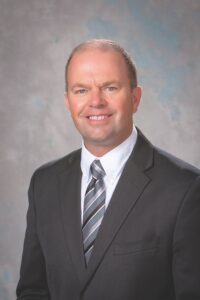
GreenStone Farm Credit Services understands agricultural finance in ways unmatched by any other financial entities. With Jones’ nearly 15-year history with GreenStone, he’s dedicated to supporting the rural and agricultural communities in Michigan and northeast Wisconsin – regardless of market or industry fluctuations – with a primary mission to help them grow, thrive and succeed.
“We unanimously believe Travis Jones is the right person to drive GreenStone’s mission and values forward to best serve our members,” said Board Chairman Ed Reed. “His deep understanding of our Core Four Values is shown through his dedication to always put the customer first, deliver quality over quantity, roll up his sleeves to get the work done, and most importantly, always doing the right thing.”
Jones has been chosen to succeed Dave Armstrong who, with a 41-year dedicated career serving the Farm Credit System, has led as President and CEO of GreenStone for the last 14 of those years. Armstrong will retire July 31, 2022. His inspiring leadership leaves the cooperative in strong, stable hands.
With a managed, steady approach Jones’ experience will help ensure an ongoing strong financial foundation for GreenStone customers to build and grow upon. Jones joined the GreenStone cooperative in September 2007 as CFO. Since that time, he has demonstrated his progressive strategic and operational leadership impacting long range organizational and capital planning.
Like many GreenStone team members, Jones grew up on a small farm in Chapin, Michigan and now lives in Owosso with his wife Sue, where they together raised three children, Tyler, Mackenzie and Katelyn. Travis believes it is important to make a difference in the communities where we live and serve. He leads by example, leveraging his financial expertise on the board of the Michigan Finance Authority to help provide impactful, affordable loans for cities, colleges, and public schools, plus serves on the Michigan FFA Association board providing support to the year-round agriscience curriculum and youth development activities.
“Every day is an honor to work alongside our 600+ talented and committed teammates to serve our members. We’ve built an inclusive, customer first culture under Dave’s leadership and I’m truly humbled with the opportunity to continue that focus as the next CEO of GreenStone and build upon the successes Dave established,” said Travis Jones. “With our shared strategic vision for the cooperative, I look forward to paving the path forward to continued success and prosperity for our team and customers.”
Jones will assume the role of President and CEO on August 1, 2022.
Chris Ockert firmly believes that good things come to those who wait, and he considers himself a great example.
When Chris was 11 years old, he started his working life shoveling manure on a pig farm in Mulliken, Michigan. At age 15, he worked in restaurants after school and on weekends. When he turned 17, he began working at a machine shop, then when he graduated from high school, he came to a pivotal point in his life – though he didn’t know it yet.
He continued planning for the future. In 2001, Chris purchased 40 acres of land in Mulliken, and four years later he built a house on the property.
Unfortunately, the timing wasn’t perfect.
“I struggled very hard to keep my head above water, I didn’t make enough money to afford what I had. I nearly lost everything I worked so hard for,” Chris said.
Since he needed more income, he decided to work even harder and started doing additional asbestos removal jobs for himself, at night and on the weekends. He eventually separated from the first company.
“I didn’t know what I was going to do. I thought everything was over. But my fiancée, Jessica Gilton, constantly said that everything will be okay. We’ll make it together, and it doesn’t matter if we live in a cardboard box on the street.”
Chris decided he could work even harder to get himself out of the situation. He wasn’t doing it just for himself and Jessica, but also their children – Taleah (14) and Zack (21).
“I had her encouragement that we could make life better together,” he said.
He worked for different companies in his profession, but he still was having trouble staying ahead of the bills.
Despite all this stress, he took a huge step. In May of 2016, he started his own company – Abatement & Demolition Services, based in Mulliken. ADS services include asbestos removal, where technicians build a negative pressure enclosure and remove and dispose of the asbestos.
All of his years of working hard for others, gaining valuable experience, led to him working for himself.
“It’s been many long, hard days,” Chris said. “But I just did it.”
Chris then made another big decision – it was time to build their forever home. They chose a one-of-a-kind timber frame home on his property in Mulliken. This was his first time working with GreenStone.
Stacy Stinson is a financial services officer in the Charlotte branch, and she enjoyed working with Chris on his plans.
“He’s really open to ideas, really creative, and one of the nicest people in the world. Since he runs his own business, he’s very customer-focused, and he knows what we need from him,” she said. “He’s always looking into doing new things, and he’s really down to earth.”
“Stacy has been really helpful,” Chris said. “It’s been great working with her.”
Chris and Jessica took months to plan what they wanted for their home. They didn’t want a spec house, or a house that wasn’t anything special – they wanted to make it different.
As a result, their home reflects those wishes. For instance, they use different types of timbers throughout the structure.
“We have oak and pine – we picked the features we wanted,” Chris said.
“Chris is building his beautiful timber-frame home and barns on 40 acres,” Stacy said. “He also recently purchased another 40 acres to graze cattle and have a rental home near his homestead. GreenStone has financed both projects and built a tremendous relationship with Chris. All the staff that have worked with him have had phenomenal experiences.”
Their home, where every detail is being considered, is projected to be done soon.
Chris and his family are looking forward to moving into their new home and enjoying the acreage.
“A great friend of mine – Todd Ranshaw – always told me good things come to those who wait, and now we are building the home of our dreams,” he said.
To view the article in the online 2022 Spring Partners Magazine, click here.
Max and Halie Schultz had a problem, and they had an idea of how to fix it. They had a lot of animals to feed, but it took a long time to go everywhere to get all the supplies they needed.
“There were no feed stores in our area near us, and I was spending one day a week picking up feed from different cities, trying to find what I wanted, and we thought – we might as well make this convenient for ourselves,” Halie said.
They owned an old antique shop on M-15, and they already had been selling deer feed to hunters out of it since 2015.
“It got really busy selling deer feed, and then people started asking for chicken feed and horse feed and all sorts of supplies, so it snowballed,” Max said. “We decided to rebuild the entire place and turn it into a store.”
Along with the help of friends and family, they took on redoing the entire place themselves. They gutted it, put steel on the outside and inside, poured concrete, and revamped the entire building. H & M Feed, Seed, and Supplies was ready to open.
Unfortunately, they were ready to open in February 2020, right when the pandemic hit. But after a brief interruption, they opened the doors on October 30, 2020.
“Now Halie runs the store, and I take care of the farming,” Max said.
Life plan
Max grew up on a cash crop farm, and now the Schultzes raise their own crops and livestock. They grow corn, soybeans, hay, wheat, and sugar beets. They market their own feed through the store, and they’re also a Kalmbach and Tribute dealer.
They also have been increasing their livestock. They began with cattle, and now they also raise 35 head of pork a year, and 200 meat birds.
“We raised 40 for freezer beef last year, and we hope to do 60 or 70 next year,” Max said. “We’re also going to try and get USDA certified so we can sell in quantities smaller than halves or wholes.”
Selling beef direct to consumer through their store has been a great market for them.
“It keeps growing and growing every day, and with the price of beef blowing up, it’s been overwhelming,” Halie said. “Lots of butcher dates to find!”
The Schultzes didn’t stop with the crops and livestock. Since things were so busy, Max left his day job in August 2021 to work on their business. They continue to add more choices for customers.
They maintain a greenhouse for flowers, so they can produce their own items to sell. They have a specialty chick day, where they take orders on chicks and run specials on their seed. They sell Amish buildings, chicken coops, gardening supplies, and items like soil, mulch, corn stalks, Indian corn, and much more.
“It’s a lot of inventory to keep in order,” Halie said. “I’ve worked in customer service, but I’ve never owned a business. What I realized is that you have to be six months ahead of everyone else, because you need to order supplies. It might be spring, but you’re focusing on fall.”
Relationships
Johnny Thompson, financial services officer in GreenStone’s Bay City branch, admires the Schultzes’ entrepreneurial spirit and attention to diversification.
“We have a really good relationship,” Johnny said. “First of all, we both have beef cattle, and if you get two guys talking about beef cattle they usually don’t stop – myself included. But really, I like the way they have diversified and market their crops. Not only did they open up the storefront, but they worked with a lot of other gas stations, meat markets, and local businesses to sell their products. This way, they’re not as subject to the market value for commodity prices. It’s really made them successful.”
Johnny also thinks they have done a great job growing their business.
“Max has worked his way up and made his own way,” Johnny said. “He lives in a place where dirt is expensive, and it’s impressive the way he’s been able to do what he does in that area without the head start of already owning land. Because of the difference in the way he markets his products, he’s been able to vertically integrate in an effective way.”
The Schultzes have had a good experience working with GreenStone, and Johnny in particular.
“Johnny’s great,” Max said. “He answers every phone call, and he wastes no time in getting everything done. He’s awesome.”
Overall, the Schultzes enjoy the farming part of their job, plus the challenge of owning an agricultural business.
“We’re young, and we’re customer-based people, and pretty much everything is grown and raised locally,” Max said. “We have lots of support from friends and family, and we’ve had the same customers for the last five years. Plus, it builds every day.”
To view the article in the online 2022 Spring Partners Magazine, click here.
Serving under the direction of GreenStone’s member-elected Board of Directors, Dave Armstrong has impressively led the association as your President and CEO since 2009. While there’s much to acknowledge from those 13 years, your directors share just a brief snippet of what stands out to them from their time working with Dave during his tenure.
Listens and Relates
“How many CEO’s of an organization, with the track record of long term success that GreenStone has, can sit in the backyard of a farm and discuss what is going on in agriculture like Dave? The first time Dave visited our farm and sat with my 80-year-old father and had a long talk about what farming means to our family was very memorable. His ability to relate to anyone in our industry is unparalleled; he is leaving big shoes to fill.”
— Jed Welder, 3 year board member
Facilitates Success
“The one thing that stands out to me is the ease that he can handle a conflict or situation, so all parties understand and come to an agreement.”
— Ron Lucas, 8 year board member
Complete Integrity
“I’ve known Dave for quite a few years now, but if I had to think of one word to associate with him it would have to be “integrity.” Dave always takes the high road and is never afraid to do the right thing.”
— Scott Roggenbuck, 14 year board member
Finding Success Regardless of Challenges
“Although fairly recent in the scope of Dave’s tenure at the helm of GreenStone, it is important to recognize the hurdles Dave and his executive team jumped through in altering business course during the Coronavirus pandemic to keep employees safe while meeting customers’ needs. All of that while still recording a record net income and paying a record dividend back to patrons. Nothing short of exceptional.”
— Troy Sellen, 2 year board member
Always Relatable
“I have only been with the board just under a year. The character that stands out about Dave is his grasp of the financial business and his understanding of the uniqueness of the agriculture business. Dave has a comfort level whether talking to VP or any local farmer.”
— Michael Feight, nearly 1 year board member
A Team with Bench Strength
“Dave has been incredibly successful at weaving together a management team that works coherently together, resulting in GreenStone’s outstanding success at being a trusted, stable lender for our agricultural community. He excels at taking calculated risks to continue to grow the organization without hindering the security of our customer’s lending base.”
— Terri Hawbaker, 6 year board member
Customers First
“The one main thing about Dave I remember is he was one of four CEOs in Michigan when there were four Farm Credit associations merging in 2000, and as a result he was going to lose his CEO job. And he still did what was best for the farmers of Michigan and helped create GreenStone Farm Credit Services.”
— Dave McConnachie, 1 year current term board member, with 13 years on a prior term
Pandemic Pivots
“I am most impressed with Dave’s leadership during the last two years of the pandemic. I can remember my first emergency board meeting with Dave detailing how GreenStone would be operating during the lock down to meet the needs of our customers. It was a time of great uncertainty and challenges none of us had ever faced before. Through all these challenges Dave has managed to not only keep GreenStone on course, but help guide us to some of the best years we have ever had financially.”
— Mike Timmer, 3 year board member
Delivering Quality
“Two things stand out to me when I think about Dave’s time as CEO. One is his ability to foster and maintain a great culture for employees and members alike. The second is his commitment to the Patronage Program and returning in excess of $700 million back to members.”
— Dale Wagner, 9 year board member
Keeping It All Balanced
“The leadership he provided in the siting and constructing the new headquarters is a highlight. His drive, focus and management of the myriad of decisions facing the organization were just amazing. His appointment of Clint (Director of Facilities) at that time was just another in a long line of terrific talent recognitions that mark his tenure.”
— Dennis Muchmore, 19 year appointed director
Doing What’s Right
“I guess one thing that really stands out to me was Dave’s handling of the COVID pandemic: shutting down offices, working virtually, and keeping the team working so effectively in so much adversity to continue to deliver for our members needs.”
— Bruce Lewis, 10 year board member
Complete Engagement
“Dave sticks his nose into every aspect of the business. He continually asks, “why do we do it this way?” And, he is laser focused on improving customer service at lower cost, which is partially why paper is not his friend!”
— Gene College, 12 year appointed director
Humble Leadership
“Dave’s passion for Michigan and Wisconsin agriculture and Farm Credit is second to none. He has an incredible ability to collaborate with staff, shareholders, and his counterparts in agriculture. I have always admired his humility and availability as the leader of GreenStone. He has always been willing to step up to challenges and do the right thing. At the beginning of the pandemic and the first round of PPP loans, Dave was quickly eating his Easter dinner so that he could get back to manually keying in customer loans…if that isn’t humble leadership, I don’t know what is. Thank you for all you have done for agriculture, Mr. Armstrong!”
— Peter Maxwell, 5 year board member
Few Words, Big Impact
“Among the years of memories and significant moments, there’s several phrases, “Davisms” that stick out to me, which I feel truly define his leadership and management traits.
– Reputation Management – Carry the water – Politics – It’s a Team Sport – Block and Tackle – Juice worth the squeeze – Out over your skis – How much capital is enough – Bench Strength – What does that do for cost – Growth – Keep your eye on the ball – Got lucky again – Swing and a miss – Shoot for the middle – Shareholder value – GreenStone is “My Farm” –
Dave, thanks for all your leadership; you’ve left the “farm” in great shape!”
— Ed Reed, 13 year board member.
To view the article in the online 2022 Spring Partners Magazine, click here.
Larry and Steve Rhoda are making full use of the tax and accounting services GreenStone offers, as it makes it easier for them to concentrate on what they really love – farming.
Larry and Steve are brothers who farm separately, but together. They both grow seed corn, commercial corn, and soybeans in Schoolcraft on land that Larry owns, land that Steve owns, and land they own together. Overall, they’re farming approximately 3,600 acres.
Their original home farm was started in 1934 by their grandfather Lawrence Rhoda, and then was farmed by their uncle John Rhoda. After finishing high school, in 1984 Larry joined his uncle. After Steve graduated, he began farming in 1994. The team of brothers eventually bought out their uncle and have been building and growing their businesses ever since. Steve’s son Kyler is an employee, and they also have one other full time and two seasonal employees.
Larry first was led to GreenStone in 1985, when his uncle John cosigned for his first land loan to start farming.
“John was already established with GreenStone, so he hooked me up. This was so long ago, it was before it was even named GreenStone,” Larry said. “Then when Steve came back, I helped him get a loan with them, too.”
Tax time
Larry and Steve do much of the work themselves, and as usual on farms, the paperwork was left until after the urgency of field work was done.
“We are probably shorter-staffed than most farms, and we do a lot of it ourselves,” Larry said. “The bills and accounting work just got stacked up and put on the back burner. We were so busy in the field that we would leave all of it until the end of the year.”
At the time, then tax accountant Mark Koester at GreenStone approached Larry and asked him to bring in his last three years of taxes to evaluate – for free. This is a service that GreenStone still offers to members today.
“Two weeks later, he told me we had a $14,000 credit coming to me,” Larry said. “That was huge for me, and I decided right there they could do my tax work.”
He wasn’t the only one who benefitted from the free tax review.
“Then I took my records to GreenStone, and they gave me a credit back too,” Steve said.
One of the advantages members see from using GreenStone for tax and accounting services is that they specialize in agriculture.
“There’s a difference in just going to an accountant and going to GreenStone, since they know things about farms that regular accountants don’t,” Larry said. “Our city accountant just didn’t know what kind of credits we could get. That sold us on it right then.”
Expansion of services
The Rhodas became comfortable with GreenStone doing their tax work, and then they were introduced to more of their services, like onsite accounting.
“We trust them, and we knew we could count on them,” Larry said. “When they told us about their accounting services, Steve and I began having them come out once a month. My wife Melissa runs the bills, and then [tax and accounting assistant] Marie Fair checks them to make sure they’re going to the right places, reconciles the month, and backs it all up.”
The difference for Larry and Steve was convenience.
“At the end of the year, instead of spending the whole month of December digging around and finding paperwork that fell behind the desk, now I just go to see GreenStone at the end of the year,” Larry said. “It’s already done amazing things for helping the farm stay on top of things, stay efficient, and plan for the future.”
As an added benefit, the Rhodas share their accounting information with their financial services officer, Emelee Rajzer.
“If I need a loan, instead of doing and gathering new paperwork every time, I’ve given them full authority to look into our account,” Larry said. “That’s helped a lot for speed and efficiency on our end.”
An additional GreenStone service the Rhodas are using is help in creating and maintaining balance sheets.
“Once a month, when GreenStone is here to do the accounting services for us, they also plug the numbers into a balance sheet,” Larry said. “This way, we can track and make sure we’re in the right place. GreenStone’s help with the balance sheet takes a lot of the pressure and stress off of us.”
The Rhodas think the time is worth the effort.
“It’s a very beneficial plan to have GreenStone come out and work with us,” Larry said. “It takes an hour and a half, and we know it’s done right, and the loan officer can see it all. The same person comes every time, so she knows where to put things, and what to do, and since it’s monthly, now we know Marie on a personal level, too.
“It really benefits both our farms,” Steve agreed.
Relationships
The Rhodas have formed successful working relationships with many people at GreenStone.
“We also really enjoy working with Elizabeth Waldschmidt,” Steve said. “She always answers the phone, and she does a great job.”
Elizabeth Waldschmidt is a senior tax accountant at GreenStone who brought 20 years of experience with her when she transitioned into Mark’s role after he took a new position with GreenStone several years ago. She’s been working with the Rhodas since her first day of work.
“We do a little bit of everything for the Rhodas – we do their payroll taxes, accounting, tax planning, and tax returns. It’s a neat operation, with two brothers farming together, and it’s fun to see them work together. They’ve made a very successful business for themselves.”
Not only does she like doing business with them, but she likes to see their working relationship.
“They each have their own land, own seed, chemicals, equipment – it’s not a partnership, they’re just individual farmers that never argue over who owes each other,” she said. “At the end of the year they just say, we’ll figure it out.”
As the Rhodas concentrate on their farm, GreenStone is equipped to do the behind-the-scenes financial work.
“If there was ever a time I hated on the farm, it was when I had just spent seven days a week doing seed corn, and it was December,” Larry said. “Instead of taking some time off, I would have to dig through paperwork for year-end financial information. Now, it’s just as nice as can be – I push a button and everything is done.”
To view the article in the online 2022 Spring Partners Magazine, click here.
With a 41-year dedicated career serving the Farm Credit System, Dave Armstrong, your president and CEO of GreenStone, has announced his retirement for mid-2022.
“Dave’s retirement marks the end of an incredible chapter for GreenStone. Under his leadership these last 13 years as CEO, our cooperative experienced robust growth, remarkable technological advancements, very efficient operations, plus outstanding customer service and employee engagement,” said GreenStone Board of Directors Chair Ed Reed.
Dave’s inspiring leadership leaves the cooperative in strong, stable hands. “His strategic vision is one shared by the senior leadership team and Board, and provides a solid path for GreenStone’s future,” Ed confirms.
“It’s really pretty simple; stay focused on what’s important: relationships with our members, teamwork among our staff, live our Core Four values, and stay true to our mission and vision,” Dave Armstrong, President and CEO, shares as his view on the secret to success. “As important as technology advancements are, we don’t ever want to lose the human touch that we’ve brought to this marketplace. The money we lend, the profit we earn, and the Patronage we pay is just how we keep score. It’s the people that matter!”
Leaving the Cooperative on a Solid Foundation
- Customer satisfaction continues its 20-year trend well above 90% satisfaction
- Core values drive employee engagement and recognition as a Top Workplace USA
- 8.2% loan growth in 2021 leading to strong profits of $265 million and $12 billion in owned and managed assets
- Record $115 million returned to members in Patronage, bringing the 17-year total to $720 million
- Nearly 600 teammates at 35 locations serving 27,000 members
From Intern to CEO – 41 Years with the Farm Credit System
Dave’s career with the Farm Credit System is truly inspirational. Prior to the formation of GreenStone, he began his career with the Production Credit Association of Southeast Michigan in 1979 as a summer intern. Upon graduating from Michigan State University in 1981, he transitioned to a loan officer in Monroe, and later relocated to Farm Credit Services of East Central Michigan as a branch manager in Lapeer in 1985. Soon afterwards, he led the sales and marketing function and became CEO of that association in 1996.
He and his family moved to East Lansing to become GreenStone’s Executive Vice President of Sales and Marketing in 1999 leading to the formation of GreenStone through mergers in 2000. He returned to the CEO role in 2009 and has served as the GreenStone President and CEO over these last 13 years. This is certainly a noteworthy 41 plus-year career.
Dave jokes of his tenure, “Some may think that I couldn’t get a job anywhere else, but I love the Farm Credit System and GreenStone is my ‘farm.’ I’ve treated the business as I would my own and been blessed to have had great teammates and members who are second to none, as demonstrated by our success over the years.”
He is a graduate of Michigan State University where he earned a Bachelor of Science degree in animal science. Dave also completed the Graduate School of Banking program at the University of Wisconsin-Madison. He is active in the local community and has served on the board of directors for the Michigan Livestock Expo, the Michigan Economic Development Corporation Executive Committee, the Farm Credit System Captive Insurance Company, the Michigan FFA Foundation, the MSU College of Agriculture and Natural Resources Alumni Association, Crystal Flash, and the Chicago Federal Reserve Bank Advisory Committee.
Dave’s positive influence reaches far beyond GreenStone. He helped devise the Centric Technology Collaboration GreenStone leads among nine Farm Credit associations, facilitated the strength of industry alignment through Ag Leaders of Michigan, and has touched numerous industry organizations in Michigan, Wisconsin, and across the country.
Over the decades, Dave’s depth of knowledge, moral compass, inclusive approach, and unwavering commitment to the agricultural and financial industries has benefited each of us.

The Future
The Board and leadership team has a long history of succession planning allowing the cooperative to be well positioned for this transition. The national search firm Kincannon & Reed has been retained by the Board to conduct a national search for the individual best suited to lead GreenStone’s future success.
At The Core of Dave Armstrong
What stands out to you from your 13 years as CEO?
The professionalism, competency, and passion for the agricultural industry of GreenStone’s team members. They never cease to amaze me in what they won’t do for our members day in and day out.
Most notable accomplishment?
Marrying my wife, Debbie, of 36 years! Also, the birth of our daughter, Lindsey who is now 30 years old.
Favorite moment?
The day our last PPP loan from 2021 was forgiven! Going from 0 to 100 mph with a program that changed, at times by the hour, and successfully processing nearly 5000 loans for about $230 million all on a remote platform was one of the most inspirational moments of my career.
What are the guiding principles you follow?
Keep God at the center of your life. He’s the only thing that never changes. Do what you say you are going to do, when you say you are going to do it. And, “no one cares how much you know UNTIL they know how much you care.”
Advice for others?
Be kind to others, give grace (NONE of us are perfect), work hard, and don’t ever be afraid to hire people a LOT smarter than you!
Retirement goals?
Travel with my wife, Debbie. Spend time with our daughter and son-in-law, Lindsey and Zach. And hopefully develop some new hobbies besides working at GreenStone.