
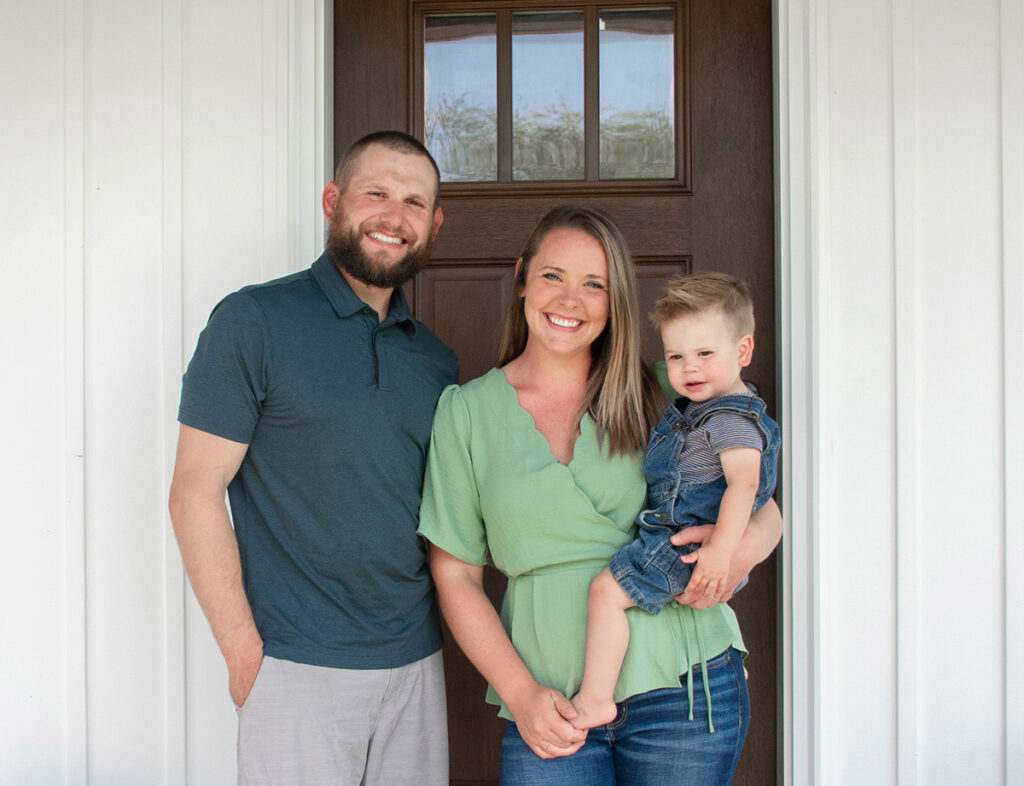
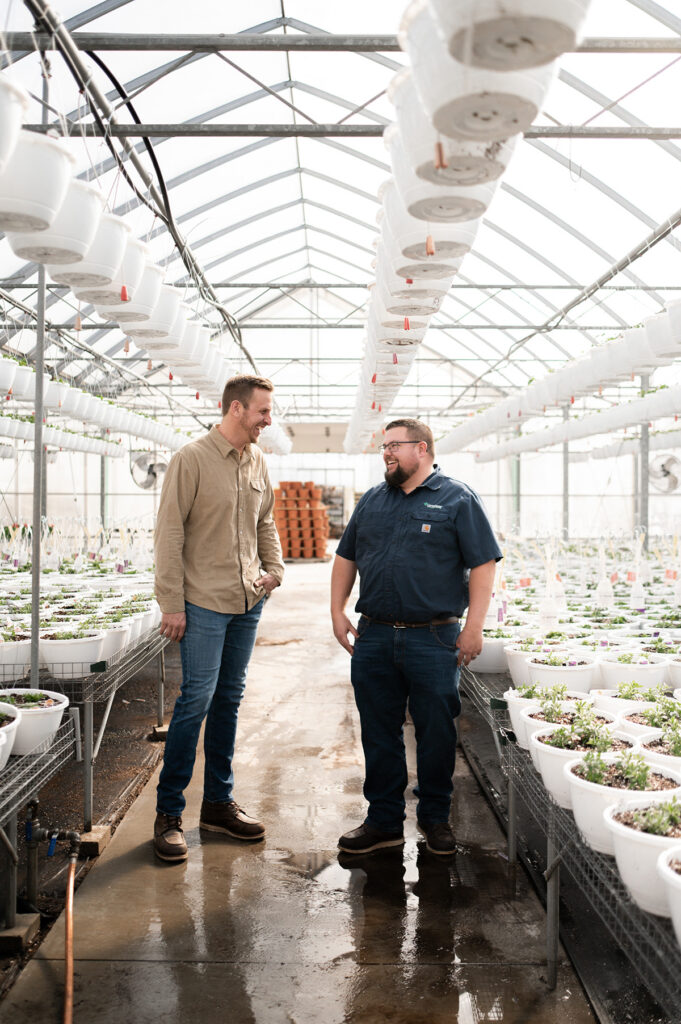

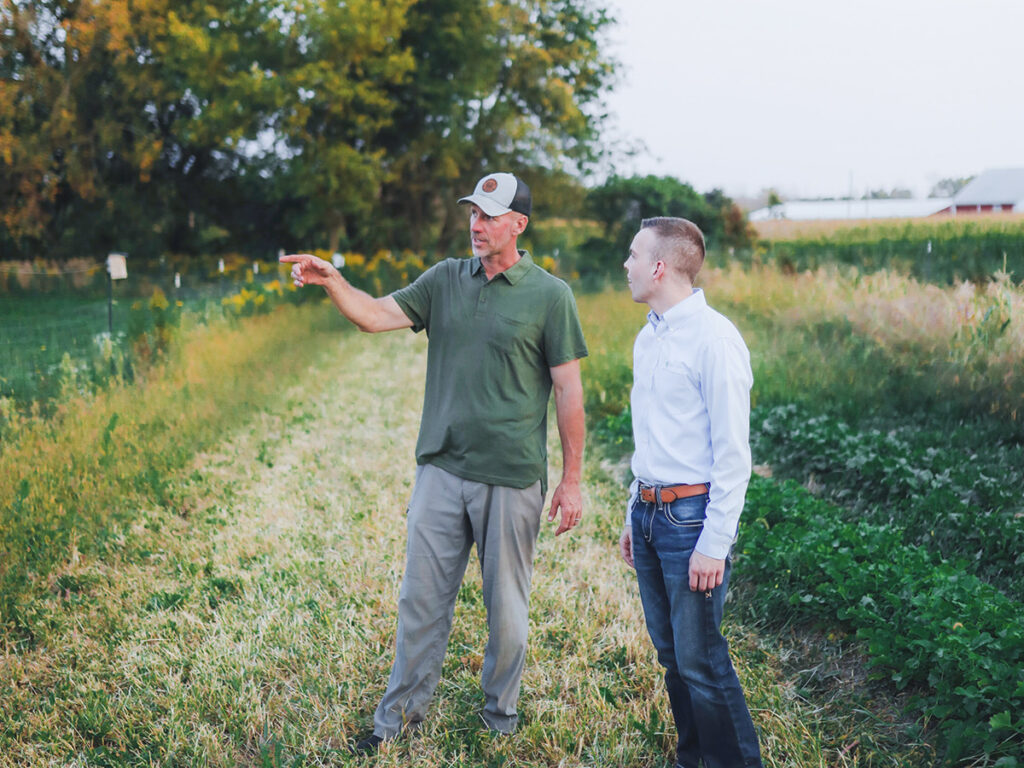
In this behind the scenes, two GreenStone employees share their work and passion to serve on GreenStone’s CultivateGrowth committee. The committee has been instrumental in the recent expansion of the program that serves young, beginning and small farmers (YBSF).
Matt Alt
7 years of service
Senior Financial Services Officer
Ionia, MI
How does your role tie into your work with development of the new CultivateGrowth program?
As a loan officer, I am meeting and talking with young, beginning and small farmers often. I have the opportunity to discuss what is working for them as well as any pain points they may be running into when applying for credit or starting their farming career. This gives me a great perspective.
Why are you passionate about supporting YBSF?
Growing up on a farm, I have many family and friends that are YBSF right now. They face the same obstacles and challenges that we are trying to address with this new program.
How will the expanded program benefit your customers?
think the program offers a lot of great educational opportunities. They can apply or a grant to assist with costs of conference registration, industry educational classes or general finance classes. Also, we have a mentor program that can pair them with another farmer to learn and gain experience.
What change in the program are you most excited to share with YBSF customers?
I am excited to share the many different options YBSF applicants will have with the expanded program. Each request and situation is different; some may be best suited for a direct GreenStone loan, others may benefit from joint financing with GreenStone and FSA. We want to work together to establish a structure that meets their goals and sets them up for long term success.
What do you do in your free time?
In my free time, I enjoy spending time outdoors with my family. We like to go camping and hiking in Northern Michigan in the summer and try to get out ice fishing as much as we can in the winter.
Zachary Nielsen
4 years of service
Credit Analyst
Grand Rapids, MI
How does your role tie into your work with the development of the new CultivateGrowth program?
My job is to analyze financial statements and outline strengths and weaknesses of our borrower’s financial position. With this program, we have been working to help customers better understand their financials and key metrics to help them improve their businesses.
Why are you passionate about supporting YBSF?
I do not have any farm background. This gives a firsthand perspective on the barriers to entry in the farming industry that many beginning farmers face.
How will the expanded program benefit your customers?
This program will provide some financial incentives as customers gain knowledge through educational conferences and courses. By working with their financial service officers, some members will be eligible for an interest rate reduction for qualifying loans. This reduction will be given upon completion of various activities. Many of these activities are regarding their business plan and financial statements. This not only helps the customer better understand and manage their business, but also helps GreenStone better understand their business and financial position. This process is mutually beneficial.
What change in the program are you most excited to share with YBSF customers?
My favorite parts of the program are the interest rate reduction and educational activities that help them qualify for the reduction. This will be mutually beneficial for everyone. It also provides the customer time with our GreenStone staff that will lead to relationships that will last for generations.
What do you do in your free time?
I enjoy deer hunting, waterfowl hunting, fishing, and spending time with friends and family.
To view the article in the online 2022 Winter Partners Magazine, click here.
Mark D. Zacharda grew up on Zacharda Farms, which was owned and operated by his dad and uncle.
He helped milk cows until they sold them at the turn of the century, and then he helped them cash crop. However, he didn’t go straight from school to the farm. He graduated from Michigan State University with a degree in agriculture science and earned a teaching certification from Saginaw Valley State University, and then he moved to Virginia to teach high school biology.
“I really enjoyed being a teacher,” Mark said. “Farming can be stressful, but teaching can be even more so. They’re similar in a lot of ways. There are farmers who just get by…if yields aren’t terrible, and if prices aren’t bad, and you have crop insurance to back it up, they can make it. Some teachers also just phone it in, but if you want to really do what’s best by the students or optimize your farm’s profitability while doing what’s best by the environment, you have to really work.”
Mark married his wife Stephanie, and they have two daughters, Edie and Maisie. After living in Virginia for four years, a trip home to Michigan for the holidays inspired Mark to consider going into farming full-time.
“My dad Mark and uncle Bob were getting older, and I wanted to work on the farm,” he said. “We moved back to Michigan in 2012 and my uncle retired in 2014, and since then my dad and I have been partners. So, I’ve been working on the farm for a majority of my life, but full-time for nine years.”
Job change
Mark made the change from teaching to farming for many lifestyle reasons.
“I enjoy working outside,” Mark said. “When I was teaching all day under fluorescent lights, it started to eat away at me after a while. Now I’m out in the field, an eagle flies by, there are deer running around – I’m closer to nature.”
Mark likes working with his hands, plus appreciates the autonomy.
“It’s really gratifying when something breaks and you can repair it yourself,” he said. “I’m always tinkering and looking for ways to increase efficiency. For instance, if I build a rack on the trailer, it can hold two more bales, which means each trip is more efficient…Plus, I also like being my own boss.”
Not only is being outside good for his mental health, but he also sees how it benefits the larger population.
“More people being aware of the natural world is a potential game-changer for the health of the planet,” he said. “People aren’t going to care about things like climate change and waste reduction if they don’t spend any time outside. Production farmers have a huge and exciting role to play in enhancing the health of the planet.”
Legacy
Mark’s family had already worked with GreenStone for 30 years when he came back to the farm. He got an operating loan through financial services officer Barb Dinsmore, and he worked with specialist Mark Klett on crop insurance.
“I really enjoy working with Mark,” he said. “He farmed himself, so he totally gets it. He’s also super responsive. I don’t like to bug people outside of business hours, but this is farming, so when I text him, he responds even if it’s 9:00 p.m. on a Sunday night.”
Mark Klett uses GreenStone’s exclusive crop insurance analysis tool, Optimum, to present options to his customers. Using this special resource GreenStone has available for its crop insurance customers, he can review and compare the vast array of available options to generate a customized, data-driven recommendation for each farm’s specific needs.
“Farmers are looking at types of policies, levels of coverage, and different options,” Mark said. “Since there are multiple levels of everything, it can get complicated. Optimum allows me to lay out the data for farmers, so we can compare the policies, narrow down our choices, and make decisions – basically, select the optimum choice.”
Mark Zacharda also appreciates the policy assessment through Optimum and enjoys working with GreenStone on improving his coverage.
“Mark does a great job explaining all the changes and any new options in the crop insurance world from year to year,” he said. “Mark introduced me to ECO and SCO, which have bigger premiums, but you get increased coverage. I’ve been thinking more lately about biting the bullet on these crop insurance premiums and taking advantage of the new programs to have that peace of mind.”
For instance, Mark’s farm had a soybean field hit by a hailstorm in 2021. There was so much damage that they replanted, but the beans got too much rain, and the replanted ones didn’t have enough time to fully grow.
“On that field, we’ll get maybe 20 bushels an acre,” Mark said. “The damage caused poor yield. So then with crop insurance – I don’t like paying for it, but I feel very reassured having that backup. When you break down your costs per acre, insurance has become one of those costs you just have to factor in. With the changes in weather pattens and the volatility in the markets, a farming operation just has to have crop insurance – it’s become a no-brainer. There are so many levels and programs, with a good agent and experience, each farmer can find where the sweet spot is for crop insurance.”
Mark sees the recent weather extremes as another reason to explore his crop insurance options. For instance, the margin protection programs offer increased backup.
“Mark Klett called it ECO on steroids,” Mark said. “With all the volatility in the world, including pandemics and climate change, the extremes we’re dealing with more and more are even more of a reason to take a look at enhanced crop insurance.”
Crop insurance specialist Mark Klett has been working with the Zacharda family for years.
“Mark Zacharda is one of the more analytical customers I have,” he said. “He always takes notes when we meet, asks questions, and keeps himself up to date. He understands that crop insurance isn’t just an expense – it’s a tool to help him.”
Sustainable future
The Zachardas farm approximately 1350 acres and grow soybeans, corn, wheat, and hay. On their intergenerational farm, Mark is focused on taking measures to become even more sustainable.
“Over time, we’ve made some changes,” Mark said. “We participate in Natural Resource Conservation Service (NRCS) programs through the USDA. We’ve put in filter strips and field borders to be a buffer between the field nutrients and the water, we’ve planted habitat areas and trees. Also, we concentrate on soil testing and following the recommendations after analysis. We have been an environmentally verified farm for our cropping system through NRCS since 2014.”
The farm recently started using a yield and moisture monitor in their combine to put together yield maps.
“It makes you wonder why you even put seed and fertilizer in certain parts,” Mark joked. “Really, it really helps you make better decisions about your inputs and where best to use them.”
“I could work in the office all day long, looking at projections, evaluating how much profit we could make, analyzing data … but I don’t have time,” Mark said. “My wife, daughters and I like to spend our time together during the farm’s off season – skiing, snowmobiling, sledding.”
To view the article in the online 2022 Winter Partners Magazine, click here.
GreenStone was supportive of me as a young producer before I even understood what the organization was.
When a neighboring producer invited me to attend to a two-day technical herdsman program, his loan officer with GreenStone offered to pay for my tuition having never even met me. That loan officer would soon become a valuable sounding board and spent countless hours providing me guidance and support far beyond what was expected of him.
As if the impression this made upon me wasn’t enough, I began to notice the green biostar logo at more and more industry events, and quickly came to realize this was an institution that thoroughly understood my occupation and the road I would follow as a young dairyman. I feel fortunate GreenStone took a chance on me in those early years, and realize our industry would suffer if every young farmer was not so lucky.
Having the privilege of serving on the board, I find myself very invested in seeing this institution continue to maintain and expand upon providing support for those patrons who are just getting a foothold in their careers. The mentorship program is a great example of GreenStone’s commitment to this, as well as the specialized lending available through our newly expanded CultivateGrowth program.
Don’t ever hesitate to ask your local GreenStone team for assistance as you navigate the uncertainty of your first few years.
My advice is to embrace your mistakes and learn from them, and consider that every business you work with could be a great resource for developing knowledge. Wisdom often comes when you’re not looking for it. Some of the greatest lessons I ever had came from people who didn’t realize they were teaching!
To view the article in the online 2022 Winter Partners Magazine, click here.
Steve and Kris Van Haitsma are committed to sustainability and environmental responsibility, which stems in part from Kris’ background in environmental chemistry.
“I graduated with a biology degree from Calvin University,” Kris said, “and I started working as a lab tech in an environmental testing lab. As a chemist for the next 18 years, I worked on quality control, testing for things like pesticides and herbicides.”
Steve was raised on an organic farm, so he was already familiar with the farming philosophy free of pesticides and herbicides. Also a Calvin graduate, he owned his own appraising business before transitioning full-time to the farm.
With those backgrounds, the couple began Mud Lake Farm by buying used greenhouses and moving them to their property. The Van Haitsmas have four greenhouses and 36 acres, plus they grow using hydroponics. The land where they farm was in Steve’s family for 117 years, and most of that time it was cattle pasture. When they were getting ready to move to it, they envisioned being able to have all the inputs to grow and produce.
“It’s a difficult thing to figure out how to do, and this was before the internet,” Kris said. “We were doing all the research with books, and we thought – let’s try hydroponics.”
They built ponds in the greenhouses that are insulated, and they use PEX tubing that runs from a geothermal system to heat the water, much like a floor heating system. Their ponds have foam floats that float on top of the water, and the roots grow into the water to draw the nutrients from it. No weeding is required, and they’re able to use all the growing area. As a result, they’re also not losing water to evaporation, because the surface is covered.
“We use about 10% of the water to grow hydroponically that we would use to grow traditionally,” Kris said.
Currently, they have between 6-10 hydroponic beds in each of their greenhouses, and they also build other beds outside in the summer. With this system, they’re able to harvest 600-800 pounds of lettuce a week in the summer.
Along with hydroponic lettuce, they use their greenhouses to grow microgreens, a variety of herbs, rosemary, pineapple sage, mint, ginger, and chamomile. Outside, they grow arctic kiwis, hazelnuts, elderflowers and berries, and much more.
“We’re always trying something new,” Kris said. “Last year we planted 100 yellow birch trees to use as a flavoring for our root beer.”
Cordials and Sodas
After making their mark in the produce arena, the couple decided to expand into a new venture.
“For our wedding anniversary we went to Wales,” Steve said. “We tried elderflower “pressé” (which is a fancy French word for soda), and we thought – we can make this!”
They went to their friends at Cascade Winery in Grand Rapids and used their canning equipment to make elderflower soda.
“We were told we were the first ones in the states to make elderflower soda,” Steve said. “It’s my favorite one. Not only do you get all the benefits of the elderflower, in that it’s good for cold and flu, but it’s also a fun beverage that you can use to make cocktails.”
They were already growing ginger for chefs and decided to try making ginger cordial with it instead. It went so well, they also made a ginger soda. Since then, they have added a root beer made with natural ingredients, including carrots, beets, and a chamomile soda from their fresh chamomile flowers.
They now produce beverages made with the fresh ingredients from their farm, and they sell under the name St. Steve’s Cordials & Sodas.
“The main thing is we’re using real ingredients to make it, and it comes from here,” Kris said. “We use our fresh elderberries, elderflowers, chamomile, ginger, birch bark.
We have a limited number of ingredients because we want just fresh, simple ingredients. Most ginger ales and ginger beers don’t even have real ginger in them, so we see this as an opportunity to give people an amazing soda that still provides the functional benefits of using the real plant.”
“We have lots of people who buy our products just for the health benefits,” Steve added. “People going through cancer treatments love the ginger. People who struggle with sleeping love the chamomile. It so neat to make something that people really appreciate. We get so much amazing feedback from our customers.”
Financing opportunity
They soon looked into purchasing a canner for their own business.
“We’ve always had conventional loans before, and other banks didn’t want to work with us because we were now a farm,” Steve said. “We talked to Matt Alt, and it really seemed to fit together with what we were trying to do and what GreenStone offered.”
Matt Alt is a financial services officer out of GreenStone’s Grand Rapids branch. When Kris and Steve contacted him, they asked about a house refinancing loan, but also additional funds for a canner.
“It was such a unique situation, as they are growing the throughput and then producing the craft soda with it,” Matt said. “It was n exciting loan to help with, because it was obvious the benefits the canner would bring to their business.”
Matt added that when he visited the farm, it happened to coincide with a day his branch was meeting up for a potluck, so he brought a case of craft soda.
“We tried a bunch of different flavors, and it was a hit,” Matt said. “I’m glad we were able to help with their soda creation.”
In January 2021, Steve and Kris used GreenStone to finance their canning line, and they now are able to can their sodas and sparkling waters on the farm on their own schedule, producing 24 cans a minute.
Sustainability
Steve and Kris have designed their farm around sustainability measures.
They use LED lighting to provide supplemental light in their greenhouses. They heat the water in the hydroponic beds with a geothermal system, and they also use a biomass furnace to heat the air over the cooler months. For a heat source, they burn cherry pits that they buy from a supplier in Shelby, Michigan.
“We tried different materials like corn, and wood pellets, but they had issues like leaving residue and attracting rodents,” Steve said. “We also had an issue that corn is a food source. With cherry pits, they’re a carbon neutral product, they’re produced every year, and they’re also a complete waste product. We buy 15 tons of them every winter.”
Steve and Kris have a strong online presence, have won many awards, and have built a successful business with their produce and beverages.
“We believe in sustainable agriculture, and we’re looking forward to exploring more ideas to make it even more sustainable,” Kris said.
To view the article in the online 2022 Winter Partners Magazine, click here.
Ben Kasik is using a variety of resources to continually educate himself about farming, including conferences, networking, and business planning.
He farms with his grandparents, Jerry and Carolyn, in Henderson, Michigan, where they grow corn, soybeans, and wheat. He began farming full-time in 2018.
“I didn’t know I wanted to farm full- time until I went away to college at Michigan State,” Ben said. “Being away that first month was so awful. I couldn’t wait to come home and help. All through the fall harvest I drove home almost every day after class to help – I couldn’t stand not being there.”
Ben graduated with his bachelor’s degree in crop and soil science and brought back his new knowledge to his home farm. His main mentor and teacher on the farm is also his coworker – his grandpa Jerry.
“My grandfather has a vast amount of knowledge and wisdom he acquired from farming his entire life,” Ben said. “He’s a well-rounded farmer, and he’s good at everything, like fixing machines, agronomy, working with people. I’m so thankful I can work and learn alongside him.”
Ben went to his financial services officer Nicole (Nikki) Burke in the spring of 2018 to obtain an operating loan, and she not only assisted him with financing, but also introduced him to other GreenStone services.
“Every time I have a financial question or a business idea, I know I can call Nikki anytime and get help,” Ben said. “She’s always willing to give me good financial advice, and if she doesn’t know something, she points me to resources to find the answer.”
Nikki works with a number of young, beginning, and small farmers out of the Corunna branch. In her 11-year career with GreenStone, she makes it a point to reach out to her customers to share about available programs.
“I care a lot about my customers, and I want to see their businesses succeed and grow,” Nikki said. “Putting the customer first is the most important thing to GreenStone, and everyone on the team truly cares about making the experience positive for our customers.”
Mentorship Program
One of the programs she suggested trying was the GreenStone mentorship program, which pairs new farmers with more experienced producers to share knowledge and help equip them for the future of the industry.
Ben was matched with mentor Eric Blaine of Blaine Farms in St Charles, who also is a cash crop farmer. Eric brings his 21 years of knowledge to the mentorship.
“He’s a really sharp young man,” said Eric Blaine. “I like working with him. He already has a great understanding of the industry, and he just wants to fine tune his skills, which is really admirable.”
Since Ben has the leadership of his grandpa, he already has a great mentor on the farm, but like most business owners, he enjoys talking with people who have the same job.
“It’s so interesting talking to Eric, because some of the things he’s doing are so different,” Ben said. “If you take three farms within ten minutes of each other, even if it’s the same crop, everyone is doing things a little bit differently. I like bouncing off ideas from him to get his completely different perspective.”
“That’s a big part of farming,” he added. “You can never know enough. I asked my friend Tony Motz, also a farmer, why he always talked to everyone, and he said – you can always learn something from everybody.”
Grant Program
The next program Ben has taken advantage of is the grants from GreenStone. Each year, GreenStone commits $40,000 to young, beginning, and small farmers for the grants, which they can use toward agricultural programs and events, GreenStone services like accounting and tax services, and resources like business and farm consultants.
Ben has made use of the grant multiple times. For example, he’s attended conferences like the Great Lakes Crop Summit, attended industry meetings, and had the GreenStone tax and accounting department prepare his tax return. GreenStone has a full array of tools and services to support farmers like Ben, including new tools as a part of GreenStone’s refreshed CultivateGrowth program (see page 25).
“Being a young farmer, it’s nice to have someone help,” Ben said. “I like that GreenStone takes a chance on young farmers, so then we can turn around and show we’re doing our part, learning and using the resources they’re giving you.”
Future Opportunities
Ben doesn’t live far from his parents, Jerry and Ellen Kasik, and joked with them that he was going to be a bachelor farmer his whole life. Instead, when he matched with his now-wife Megan on the Farmers Only dating site, he called his mom after their first date to tell her he met the woman he was going to marry. They married in the summer of 2021.
“Our wedding happened right during wheat harvest, and I was so glad it rained, so I wasn’t thinking I could be combining wheat,” he said.
“Megan isn’t from a farm, but now she wouldn’t have it any other way,” he said. “I think a farm is the best place to raise a family. There are so many opportunities for responsibility, even at a young age, and it gives you a connection to nature. Not every kid gets the chance to smell a rain coming or feel a frost melting in the spring.”
He looks forward to the future of farming with his grandpa and living with his family on the farm. As he plans for his farming future, he knows he’ll continue to use the resources available to him, as well as let other people know about them.
“I would encourage any other farmers to take advantage of these opportunities,” Ben said. “Go for it. I plan on using every resource I can, from financing, programs, grants, meetings, anything like that – where I have the chance. Without GreenStone’s assistance with getting started, I wouldn’t be where I am now.”
To view the article in the online 2022 Winter Partners Magazine, click here.
Tom and Robbin DeMeester had been actively looking for land to purchase for some time. Even before they sold their family home in Ada, they’d been searching for a large place that wasn’t clear-cut farmland. They wanted something with some character, trees, and maybe even water.
While driving around the area, Tom spotted a wooden sign.
“I think the only reason this parcel was available is because it was for sale by owner, and the wooden sign had fallen down,” Tom said. “I saw it amidst the roadside trees and thought – I wonder if it’s still for sale? I made the call, and odd as it was, the seller was a guy that I went to high school with.”
Tom, a manager at Greenleaf Trust, and Robbin, a Forest Hills Central High School teacher, planned on downsizing their living space and upsizing the property around them. The almost-25 acre plot seemed just right. Now, they had to start the process to finance vacant land.
“I had seen the billboards for GreenStone that referenced land loans, and I knew conventional lenders didn’t focus on that,” Tom said. “It’s a specialty service to provide financing expertise tied to vacant land. I reached out to GreenStone in December 2017, Devon Feldpausch was the individual that followed up, and that started our journey.”
Devon Feldpausch, a financial services officer who also started his career with GreenStone in 2017, dug in and worked through all the details with the DeMeesters.
“Tom and Robbin were some of my first customers,” Devon said. “I’m blessed to have worked with them. The first closing was getting married. The second closing my wife was pregnant. We’ve been through a lot of life stages together, and at this point they feel more like family. Honestly, you’re not just a number here…I don’t remember the last time I haven’t chatted on the phone with him without the call ending in a smile.”
Starting out
The property in Ada, Michigan was a split off of a larger parcel, and as a result, it needed a lot of work to make it buildable. First, there was the clearing.
“There were quite a few trees on it, so the next step was we had to cut in a roadway,” Tom said.
“It was quite the endeavor,” Tom said. “My son-in-law, my son and I forested the property, which included taking down 125 trees, and cut the drive in. We used a road builder to install what the civil engineers developed.”
As with most building projects, it became more involved along the way. The road had to be 18 feet wide, have culverts, correct drainage, grading, and they also encountered unstable soil.
Building the Better Life
In February of 2020, Tom and Robbin began the construction of their home.
“With the road being more involved than we had anticipated, we pivoted and decided to build our home as a barndominium,” Tom said. “Again, that was something that was a little unique, and GreenStone had more of an appetite for that than another lender would have.”
Working with J. Visser Design out of Grand Rapids, the DeMeesters built a timber frame barndominium. They also designed the home to be energy efficient. They used structurally insulated panels (SIP) which have a foam core that creates a tight envelope for the building.
“We were very conscious as we built this to preserve the exterior envelope of the home,” Tom said. “We didn’t even run electrical through the outside walls – we ran it in the interior.”
The home also has radiant floor heat, and everything is tied to a radiant hydronic system, which means there isn’t any duct work or forced air. They have supplemented the radiant system with mini-split systems, so each room has its own ability to run air conditioning or a heat pump. This has allowed them to keep the perimeter of the home very efficient, as well as preserve a great view.
“Because of the timber frame and SIPs, we’ve been afforded the freedom to have open, expansive views. It’s a unique building,” Tom said. “Ninety percent of the time, it’s just the two of us, but we built large common areas that allow space for our expanding family.”
Tom said he and his family enjoy visiting around their 750-lb, 12-seat table made of reclaimed beams from a company in England.
“It’s the centerpiece of our home, and it’s the central gathering place for our family,” Robbin said.
Ada journey
The property has beautiful, rolling hills, lots of trees, and is surrounded by a stream at the bottom of a ravine. They overlook the Grand River. The DeMeesters have developed trails on the property, and they’re landscaping their yard over time. Robbin started a small garden, and next season they’re building a raised bed garden.
Their daughter, Emily, son-in-law Spencer, and grandsons Grayson and Hudson are planning on building on one of the other spots on the property. Their son Jared and daughter-in-law Jessica currently enjoy living in Chicago, and everyone knows they have a spot if they move back, too.
Tom has enjoyed his years working with GreenStone.
“I say it’s a journey with Devon, because we really started this in December of 2017 and took occupancy of our home in June of 2021. Over that timeframe, we got to know quite
a bit about each other. We’ve met in person several times, Devon started a family, I had a grandchild, and we shared many life events.”
The DeMeesters look forward to many happy years enjoying their home and property.
“Working with Devon and the rest of the GreenStone staff exceeded our expectations, and we love the end result,” Tom said. “We’ve built homes before … but being part of this specific process, having the right setting, and working with the right people, has been a very good experience.”
To view the article in the online 2022 Winter Partners Magazine, click here.
In this behind the scenes, two GreenStone employees from the appraisal team speak about how their daily work supports customers and improves the overall customer experience.
Shane Kenner
23 years of service
Senior Appraiser
Adrian, MI
What advancements has GreenStone made to better serve their customers?
The appraisal is an important part of the loan process and GreenStone has implemented some significant advances regarding how appraisals are ordered and submitted. This process change was one of the most significant I have seen during my tenure. It has streamlined the appraisal process by providing an easy user interface for the staff ordering the appraisal and the appraiser, making the process faster and providing the convenience for the appraiser to access to all information online. Additionally, this allows for easier appraisal tracking and overall data analysis.
What was the significance of the land value benchmark project?
The land value benchmark process was implemented to track market trends of farmland prices. Early in the annual process, appraisal staff would appraise an actual farm each year to see what value change had occurred. Today we appraise a “virtual farm” as well as transitional land, or land in areas of non-farm influence. The process has become more important in the past fifteen years as we have seen more significant land value changes. Benchmarking allows GreenStone to effectively track land values by region, aiding in customer buying decisions and general lending evaluation. The benchmark process allows GreenStone to rely upon appraisal values for a longer period, saving the customer money in the long run as a new appraisal does not to be ordered and paid for every time a loan is requested.
What do you enjoy about your role?
I really love getting out and meeting our borrowers in person. The southeast appraisal team covers 13 different counties, and I am often called to work in any of them. This has led me to several small rural communities throughout the region. I’m convinced that we have the best borrowers of any lending institution, as I’ve met an unbelievable number of enjoyable people though this job. I’ve appreciated how down to earth and genuinely nice everyone has been and have had some wonderful conversations over the years meeting farmers, professionals, entrepreneurs, and executives alike.
What do you enjoy doing in your free time?
I enjoy most spending time with my 2-year-old son and my wife. My wife and I also enjoy visiting wineries around Michigan when we have time, especially one of the local borrower–owned establishments. I’m also quite a “car guy” – I’m one of the few appraisers in the department you’ll see driving a sporty sedan instead of a pickup truck. A good amount of my time, however, has been spent improving our 150-year-old farmhouse.
Lyndsy Bock
15 years of service
Senior Appraiser
Mount Pleasant, MI
What advancements has GreenStone made to better serve their customers?
We have implemented different projects to shorten the time it takes to complete appraisals. In addition, we have added programs that have led to faster writing and streamlined our report requirements. Our department has doubled in size in the last decade, allowing us to focus on quality appraisals with less wait for the reports to be delivered to the credit staff, ultimately benefiting our customers and their timeline.
GreenStone is committed to evolving technology. Our department has access to new technology that enables us to be more efficient, from office equipment to tools for use on inspection sites. When I started, we were still using digital cameras. Now we do it all from our smart phones, which also provides us access to anything we might need on our computer in the office from our phones. It’s nice to look up information onsite when meeting with customers.
What was the significance of the land value benchmark?
The benchmark is a type of valuation that is based on the appraisal department’s study of annual market changes. The study applies year over year benchmark changes to an appraisal of properties. Using the benchmark study for valuations allows for appraisals to have a longer shelf life for credit decisions. Ultimately, it helps shorted the time from application to closing the loan. If a loan meets the criteria using the benchmark study, it eliminates the need to have another appraisal completed, and saves the customer money on an appraisal and quickens the closing process!
What do you enjoy about your role?
Every day is a new project! The appraisal requests I complete can be anywhere from a vacant 40-acre recreational tract to a 3,500-cow dairy facility. I have met some incredibly smart and interesting people over the years doing inspections. We have the most incredible customers that are always happy to answer the “whys” and “what do you thinks” I typically ask. These are their family farms, or their startups, or their dream retirement properties that they have poured their lives into. Our customers have been more than generous with their life lessons, advice, and knowledge over the years. There is always something to be learned.
What do you enjoy doing in your free time?
My husband and I also have a small cash crop operation outside of our day jobs, and two boys. Between them, their sports, and our farm, I am not sure about too much free time. However, when we do have free time, we are camping in the summer, snowmobiling in the winter, or just enjoying a quiet night at home.
To view the article in the online 2021 Fall Partners Magazine, click here.
Jeremiah Mostrom lived in Richmond, Texas when he found a job in West Michigan with the human resource services firm Axios HR. Originally from Minnesota, he was attracted to the idea of the opportunity to buy land, have space, and form a family connection to a piece of the country.
Jeremiah, his wife Carrie, and their daughter Sadie closed on a house on five aces in Alto, Michigan. There were 30 acres adjacent to the land, but the owners weren’t quite ready to sell.
However, the day the Mostroms closed on the house, the owners put it up for sale. It was a chaotic time for them; they were in the middle of a move, still owned a house in Texas, and weren’t expecting the opportunity.
“Our realtor said – get ahold of Cameron Bongard right now. I did, and we closed the loan in 19 days. It was seamless,” Jeremiah said. ”Cameron was fast, easy to work with, and just like that – we had the land we had dreamed of owning.”
Jeremiah enjoyed dealing with Cameron, who is a financial services officer for GreenStone, in part because of his communication skills.
“He did a great job of understanding what we needed,” Jeremiah said. “His communication was great, and I was never left wondering what was going on. No hidden fees, very straightforward process, and with the co-op you even get money back from the Patronage Program.”
Not only did they have a good working relationship, but they also had a good personal one.
“Cameron knew it was a super cool opportunity for us to purchase this land, and he really, truly wanted to see it happen, and he made it happen,” Jeremiah said. “He also is a hunter, and he lives in my area, and all of it made it easy to work with him.”
Cameron also enjoyed the process with the Mostrom family.
“Jeremiah was so great to work with, because whenever I needed anything, he had it within the hour… and he was still in Texas,” said Cameron. “We also connected on a personal note, because recreational or vacant land loans are my favorite things to do as a lender. It’s the perfect scenario to walk out your door and have your own acres, and I’m happy we could help make that happen.”
Increasing the beauty
The Mostroms immediately began beautifying their recently-purchased land.
Their road is part of the State of Michigan’s Natural Beauty Roads program, which preserves roads in an undisturbed condition. As part of their plan, Carrie enrolled in MSU Extension master gardener class, they planted a few gardens on their property, and Jeremiah bought a tractor.
“I was riding along in my tractor, and I was pinching myself, like – am I alive?” Jeremiah said. “This has been our dream, and here I am brush cutting trails on my land. This is exactly what I wanted.”
The property has grapevines and apple trees, as well as an 1850 barn they’re restoring. For this big project, they’re currently working with the Michigan Barn Preservation Network.
“Our intention is to keep the land how it is, and pass it down,” he said.
Sadie’s Sunset Farm
One of the most exciting opportunities for the Mostroms was the chance for their daughter, Sadie, to start her own business. Out of her own garden, she grows fresh produce, like sweet corn, carrots, zucchini, beans, tomatoes, chili peppers, and herbs, and then she sells them from a roadside stand on their property. She plans on expanding her offerings to pastured meats and more products, and her parents are helping her along the way.
“We love that our daughter is learning to be an entrepreneur, the importance of agriculture in our communities, and that we’re able to do that here,” Jeremiah said.
Enjoying the land
Not only do they have a small business, but they also love having the land for recreational purposes. Jeremiah particularly enjoys hunting on his land, as he’s been a hunter his whole life.
“There are really a lot of beautiful deer out here, and I’ve planted a whitetail habitat with food plots and bedding areas to help supplement the already-healthy herd,” he said. “It’s such a big blessing to be able to walk outside your door to go hunt, instead of driving six hours to get to land you lease in Texas…and worry about poisonous snakes and spiders.”
Not only has he hunted with his family members, but he also likes the camaraderie of hunting with friends.
“My neighbors and I are planning on getting the kids together, setting up some old campers away from the houses, and having a deer camp during the youth hunt,” he said. “We just want to do something special in honor of that time of year.”
The Mostroms definitely feel they have the connection to the land they were originally seeking.
“We want to keep the land beautiful the way it already is, hike, hunt, grow food, and just enjoy West Michigan,” he said. “We’re so excited to have this place for all of us to connect with the land.”
To view the article in the online 2021 Fall Partners Magazine, click here.
This past spring, GreenStone members elected Michael Feight to the cooperative’s Board of Directors. With decades of a diverse farming background, a father’s footsteps to follow, and the experience of financing in the 80s all a part of his foundation, Michael shares a bit more about his farm and perspective of being the newest member on GreenStone’s Board of Directors. Be sure to watch his video bio for an inside view!
Michael’s Perspective
When I received the call from the nominating committee representative to consider running for a GreenStone board position, I can say the I was completely surprised and honored to be considered. We all have times and occurrences in our lives that seem to happen when you are not looking in that direction at all, but after many trips across the field in auto mode, you realize that those occurrences can be unforeseen opportunities. For me, it was one on of those times when I realized it was a good fit for where I am in life. So, with the support of the voters of Region Three, I was elected to the board of directors for GreenStone this past spring.
I farm with my father Fred and brother Doug in Tecumseh, Michigan, located in Lenawee County. In 2018 we sold our dairy herd and now focus on cash crops. We have 2,500 acres of corn, soybeans, and wheat. In addition, we’ve also diversified and grow 60 acres of carrots for Campbell’s Soup.
The farm was started by my great grandfather and his brothers who came over from Ireland and began farming in 1870. The farm was unable to survive the Depression of the 1930’s, but my father was gradually able to reacquire the land to continue farming.
It is hard to describe all the uniqueness that being involved in the business of agriculture has to offer. Dealing with land and nature touches one in a way that few occupations have to offer. At the same time, we must be well aware of the business aspect of farming because in the end, in order to keep doing what we love, it has to be a viable way of making a living. This is where having the understanding and integrity of GreenStone gives those in the production of food and grain the financial stability that is needed.
In my first few months of getting oriented onto the board and becoming even more acquainted with GreenStone, there were two things in particular that surprised me about the organization. One being the scope of lending that the cooperative handles – from the family farm operation like mine to the large food and timber companies. The second thing was the outside regulatory process and guidelines that GreenStone has to abide by. Like any business, there’s much more behind the scenes than anyone realizes; the awareness I have gained recently gives me even more appreciation for the organization I now serve.
I would like to thank all the board members and staff of GreenStone for making me feel welcome as the newest board member. I look forward to working with everyone!
To view the article in the online 2021 Fall Partners Magazine, click here.
“20 years of bringing the best to members”
Life and disability insurance is a critical risk management component to consider with every farm operation. Evaluating the type of insurance, its uses, and the correct amount can mean the difference between success and foreclosure. No one understands the importance of planning better than a farmer. It’s the attention you give your soil, your crops, and your livestock that produces a successful tomorrow. Careful planning is the key to your family’s future too. Life and Disability insurance will provide a monetary benefit to your family if you are no longer living or able to perform the farm duties.
After many years of bringing Minnesota Life’s “Credit Life” to our members, GreenStone recognized the customer desires. FCS wanted to expand their members’ options for Life and Disability coverage to include products available from the entire marketplace. This was to ensure GreenStone members were receiving the very best in pricing, guarantees, and benefits.
The old saying “A jack of all trades and a master of none” has never been a trait of GreenStone. With the goal of providing a depth of knowledge and experience through another risk management tool, GreenStone partnered to create FCS LifeExpress. With the amount of knowledge it takes to navigate the life insurance industry, and all the evolving products, GreenStone knew partnering with experts is what members deserve. So twenty years ago, AgriBank, along with the Farm Credit associations and First Resource Group created FCS LifeExpress. FCS LifeExpress is a resource-based service for members to review the insurance marketplace to find the best options for each individual.
Best Pricing, Best Guarantees and Best Benefits tailored to each individual on an easy to read chart, gives members the very best options in the marketplace to review in the privacy of their own home. No pressure… Just the facts in an easy to understand format!
Expanded products portfolio to target your exact needs:
Term Life Insurance
- Least costly
- Can renew to age 95
- Can convert to Permanent coverage
- Term periods from 10 to 40 years
- Fixed Premium Guarantees
- Optional Return of Premium feature
- Permanent Life Insurance
- Survivorship Life– Perfect for Farm Transition or Family Equalization
- Whole Life– Guaranteed Permanent Death Benefit
- Can convert with Guaranteed Level Premiums.
- Disability Coverage
- Short term or Long-term coverage
- Optional Return of Premium Feature
- Farm/Business Overhead
- Expense coverage
- Customized coverage for your operation
- Long Term Care Coverage
- Traditional Stand-alone LTC coverage
- Life Linked LTC coverage – Pre use your Life insurance death benefit to fund LTC expense and/or Life insurance death benefit to pass to beneficiaries.
Besides providing the best priced life insurance to cover debt or to replace income for the family, FCS LifeExpress is ready to work with customers and their trusted team of accountants or attorneys to design funding for the long term operational succession, optimal farm transition, and life risk management.
At FCS LifeExpress, our goal is simple: To be the best resource to help members eliminate risk for their families and their farm operation.
To view the article in the online 2021 Summer Partners Magazine, click here.