
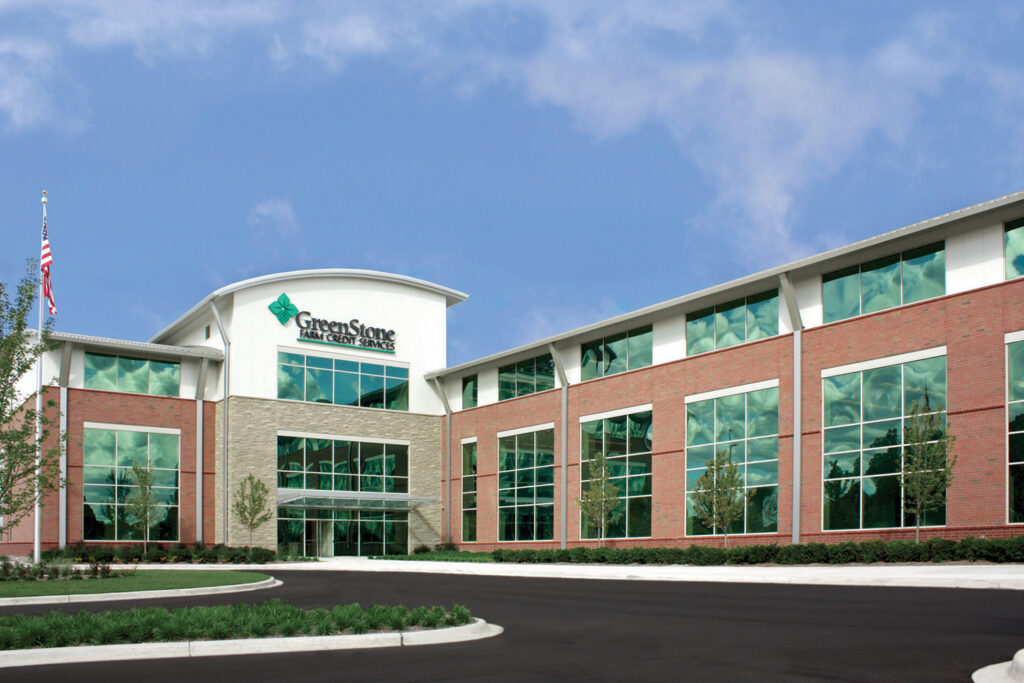
Serving under the direction of GreenStone’s member-elected Board of Directors, Dave Armstrong has impressively led the association as your President and CEO since 2009. While there’s much to acknowledge from those 13 years, your directors share just a brief snippet of what stands out to them from their time working with Dave during his tenure.
Listens and Relates
“How many CEO’s of an organization, with the track record of long term success that GreenStone has, can sit in the backyard of a farm and discuss what is going on in agriculture like Dave? The first time Dave visited our farm and sat with my 80-year-old father and had a long talk about what farming means to our family was very memorable. His ability to relate to anyone in our industry is unparalleled; he is leaving big shoes to fill.”
— Jed Welder, 3 year board member
Facilitates Success
“The one thing that stands out to me is the ease that he can handle a conflict or situation, so all parties understand and come to an agreement.”
— Ron Lucas, 8 year board member
Complete Integrity
“I’ve known Dave for quite a few years now, but if I had to think of one word to associate with him it would have to be “integrity.” Dave always takes the high road and is never afraid to do the right thing.”
— Scott Roggenbuck, 14 year board member
Finding Success Regardless of Challenges
“Although fairly recent in the scope of Dave’s tenure at the helm of GreenStone, it is important to recognize the hurdles Dave and his executive team jumped through in altering business course during the Coronavirus pandemic to keep employees safe while meeting customers’ needs. All of that while still recording a record net income and paying a record dividend back to patrons. Nothing short of exceptional.”
— Troy Sellen, 2 year board member
Always Relatable
“I have only been with the board just under a year. The character that stands out about Dave is his grasp of the financial business and his understanding of the uniqueness of the agriculture business. Dave has a comfort level whether talking to VP or any local farmer.”
— Michael Feight, nearly 1 year board member
A Team with Bench Strength
“Dave has been incredibly successful at weaving together a management team that works coherently together, resulting in GreenStone’s outstanding success at being a trusted, stable lender for our agricultural community. He excels at taking calculated risks to continue to grow the organization without hindering the security of our customer’s lending base.”
— Terri Hawbaker, 6 year board member
Customers First
“The one main thing about Dave I remember is he was one of four CEOs in Michigan when there were four Farm Credit associations merging in 2000, and as a result he was going to lose his CEO job. And he still did what was best for the farmers of Michigan and helped create GreenStone Farm Credit Services.”
— Dave McConnachie, 1 year current term board member, with 13 years on a prior term
Pandemic Pivots
“I am most impressed with Dave’s leadership during the last two years of the pandemic. I can remember my first emergency board meeting with Dave detailing how GreenStone would be operating during the lock down to meet the needs of our customers. It was a time of great uncertainty and challenges none of us had ever faced before. Through all these challenges Dave has managed to not only keep GreenStone on course, but help guide us to some of the best years we have ever had financially.”
— Mike Timmer, 3 year board member
Delivering Quality
“Two things stand out to me when I think about Dave’s time as CEO. One is his ability to foster and maintain a great culture for employees and members alike. The second is his commitment to the Patronage Program and returning in excess of $700 million back to members.”
— Dale Wagner, 9 year board member
Keeping It All Balanced
“The leadership he provided in the siting and constructing the new headquarters is a highlight. His drive, focus and management of the myriad of decisions facing the organization were just amazing. His appointment of Clint (Director of Facilities) at that time was just another in a long line of terrific talent recognitions that mark his tenure.”
— Dennis Muchmore, 19 year appointed director
Doing What’s Right
“I guess one thing that really stands out to me was Dave’s handling of the COVID pandemic: shutting down offices, working virtually, and keeping the team working so effectively in so much adversity to continue to deliver for our members needs.”
— Bruce Lewis, 10 year board member
Complete Engagement
“Dave sticks his nose into every aspect of the business. He continually asks, “why do we do it this way?” And, he is laser focused on improving customer service at lower cost, which is partially why paper is not his friend!”
— Gene College, 12 year appointed director
Humble Leadership
“Dave’s passion for Michigan and Wisconsin agriculture and Farm Credit is second to none. He has an incredible ability to collaborate with staff, shareholders, and his counterparts in agriculture. I have always admired his humility and availability as the leader of GreenStone. He has always been willing to step up to challenges and do the right thing. At the beginning of the pandemic and the first round of PPP loans, Dave was quickly eating his Easter dinner so that he could get back to manually keying in customer loans…if that isn’t humble leadership, I don’t know what is. Thank you for all you have done for agriculture, Mr. Armstrong!”
— Peter Maxwell, 5 year board member
Few Words, Big Impact
“Among the years of memories and significant moments, there’s several phrases, “Davisms” that stick out to me, which I feel truly define his leadership and management traits.
– Reputation Management – Carry the water – Politics – It’s a Team Sport – Block and Tackle – Juice worth the squeeze – Out over your skis – How much capital is enough – Bench Strength – What does that do for cost – Growth – Keep your eye on the ball – Got lucky again – Swing and a miss – Shoot for the middle – Shareholder value – GreenStone is “My Farm” –
Dave, thanks for all your leadership; you’ve left the “farm” in great shape!”
— Ed Reed, 13 year board member.
To view the article in the online 2022 Spring Partners Magazine, click here.
Crop insurance through GreenStone is even more streamlined than you may have experienced before, because you can now electronically share your precision data with your crop insurance specialist. The purpose of crop insurance is to help protect your business, and that’s why along with offering the smartest plans to protect revenue, we also have the latest in technology to save you time and money.
Using precision data benefits farmers in a variety of ways. First, it makes it simple to share important information, as it uses data you’re already capturing. As an added benefit, it is easier to keep records since you’re not managing a lot of pieces of paper. Plus, you can do it from your home, your field, your farm – anywhere you can get on the internet.
The biggest benefit to GreenStone customers is policy holders only pay premium on the acres they plant, and this also creates a more precise Actual Production History (APH.) If you’re reporting fewer acres, this could increase your APH, resulting in a larger guarantee and the first dollars paid during a claim.
Ultimately, this helps crop insurance specialist assist customers because it reduces the amount of time specialists spend with policy holders collecting data, and instead allows time for more valued-added conversations. Policy holders already collect this data; electronically sharing it with your specialist saves time for the policy holder with both the crop insurance specialist and their FSA office.
Precision data sharing applies to reporting, claims, and APH reviews. For reporting, as soon as your planting and harvest data is available, you can upload it securely to the cloud – or put it on a thumb drive for your crop insurance specialist to access. No need for printing paperwork or entering data into a website. The completed report will be sent in DocuSign for your approval.
For claims, your adjuster will have the information as soon as you share it. Plus, you know that your data is complete and accurate, which will result in a fair assessment of payment. Three documents are required to verify a loss – seeding map, calibration report, and harvest wet-weight map. When you upload them, you’re set for a faster claim process.
When you’re using it for APH reviews, you can ensure your records are correct, save time by doing it all electronically, and provide the best data. Farmers can gather the relevant precision records, review them with GreenStone, and the complete records make the process even smoother.
You don’t need to worry about GreenStone mining or selling your data. We only use what’s needed for crop insurance, and we never share your information. Even though precision data may capture a lot of extra information, we only use the same information that you are currently manually reporting.
Not only does sharing precision data make working with GreenStone more convenient, but with the instant sharing of information, it takes much less time to validate claims, so you get your money faster. You do the field work, we’ll do the paperwork.
For more information, contact your GreenStone crop insurance specialist.
To view the article in the online 2022 Spring Partners Magazine, click here.
Larry and Steve Rhoda are making full use of the tax and accounting services GreenStone offers, as it makes it easier for them to concentrate on what they really love – farming.
Larry and Steve are brothers who farm separately, but together. They both grow seed corn, commercial corn, and soybeans in Schoolcraft on land that Larry owns, land that Steve owns, and land they own together. Overall, they’re farming approximately 3,600 acres.
Their original home farm was started in 1934 by their grandfather Lawrence Rhoda, and then was farmed by their uncle John Rhoda. After finishing high school, in 1984 Larry joined his uncle. After Steve graduated, he began farming in 1994. The team of brothers eventually bought out their uncle and have been building and growing their businesses ever since. Steve’s son Kyler is an employee, and they also have one other full time and two seasonal employees.
Larry first was led to GreenStone in 1985, when his uncle John cosigned for his first land loan to start farming.
“John was already established with GreenStone, so he hooked me up. This was so long ago, it was before it was even named GreenStone,” Larry said. “Then when Steve came back, I helped him get a loan with them, too.”
Tax time
Larry and Steve do much of the work themselves, and as usual on farms, the paperwork was left until after the urgency of field work was done.
“We are probably shorter-staffed than most farms, and we do a lot of it ourselves,” Larry said. “The bills and accounting work just got stacked up and put on the back burner. We were so busy in the field that we would leave all of it until the end of the year.”
At the time, then tax accountant Mark Koester at GreenStone approached Larry and asked him to bring in his last three years of taxes to evaluate – for free. This is a service that GreenStone still offers to members today.
“Two weeks later, he told me we had a $14,000 credit coming to me,” Larry said. “That was huge for me, and I decided right there they could do my tax work.”
He wasn’t the only one who benefitted from the free tax review.
“Then I took my records to GreenStone, and they gave me a credit back too,” Steve said.
One of the advantages members see from using GreenStone for tax and accounting services is that they specialize in agriculture.
“There’s a difference in just going to an accountant and going to GreenStone, since they know things about farms that regular accountants don’t,” Larry said. “Our city accountant just didn’t know what kind of credits we could get. That sold us on it right then.”
Expansion of services
The Rhodas became comfortable with GreenStone doing their tax work, and then they were introduced to more of their services, like onsite accounting.
“We trust them, and we knew we could count on them,” Larry said. “When they told us about their accounting services, Steve and I began having them come out once a month. My wife Melissa runs the bills, and then [tax and accounting assistant] Marie Fair checks them to make sure they’re going to the right places, reconciles the month, and backs it all up.”
The difference for Larry and Steve was convenience.
“At the end of the year, instead of spending the whole month of December digging around and finding paperwork that fell behind the desk, now I just go to see GreenStone at the end of the year,” Larry said. “It’s already done amazing things for helping the farm stay on top of things, stay efficient, and plan for the future.”
As an added benefit, the Rhodas share their accounting information with their financial services officer, Emelee Rajzer.
“If I need a loan, instead of doing and gathering new paperwork every time, I’ve given them full authority to look into our account,” Larry said. “That’s helped a lot for speed and efficiency on our end.”
An additional GreenStone service the Rhodas are using is help in creating and maintaining balance sheets.
“Once a month, when GreenStone is here to do the accounting services for us, they also plug the numbers into a balance sheet,” Larry said. “This way, we can track and make sure we’re in the right place. GreenStone’s help with the balance sheet takes a lot of the pressure and stress off of us.”
The Rhodas think the time is worth the effort.
“It’s a very beneficial plan to have GreenStone come out and work with us,” Larry said. “It takes an hour and a half, and we know it’s done right, and the loan officer can see it all. The same person comes every time, so she knows where to put things, and what to do, and since it’s monthly, now we know Marie on a personal level, too.
“It really benefits both our farms,” Steve agreed.
Relationships
The Rhodas have formed successful working relationships with many people at GreenStone.
“We also really enjoy working with Elizabeth Waldschmidt,” Steve said. “She always answers the phone, and she does a great job.”
Elizabeth Waldschmidt is a senior tax accountant at GreenStone who brought 20 years of experience with her when she transitioned into Mark’s role after he took a new position with GreenStone several years ago. She’s been working with the Rhodas since her first day of work.
“We do a little bit of everything for the Rhodas – we do their payroll taxes, accounting, tax planning, and tax returns. It’s a neat operation, with two brothers farming together, and it’s fun to see them work together. They’ve made a very successful business for themselves.”
Not only does she like doing business with them, but she likes to see their working relationship.
“They each have their own land, own seed, chemicals, equipment – it’s not a partnership, they’re just individual farmers that never argue over who owes each other,” she said. “At the end of the year they just say, we’ll figure it out.”
As the Rhodas concentrate on their farm, GreenStone is equipped to do the behind-the-scenes financial work.
“If there was ever a time I hated on the farm, it was when I had just spent seven days a week doing seed corn, and it was December,” Larry said. “Instead of taking some time off, I would have to dig through paperwork for year-end financial information. Now, it’s just as nice as can be – I push a button and everything is done.”
To view the article in the online 2022 Spring Partners Magazine, click here.
2021 was an unprecedented year in the world of cyber security. Through Sept. 30, 2021 there were 1,291 publicly reported breach incidents according to the Identity Theft Resource Center (Identity Theft Resource Center, 2021). Many ended the year with a very publicized Apache Log4j vulnerability that affected millions of internet-connected devices. Heading into 2022, there are no signs of this activity slowing down. In fact, with the current geopolitical scene, many cybersecurity professionals are expecting phishing and ransomware events to increase this year.
Verizon reported in its 2020 Mobile Security Index Report (Verizon, 2020) that 85% of phishing attacks take place on mobile devices. These attacks are happening via messaging (SMS), social media, gaming sites, and productivity apps like Google’s G-Suite or Microsoft’s Office365.
Phishing attacks continue to be a popular choice with bad actors because of their simplicity and that they continue to work. According to Gartner Research (Pemberton, 2016), 98% of all text messages are read, and 45% of them are responded to; this is much higher than emails, which have only a 20% read rate and only 6% are responded to. Smishing and vishing are two old tactics that continue to gain in popularity targeting mobile phones.
What is Smishing?
The word smishing comes from combing “SMS” which means short message service. This is the technology used on our mobile devices for text messaging. SMS is combined with the word “phishing”, which is a cybercrime that attempts to lure individuals into providing sensitive data such as personally identifiable information, banking and credit cards details, and usernames and passwords. Phishing attacks use email, and smishing attacks start with a text message that looks like a legitimate message. These text messages contain URLs or links that trick recipients into visiting websites that could download viruses onto the victim’s mobile device or want you to provide sensitive data.
Smishing is rising in popularity because most people trust a text message they receive on their mobile device over an email that arrived at their Inbox. Because of this trust, more people would respond to the text message they just received or click on the link that they were sent.
What is Vishing?
The word vishing comes from combing “voice” and “phishing”. Vishing is simply a phishing attack that, instead of using an email, starts with a voice call. The scam artist wants to trick you into providing sensitive data to the scam artist over the phone. The scam artist will often say things like your account is compromised or locked out and claim to represent financial institutions, law enforcement, or customer support representatives. These voice calls use techniques that can spoof the caller ID to make it look like the call originates from a known number.
Along with smishing, vishing is also rising in popularity because most individuals, when contacted directly, fall victim to the scam artist pressure tactics over the phone.
Here are eight tips to help protect yourself from falling victim to Smishing and Vishing attacks!
- Use common sense – Limit the information you share on online profiles and do not share your mobile phone number on public websites.
- Do not reply directly to smishing text messages – replying directly to these smishing text messages lets the spammer know that this number is genuine. This could increase the number smishing messages you receive.
- Do not click on any links in text messages – clicking links in these smishing messages could install viruses or malware on your mobile device to harvest personal information from your phone.
- Contact the company directly – when in doubt, contact the company directly using a phone number or website that you know to be legitimate and verify the request was made.
- Place your number on the National Do Not Call Registry – Adding your mobile number to the Federal Trade Commission’s (FTC) registry lets you opt-out of receiving unwanted calls. If you receive a call after a month, you can report the offense to the FTC.
- Do not pick up the phone – If you do not know the phone number that is calling, let the number go to voicemail. If the caller leaves a message, you can decide if you need to contact them back.
- Hang up the phone – If you pick up the phone and suspect a call is a vishing attempt, just hang up the phone. No additional conversation is needed. Hang up and block the number.
- Caller ID can be faked – Do not trust the caller ID number. This number can be easily spoofed to get you to answer the call or text. All contact should be regarded as suspicious unless proven legitimate.
These tips will go a long way to help you identify and know what to do when you get a smishing and vishing message.
To view the article in the online 2022 Spring Partners Magazine, click here.
GreenStone Farm Credit Services has released its 2021 Annual Report with the theme focused on ‘Innovation’.
The report outlines the exceptional year the cooperative experienced in 2021, including net earnings of $264.7 million, as well as the $115 million GreenStone will give back to members as part of its Patronage program.
“We are experiencing one of the most difficult periods in our country’s history,” said GreenStone former president and CEO Dave Armstrong. “Despite all of the challenges associated with the pandemic, our members have been working hard and finding success. We’re happy we’ve been able to get through this together, due in part to using innovative strategies.”
The cooperative also saw solid growth within its loan portfolio in 2021, finishing the year with $12 billion in owned and managed assets. Achieving strong earnings is good news for members, as earnings allow the association to build capital for future adversity while maintaining a sound financial foundation.
In addition to financial results and performance, the report includes profiles of three customers who have been innovative in business, especially during the pandemic. It also includes information about GreenStone’s score of above 90 percent customer satisfaction rating for the 20th year in a row.
GreenStone also reports on prioritizing our outreach efforts, partnering with hundreds of nonprofit and mission-focused organizations each year with both dollars and staff’s time and expertise. In total, nearly $625,000 was donated and 3,400 hours were volunteered by staff.
The report also outlines GreenStone’s expanded CultivateGrowth program, which now provides a broader, expanded foundation to help young, beginning, and small farmers flourish in their agricultural aspirations.
“I am incredibly proud to lead this organization, because our employees are completely dedicated to our members and communities,” said Armstrong. “We are happy to have a small role in helping Michigan and Wisconsin farmers and rural consumers achieve their personal and financial goals.”
With a 41-year dedicated career serving the Farm Credit System, Dave Armstrong, your president and CEO of GreenStone, has announced his retirement for mid-2022.
“Dave’s retirement marks the end of an incredible chapter for GreenStone. Under his leadership these last 13 years as CEO, our cooperative experienced robust growth, remarkable technological advancements, very efficient operations, plus outstanding customer service and employee engagement,” said GreenStone Board of Directors Chair Ed Reed.
Dave’s inspiring leadership leaves the cooperative in strong, stable hands. “His strategic vision is one shared by the senior leadership team and Board, and provides a solid path for GreenStone’s future,” Ed confirms.
“It’s really pretty simple; stay focused on what’s important: relationships with our members, teamwork among our staff, live our Core Four values, and stay true to our mission and vision,” Dave Armstrong, President and CEO, shares as his view on the secret to success. “As important as technology advancements are, we don’t ever want to lose the human touch that we’ve brought to this marketplace. The money we lend, the profit we earn, and the Patronage we pay is just how we keep score. It’s the people that matter!”
Leaving the Cooperative on a Solid Foundation
- Customer satisfaction continues its 20-year trend well above 90% satisfaction
- Core values drive employee engagement and recognition as a Top Workplace USA
- 8.2% loan growth in 2021 leading to strong profits of $265 million and $12 billion in owned and managed assets
- Record $115 million returned to members in Patronage, bringing the 17-year total to $720 million
- Nearly 600 teammates at 35 locations serving 27,000 members
From Intern to CEO – 41 Years with the Farm Credit System
Dave’s career with the Farm Credit System is truly inspirational. Prior to the formation of GreenStone, he began his career with the Production Credit Association of Southeast Michigan in 1979 as a summer intern. Upon graduating from Michigan State University in 1981, he transitioned to a loan officer in Monroe, and later relocated to Farm Credit Services of East Central Michigan as a branch manager in Lapeer in 1985. Soon afterwards, he led the sales and marketing function and became CEO of that association in 1996.
He and his family moved to East Lansing to become GreenStone’s Executive Vice President of Sales and Marketing in 1999 leading to the formation of GreenStone through mergers in 2000. He returned to the CEO role in 2009 and has served as the GreenStone President and CEO over these last 13 years. This is certainly a noteworthy 41 plus-year career.
Dave jokes of his tenure, “Some may think that I couldn’t get a job anywhere else, but I love the Farm Credit System and GreenStone is my ‘farm.’ I’ve treated the business as I would my own and been blessed to have had great teammates and members who are second to none, as demonstrated by our success over the years.”
He is a graduate of Michigan State University where he earned a Bachelor of Science degree in animal science. Dave also completed the Graduate School of Banking program at the University of Wisconsin-Madison. He is active in the local community and has served on the board of directors for the Michigan Livestock Expo, the Michigan Economic Development Corporation Executive Committee, the Farm Credit System Captive Insurance Company, the Michigan FFA Foundation, the MSU College of Agriculture and Natural Resources Alumni Association, Crystal Flash, and the Chicago Federal Reserve Bank Advisory Committee.
Dave’s positive influence reaches far beyond GreenStone. He helped devise the Centric Technology Collaboration GreenStone leads among nine Farm Credit associations, facilitated the strength of industry alignment through Ag Leaders of Michigan, and has touched numerous industry organizations in Michigan, Wisconsin, and across the country.
Over the decades, Dave’s depth of knowledge, moral compass, inclusive approach, and unwavering commitment to the agricultural and financial industries has benefited each of us.

The Future
The Board and leadership team has a long history of succession planning allowing the cooperative to be well positioned for this transition. The national search firm Kincannon & Reed has been retained by the Board to conduct a national search for the individual best suited to lead GreenStone’s future success.
At The Core of Dave Armstrong
What stands out to you from your 13 years as CEO?
The professionalism, competency, and passion for the agricultural industry of GreenStone’s team members. They never cease to amaze me in what they won’t do for our members day in and day out.
Most notable accomplishment?
Marrying my wife, Debbie, of 36 years! Also, the birth of our daughter, Lindsey who is now 30 years old.
Favorite moment?
The day our last PPP loan from 2021 was forgiven! Going from 0 to 100 mph with a program that changed, at times by the hour, and successfully processing nearly 5000 loans for about $230 million all on a remote platform was one of the most inspirational moments of my career.
What are the guiding principles you follow?
Keep God at the center of your life. He’s the only thing that never changes. Do what you say you are going to do, when you say you are going to do it. And, “no one cares how much you know UNTIL they know how much you care.”
Advice for others?
Be kind to others, give grace (NONE of us are perfect), work hard, and don’t ever be afraid to hire people a LOT smarter than you!
Retirement goals?
Travel with my wife, Debbie. Spend time with our daughter and son-in-law, Lindsey and Zach. And hopefully develop some new hobbies besides working at GreenStone.
In this behind the scenes, two GreenStone employees share their work and passion to serve on GreenStone’s CultivateGrowth committee. The committee has been instrumental in the recent expansion of the program that serves young, beginning and small farmers (YBSF).
Matt Alt
7 years of service
Senior Financial Services Officer
Ionia, MI
How does your role tie into your work with development of the new CultivateGrowth program?
As a loan officer, I am meeting and talking with young, beginning and small farmers often. I have the opportunity to discuss what is working for them as well as any pain points they may be running into when applying for credit or starting their farming career. This gives me a great perspective.
Why are you passionate about supporting YBSF?
Growing up on a farm, I have many family and friends that are YBSF right now. They face the same obstacles and challenges that we are trying to address with this new program.
How will the expanded program benefit your customers?
think the program offers a lot of great educational opportunities. They can apply or a grant to assist with costs of conference registration, industry educational classes or general finance classes. Also, we have a mentor program that can pair them with another farmer to learn and gain experience.
What change in the program are you most excited to share with YBSF customers?
I am excited to share the many different options YBSF applicants will have with the expanded program. Each request and situation is different; some may be best suited for a direct GreenStone loan, others may benefit from joint financing with GreenStone and FSA. We want to work together to establish a structure that meets their goals and sets them up for long term success.
What do you do in your free time?
In my free time, I enjoy spending time outdoors with my family. We like to go camping and hiking in Northern Michigan in the summer and try to get out ice fishing as much as we can in the winter.
Zachary Nielsen
4 years of service
Credit Analyst
Grand Rapids, MI
How does your role tie into your work with the development of the new CultivateGrowth program?
My job is to analyze financial statements and outline strengths and weaknesses of our borrower’s financial position. With this program, we have been working to help customers better understand their financials and key metrics to help them improve their businesses.
Why are you passionate about supporting YBSF?
I do not have any farm background. This gives a firsthand perspective on the barriers to entry in the farming industry that many beginning farmers face.
How will the expanded program benefit your customers?
This program will provide some financial incentives as customers gain knowledge through educational conferences and courses. By working with their financial service officers, some members will be eligible for an interest rate reduction for qualifying loans. This reduction will be given upon completion of various activities. Many of these activities are regarding their business plan and financial statements. This not only helps the customer better understand and manage their business, but also helps GreenStone better understand their business and financial position. This process is mutually beneficial.
What change in the program are you most excited to share with YBSF customers?
My favorite parts of the program are the interest rate reduction and educational activities that help them qualify for the reduction. This will be mutually beneficial for everyone. It also provides the customer time with our GreenStone staff that will lead to relationships that will last for generations.
What do you do in your free time?
I enjoy deer hunting, waterfowl hunting, fishing, and spending time with friends and family.
To view the article in the online 2022 Winter Partners Magazine, click here.
Mark D. Zacharda grew up on Zacharda Farms, which was owned and operated by his dad and uncle.
He helped milk cows until they sold them at the turn of the century, and then he helped them cash crop. However, he didn’t go straight from school to the farm. He graduated from Michigan State University with a degree in agriculture science and earned a teaching certification from Saginaw Valley State University, and then he moved to Virginia to teach high school biology.
“I really enjoyed being a teacher,” Mark said. “Farming can be stressful, but teaching can be even more so. They’re similar in a lot of ways. There are farmers who just get by…if yields aren’t terrible, and if prices aren’t bad, and you have crop insurance to back it up, they can make it. Some teachers also just phone it in, but if you want to really do what’s best by the students or optimize your farm’s profitability while doing what’s best by the environment, you have to really work.”
Mark married his wife Stephanie, and they have two daughters, Edie and Maisie. After living in Virginia for four years, a trip home to Michigan for the holidays inspired Mark to consider going into farming full-time.
“My dad Mark and uncle Bob were getting older, and I wanted to work on the farm,” he said. “We moved back to Michigan in 2012 and my uncle retired in 2014, and since then my dad and I have been partners. So, I’ve been working on the farm for a majority of my life, but full-time for nine years.”
Job change
Mark made the change from teaching to farming for many lifestyle reasons.
“I enjoy working outside,” Mark said. “When I was teaching all day under fluorescent lights, it started to eat away at me after a while. Now I’m out in the field, an eagle flies by, there are deer running around – I’m closer to nature.”
Mark likes working with his hands, plus appreciates the autonomy.
“It’s really gratifying when something breaks and you can repair it yourself,” he said. “I’m always tinkering and looking for ways to increase efficiency. For instance, if I build a rack on the trailer, it can hold two more bales, which means each trip is more efficient…Plus, I also like being my own boss.”
Not only is being outside good for his mental health, but he also sees how it benefits the larger population.
“More people being aware of the natural world is a potential game-changer for the health of the planet,” he said. “People aren’t going to care about things like climate change and waste reduction if they don’t spend any time outside. Production farmers have a huge and exciting role to play in enhancing the health of the planet.”
Legacy
Mark’s family had already worked with GreenStone for 30 years when he came back to the farm. He got an operating loan through financial services officer Barb Dinsmore, and he worked with specialist Mark Klett on crop insurance.
“I really enjoy working with Mark,” he said. “He farmed himself, so he totally gets it. He’s also super responsive. I don’t like to bug people outside of business hours, but this is farming, so when I text him, he responds even if it’s 9:00 p.m. on a Sunday night.”
Mark Klett uses GreenStone’s exclusive crop insurance analysis tool, Optimum, to present options to his customers. Using this special resource GreenStone has available for its crop insurance customers, he can review and compare the vast array of available options to generate a customized, data-driven recommendation for each farm’s specific needs.
“Farmers are looking at types of policies, levels of coverage, and different options,” Mark said. “Since there are multiple levels of everything, it can get complicated. Optimum allows me to lay out the data for farmers, so we can compare the policies, narrow down our choices, and make decisions – basically, select the optimum choice.”
Mark Zacharda also appreciates the policy assessment through Optimum and enjoys working with GreenStone on improving his coverage.
“Mark does a great job explaining all the changes and any new options in the crop insurance world from year to year,” he said. “Mark introduced me to ECO and SCO, which have bigger premiums, but you get increased coverage. I’ve been thinking more lately about biting the bullet on these crop insurance premiums and taking advantage of the new programs to have that peace of mind.”
For instance, Mark’s farm had a soybean field hit by a hailstorm in 2021. There was so much damage that they replanted, but the beans got too much rain, and the replanted ones didn’t have enough time to fully grow.
“On that field, we’ll get maybe 20 bushels an acre,” Mark said. “The damage caused poor yield. So then with crop insurance – I don’t like paying for it, but I feel very reassured having that backup. When you break down your costs per acre, insurance has become one of those costs you just have to factor in. With the changes in weather pattens and the volatility in the markets, a farming operation just has to have crop insurance – it’s become a no-brainer. There are so many levels and programs, with a good agent and experience, each farmer can find where the sweet spot is for crop insurance.”
Mark sees the recent weather extremes as another reason to explore his crop insurance options. For instance, the margin protection programs offer increased backup.
“Mark Klett called it ECO on steroids,” Mark said. “With all the volatility in the world, including pandemics and climate change, the extremes we’re dealing with more and more are even more of a reason to take a look at enhanced crop insurance.”
Crop insurance specialist Mark Klett has been working with the Zacharda family for years.
“Mark Zacharda is one of the more analytical customers I have,” he said. “He always takes notes when we meet, asks questions, and keeps himself up to date. He understands that crop insurance isn’t just an expense – it’s a tool to help him.”
Sustainable future
The Zachardas farm approximately 1350 acres and grow soybeans, corn, wheat, and hay. On their intergenerational farm, Mark is focused on taking measures to become even more sustainable.
“Over time, we’ve made some changes,” Mark said. “We participate in Natural Resource Conservation Service (NRCS) programs through the USDA. We’ve put in filter strips and field borders to be a buffer between the field nutrients and the water, we’ve planted habitat areas and trees. Also, we concentrate on soil testing and following the recommendations after analysis. We have been an environmentally verified farm for our cropping system through NRCS since 2014.”
The farm recently started using a yield and moisture monitor in their combine to put together yield maps.
“It makes you wonder why you even put seed and fertilizer in certain parts,” Mark joked. “Really, it really helps you make better decisions about your inputs and where best to use them.”
“I could work in the office all day long, looking at projections, evaluating how much profit we could make, analyzing data … but I don’t have time,” Mark said. “My wife, daughters and I like to spend our time together during the farm’s off season – skiing, snowmobiling, sledding.”
To view the article in the online 2022 Winter Partners Magazine, click here.
GreenStone was supportive of me as a young producer before I even understood what the organization was.
When a neighboring producer invited me to attend to a two-day technical herdsman program, his loan officer with GreenStone offered to pay for my tuition having never even met me. That loan officer would soon become a valuable sounding board and spent countless hours providing me guidance and support far beyond what was expected of him.
As if the impression this made upon me wasn’t enough, I began to notice the green biostar logo at more and more industry events, and quickly came to realize this was an institution that thoroughly understood my occupation and the road I would follow as a young dairyman. I feel fortunate GreenStone took a chance on me in those early years, and realize our industry would suffer if every young farmer was not so lucky.
Having the privilege of serving on the board, I find myself very invested in seeing this institution continue to maintain and expand upon providing support for those patrons who are just getting a foothold in their careers. The mentorship program is a great example of GreenStone’s commitment to this, as well as the specialized lending available through our newly expanded CultivateGrowth program.
Don’t ever hesitate to ask your local GreenStone team for assistance as you navigate the uncertainty of your first few years.
My advice is to embrace your mistakes and learn from them, and consider that every business you work with could be a great resource for developing knowledge. Wisdom often comes when you’re not looking for it. Some of the greatest lessons I ever had came from people who didn’t realize they were teaching!
To view the article in the online 2022 Winter Partners Magazine, click here.
The pot of gold just got sweeter…a record $115 million will be returned in checks to our GreenStone members on Patronage Day!
It’s lucky #17 – 17 years of returning a total of $720 million in dividends back to our members, and this year you’ll be getting your share of the pot of gold from GreenStone on St. Patrick’s Day – March 17th!
Patronage Day is an opportunity to celebrate many benefits of your cooperative membership. Come join us in the branch, wear your lucky green, and come get your green dough.
Being a member-owned cooperative means our members benefit from our strong financial position. That’s why your board of directors elected to again increase your patronage return this year from $105 million in 2021 to $115 million in 2022 – that’s nearly 45% of GreenStone’s net earnings and it’s all coming back directly to our loan customers, our members, in dividend checks on March 17.
Each member will receive notification letter in mid- February where you’ll learn the amount of your check. Included with the letter will be a personal invitation to join us in the celebration at your local branch, where you’ll be able to safely pick up your check and enjoy in the lucky fun with your local staff.
And once again, GreenStone’s not only sharing profits with our customers, but we’re also donating $20,000 to local organizations on behalf of our customers through our Member Grown Outreach program.
When you get your Patronage check, you’ll also have the opportunity to vote for the cause most important to you. Once we hear from our members, we’ll work with our branches to select a local organization in each region in our territory to receive $2,500 to support the positive work they do in our local communities.
As a financial cooperative, it is important for GreenStone to generate strong earnings and maintain adequate capital levels to help ensure it is a dependable source of credit for years to come.
Supporting rural communities and agriculture is why we exist. These dollars offer an important tactical value, and our partnership will continue to pay in more ways than one!
To view the article in the online 2022 Winter Partners Magazine, click here.


