


The 2026 MI GreenStone PAC contribution campaign brought in over $26,000 from more than 250 Michigan GreenStone customers. This is another strong representation of the support members have for the MI GreenStone PAC. Your board of directors and management team are diligently evaluating legislative leaders and will be sharing the importance of rural communities, agriculture, and Farm Credit System with elected officials.
The WI Farm Credit PAC contribution campaign received over $1,500 from Wisconsin GreenStone customers. These important WI Farm Credit PAC funds will also be disbursed by your board directors and management team in coordination after an evaluation process.
The AgriBank District 2026 Farm Credit PAC drive competition brought in over $27,000 in contributions and these funds are used to support federally elected officials. A portion of the Farm Credit PAC funds will be allocated to the GreenStone territory and your board members and management team will assist in the delivery and communication of the Farm Credit message.
As the election season marches closer, we are well positioned to carry the messages of Farm Credit and our members in rural communities and agriculture. In fact, the work has already begun with delivery of PAC checks in Michigan and Wisconsin. Our success will be determined by the strength of the relationships we have with elected officials, and that is why your support of the PACs is so important.
Thank you for being a champion of our communities and the agricultural industry. Be on the look-out for opportunities to be involved in legislative visits at our branches!
To view the article in the online 2026 Spring Partners Magazine, click here.
When the Thielens originally set out to build their dream home, they never imagined they would find it instead! Justin and his wife, Amy, and their three young children, were looking forward to a new home with lots of space and plenty of land to spend time outdoors on. Having previously financed a thirty-acre recreational property with GreenStone, the Thielens were already familiar with working with the GreenStone team.
A Change of Plans
“We initially planned to build a custom home, and since we had worked with GreenStone on financing land before, it just made sense to finance the construction of our home with them too,” explained Justin. The Thielens began preparing to sell their current home and spent close to a year preparing for the construction of their new home. “We had already developed the layout and design of the home. We even went through contractor bidding prices and were very close to breaking ground when our plans changed.”
While they were searching for the right parcel of land to build their home on, the Thielens stumbled upon a home listing located in Mt. Pleasant, Mich. “We saw the property online and went out to look at it right away. As soon as we saw it, we realized this home would meet our needs better than building a home could,” said Amy.
They made the call and quickly pivoted to purchasing the home with financing through GreenStone. “We were able to transition our construction loan to a home loan. We weren’t expecting to find a home instead, but once we realized how strong of a fit the property was, we knew we had to act fast,” said Justin.
The Property of a Lifetime
The home sits on forty acres of secluded property, offering around 28 acres of tillable land, 10 acres of private woods, and a spacious yard. The long, winding driveway up to the property ensures plenty of privacy. Situated around thirty minutes from family and work for both Justin and Amy, the location is ideal.

The home is 3,200 square feet, with a main living area upstairs, and large, open kitchen and dining area, perfect for hosting family gatherings. “I have a large family, so one of the things I’m looking forward to most is hosting in our new home and having plenty of room for everyone,” said Amy.
“The opportunity to purchase a property on a large, contiguous piece of land was just too rare to pass up,” remarked Justin. “That was one of our biggest goals when looking for a property. We wanted to find a property that would allow us to enjoy peace, quiet, and privacy.”
When that reality came to fruition, the Thielens quickly reached out to their financial services officer, Jordan Hendrian, who got right to work on transitioning their construction loan to a home loan.
“The whole experience working with Jordan was hands-off,” said Justin. “We were surprised how minimal the back and forth was after we transitioned over to a home loan. There really wasn’t a lot of extra documentation required.”
“It was really cool to see Justin and Amy go from a long-time dream of building their own home to finding such a beautiful property that fit their family so well listed on the market,” said Jordan. “This is going to be a great property to raise their kids on and will have plenty of room for dirt biking, hunting, and all of the other family activities that they were looking forward to.”
Turning Dreams to Reality
Due to the amount of acreage, the Thielen’s property also required a unique appraisal process, which GreenStone worked through with them. “Despite it being a more unique situation, they took the time to work with us and maintained clear, proactive communication throughout the appraisal process,” said Justin.
The entire process of purchasing the home from the time the Thielens first looked at the property to the time they closed was about 60 days. “The fact that Jordan and the GreenStone team were able to pivot so quickly after we had been planning for construction instead of a home loan was amazing. There was even an extra thirty days in the closing process just to allow time for the sellers to find their next home. I felt like Jordan’s goal really was to help us secure our dream home no matter what,” the Thielens agreed.
Another key decision that led Justin and Amy to continue working with GreenStone is the benefit of Patronage – a return of a portion of GreenStone’s profits back to its members. “We had been receiving Patronage checks already because of our land loan, so that gave us all the more reason to continue working with GreenStone. It’s a significant financial benefit that we wanted to keep taking advantage of.”
Enjoying Endless Possibilities
As the Thielens make their new home “home,” they are most excited for the possibilities and potential that comes with the property. “There are endless opportunities here for our family, whether it’s our kids raising 4H animals, Justin hunting on the property, or just us enjoying it as a family,” said Amy.
“When we first started this journey, we had no idea our dream home already existed. We were sure we would have to build it,” said the Thielens. “We weren’t even really looking for this property, it just kind of found us!” they laughed.
“Without the support of GreenStone, I’m not sure we would have been able to pivot so quickly to purchase this property,” said Justin. With endless possibilities ahead of them, the Thielens look forward to all the opportunities their forever home will bring their family.
To view the rest of the 2026 spring Partners articles please click here.
By the time you read this, the “official” start of spring on March 20 is well behind us. Here in Michigan, that date often means very little in the big picture and this year was so different, as we were once again still shaking off the last of the winter snow and enduring those stubborn April flakes. But for the Michigan outdoorsman, spring doesn’t arrive with a date on a calendar—it arrives with the opening of turkey season.
The 2026 spring season kicks off on April 18 for many hunters across the state. It’s a tradition that has grown into a significant success story since Michigan’s first modern spring hunt in 1968. What started with just a few hundred birds harvested has blossomed into a premier hunting event, with roughly 37,000 birds taken last spring alone.
It is easy to take these numbers for granted, but the resurgence of the wild turkey is one of the more impressive turnarounds in our state’s history. At the turn of the 20th century, you couldn’t find a wild turkey anywhere in Michigan due to unregulated hunting and habitat loss. It wasn’t until the 1950s that the Department of Conservation (now the DNR) purchased 50 birds from Pennsylvania and released them in Allegan County. From those original 50, our population has expanded to over 200,000 birds today, proving that these birds are as resilient as the hunters who chase them.
Part of that resilience comes from the turkey’s incredible senses. A wild turkey has a field of vision of about 270 degrees and can detect the slightest movement from hundreds of yards away. Their hearing is equally sharp; a tom can pinpoint the exact location of a hen’s yelp from half a mile off through thick timber. Although at times turkeys can seem rather oblivious, when threatened or on high alert their senses make them very difficult to hunt.
Spring is a time of rebirth, when the woods finally come alive. The dark grey landscape starts to pop with color and rings with one of the best sounds in nature: the echoing gobble of a tom turkey. Whether you are in the Upper Peninsula, the northern lower, or southern Michigan, these birds are out there, each region offering its own unique set of challenges.
Birds in the Upper Peninsula of Michigan can be harder to find, but because they aren’t as densely concentrated they can sometimes be called in a little easier. The northern lower, for many years, was considered the best spot for huntable birds, but the population has slowly shifted toward the “land of plenty” in the southern lower. However, more birds doesn’t equate to an easy hunt. In the southern regions, getting a tom to leave his “harem” of ladies for a hunter’s call is a challenge, to say the least. But that’s exactly what makes turkey hunting so great—you’re in a conversation with a bird, trying to get him to do the exact opposite of what nature intended.
Typically, a tom or jake gobbles from his roost to let the hens know where he is, and the hens come to him. As hunters, we try to sound like a lonely hen to lure the male toward us. Essentially, turkey hunting is like a junior high dance: the boys are desperate to find a girl, and the sound of a call might just coax him over to take a look. But the ladies hold all the cards—a hen may decide to leave the dance at any moment, pulling every tom in the area along with her.
In this dance, your call is often more important than how good you sound. Whether you’re using a box call, a slate, or a mouth call, they all have their place in this ever-changing ritual. It’s hard to describe the joy of chasing these birds. But when the dance is played just right and the conversation goes well, it’s as good as a spring morning can be in Michigan’s great outdoors!
To view the rest of the 2026 spring Partners articles please click here.
Livestock producers face constant market volatility, from shifting milk and cattle prices to tightening margins and unpredictable inputs. GreenStone helps producers prepare for uncertainty by providing its livestock insurance customers with a powerful suite of tools and expert resources designed to support informed decision making — available to both current dairy and livestock insurance customers and anyone applying for coverage.
“If you complete an application with GreenStone, these are all the things you get free access to without paying a single dollar,” said Ben Mahlich, senior vice president of insurance at GreenStone. “Some customers are paying over $10,000 a year for this same information—and ours is free.”
At the core of GreenStone’s offering is access to the Livestock Insurance Analyzer, a robust digital platform that allows producers to quickly analyze Dairy Revenue Protection (DRP) and Livestock Risk Protection (LRP) options, track endorsement purchases, and model customized “what if” scenarios based on price movements and coverage levels. Producers can also view historical pricing and monitor potential revenue floors, helping them align coverage decisions with their operational goals.
For added convenience, the Livestock Insurance Analyzer is available as a mobile app, enabling producers to manage insurance decisions anytime, anywhere. From requesting coverage and tracking endorsements to setting price alerts, the app streamlines the process and keeps critical information at your fingertips—whether you’re in the office or out in the barn.
“It’s more than just the analyzer and the app—it’s the market intelligence, the weekly update emails, the daily text alerts, and the industry updates,” Ben said.
GreenStone also provides free bi-weekly dairy marketing video calls covering topics like DRP and LRP, premium levels vs. risk, and key economic indicators for dairy and livestock prices. Cattle producers receive weekly cattle market video calls focused on price drivers, risk considerations, and near term market outlooks. These sessions help break down complex market dynamics and provide context for insurance and marketing decisions, offering real world insights that go beyond a static report.
Producers also receive bi weekly emails summarizing market trends and daily text updates with timely pricing information. Together, these communications help ensure producers are never caught off guard by sudden market shifts and can act quickly when opportunities arise.
The most valuable advantage GreenStone offers to dairy and livestock customers is access to dedicated livestock insurance agents who focus exclusively on dairy and livestock risk management. These specialists work one on one with producers to explain coverage options, help align insurance strategies with business goals, and provide ongoing support throughout the year. Through brokerage partnerships, GreenStone can also extend additional market access and pricing insight, giving producers more flexibility and choice. In today’s fast-moving dairy and livestock markets, having insurance coverage is essential—but having the right tools and expert support can make all the difference. With its combination of advanced digital tools, expert market intelligence, and specialized agents, GreenStone empowers producers to manage risk with confidence.
To view the rest of the 2026 spring Partners articles please click here.
Farmers are no strangers to change and adaptation. For Paul Schmidt of Schimdt’s Ponderosa, each season of life, and farming, has brought about changes requiring transition and readjustment. He grew up in Bonduel, Wis., with seven siblings, and started farming with his parents right out of high school.
When his father passed away in 1985, Paul, his mother Louise, and three of his siblings took on the responsibility of operating the farm. “By 1998, we were milking around 100 cows, which is double the amount my parents had started with. At this point we knew we needed to start expanding our infrastructure to support the growth of the farm.”
Embracing this new season of change, Paul, his mother, two of his brothers, Ronald and Steven, and their sister Janet, who all owned the farm at the time, began focusing on plans for expansion to grow their herd and improve their facilities. That’s when they reached out to GreenStone. “One of my sisters-in-law actually worked for GreenStone at the time, so that’s how we got connected to our local branch.”
The Start of a Strong Partnership
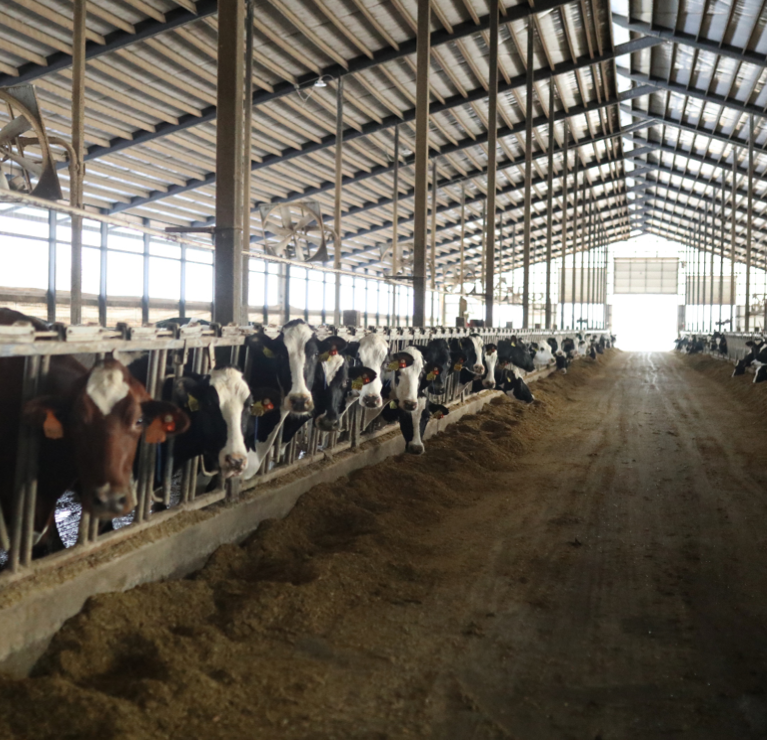
Paul and his siblings began working with the GreenStone team in Clintonville, Wis. to secure financing for the expansion of the farm. “When we started working with GreenStone, we were able to construct a new free stall barn and a double-12 milking parlor, allowing for two dozen cows at a time to be milked.” This expansion allowed them to grow their herd to about 500 cows.
“I remember our mother always being very supportive of the decisions my siblings and I were making to expand our operation and continue growing it. I think she could have been very hesitant to keep making these big changes, but she trusted us to make the best decisions for the farm,” he reflected.
In the early 2000s, Paul and his wife, Renee, entered another season of change when they officially purchased the family farm from his sister Janet and brothers Ronald and Steven.
“The dairy industry was rapidly expanding in the late 1990s and early 2000s,” explained Paul. This growth and demand required constant reinvestment in both their facilities and herd size, and they continued to work with GreenStone on the growth of their operation.
With Paul’s focus on the daily operations and strategic expansion of the farm, there became less and less time available to dedicate to the farm’s financials.
He had previously worked with another accounting firm, and his brother Ronald was also helping out with the bookkeeping, but it just wasn’t efficient.
In 2002, Paul reached out to GreenStone to start getting help with the farm’s taxes. “That’s what really changed things for us,” he said.
Streamlined Services for an Efficient Operation
Twenty-four years later, Paul is still utilizing GreenStone’s tax, accounting, and payroll services, and now works with the GreenStone team out of the Little Chute, Wis. branch as well. “What I like about working with GreenStone is everything works together. They already handle all my financing, so it just made sense to have them handle our accounting work as well. Instead of going back and forth with a separate lender or accountant, GreenStone already has all our financial information.”
Through utilizing both GreenStone’s lending and financial services, Schmidt’s Ponderosa has been able to diversify and maintain steady growth over the years. Paul and his three sons, Matthew, Peter, and Andrew now manage the farm which is milking around 2,000 cows and has expanded into embryo work for raising their own replacement stock.
The Schmidt’s tax accountant, Eric Vandivier, has been working with them for over a decade. Every two weeks, he makes a trip out to the farm to handle payroll for the farm’s 18 employees. “I’ve enjoyed watching their operation grow over the years and just visiting them in general. We’ve developed a great relationship, and I enjoy playing a part in helping everything run smoothly.”
“Working with Eric is great because he fully understands the agriculture industry. Just having someone who knows the ins and outs of our business is essential,” remarked Paul. “It’s saved us time, and we don’t have the stress of trying to do all the paperwork and payroll ourselves.”
A Vision for the Future
As Schmidt’s Ponderosa continues to grow, Paul is reminded of when he and his siblings began expanding the farm with the support of their mother. Now, it’s his three sons that are leading the charge on improved operations and continued growth.
“Our focus remains on sustainable growth in the future,” said Paul. “Now that my sons are starting to get more involved with the farm, they’re starting to discuss ways we can continue to expand our operation.
Paul says he recognizes that each generation of a family farm must continue growing the operation for it to remain viable. “We as farmers know what it means to adapt and change with the cycles and market shifts. I think we all are striving to do the best we can for future generations.”
One thing has remained throughout the many shifts and seasons of change Paul has seen in his time farming – GreenStone’s committed support. “The support we’ve gotten through GreenStone from the very beginning to where we are today has helped us continue to evolve throughout the years. I’m looking forward to seeing how our farm will continue to grow through the next generation as well.”
To view the rest of the 2026 spring Partners articles please click here.
Email sits at the center of modern life. Banking alerts. Account passwords. Shipping confirmations. Conversations with coworkers, family, vendors, and service providers. Over time, it becomes something like a digital junk drawer — a place where everything ends up.
That is exactly what makes it so valuable to attackers.
$43 billion. That’s the amount lost globally to business email compromise schemes between 2016 and 2021, according to the Federal Bureau of Investigation (Business Email Compromise: The $43 Billion Scam, 2022). Many of these incidents begin with a single compromised email account.
When an attacker gains access, they are not just reading messages. They can reset passwords, intercept financial communications, and move into other accounts. Email often becomes the starting point for broader account takeover.
Most compromises begin with something simple. A convincing phishing message. A fake login page. A password reused from another site that was previously breached. Once an attacker gains access, they may quietly monitor messages, create hidden mailbox rules, or forward emails to another address. The goal is usually to stay unnoticed long enough to gather useful information.
Why These Attacks Work
These attacks are effective because they rely on routine behavior, not technical weaknesses or software vulnerabilities.
Email is used quickly and often without a second thought. Messages are read between meetings or at the end of a long day, and attackers take advantage of that pace.
A message may appear to come from a trusted vendor, a login page may look identical to the real thing, and a request may match an ongoing conversation—creating a situation where nothing feels out of place.
More often than not, it comes down to timing. The message arrives when someone is busy, distracted, or expecting a response, which makes it easier to trust without a second look.
Attackers also tend to be patient, taking time to observe communication patterns and understand how conversations typically flow before taking action.
For businesses and producers, that moment is often tied to payments. An attacker may step into an existing conversation with a supplier, buyer, or customer and send updated payment instructions that appear legitimate. The request aligns with expectations, the language feels familiar, and nothing raises concern—until the payment is sent to the wrong account.
For individual customers, the impact may look different but can be just as serious, as a compromised email account can allow an attacker to reset passwords, access financial accounts, or send messages that appear to come directly from the account holder.
There is often no immediate warning, only the realization after the damage is done.
What to Watch For
While email compromises are often subtle, there are warning signs that something may be wrong.
Unexpected password reset emails are often one of the first indicators. These may suggest someone is attempting to access linked accounts.
Changes in email behavior can also signal an issue. Messages that are missing, automatically moved, or marked as read without action may point to unauthorized mailbox rules.
For businesses and producers, requests to change payment instructions should always be verified through a secondary method, such as a phone call to a known contact. Even small changes in wording or timing can be a sign of interference.
Unfamiliar login alerts or notifications from new locations should be taken seriously. These are often early indicators that access has already been gained.
Recognizing these signs early can prevent further impact.
If Your Email Account Has Been Compromised — or You Want to Strengthen It
If you suspect unauthorized access to your email account, or want to strengthen your account security, the following steps can help protect your information and reduce risk.
1. Use a strong, unique password
Your email password should be different from every other account you use. Reusing passwords creates a chain reaction—if one account is exposed, attackers often try the same credentials elsewhere.
Consider using a passphrase made of several unrelated words. Longer passwords are generally more difficult to crack and easier to remember.
2. Turn on Multi-Factor Authentication (MFA)
Multi-Factor Authentication adds a second step when signing in, such as a code sent to your phone or generated by an authentication app.
Even if someone discovers your password, MFA makes it far more difficult for them to access the account.
3. Sign out of all devices if you suspect unauthorized activity
Many email services allow you to sign out of all active sessions. If you believe someone may have accessed your account, changing your password and logging out all devices forces every user to sign in again.
This step is especially important if an attacker has already gained access, as it prevents them from staying connected through an existing session.
4. Check mailbox rules and forwarding settings
Attackers often create hidden email rules to help them stay undetected. These rules may automatically move messages into folders like Junk, Archive, or RSS feeds. Others may forward copies of emails to an outside address.
Review your mailbox rules periodically to confirm nothing unfamiliar has been added.
5. Review recent sign-in activity
Most major email providers allow you to see recent login activity, including locations and devices. If you notice a login from an unfamiliar location or device, take action right away by resetting your password and reviewing your account settings.
How We Help Protect You
At GreenStone, we take steps to help protect our customers from fraud. For example, we use call-back procedures on wire requests to confirm payment instructions before processing transactions.
GreenStone will never ask you in an email to provide sensitive information such as your PIN, account number, Social Security number, username, or password.
If you receive a message or phone call asking for this type of information, do not respond—even if it appears to be from GreenStone or another financial institution.
If you are unsure, contact us directly using a known and trusted phone number.
Looking Ahead
Email remains one of the most common entry points for fraud because it offers something attackers value most — access without resistance.
For both customers and producers, the risk is not just the account itself, but everything connected to it. Financial systems, vendor relationships, and personal information all flow through a single inbox.
That “digital junk drawer” most of us rely on holds more than we realize. And once access is gained, it does not take long for that access to expand.
The good news is that this risk is manageable. A few consistent actions — strong passwords, multi-factor authentication, and regular account review — can prevent many of the most common incidents.
Securing your email is not just a technical step. It is one of the simplest ways to protect your operations, finances, and relationships.
To view the rest of the 2026 spring Partners articles please click here.
Have you ever thought “it would be great if I could get paid for doing what I love”? Chances are, you can!
Whether you’re considering selling produce from your garden, starting your own roadside farm stand, or even getting into beekeeping, it is entirely possible to generate an income from these “part-time farming” activities that you already enjoy doing.
Start with what you already have
Using the resources you already have at home or in your backyard, you can create realistic and flexible ways to generate income and share your passions with others. Do you have a garden that could be expanded beyond your personal use to grow more produce or sell cut flower bouquets at your local farmers market? Maybe you have a backyard chicken coop and could sell eggs at a roadside stand. If you’re already canning vegetables and making homemade salsa, why not produce extra to sell?
Whatever your passion, consider how you can build on it. Determine how you will fit the activity into your existing daily routine, and how much time you are willing to dedicate to it. Avoid taking on too much at once and instead start small and see where it leads. Generating a farm income doesn’t require large acreage or a full-time commitment. Small, manageable efforts can grow into meaningful income! Whether your operation remains a hobby or evolves into a full-time business, part-time farming is a great way to start, learn, and potentially grow.
Utilize the resources available to you
You may be surprised by just how many resources are available to those just getting started on their farming journey. GreenStone offers part-time farm financing for land, equipment, building improvements, livestock, and more. Working with a lender who specializes in agricultural operations of all sizes is incredibly beneficial when it comes to determining the right solution for supporting your farming activity. Maybe you purchase recreational land and wonder what it would take to start growing some produce; GreenStone has you covered as well.
Our CultivateGrowth program also offers grants, education, and mentorship designed to support young, beginning, and small farmers and help the next generation of agriculture succeed – from part-time operations to full-time agribusinesses.
The Beginning Farmer Resource and Decision-Making Guide from Michigan State University Extension also offers valuable resources to help new farmers and decision-makers get started on their farming journey.
Don’t be afraid to seek out the advice of others who have found success in their own part-time farming operations as well. Regardless of where you are starting from, there are producers who have been where you are, and many are happy to share what they’ve learned.
What you should know before you start selling
Before you start selling a product of any kind, it’s important to review your local laws and regulations to ensure you can operate legally. This could mean acquiring a business permit, researching ordinances around setting up a roadside farm stand, expanding your garden, or learning the requirements for selling your products at your local grocery store or farmers’ market. If you plan on selling nonperishable, edible items such as baked goods or canned items directly from your home, investigate cottage food law regulations. Oftentimes there are legal provisions that make it simpler to operate these businesses, allowing you to avoid as much red tape as possible – at least when you are starting out.
Ensure your farming activities meet all township and municipal compliance requirements. Your state may also have specific regulations to follow as well.
No matter the scale of your operation or the activity you are pursuing, registering your business can be as simple as registering with state and local governments under a “Doing Business As” name or DBA. This is an easy, low-cost way to operate your business without forming an LLC or other formal business entity. If you seek more specific advice, speaking with an attorney or utilizing any number of reputable online legal services providers is a good option.
Collaborate and grow
How do you plan on sharing your products or services with others? Marketing your business will look different depending on your goals for your operation! Consider teaming up with friends or neighbors who are already selling their own products. Maybe there is already a nearby farm stand where you could sell honey, produce, or eggs from, or a local bakery or business would be happy to carry your fresh cut flower bouquets. Building relationships with those in your community early on can lead to more opportunities for collaboration and growth in the long run.
You may even be able to exchange resources with other local part-time farmers. If one of your neighbors already has the equipment you need to expand your garden, consider how you could exchange goods or services to support each other’s small businesses.
Try it and see what works!
There are no rules when it comes to part-time farming or sharing what you love with your local community. Sometimes the best way forward is to simply try something and see what works. Whether you aim to sell a few loafs of sourdough at your farmer’s market or establish an operation that can eventually grow into your full-time gig, the sky is the limit.
No matter the size of your operation, GreenStone is here to help. We offer resources, specialized lending, and financial services to help your farm thrive, whether it’s five or 5,000 acres!
Connect with your local branch today to learn more about our part-time farm financing options!
This article was originally published in Michigan Farm News.
Cooperative demonstrates dedication to members and local communities in 2025
GreenStone Farm Credit Services is pleased to announce the release of its 2025 annual report themed “Commitment to Partnership.” The report highlights the cooperative’s deep commitment to its member-owners and the resilient, long-standing relationships they continue to cultivate.
Included in the report are several financial highlights including net income of $270 million, 95% customer satisfaction, and a record-breaking $125 million returned to members in the form of Patronage – a dividend to loan customers – marking $1.2 billion total returned over the past 21 years.
Under the theme “Commitment to Partnership,” the report demonstrates the resilience and commitment of both the cooperative’s members and their employees. A couple shares their story of perseverance after losing their barn in a fire in their early days of farming, and a family building their forever home in the remote Upper Peninsula of Michigan explains how GreenStone was by their side through each step of the construction process. GreenStone’s commitment to its members is also highlighted through the accounts of two long-tenured employees who share what ongoing commitment to their customers has looked like throughout the cycles.
“Our cooperative is built on strong relationships with our member-owners, and that commitment remains steady regardless of the economic cycle we are in,” said President and CEO and President Travis Jones. “Our team remains focused on maintaining open communication with our members so we can continue delivering solutions tailored for each of their unique needs.”
GreenStone’s commitment to supporting rural communities was also shown through a combined 12,700 volunteer hours across the company, and approximately $1.5 million given in support of industry organizations and community events.
This dedication to strengthening the rural communities they are a part of, solid financial performance, and record-breaking Patronage returns is a testament to GreenStone’s continued commitment to working alongside its members in every cycle.
Other financial highlights in this year’s report include:
- Net Income: $270 million
- Total Assets: $16 billion
- Total Loan Growth: 5.4%
- Patronage Paid: $125 million
“Our members have shown tremendous resilience as they continue to manage sticky inflation, interest rates, and higher input costs,” said Executive Vice President and Chief Financial Officer Kim Brunner. “That strength reinforces the value of the cooperative model, where we remain focused on supporting our members and growing alongside them.”
The report can be viewed here.
Pictured above: Jennifer Whitford (left) and Karen Messer (right)
Through every season, GreenStone has remained committed to serving as a strong financial partner to our members. This strength allows us to stand alongside you through every cycle. Our dedicated team of experts work closely with our members to deliver personalized solutions.
Two of our longest tenured financial services officers share what it means to remain committed to serving our member-owners. With a combined 54 years of experience, they are among many staff who have spent decades partnering with our members to support their individual goals.
Jennifer Whitford, VP of Lending, 23 years of service
Jennifer Whitford began her career with GreenStone in 2003 where she started as a credit analyst out of the Alma branch. Her journey started from the recommendation of a friend, when she decided to take a chance and apply for the role at GreenStone, seeking a career rooted in her local community. Over two decades later, Jennifer has built a career based on her love of supporting people and the agriculture industry.
“I would like to believe over the years of working with my customers, I have transitioned from being not only a lender, but a member of their farm management team,” Jennifer said. “With that transformation, my daily activities have moved from taking loan applications and fulfilling an immediate need for financing, to partnering with our customers for both short- and long-term financing needs.”
With the current commodity climate very similar to when she started with GreenStone in 2003, partnering is now more important than ever. “Most of my customer portfolio is cash crop commodity producers and the markets are always changing,” she said. “Something I learned very early in my career with GreenStone was the value of extending working capital to bridge unanticipated cash flow shortages to better support our customer’s operations during periods of uncertainty.”
After beginning her career as a credit analyst and building foundational knowledge of the financial metrics of farming, she transitioned to the role of financial services officer in 2009.
Jennifer reflected on what the market was like when she started her current role. “I got to know a lot of my customers at the time through the lowering interest rates, which were a result of the 2008 housing market crash,” she said. “I was able to work with them to better their financial position through interest rate savings.”
When working through the cycles with customers, Jennifer highlighted the importance of looking at the big picture. “In 2024 and 2025 we ran into a very similar commodity cycle where prices were down, and inputs had not followed. I know how important it is to look at all aspects of a farming operation and make individualized recommendations based on each farm’s long-term goals,” she said.
“I’ve also learned things change and that’s ok. The best of plans don’t always work out. The key is to communicate often and as early as possible. As a specialized lender, GreenStone can tailor solutions to our customers and their unique needs,” she advised.
As Jennifer remains committed to serving her local community, one thing is certain. “What I enjoy and appreciate most about my role are the relationships I’ve built with my customers.”
Karen Messer, Financial Services Officer, 31 years of service
When Karen Messer saw the listing in the newspaper for the position of loan processor at GreenStone in 1995, she jumped at the chance. “I wanted to work in my local community, and when I saw the listing, my thought was ‘what do I need to get this job?’ I was committed to getting the role!” she laughed.
After mastering that role, Karen worked in the risk asset department at GreenStone for 13 more years before moving into her current role where she has served as a financial services officer out of the Jonesville branch for the past 15 years.
“One thing that’s stayed the same over the years has been the importance GreenStone places on our relationships with customers. We want to be a part of our customers’ futures and will work with them to find a solution that meets their needs,” Karen shared.
Karen explained how the hurdles customers were facing when she started with GreenStone are similar to those they might be facing today. “When I started as a financial services officer, prices were going up everywhere, not just on homes. Today customers are facing the same challenges, just on a different scale.”
She recalled a customer she worked with to help them continue paying on their home. “It seemed like they were continually running into challenges. We were able to be flexible and find a solution that worked for their needs, which is a unique benefit of GreenStone. Today those customers are less than a year away from paying off their home, which is something that is incredibly rewarding to me.”
Karen says the decisions she’s made throughout her career with GreenStone have been guided by the long-term trust and loyalty of her customers. “One of the things that makes me the proudest is when a customer sends a referral my way or sends one of their children to me when they’re looking for financing. It’s that level of unspoken trust that’s humbling.”
When it comes to serving her customers the best she can, Karen emphasized the importance of looking at each customer individually and considering their own unique circumstances. “No two customers are going to be the same, so listening to their own unique story and making sure they feel heard is key.”
For her, commitment to her customers means building long-term relationships, and not transactions. “I especially look forward to seeing my customers on Patronage Day, when GreenStone returns a portion of its profits back to our members,” Karen said. “It never gets old when my customers are excited to see me and stop by the branch just to say hello. That’s what I love most about my role – the connections I’ve built throughout the years!”
It’s no secret commitment and farming go hand in hand. For Bryan and Molly Benson of Benson Dairy, LLC, that resilience is particularly strong in their farm’s history. As fifth generation dairy farmers, their success has been a culmination of not only their own strength and determination, but that of the generations before them.
“I think farm families are just a resilient group,” explained Molly. “We’re thankful for the foundation Bryan’s family started for us to keep building on.”
Throughout the years, the Benson family had faced a fair number of trials. “The farm was started in 1870 by my great-great grandfather. In the 1970s, my grandparents lost their entire herd to sickness, causing them to have to start over with new cows. The original home on the property also burnt down at one point, but they rebuilt and kept going,” said Bryan.
This history of resilience helped guide Bryan and Molly through their own challenging time on the farm.
“Farming Chose Us”
Bryan grew up on the family farm located in Cadillac, Mich., and when an opportunity presented itself for Bryan to take over the operation, he jumped at the chance. He worked alongside his parents for five years before transitioning to farming full-time on his own.
Molly also grew up on her family’s dairy farm – only she was a state away in Wisconsin. “I saw growing up how challenging farming could be, and never expected to return to it,” Molly explained. Her family had stepped away from farming to pursue other opportunities when she was in sixth grade. She remained connected to agriculture, however, through working for an agricultural sales company in Wisconsin after graduation.
Bryan and Molly met through a mutual friend at church and quickly started making plans for their future together. “I actually remember Bryan sitting me down when we were dating and telling me, ‘I want to farm, and this is the amount of debt I want to get into. If you’re ok with that, we can continue this relationship’,” laughed Molly.
Inspired by Bryan’s vision for the farm and their plans for the future, the couple got engaged in March of 2018. “It was a really exciting time, and we were just looking forward to getting our life started together,” said Bryan.
An Unexpected Turn
Bryan and Molly had been making plans for expanding the farm. At the time, Bryan was milking around 140 cows, which was the size of the operation he had grown up with. “We were planning to double our herd size and were working on building a new barn with robotic milkers,” said Bryan. “It was an exciting step for us.”
One week after getting engaged, and three weeks away from completing the construction, the unthinkable happened. The barn caught fire and burned down.
Molly, who at the time was still living in Wisconsin five hours away, remembered when she heard the news. “I got a video call from Bryan, and he just said, ‘My barn is burning down right now.’ I didn’t even believe him until he flipped his phone camera around to show me. I was speechless.”
“I actually called a local farmer I knew and asked them what they thought the best thing I could do to help was. They told me right away the most important thing was to just go be with Bryan. So that’s what I did,” Molly said. “I hopped in my car and got to Michigan around midnight.”
The barn was a total loss. “I remember thinking, ‘Is this it? Do we just give up?’” said Bryan. “By Monday of the next week though, I had decided we were going to rebuild.”
“I was kind of surprised, but not really,” said Molly. “It all happened so fast, but knowing Bryan and how determined he is, I wasn’t surprised he wouldn’t let it stop him.”
By the end of that month, they had already set plans in motion for what they needed to do to rebuild.
Bryan had taken out a farm construction loan with GreenStone after watching his parents work with them for decades. “We still had some funds available with GreenStone, and we were able to use that money to buy trusses for the new barn and new robotic milkers,” explained Bryan.
Their challenges weren’t over, however. “The builder we had used originally wasn’t able to build the new barn, so we had to find a new builder,” said Bryan. “Even though it was a challenging process, GreenStone was with us through it all.”
New Growth
Despite all they had faced in the past few months, Bryan and Molly continued with the construction of their new barn in June, only three months after the fire.
That summer was full of exciting moments, as they also got married that July!
By October, they had finished the build and were ready to start moving cows over to the new barn. Through their new robotic milkers, they were able to milk more quickly and efficiently than ever before.
“We’ve continued to expand ever since,” said Bryan. In late 2021, they added another addition to the barn and added two more robotic milkers through financing from GreenStone. “We were up to 340 cows with six robotic milkers.”
At that point, the Bensons had started working with their current financial services officer at GreenStone, Autumn Rector. “We were introduced to Autumn in 2021, and she’s been a part of the growth of the farm ever since. She’s been great to work with. We’ve never had a bad experience working with anyone from GreenStone!” Molly said smiling.
In June of 2025, the couple expanded again and took in another 180 cows from a neighboring farm, adding four more robotic milkers to a facility down the road from their farm.
“It’s been rewarding seeing the kind of growth they’ve experienced,” said Autumn. “Getting to work with them and seeing them be successful after the challenges they faced while first starting out is very inspiring.”
Bryan and Molly, along with their four children who are the sixth generation of Bensons to live on the property, continue to look towards the future of their farm and their family’s legacy. “We’ve always known what our goals are and will just keep pushing forward,” they said.