



As producers look ahead to the rest of the year, the agricultural economy across Michigan and Wisconsin is being shaped by contrasting market forces. Continued pressure on grain prices, relative strength in dairy and livestock, and ongoing volatility underscore the importance of working with a trusted financial partner. In times of uncertainty and opportunity alike, GreenStone remains committed to providing guidance, resources, and financial solutions that help producers navigate changing market conditions.
A Mixed Economic Landscape
Entering 2026, some sectors of the agricultural economy are experiencing ongoing stress, while others are benefiting from favorable pricing and improved margins. These conditions are familiar to producers following several years of volatility.
Success is rarely about timing the market perfectly. Instead, it depends on planning, perspective, and partnership. Maintaining a strong relationship with a lender that understands agriculture helps producers make informed decisions that support their short-term and long-term goals.
Grain Markets Continue to Face Headwinds
Row crop producers entered 2026 facing continued margin pressure. Corn, soybean and wheat prices remain subdued, driven by global supply levels and limited export demand. These conditions have tightened cash flow and increased financial stress for many grain operations.
This is where proactive planning and collaboration with financial partners matter most. Reviewing cost structures, operating lines and risk management strategies early can help producers remain resilient—even when commodity prices are under pressure.
Michigan and Wisconsin: Similar Pressure, Different Stories
While the broader agricultural market pressures are similar, Michigan and Wisconsin experience them differently.
Michigan’s agricultural diversity continues to be a stabilizing force. The Great Lakes State is the country’s second most agriculturally diverse state and produces more than 300 commodities, according to the Michigan Department of Agriculture & Rural Development.
This diversity spreads risk across multiple sectors. When one or more commodities struggle, others perform better and help ensure the stability of the state’s agricultural industry.
Wisconsin’s agricultural economy is more heavily concentrated in dairy. That concentration can increase exposure during downturns, but it also creates opportunity when dairy markets are strong. In both states, producers benefit from working with a lender that understands regional nuances and customizes solutions accordingly.
Dairy Outlook: Strength Supported by Strategic Planning
Dairy producers headed into 2026 with comparatively strong footing. Solid milk and beef prices, combined with lower feed costs, have supported positive margins over the past two years. As prices begin to trend downward from recent highs, the industry is ready.
“The (dairy) industry is well prepared with strong balance sheets and working capital positions to absorb the downturn in dairy prices currently visible in the futures market,” said Ben Spitzley, senior vice president of agribusiness lending at GreenStone. “Those who have taken DRP (Dairy Revenue Protection) positions will be further insulated from the downturn. We expect to see increased cow slaughter rates with more dairy cows shifted to the beef market to recalibrate the largest dairy herd in over 30 years.”
The recent strength of the dairy and beef industries has created opportunities for producers to reinvest in their operations and plan strategically. As producers look to maintain gains made during recent years in 2026, GreenStone remains a partner that understands their industry and operation and stands to support them with specialized agricultural financing and tax and accounting services.
Input Costs, Equipment and Long-Term Decision-Making
After the extreme inflation of the post-pandemic years, equipment and input costs have started to stabilize. While new equipment purchases remain out of reach for many operations, opportunities are emerging in used equipment. Falling prices for late model used equipment stand to provide an opportunity for many operations to add efficiency and productivity while avoiding the inflated costs of new equipment.
Careful evaluation is essential for healthy investment and growth. GreenStone works with producers to assess capital purchases in the context of cash flow, long-term profitability, and overall financial health—helping to ensure decisions made today support operations tomorrow.
The Importance of Early Planning
For many operations, including many grain producers, the cumulative effect of multiple tight-margin years is becoming evident. Financial stress often builds gradually. It is crucial to begin planning and preparing for challenges early to avoid them becoming insurmountable.
Engaging with a trusted financial partner months before the next production cycle allows producers to explore options such as refinancing, restructuring or adjusting operating strategies—before pressure mounts. Early conversations create flexibility and open the door to more effective solutions.
Preparing for Today and Tomorrow
Increasingly, producers and lenders are planning for more than one crop year at a time. While year-end numbers matter, balance sheets often reveal trends well in advance.
By looking ahead together, producers and financial partners can anticipate challenges, manage working capital more effectively, and avoid reactive decisions. This proactive, data-driven approach can provide producers with more confidence when navigating uncertain markets.
Recognizing Your Needs as a Producer
In today’s environment, producers generally fall into three broad categories:
1. Operations that are currently financially sound, with favorable market conditions.
2. Those that are facing some adverse conditions and need modest adjustments or support.
3. A smaller group facing significant financial stress, due to longer term adverse conditions.
No matter where an operation falls, having a knowledgeable financial partner that can provide perspective, tools, and tailored solutions is crucial. GreenStone has more than a century of experience supporting its cooperative members through every cycle of the agricultural economy.
Risk Management and Crop Insurance as Strategic Tools
Market volatility makes risk management essential. Crop insurance and related tools play a key role in protecting revenue and stabilizing cash flow. Recent legislation and policy changes look to expand access and increase the value of crop insurance for many farmers for the 2026 crop year.
GreenStone’s unique tools and customized approach to crop insurance helps producers evaluate coverage options, ask the right questions, and align policies with real-world risk. The goal is not just protection, but confidence—knowing your operation is prepared for whatever the season brings.
Key Takeaways for 2026
As producers prepare for 2026, a disciplined and proactive approach will be essential. Keeping costs low and under control remains a top priority, as tighter margins make it more important than ever to closely review operating expenses and identify opportunities for efficiency.
Planning financing well ahead of the production cycle can help reduce uncertainty, strengthen cash flow, and provide flexibility as market conditions evolve. Strategic use of risk management tools—such as crop insurance and thoughtful marketing strategies—can also help protect against volatility.
Agriculture is often defined by volatility and change, but strong partnerships can provide consistency and confidence. Whether markets are favorable or challenging, GreenStone remains dedicated to helping Michigan and Wisconsin producers succeed.
This article was originally published in Michigan Farm News.
Building your dream home can feel overwhelming at first. Where should you start? What do you need to consider when it comes to where you’ll build your home, choosing a general contractor (if you decide to work with one), or how you will receive the funds for the project? Dive into all these questions and more on the home construction process below!
Location and Land
The first decision to make when building your dream home is choosing your dream location! Where do you want to build your home? Do you already own land, or do you need to purchase a home site? Either way, visit your local planning and development department to ask about flood plains, toxic waste, and zoning limitations to ensure the type of home you’re planning on building will work on the property. You’ll also need to see what the cost of adding utilities such as sewer, gas, electricity, water, and more would be, and contact the health department for a perc test.
Planning: DIY vs Contracted Build
Now it’s time for the home planning research to begin! Will you be hiring a builder or acting as your own general contractor? If you plan to work with a builder, make sure you do your research. Find a reputable builder through attending home tours, getting recommendations through word of mouth, and even asking your county zoning commissioner for suggestions. Make sure you obtain several detailed price quotes from your top builders, and tour homes they have built to help you choose the builder that’s best for you.
One unique benefit of working with GreenStone is the ability to act as your own general contractor throughout the home construction process. If you choose to act as the general contractor for your project, you will be responsible for overseeing the build from start to finish, coordinating subcontractors, managing the budget, and more.
Ask yourself, “Am I capable of doing the labor myself, or know anyone that can help me? Do I have time and energy to make phone calls, complete the paperwork, handle scheduling of the project, and supervise the build?” Answering these questions honestly will help you make the right decision for you.
When to Talk to a Lender
The first step in working with your lender is obtaining a pre-qualification to know how much you can afford. Once your construction documents are completed, including the sworn statement, dwelling specifications, and blueprints, your lender will review them.
- Your sworn statement acts as a detailed breakdown of the cost of the entire project. It lists who is doing what work and how much each subcontractor will be paid.
- The dwelling specification worksheet lists the detailed materials used in the construction of the home, such as flooring, finishes, fixtures, and more
Once all documents have been reviewed and your loan has been approved, the title work and appraisal will be ordered. After the review of the title work and appraisal, the clear to close will be issued and a closing date will be scheduled.
The Draw Process
So, what is a draw? The funds for your construction process will be released in what are called draws, not all at once. This will help manage payments to all of your subcontractors.
For each draw, you will need to submit a notarized sworn statement along with all receipts, bills, or quotes to the title company and notify your lender. The title company approves the draw request and issues the endorsement. Your lender will then issue the funds, and you will secure the lien waivers prior to your next draw.
Completing Your Build
With a home construction loan from GreenStone, our team will be with you every step of the way through the process of building your new home. Your dedicated construction disbursement specialist will be your primary point of contact and will handle your draw requests as well as any documentation and communication with the title company.
Throughout the construction process, you can typically expect four inspections to ensure that the progress of the project is aligned with the funding requests you have made. Inspections by the appraiser are typically done:
- After the footings are installed
- At around 50% completion of the entire project
- Again at around 75% completion
- At completion
Once you have completed the construction of your home, there are just a few final steps left. Your final inspection and final draw will be completed at this stage, as well as obtaining a certificate of occupancy from the county.
What to Consider Before Building
No matter the type of home you’re dreaming of building, doing your research and thoroughly preparing prior to beginning construction is the key to a successful home building process. Do your homework early, and don’t be afraid to spend time doing research. The more planning that can be done upfront, the smoother the process will go.
Home construction is often the largest investment of a lifetime, so preparation is key. If you are interested in learning more about the home construction process or what it might look like to act as your own general contractor or subcontractor, register for one of GreenStone’s free home construction seminars online or in-person here.
Ready to dive into the home construction process? Click here to start your home construction loan application or contact your local GreenStone branch with any questions!
As Michiganders, we are truly fortunate to be surrounded by a wealth of fishing and hunting opportunities. Our state is home to world-class small game, thrilling turkey hunts in both peninsulas, excellent waterfowl hunting, and the perennial favorite, deer season.
But amidst all this abundance, one pursuit stands alone, a season so rare and coveted that it inspires over 40,000 people to apply for just 200 available tags—the elk hunt. Here in Michigan, the elk season is undeniably a special, once-in-a-lifetime quest.
Elk were reintroduced to Michigan in 1918. A few limited hunts occurred in the mid-1960s, but the annual hunt here in Michigan officially started in 1984. Since that time, the elk population has been managed by a limited hunt. The goal of the Michigan DNR is to maintain an elk population ranging from approximately 700 to 1,200 animals. The hunt has changed a bit year to year, but the current version is working well. There is an early hunt and a late hunt.
The early hunt involves a lot of scouting, with the mornings and evenings being the main focus as elk are only visible for a short time first thing in the morning, and for few minutes before dusk. The late hunt is in December and offers quite a difference from the early seasons. There is still a lot of scouting that takes place, but with the leaves down and snow on the ground, elk are much more visible and easier to track. The cold weather and lack of food also causes them to spend more time on their feet during daylight hours.
I’ve been lucky enough to tag along on many hunts here in Michigan, but it’s hard to put into words just how special this experience is. Elk are amazing animals, and getting picked by the lottery system they have in place is very much like winning the actual lottery! Since COVID, the pre-hunt meetings for all the lucky hunters takes place online, which is a shame. I remember year after year looking at the lucky hunters as they got their pre-hunt orientation from the DNR. The number of smiles and good vibes in that room was palpable, and quite something to be a part of. Of the tags available, many are for cow elk only, with some bull tags available as well. Getting a cow elk tag is certainly special, as elk make for some of the best meat you will ever eat, but the luckiest hunters receive the coveted “any elk” tag, meaning they can harvest a bull elk.
The elk we have in Michigan came from the Rocky Mountains and boast some incredible antlers. Seeing them in the woods is truly an awesome experience. To hear the bulls bugle is a sound that can make the hair on your neck stand on end! The elk herd is primarily contained in the northeastern part of the Lower Peninsula, from about Gaylord to Atlanta. Each hunter has a designated area to hunt in the core of the elk habitat, and then an outer area is open to anyone holding a tag. This is in part to contain the elk to their current area.
Many of us will never get a tag to hunt elk here in Michigan. But, just like the lottery, we still apply year after year in hopes of beating the system. Michiganders are only allowed one bull tag in a lifetime and can only draw a cow tag every 10 years, making it the most coveted tag here in our great state. Good luck to the lucky hunters who hit the lotto and get to chase elk around the woods this year!
To view the rest of the 2026 winter Partners articles please click here.
As the holiday magic and festivities wind down and the décor is put away, many of us find ourselves looking around and wondering how to refresh. From rearranging furniture to a fresh coat of paint, these low-budget DIY ideas can breathe new life into your interior to make your home feel cozy and welcoming all winter long!
Declutter and Reframe
The first step to any sort of refresh is getting a fresh start. Ensuring all holiday items are packed away for the next holiday season will give you more space to work. While the space is clear, take a peek at your walls and other décor that’s left year-round. Are there picture frames or artwork that could be moved from one room to the next? Subtle adjustments will give your space a whole new look and feel without buying anything new.
Rearrange Furniture
Each piece of furniture is like a puzzle piece, moving them around can completely transform the feel of a room. Orienting chairs and couches towards natural light will brighten those dark afternoons. Even small shifts, like pulling sofas closer together for easier group conversations or further apart for more space can make the room feel more purposeful.
Texture and Warmth
Inclement weather makes us want to be cozy and comfy. Layering throw blankets, pillows, and rugs add depth to the space. Choosing fabrics in rich textures such as knit, velvet, or fur invite the perfect amount of relaxation during those chilly evenings.
Bring the Outdoors In
Greenery doesn’t have to be for just the holidays. Houseplants and other natural elements like pinecones or dried arrangements can add life and texture to your winter décor. Not only do they look great, they can cleanse the air and uplift your mood.
Fresh Paint
Painting is one of the more dramatic ways to refresh your interior. Whether you go for an accent wall, an entire room, or just the doorframe it can quickly modernize the space. If you aren’t looking to invest in painting, wiping any dust or dirt from the walls can give them a refreshed glow too.
Miscellaneous
Adjusting the tone when guests arrive can uplift your space even more. A winter themed entryway fit with your favorite doormat and a basket for scarves allows everyone to feel welcome and ready for the weather.
Refreshing your home after the holidays doesn’t have to be overwhelming or a financial burden. Utilizing small but thoughtful tweaks will allow you to create a fresh space perfect for comfort, restoration, and inspiration for your home and family!
To view the rest of the 2026 winter Partners articles please click here.
Greg Kugel is no stranger to taking risks. At 19 years old, when he expressed interest in coming back to the family cash crop farm after being away at college and working as sales rep for a crop inputs company, Greg’s dad, John, agreed but under one condition: Greg would take on farming a few acres of his own. John told him if he could make a profit, he could leave college and return to the farm full-time.
Realizing a Dream
Greg had worked on the farm growing up, but while he was in college recognized his calling had always been farming. “Working in an office made me realize that when it comes to what I do every day, ten out of ten times I’d rather be in the tractor,” said Greg. “For me that’s what is the most rewarding and what I look forward to.”
Greg’s parents always encouraged him to return to the family farm after completing a college degree. Seeing his desire to build on the family legacy, yet recognizing the challenges that would lay ahead, John, who had taken over a few acres of grain for some neighboring farms at the time, challenged Greg to farm a few acres of grain on his own.
“That was one of the wettest years on record,” Greg laughed as he recalled that first year he was responsible for farming his own land. Despite the challenges he faced his first season, Greg made a profit!
“After that season, I was ready to pursue farming full time, but I knew I would have to bring something new to the table. I didn’t just want to be another person for the farm to payroll- I wanted to bring in an additional revenue stream to help the farm expand,” said Greg.
A New Direction
Kugel Farms started as a fruit farm nearly a century ago, growing a wide variety of produce. Located in Berrien Springs, Mich, the farm was founded in 1930 by Greg’s great grandfather Grover Kugel who purchased the original 80 acres. Only 15 miles off the coast of Lake Michigan, the farm’s soil and climate provide ideal conditions for growing fruit.
Today, the farm spans over 225 acres, and has transitioned its focus from mostly tart cherries to grapes, peaches, and over sixteen varieties of apples.
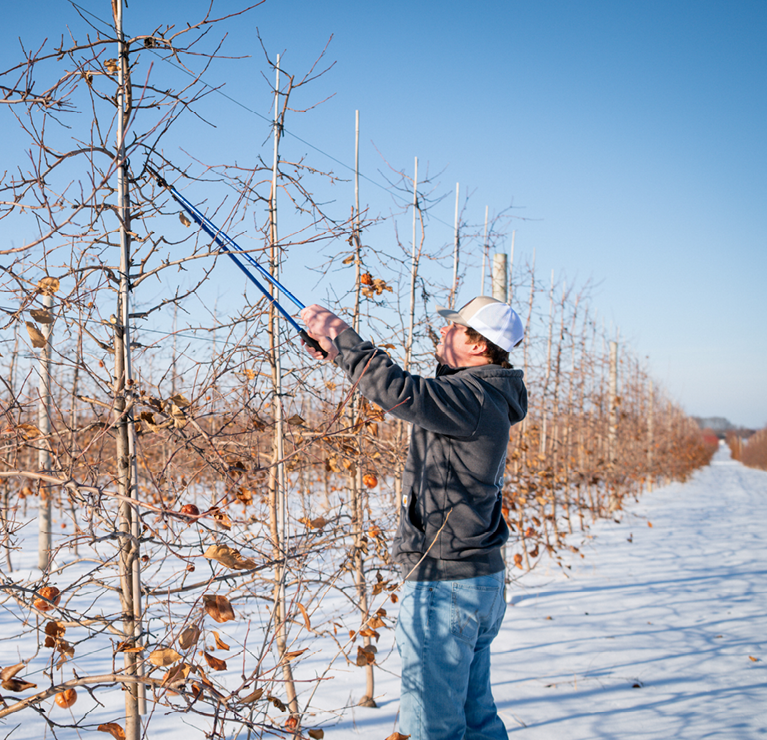
“When I came back to the farm, a neighbor approached me about renting out some apple orchards,” said Greg.
The farm began selling their produce wholesale, but Greg had a vision to sell to the fresh market as well. “I grew up around other producers who were selling at local farmer’s markets, and that’s what gave me the idea to start getting our fruit in front of customers so they could enjoy the farm fresh produce we were proud of growing.”
“That’s when I got the idea to start travelling to the Chicago Farmers’ Markets,” Greg said. “I really started pushing for this idea in January of 2020, and then two months later the pandemic was in full swing.” What seemed like a possible roadblock in Greg’s plans turned out to be one of the tickets to his success.
Despite the uncertainty, Greg prepared all spring for the farm’s first trip to the farmers’ market. Only a little over an hour and half away, Chicago is home to dozens of farmers’ market locations that host thousands of vendors and customers weekly.
“Farmers’ markets were one of the only places people could still gather during the pandemic because they were outside, so we saw massive success that first year we started making trips to Chicago each week. I think people were just so anxious to go somewhere and be outside. We sold out the first trip we took there, and that’s when I realized this could be a really profitable source of income for the farm.”
Supported for Growth
Greg and several of the farm’s full-time employees started making multiple trips to the Chicago Farmers’ Markets each week, putting them on a path of rapid growth over the next few years. At that point, Greg recognized his need for not only financial support, but industry expertise as his farming operations continued to grow.
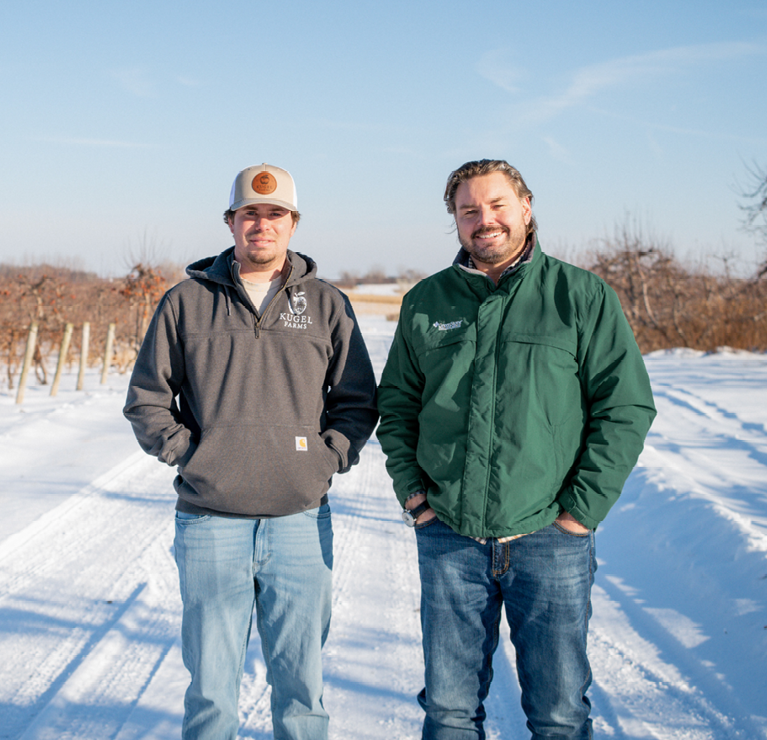
“That’s when I reached out to GreenStone, and they introduced me to Jeff Ginter,” said Greg, referring to the vice president of lending who works out of GreenStone’s Berrien Springs branch. “I’ve been working with Jeff since the beginning. When I really started growing, I needed a loan to help me make upgrades to my equipment and help with operating expenses. Jeff knew exactly what kind of operating note I was going to need and walked me through every step of the loan process and everything I needed to know like the interest rate and structure of my loans.”
“When I first started working with Greg, he had just started farming on his own and had big ideas of what he wanted to achieve within his first five years farming. When he started going to the Chicago Farmers’ Markets, he came to GreenStone seeking financial support, and I was excited to start working with him to help set him up for success,” said Jeff.
“I’ve loved working with Greg because he truly has a passion for what he does, and he has so much energy. It’s really rewarding for me to work with younger farmers who are just starting out because I enjoy watching them succeed and seeing their operations grow over time.”
“I really had to lean on Jeff to determine what I needed to operate and upgrade to still make the operation profitable. I would consider Jeff a vital part of what I do. I know I can text him anytime and he’s always there to answer my questions.”
As the demand for fresh produce at Kugel’s Farms stand continued to grow, Greg also realized he needed assistance with keeping his farm’s books up to date and turned to GreenStone again for support with tax and accounting services.
“I began to realize how valuable my time was, and having professional support even with something you might be able to do yourself is worth it for the time you can put back into your operation.”
The Power of Starting Today
During the busy farmers’ market season, which usually runs from the end of May through the end of October, Greg loads up a box truck full of fresh produce including a variety of apples, berries, peaches, tomatoes, and other vegetables and makes a trip to the Chicago Farmers’ Markets three times a week. He has gained a large following of regular customers that he looks forward to seeing each week.
“To me, it’s really rewarding to share the product we grow ourselves with people who are excited about it,” said Greg.
Greg now farms 50 acres of his own land, harvesting about 40 acres of apple varieties, and 10 acres of other seasonal produce to take with him to the markets.
“My advice for a young farmer who is just starting out? I would say if you are willing to learn, there is always someone out there who is willing to help. In farming, there are plenty of people who want to see the next generation succeed and are willing to help you get started,” Greg said. “Don’t worry about being too young or not having enough experience. The sooner you start, the more you can learn, and the more experience you can gain yourself!”
To view the rest of the 2026 winter Partners articles please click here.
The United States recently passed a bill to move past the longest government shutdown on record. Late on the night of November 12, the house passed the bill with a 222-209 vote to overcome budgetary disagreement and fund the government after 43 days.
Points of contention existed between republicans and democrats regarding premium tax credits issued under the Affordable Care Act to reduce health care premiums which were enacted as an emergency during the pandemic. The inability to come to an agreement led to air travel delays, SNAP benefit issues, and federal office closures, including at the USDA.
The bill passed and extended the 2018 Farm Bill for another year. Many farm families depend on the Farm Bill and the USDA for farm loan programs. The USDA had limited staffing during the shutdown which stopped direct loan funding and guarantee agreements and severely limited Commodity Credit Corporation (CCC) loan approval. The bill approval included funding for the USDA through 2025 and 2026.
Although the legislature continued to meet during the government shutdown, policymaking was more difficult following the recent closures of governmental statistical agencies, such as the Bureau of Labor Statistics, which the Fed relies on for key economic data. Despite the delays, recent indicators have shown the U.S. economy is slowing. Private sector layoffs increased and job growth slowed in July and August with just 68,000 jobs added between the two months. The September jobs report did deliver good news with 119,000 jobs added, but July and August’s figures were revised downward with the new data. In total, the unemployment rate ticked higher to 4.4% based on the new information.
During the most recent December 9 and 10 meeting, the Fed elected to cut its target range for the federal funds rate by 25 basis points to 3.50% to 3.75%. This followed similar cuts of 25 basis points in September and October which brought total cuts to 1.75% since the Fed started cutting rates in September 2024. The rate cuts were attributable to a combination of a weakening labor market and concerns about a slowing economy.
While most media coverage was devoted to the government shutdown, key changes in tariff negotiations tested commodity prices through U.S. and China negotiations. Soybeans are the United States’ largest agricultural export, with China being the main buyer. As President Trump worked through trade negotiations, China elected to forego all soybean purchases up until the end of October. As of October 30, China agreed to a 12 million metric ton purchase by the end of 2025 and at least 25 million tons annually for the next three years. Soybean futures markets did respond positively to the news with a rally of more than one dollar, but the net result remains an overall decrease in exports to China of roughly 30% with continued trade negotiations needed between the two countries.
Corn & Soybeans
The most recent 2025/26 soybean outlook was unchanged from the November WASDE report with lower beginning stocks and production, reduced crush, slightly higher exports, and lower ending stocks. Production is forecast at 53 bushels per acre, down .5 bushels, for total production of 4.3 billion bushels. This is down 48 million bushels based on lower yields. Futures price for soybeans did increase to $11 per bushel after the agreement with China was established, however the resulting cash price is still below break-even for many U.S. producers.
Based on the December WASDE report, the 2025/26 U.S. corn outlook is for greater exports and lower ending stocks. During November, data shows strong foreign demand and implies total shipments during September-November will likely exceed 800 million bushels. The season average corn price received by producers remains unchanged at $4 per bushel.
President Trump announced the new Farmer Bridge Assistance (FBA) Program on December 8, which is intended to provide much needed financial assistance to U.S. row crop farmers. This $12 billion program will provide producers with a one-time payment to be paid out in February of 2026. Farmers will be able to apply for aid within the next month.
Dairy
Above average profitability in 2024 and through most of 2025 have led to an increase in dairy production, both in terms of increased yields and an increase in the national herd size. Through October, total milk production was up 3.7% year-over-year, and the total herd size was up 208,000 head from the same time in 2024, up to 9,575,000 cows. Despite a 6,000 head drop in total cow numbers from September to October, cow numbers are at their highest levels since 1993, despite scarce replacement heifers. Slaughter volume is rising, but rates remain 4.2%, or 98,000 head, below 2024 and 16.2%, or 434,000 head, under the three-year average. Strong cattle markets are driving the decision for producers to breed for crossbred calves. The additional profits from these calf sales are driving the decision to keep cows another lactation that may not break even based solely on milk production. According to the Pennsylvania weekly cattle auction summary in mid-November, one day old dairy-beef calf prices averaged $1,388 per head.
In addition to the increased production in the U.S., Europe and New Zealand have also increased their total milk production, resulting in more competition for exports and pushing dairy prices lower. Throughout a good portion of 2025, the U.S. was able to clear record amounts of cheese and butter products through export markets. Lower U.S. prices for both are expected to keep the US competitive in the export market, which will continue to play a large role in moving the large milk supply.
After another year of positive margins in 2025, milk production is expected to continue to grow. This increased production will likely push prices lower, and U.S. dairy margins are forecast to contract going into 2026. As of the beginning of December, Class III milk futures for 2026 average $16.75 and Class IV milk futures average $15. Producers are well positioned for a downturn in milk prices with historically strong balance sheets and working capital positions. New facilities, low feed costs, high beef revenue, and risk management programs will likely slow the transition from expansion to contraction.
Pork
The typical fall trend for market hog prices is a strong seasonal downtrend and often resulting in operating losses, with fourth quarter of 2024 being a recent notable exception. However, truer to form, fourth quarter of 2025 negotiated cash market hog prices have fallen sharply during the quarter, and to levels below 2024 and closer to the prior five-year average. Increasing live market hog weights this quarter are also typical due to cooler weather and new crop corn, but fourth quarter sale weights have been significantly above year-ago and five-year average weights and are putting downward pressure on market hog prices. In contrast, while the CME Lean Hog Index has fallen steadily since its strong run throughout the second and third quarters, and 2025 peak at over $112 per lean hundredweight, it remains much closer (within 3%) of year-ago levels as of early December but very near its 12-month low of just over $80 per lean hundredweight. While also falling from its summer highs, the Pork Cut-Out wholesale pork composite value is the most stable performing of the price measures. As of early December, the Cut-Out price is roughly $94 per lean hundredweight.
As producer contracts may be based upon various price indices including the above and near-by futures contract prices, or weighted-average combinations thereof, there is now a wide range of prices received by farmers per head and fourth quarter expected profits or losses along with the increasing feed cost trend. While producer profit margin opportunities for the fourth quarter in 2025 and into 2026 have diminished during this quarter, for most producers that experienced good herd health in 2025, 2025 should be a period of strong earnings and replenishment of working capital. The outlook for profits in 2026 is still historically good at prevailing commodity futures prices as well. The latest USDA Hog and Pigs report shows the U.S. sow herd down 2% from a year ago, farrowing intentions slightly lower, and no significant expansion expected in pork production for next year, which is supportive to producer prices and margins outlook.
To view the rest of the 2026 winter Partner articles please click here.
Your MI GreenStone PAC and WI Farm Credit PAC had a successful 2025. Disbursements were completed with meetings and checks being delivered to both Senate, House of Representatives, and Assembly legislators! The meetings were productive as connections were made and conversations revolved around how farmer-members and the GreenStone cooperative are doing.
At the Federal level, the legislative activities have been ever changing with regards to the Farm Bill as the priorities and attention of Congress change. The Farm Credit System, through individual associations and the Farm Credit Council, continues to remain dedicated to advocating for the Farm Bill reauthorization.
In November, the Farm Credit System came together to host a Farm Credit Marketplace with customer products. The event is very popular with staff and members of Congress and allows for conversations about the farm and rural economy while agricultural products are put in their hands. For GreenStone, we placed dried cherries and cheese curds in attendee hands and talked about food processing requirements and Farm Bill implications. This brings business and personal connections that will continue to be built upon.
Change can take time, and GreenStone remains focused on building relationships and strengthening the recognition of our members, communities, and industry. Thank you for your commitment as none of this would be possible without your engagement to raise legislative awareness of rural communities, agriculture, GreenStone, and the Farm Credit System.
To view the rest of the 2026 winter Partners articles please click here.
Get to know a few members of GreenStone’s information services (IS) leadership team!
Duane Brown: Director of Data, 8 years of service
What is your favorite part about your role?
The best part of my role is finding ways to assist others or improve a process that makes someone’s day easier. Seeing the relief and appreciation on people’s faces when we resolve a pain point is what makes the work truly rewarding.
What is something people might not know about GreenStone’s IS department?
Many people don’t realize how specialized the IS department truly is. My role is within the Data and Analytics team, where we provide reports to the Board of Directors, executives, and the entire GreenStone organization. Within the Farm Credit System, strict regulations and internal controls must be followed, and we support these requirements to maintain compliance. Our team uses data to provide insights into our financial position and to help deliver the best possible customer experience.
What is the most valuable lesson you’ve learned during your time with GreenStone?
My most valuable lesson during my time in the IS department at GreenStone is having a purpose behind what we do. Many IS departments focus on what’s best for the business, but at GreenStone I understand the “why” behind the work and how it impacts revenue, customers or employees.
Josh Martin: Service Desk Manager, 15 years of service
What is your favorite part about your role?
I get the opportunity to lead the most incredible team that cares so deeply about our customers’ and users’ success. They are the reason I am so fulfilled in my role here at GreenStone!
What is something people might not know about GreenStone’s IS department?
Our department has more than doubled in size since I started in 2010. We’ve steadily grown to meet the ever-evolving needs of GreenStone to provide the best service and value to our customers.
What is the most valuable lesson you’ve learned during your time with GreenStone?
The relationships we build are the most important aspect to our success. A solid relationship leads to trust, and that trust allows everyone to not only be their authentic selves but empowers evolution and innovation to be the best at what we do.
To view the rest of the 2026 winter Partners articles please click here.
As a member-owned cooperative, GreenStone is governed by members who have a vested interest in seeing GreenStone continue its successful mission of serving rural communities and agriculture. In that role, six committees have been established within the Board of Directors to apply adequate focus on critical functions of the organization.
These committees work with the leadership team to ensure the cooperative remains financially strong, adaptive to trends and industry advancements, aligned with regulations, and responsible to both members and employee expectations.
GreenStone’s Board of Directors now has six committees: Audit, Finance, Technology, Executive, Compensation, and Legislative and Public Policy. The first trio of committees are further highlighted here through the perspective of the committee chairs to bring awareness to our members on the strategic structure and focus of your cooperative’s governance and leadership.
Audit Committee: By Paul Lindow, Appointed Director and Committee Chair
GreenStone’s Audit Committee of the Board of Directors is a required Board Committee by the Farm Credit Administration (FCA). The primary function of Audit Committee is to provide oversight and assurance of the financial reporting process, the system of internal control, the audit process (internal audit and external audit), along with the process for monitoring compliance with laws and regulations, the standards of conduct, and their code of ethics.
The committee consists of four directors, one of which must be an outside (appointed) director. While each committee member must be financially literate with knowledge in either finance, financial reporting or accounting procedures, one member shall be designated by the board as the “financial expert”.
In fulfilling these responsibilities, the Audit Committee provides immense value by ensuring financial integrity, managing risk and strengthening corporate governance. In my role as the Chair of the Audit Committee, I also serve as the financial expert and in leading this committee, act as a crucial link between management, external auditors, and the board. Additionally, I work closely with the other committees to establish agenda topics and areas of focus – including any emerging issues related to risk, controls, and financial reporting. As part of our periodic meetings, GreenStone management from internal audit, credit review, credit administration, technology, information security, and finance regularly attend to provide detailed updates on their activities.
Given the importance of the Audit Committee for GreenStone, the FCA, and across the System, the responsibilities and areas of focus will continue to evolve as well as the expectations of the members serving in the committee.
Finance Committee: By Trent Hilding, Montcalm County Director and Committee Chair
The purpose of the Finance Committee is to give the board updates on the status of the economy, interest rates, trends, financial results, health of GreenStone’s finances, budget, and balance sheet. We play a vital role in reviewing the health of the organization and continuing to ask important questions on the financial numbers and results in the business. Our role is to keep the board and members informed of changes, risks, and trends that impact the overall business so we can plan healthy growth.
The Finance Committee has an important role, which is complimented by the Audit Committee with their role on validating the business financials and regulatory scrutiny. In addition to the responsibility of the Finance Committee, the members also serve on the newly established Technology Committee. Although two separate committees with split tasks for each, the members are consistent for each to ensure transparency and alignment between the two.
The board tends to ensure members can rotate to get a full vision and understanding of each committee’s responsibility and to get a feel for the executive staff involved in each committee, while aligning board members with committees they have appropriate talents to contribute to. Committees play a vital role for the board and executive leadership within GreenStone. The Committee Structure helps keep organization and flow for the tasks that need to be completed.
Technology Committee: By Rick Snyder, Appointed Director and Committee Chair
The Technology Committee is a brand-new board committee. Our inaugural meeting was just held this December. Why? Technology continues to grow in importance in all of our lives and how GreenStone operates. It often creates new and better ways to do things; but it also comes with significant issues and risks.
There are four main responsibilities for the committee. First, monitoring and providing input on GreenStone’s technology strategy with an emphasis on encouraging innovation. Second, information security and risk oversight. Historically, GreenStone has had strong cybersecurity practices; but threats are only becoming more sophisticated, and we need to keep up with a fast-changing threat environment. Third, monitoring the organization’s information technology operations and performance. Fourth, helping ensure that GreenStone is following regulatory requirements and ethically using technology. This last point is critical with the growth of artificial intelligence. Given this list, this committee needs to work in close coordination with the Audit Committee.
It was an honor to be elected Chair of the Technology Committee. As a newly appointed director, I appreciated the board adding me so I could bring many years of technology experience to GreenStone. I look forward to working with three great elected directors on making this committee another important contributor to a stronger and better GreenStone.
To view the rest of the 2026 winter Partners articles please click here.
Agriculture “planning” may be defined as the strategic management of some everyday resources put in place for a very specialized use to serve mankind in a most beautiful way to sustain humanity. This might seem to be a dramatic definition, but without a fed population history has shown trouble often leads to conflict. Farmers serve utilizing the natural resources of land, water and sky with responsible productive measures with an eye toward innovation and efficiency. The planning starts it all anew by making any necessary adjustments from the previous year.
It is good fortune when policy makers recognize the heavy investment our nation’s producers make to serve the population they lead with their legislative and regulatory responsibility. When those leaders work to understand and support the needs of farmers and rural communities, we all benefit. Expressing gratitude for those leaders in politics is important to maintain the cycle of planning. This is both a collective and individual responsibility we shoulder together.
The development of sound farm policy, whether in what we have come to expect in a Farm Bill, or independent stand-alone bills, can make, break, or cause a change in direction in both planning and planting. As your Farm Credit cooperative, GreenStone is also dependent on a functioning set of laws, regulations, and rules to fuel the engine of agriculture. We are grateful to those leaders across the spectrum that support the Farm Credit mission.
Evaluating the actions of planning, planting, and politics with concepts of success in contrast with pitfalls that lead to failure should help us preserve solid footings for business success for our farms, families, and communities. A joint focus on connecting in some of these ways will create positive results (“precepts of success”):
- Continuous improvement in small ways leads to big results
- Perseverance to overcome any hardship
- Purpose blending passion and skill
- Openness to new ideas
- Make progress over perfection
- Build consensus, collaboration for action
- Patient with persistent effort
- Financial order for peace of mind
- Allowing failures to build the foundation to learning
When weighed against the following fundamentals of failure, embracing the precepts of success and collaborating with likeminded people will help all of us in our mission to serve agriculture. The following should be considered to avoid (“failure points”):
- Ignore market needs
- Insufficient investment and not understanding costs and markets
- Rushing decisions
- Perfection paralysis rather than progressing
- Expecting instant results
- Thinking you know it all without an open mind to learn
- Giving up upon suffering discomfort
- Focusing on fame rather than value
Successful agriculture has been led with the precepts of success, and we should look to leaders who share these precepts in the planning, planting, and politics in our agriculture practices.
There is a lot of activity and constant work with shadows of worry about hurdles, distractions, and naysayers. Considering agriculture should be intelligently viewed as the bedrock of civilization providing food, wealth, and health as farmers steward the earth, let’s ring the bells in celebration of our collective successes and lead to assurance of great future results.
As Will Rogers said, “The farmer has to be optimistic, or he wouldn’t still be a farmer.” Sharing in that optimism with hard work in planning, planting and politics is part of the job to achieve the mission and keep moving in a positive future.
To view the rest of the 2026 winter Partners articles please click here.