
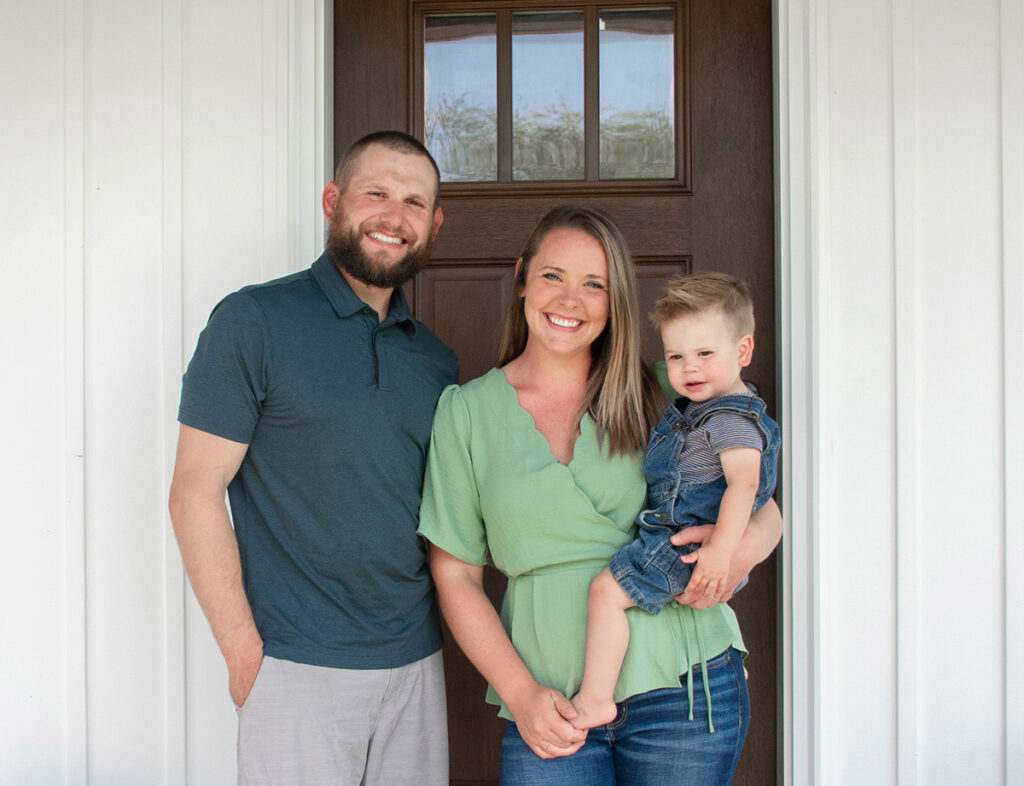
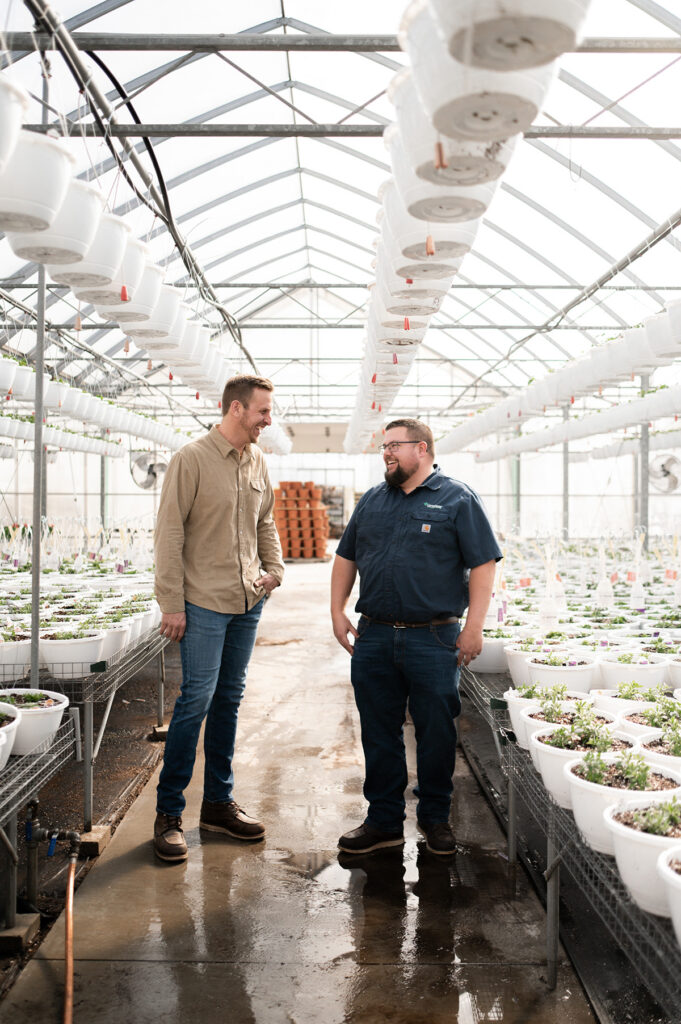

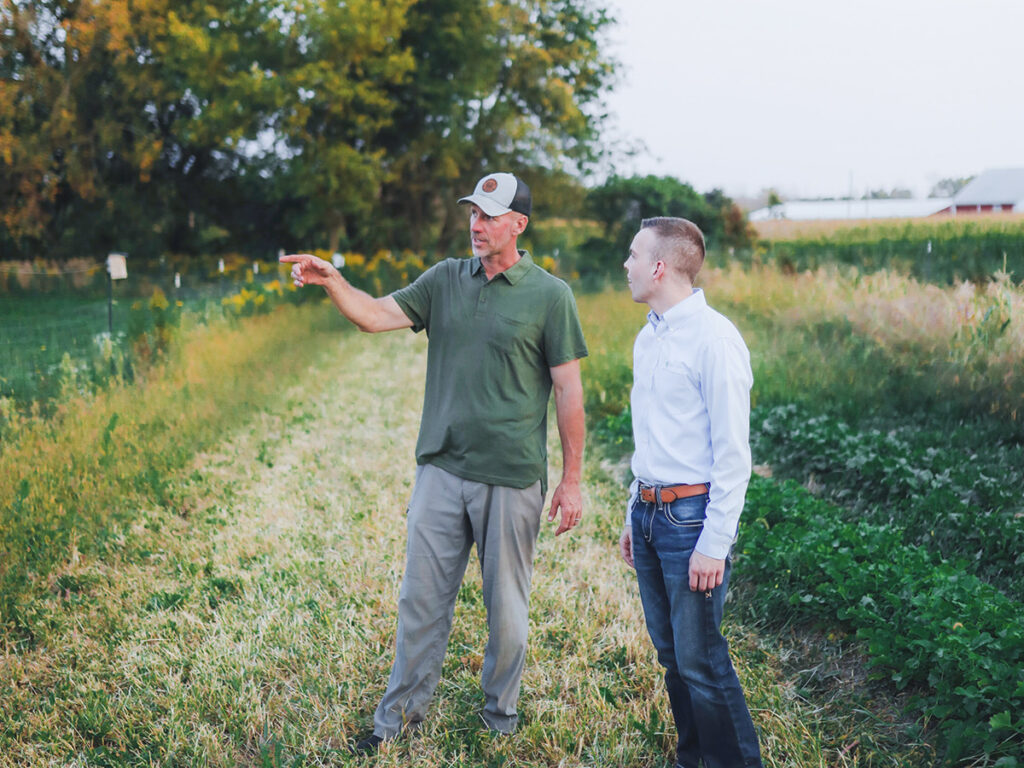
A few years ago, the Yevzelman’s found a once in a lifetime leasing opportunity through MIFarmLink.com so they took it. Cedar Field Farm, located in Belleville, Michigan, is a market garden style farm. They sell vegetables, herbs, mushrooms, and flowers.
While Simon has 10 years of agriculture experience, this was his first foray into small scale specialty crop farming. Combined with Caitlin’s career in marketing & data analytics, they had a solid foundation to start a small farming business together. However, knowing they did not have a lot of knowledge in the financial accounting side of running a business, they started looking into accounting services and the CultivateGrowth grant through GreenStone.
They felt GreenStone was a good fit since the association provides financial services, specifically in agriculture. They found their tax accountant, Emilie Reyome, and shortly after were approved for the CultivateGrowth grant to help pay for their first-time use of GreenStone’s tax and accounting services. Since it was their first time as entrepreneurs, they didn’t know what they needed as far as tax filings and year-end income tax planning.
“Emilie was super informative in helping us learn the ins and outs of tax and accounting services for our business. She was always available, even virtually, and very responsive to any questions we had. In addition to her being nice and responsive, it was a wonderful opportunity to learn more about tax reports, other services GreenStone provides, and what the overall process looks like. Emilie met us where we were and helped teach us how to build a sustainable business with GreenStone.”
Caitlin appreciates her experience with GreenStone’s CultivateGrowth grant wasn’t just helpful in learning about tax and accounting services, or how to build their plan, but also in saving them time and money. She said, “It could take us months trying to file things. Not only are we saving time, but we also get to spend that time growing the business rather than on the nitty gritty tax and accounting parts.”
With the help of GreenStone’s CultivateGrowth grant and tax and accounting services, Caitlin and Simon gained important lessons from learning how to use balance sheets and templates, to how to budget accordingly. “Cedar Field Farm could not have grown as much as they did without the help of these programs. They helped tremendously with saving us money, and from learning how to make our business more sustainable, better and run on a smoother process,” Caitlin said.
GreenStone is proud to support other young, beginning, or small farmers like Caitlin and Simon with help from the CultivateGrowth grant. To learn more about our CultivateGrowth program and what possibilities there are for you, click here.
Effective financial planning is essential for keeping your farming operation running smoothly and helping you achieve your goals. Not sure where to begin? Here are four tips to improve your financial planning strategy as a young, beginning, or small farmer and ensure you are on track to reaching both your short- and long-term goals.
1. Seek Support and Mentorship
One of the most valuable things you can do is surround yourself with experienced mentors who are willing to share what they’ve learned throughout their years of farming. Many experienced farmers are more than willing to help the next generation get started through sharing what they’ve learned along the way. Consider getting connected with local farms to learn from – or better yet, see what help they may need on their farm and build a partnership that is mutually beneficial for both parties.
Many beginning farmers find one of the biggest barriers to entry is access to the equipment needed to get started. By partnering with a local farmer, you could agree to provide free labor in exchange for use of their equipment for your operation. Embracing community is essential when starting out as a beginning farmer.
Look into what local resources are available to help you succeed. Is there an agricultural co-op in your area? If so, it may be an opportunity for you to participate with local farmers who pool their resources and knowledge. If you need help finding a mentor, GreenStone’s CultivateGrowth mentorship program can connect you with an experienced farmer. The program also offers grants, educational resources, and more for young, beginning, and small farmers.
2. Set Goals that Match Your Vision
It’s important to define the “why” behind your farming goals. Where do you see yourself in a year? What about five or ten years? Don’t be afraid to ask if your goals for your farm are aligned with your lifestyle or what you want your lifestyle to look like. Are you planning on farming full-time? Are you comfortable with farming being your primary source of income? What level of risk are you comfortable with?
Consider how your plans for your farm align with your long-term vision. Remember, bigger isn’t always better! When it comes to planning for the future of your farm, prioritize efficiency over expansion. Just because you can increase your herd size or acres farmed, does it really make the most sense for your farm? Look into investments that could help improve your current processes while maximizing your output.
Don’t be afraid to adjust your goals to match your current capacity. As your circumstances evolve, so will your plans. Don’t be afraid to adjust your plans or change them entirely as your goals are accomplished, or change.
3. Use Financial Experts as a Resource
When it comes to looking at your farm’s financials, open communication with your lender is key. The more information you can provide up front, the more they will be able to help you determine the best solutions for your unique needs. Get started by working with a lender who understands the ins and outs of the agriculture industry.
It’s important to meet annually with your lender. This will provide a snapshot of your financial performance throughout the past year and help you evaluate anything that needs to be addressed. Are there any operating costs that can be improved upon or cut back? Your lender can help you review these metrics, so you can make more informed decisions that move you closer to your goals.
Your lender will likely ask to look over these three documents to get a better understanding of your financials:
- Current balance sheet
- Prior year’s tax returns
- Financial projection for the upcoming year- if you do not have these documents completed, don’t worry! Bring in as much information as you can, and your lending team can help refine them.
4. Know Your Risk Tolerance
Part of preparing your farm’s finances for the year ahead is assessing your risk tolerance. Consider how a loss could impact your farm and your goals for the future, whether that be through damaged crops or a dip in market prices.
Many beginning farmers are not in a position to face a loss within their first few years of their operation. Working with a crop insurance agent to receive up to date evaluations on your risk and understand subsidy amounts will help mitigate your risk for unexpected losses or damage to your crops.
Crop insurance coverage can be more affordable than you might think. Through USDA, young, beginning, and small farmers are eligible for certain benefits designed to help start your operation. Crop insurance coverage can potentially save you from having to experience a major financial loss within your first few years of farming due to circumstances that are out of your control.
Financial planning for your farm may seem daunting when you’re just starting out. It’s important to know there are a wide range of resources and tools available to help you succeed. Connecting with the right community of mentors and financial experts will play a critical role in your progress. You’re not alone! GreenStone offers expertise, resources, and support to help you move forward with confidence and ensure your farm is positioned for continued success.
This article was originally published in Michigan Farm News.
The first step toward building a home in the country is purchasing land to build on. For some, construction begins immediately, for others life circumstances or finances could require purchasing land first and building down the road. When the time comes to build your dream home, here are some key things to consider when preparing for a home construction loan.
Start with pre-qualification
Starting with pre-qualification is always a good idea. Getting pre-qualified for a home construction loan provides financial clarity. It can be easy to lose sight of reality when planning a home. Pre-qualification provides you with an amount you are approved to borrow, informing your decisions whether you choose to work with a general contractor or manage construction yourself.
Pre-qualification also provides flexibility. Much like getting pre-qualified for a home loan for an existing home, getting pre-qualified for a home construction loan provides the ability to make decisions and move the project along more quickly. If for some reason you decide to delay your home build, you are prepared when the time comes.
Evaluate the site
Whether you purchased land in the past with the intention of building a home on the site in the future or would like to build on a property not originally intended for building, the same checklist applies.
Before starting construction, you will need to check local zoning and code requirements. Municipal rules differ widely across Michigan and Wisconsin. Every township is different, so it’s best to reach out to your township on these legal questions as soon as possible. Maybe you would like to build a barndominum on your property, only to find out your township doesn’t allow barndominums. Or maybe the dream home you are planning doesn’t meet your township’s square-foot requirements. The best way to avoid frustration is to make sure that you know your local requirements early in the process.
In most cases, a percolation (perc) test is required before building a home on a piece of land to ensure a septic system can be installed on the property. If electric and other utilities are not already accessible, it is crucial to establish a plan for getting them set up. These utilities can come at a substantial expense that can impact the budget of your construction project and its timeline.
Another consideration that can easily be overlooked is legal access. GreenStone encourages getting a survey of the property you intend to build your home on to ensure there are no surprises when it comes to property boundaries or access.
Leverage your land
GreenStone gives you options when transitioning from owning land to building a home on your land. If your land loan is with GreenStone, you can choose to keep your existing loan and take out a second loan for home construction. This option might make sense if you bought your property when interest rates were lower, allowing you to maintain a lower rate by keeping the two separate. However, you also have the option to roll your land loan into your construction loan, simplifying your payments.
Depending on the amount of equity you have in the land that you intend to build your home on, you may have the option to use the equity you have in your land towards a down payment on your construction loan. This can be a great option if you have built enough equity to satisfy the down payment requirements for the new loan.
Consider your construction approach
Unlike most lenders, GreenStone gives you options when it comes to how you want to manage the process of building your home. For those that choose to go the traditional route of working with a builder, GreenStone does not require you to only work with certain builders like many other lenders, giving you freedom to find the best builder for your project.
GreenStone also gives you the option to manage your home construction project yourself (do it yourself, or DIY), where you act as your own general contractor. Whether you have a construction background or simply want to be as hands on as possible, this is a great option for some. GreenStone is one of the only lenders that offers a DIY option.
A third option is to do a DIY loan but still work with a contractor for some aspects of the build.
This hybrid approach allows you to be hands on while still outsourcing certain aspects of the project as needed.
One thing to note is even if you choose the DIY option, you are still required to get third-party bids to ensure estimates for the project are accurate and competitive.
Budget wisely
Whether you choose to work with a builder, or go DIY, having a solid budget that entails all the various costs associated with your home construction project is very important. A good budget ensures you are working within the available funds you have for your project.
Construction costs fluctuate often based on the economy and other factors. GreenStone requires a 10% cost overrun fund for most projects to protect the borrower and ensure the project can be completed. If unused, the overrun can be reapplied to the loan balance, reducing monthly payments.
Know what to expect during construction
Once construction begins, borrowers enter a nine-to 12-month interest-only phase. This delays the need to pay principal on your loan until construction is completed.
Once the home is complete, the loan automatically converts to a traditional principal-and-interest mortgage—no refinancing required. If delays occur, GreenStone can extend the timeline for an additional fee, and we regularly work with customers to keep their projects moving.
One advantage of working with GreenStone is that throughout the construction process you’ll work with a dedicated construction disbursement specialist who handles draw requests, documentation, and coordination.
Start early and ask a lot of questions
When preparing for a construction loan, doing your due diligence at the beginning pays big dividends.
GreenStone’s team of experts is here to help by answering any questions you have and walking you through the construction loan process every step of the way. By pairing due diligence with GreenStone’s customized financing options and commitment to customer service, you can build your dream home with confidence.
At GreenStone, we realize the journey of turning your dream home into a reality can be both exhilarating and overwhelming. Whether you’re just beginning to explore the home building process, or you’ve already laid out your plans, navigating the numerous choices can be a daunting task. We are here to help you each step of the way!
To guide you through this intricate process and empower you with the knowledge needed to make informed decisions, we extend a warm invitation to join one of GreenStone’s complimentary home construction seminars!
Led by experienced construction loan experts, each seminar is meticulously designed to provide a comprehensive understanding of the flexible financing options available. Our experts will dedicate ninety minutes to walk you through the entire home construction process, covering crucial aspects such as:
- Loan Approval Timeline: Gain insight on the timeline for loan approval, ensuring you have a clear understanding of the necessary steps to secure your financing.
- Construction Timeline: Navigate the construction timeline with ease, from breaking ground to completion, ensuring a smooth progression of your project.
- Various Loan Options: Explore the diverse range of loan options available, tailored to suit your specific needs and financial preferences.
- Understanding the Draw Process: Delve into the intricacies of the draw process, giving you a comprehensive overview of how funds are disbursed throughout the construction phases.
- Do-It-Yourself vs. Contracted Projects: Assess the pros and cons of taking on aspects of the construction yourself versus hiring professional contractors, helping you make informed choices aligned with your vision for your home and your capabilities.
Registration for spring seminars is now closed. Be on the lookout for future seminars near you!
Pork producers are wrapping up one of their most profitable years in recent history, with profitability expected to continue well into 2026, according to Kyle Hurley, vice president of agribusiness lending for GreenStone Farm Credit Services.
The industry has seen exceptional profitability throughout 2025, with producers averaging $40 or more profit per head over the last four months per Iowa State University’s pork profitability estimates. Even in October, it reported average profits of $34 per head.
“It’s been a really good year for most producers,” Hurley said. “We’ve had profits on average for the last 17 months, which is a pretty long run.”
Key drivers in pork industry profitability
The higher hog profitability in 2025 was driven by several key factors:
- Strong market hog prices throughout the year, supported by high value of pork carcasses and increased demand.
- Lower feed costs, mainly due to cheaper corn and soybean meal.
- The gap between hog prices and feed costs was unusually wide.
- High prices for competing proteins — like beef — boosted demand for pork.
- Growing domestic demand for pork remains a bright spot, with approximately 21.7 billion pounds consumed domestically in 2024.
- The industry is capitalizing on food trends including increased interest in high-protein diets and promoting pork’s taste, freshness and value proposition.
- Export demand remained relatively strong, even with some trade disruptions. July 2025 pork exports were 3% lower than July 2024, primarily driven by an 11% decrease in shipments to Mexico.
- Exports still represent a significant portion of production, with an estimated 7.1 billion pounds (more than 25%) exported in 2024, valued at $8.6 billion, according to the United States Department of Agriculture (USDA).
- The USDA pork cut-out — a composite value of pork primal cuts that estimates carcass worth — has stayed well above typical seasonal levels. “This high meat value supports cash hog prices because packers want the hogs when carcasses are valuable,” said Hurley.
Disease challenges persist
Despite strong profits, producers still face significant disease pressures that can impact operations:
- PEDv (Porcine Epidemic Diarrhea) and PRRS (Porcine Reproductive and Respiratory Syndrome) continue disrupting production nationally.
- Michigan farms experienced several PEDv outbreaks early this winter.
- PEDv typically results in about four weeks of lost pig production per farm.
- Surviving pigs often grow more slowly.
“This has been an exceptionally bad year for PRRS (Porcine Reproductive and Respiratory Syndrome) which has had an impact on the number of market hogs available,” said Mary Kelpinski, CEO of the Michigan Pork Producers Association.
Farms maintaining good herd health have seen the best profitability, while those battling disease have faced reduced margins, Hurley says.
Supply remains stable
The latest USDA Hog and Pigs report shows the U.S. sow herd down 2% from a year ago, farrowing intentions slightly lower and no significant expansion expected in pork production for next year.
Total 2025 pork production is forecast at 27.6 billion pounds, a decrease of less than 1% compared with last year’s production, according to USDA.
“Despite the profitability, there isn’t much of an expectation that there’s going to be a lot more hogs produced,” said Hurley.
Several factors prevent rapid industry growth, including high capital requirements for expansion, limited processing capacity, ongoing disease risks and asset fixity from previous investments.
“There’s room for some more pigs, but not a lot more pigs without some sort of larger structural change within the industry,” Hurley said. “If the country continues to produce roughly the same amount of pork, in the short term, I think there’s some good profit opportunities.”
The current profitability stands in sharp contrast to 2023, which Hurley called “one of the absolute worst in the history of the industry.”
In 2023, producers faced high feed costs from expensive corn and soybean meal, rising labor wages and utility costs and low hog prices.
“Those conditions were worse than the infamous 1998 crisis for some producers,” he says.
New marketing strategies
In May 2025, the pork industry launched the “Taste What Pork Can Do” campaign focusing on digital marketing based on consumer segmentation studies and pork’s flavor and versatility. The campaign also touts the health benefits of pork, while reaching out to different consumer groups with targeted messaging.
“Focusing on flavorful, familiar cuts, such as bacon, sausage and ham, the campaign will support category growth and ultimately encourage consumers to expand their pork experience with fresh products,” Kelpinski said. “Highlighting pork as an ingredient reminds consumers of pork’s flavor profile and versatility, characteristics that encourage consumers to explore more cultural and regional cuisines. The goal is to be the number one protein in flavor and expand pork from a special occasion protein to an everyday choice.”
Also pushing to advance the industry are technological improvements in 2026, including increased AI applications at the farm level, wider adoption of existing technologies, and efficiency improvements from new innovations.
Bottom line for producers
When comparing current futures prices for hogs against projected corn and soybean meal costs, “There are a lot of reasons to remain optimistic,” Hurley said.
Producers who maintained good herd health and managed price risk through hedging, purchasing Livestock Risk Protection (LRP) or Livestock Gross Margin (LGM) insurance, or forward contracting have positioned themselves well for continued success into 2026, Hurley says.
Amid food shortages during the Covid-19 Pandemic, southern Californian city girl, Tawney, and southern Illinois hunter, Chris, didn’t want to rely on grocery stores for meat anymore. So, when their local stores had limits on how much protein they could buy, they decided to start their own farm, Fluffy Butt Farms.
During this time farmers couldn’t sell their pigs to market because of Covid restrictions, but Chris was able to find a farmer selling pigs. With hesitation, as this is something that they had never done before, they brought the pig home. Chris and Tawney are grateful they took a risk, “This city girl loved every minute of it,” Tawney said.
Over the years, they continued raising pigs in their backwoods, but it brought questions to Tawney like, “How can we improve our operation?” This is when Chris and Tawney discovered GreenStone’s CultivateGrowth grant. They were struggling with understanding how to price their pigs and how to market them better. They decided they wanted to apply for the CultivateGrowth grant to attend Farrow to Finish Marketing School!
“The program mostly focused on rotational grazing, and lucky for us, they have the same topography we have. We got to tour the area and see firsthand how they moved the pigs. It was wonderful to see the practice in action,” Tawney said happily when talking about what she learned from the class.
“Then, the program moved into finances and marketing. It was the biggest areas of our operation I wanted to learn about, so that was a big impact for me personally.” Tawney learned how to create a new cost sheet, adjust the prices, and then started looking for new land to lease to allow them to expand their farm.
Now that Chris and Tawney have seen first-hand implementations that can make their operation better, they know exactly what changes they are going to make to drive forward.
“The more people we meet who share our same goal of raising our animals naturally, and the more knowledge we gain, the more inspired we are to continue. The CultivateGrowth grant really helped offset the expense of leaving the farm to attend this program. We are grateful GreenStone gave us the opportunity to help us grow as farmers.”
GreenStone is proud to support other young, beginning or small farmers like Chris and Tawney with the help from the CultivateGrowth program. To learn more about our CultivateGrowth program and what possibilities there are for you, click here.
After several years of record-high prices and unpredictable swings, the farm equipment market is beginning to rebalance. For many operations, especially small and mid-sized farms, this reset presents a meaningful opportunity to upgrade machinery at a lower cost. New equipment prices have leveled off but remain high in relation to falling commodity prices. However, late model used equipment prices have fallen from the sharp inflation of the post-pandemic years.
Industry data and on-the-ground observations indicate we are in one of the most favorable times in recent years for farmers to explore equipment purchases—provided those decisions are guided by sound financial analysis and long-term planning.
From Inflation Surge to Market Correction
During the height of the COVID-19 pandemic, supply-chain disruptions, government stimulus programs, and strong commodity prices combined to drive a historic spike in farm-equipment costs. Farmers who had cash on hand competed for limited inventory, sending both new and used prices sky high.
Thankfully, this trend has since leveled out, or in some cases, reversed. Used equipment values have declined consistently over the past two years as inventories have grown, and commodity prices have softened. According to Colton Vrable, an appraiser with GreenStone Farm Credit Services, the shift has been significant.
“Inventory levels are high at the dealer level, both new and used,” Vrable explains. “That higher supply is bringing prices down. We’re seeing year-over-year decreases in used-equipment values across nearly all categories.”
Vrable notes that combines have experienced some of the largest declines, while new-equipment prices are increasing only modestly—about 1 to 1.5% year over year—largely keeping pace with inflation and input costs such as steel, and a relief from post-pandemic years that saw annual prices rise as much as 5 to 7% annually. While new equipment prices have not declined at the rate commodity prices have, they have fallen to more historic levels of growth.
New Opportunities
Lower prices and greater selection mean many producers can replace outdated machinery with newer, more efficient models that were unaffordable just a few years ago. For these buyers, late-model tractors, combines, and implements often deliver significant gains in reliability and technology without the financial burden of brand-new equipment.
Vrable describes the current situation as a classic point in the agricultural cycle: “The market is cyclical. We’re in a downturn where equipment is cheaper than it has been. When the ag economy rebounds, prices will rise again.”
That cyclical pattern—declining values during low commodity periods and higher values during profitable years—suggests that the next uptick in commodity prices will again push equipment costs upward. For farmers considering upgrading, market shifts could provide an opportunity to invest and avoid the inevitably higher prices that will come with an improved ag economy.
Know Your Numbers
While current market conditions should be encouraging to some producers, the decision to invest in equipment must begin with a careful assessment of financial capacity. Each operator should “know their numbers” to best align market conditions with business goals and make sound financial decisions.
In the current rate environment, interest differences between five-, six-, and seven-year equipment loans are relatively small. Extending loan terms may improve cash flow and reduce financial strain, provided the equipment’s useful life supports the term.
GreenStone offers financing for both new and used equipment with repayment terms up to seven years. Equally beneficial to the farmer, GreenStone does not impose strict limitations based on the equipment’s age or usage hours. This flexibility allows borrowers to structure payments that complement their farm’s revenue cycle and capital strategy.
Sound borrowing decisions rely on accurate accounting and financial awareness. Farmers who understand their operating costs, break-even points, and annual obligations are best positioned to determine what level of debt their operation can support. A disciplined approach goes a long way in ensuring that an attractive purchase price translates into a sustainable long-term investment.
Evaluating Value and Timing
Determining whether an equipment upgrade is appropriate should be guided by measurable value. The true cost of ownership—purchase price, maintenance, repair, and operating efficiency—should be compared against projected productivity gains.
For example, if replacing an older tractor reduces hourly operating costs considerably while improving reliability, the financial return may justify the investment even in a cautious market. On the other hand, purchasing equipment that exceeds the operation’s needs or repayment capacity can create unnecessary risk.
Vrable encourages farmers to use multiple reliable sources when assessing equipment values. Online platforms such as Tractor House and Machinery Pete provide recent sale listings and auction data that reflect regional trends. He also recommends utilizing the Purdue Ag Economy Barometer, which tracks nationwide agricultural sentiment and capital-investment intentions.
“Being diligent about research goes a long way,” advises Vrable. “Look at the most recent sales in your area. The market has changed quickly, and using up-to-date information helps farmers make better-informed decisions.”
The Relationship Advantage
Working closely with a trusted lender remains one of the most effective ways to navigate equipment purchases. GreenStone’s relationship-based approach allows lenders to understand each customer’s financial situation and operational goals, ensuring loan structures align with realistic repayment capacity.
Lenders can also help producers evaluate timing. Because equipment and commodity prices often move together—with equipment prices lagging several months behind commodity shifts—lenders familiar with market cycles can provide valuable perspective on when to buy or hold.
Farmers uncertain about their equipment values can request professional fee appraisals through GreenStone. Understanding the fair-market value of existing equipment can strengthen trade-in negotiations and clarify the financial impact of upgrades.
Positioning for Long-Term Success
The recent market correction underscores the importance of patience and preparation in capital-equipment planning. Producers who held off on upgrading during the extreme price inflation of the post pandemic years now find themselves in a more balanced environment where disciplined financial management can yield real advantages.
High inventory levels give buyers leverage, but the key to long-term success is ensuring any purchase complements the farm’s overall strategy. Matching the right piece of equipment to the right financial plan enables efficiency improvements without jeopardizing stability.
As Vrable observes, “There’s more bargaining power now with how high the inventory is on dealer lots. If an operation has the numbers in place, it’s a good time to make some changes.”
Farmers considering new or used equipment should begin by reviewing their balance sheets, updating cash-flow projections, and consulting with their lender. With clear financial insight and professional guidance, producers can identify opportunities that enhance productivity and maintain healthy margins.
Looking Ahead
The agricultural economy will continue to evolve, but the fundamentals of smart investment remain constant: know the numbers, understand the market, and make decisions grounded in long-term sustainability.
Used-equipment prices have declined to their most reasonable levels in years, while new-equipment costs have stabilized but remain high in comparison to commodity prices. For operations positioned to invest, the combination of lower used equipment prices, ample inventory, and flexible financing options provides a rare opportunity to strengthen capacity for the seasons ahead.
By pairing market awareness with disciplined financial planning, farmers that know their numbers have the opportunity to transform today’s price correction into tomorrow’s competitive advantage.
This article was originally published in Michigan Farm News.
Think you can’t afford to own recreational land? Think again!
Many people dream of buying their own land as a rural getaway, a long-term investment to pass down to future generations, a future home site or for additional income. As land prices continue to increase, many people are skeptical of whether they can afford to own land. As your recreational land financing expert, here are ways to make owning your dream property more affordable.
Create your dream getaway, gradually
Perhaps you dream of a getaway property with a custom log cabin, a fish-stocked pond and a pole barn to store your outdoor toys. It’s important to have goals, but they might not be immediately attainable within your current budget. Consider purchasing as your budget allows. Gradual progress on a piece of land you own can be mentally fulfilling, budget-friendly, and a great way to build family memories.
Create a profitable side hustle
Landowners have more options than ever before to create an additional revenue stream using their rural property. Services such as HipCamp and AirBnB make renting your cabin, camper or vacant land much less of a hassle. This income might even cover a portion of your mortgage payments each month. Part-time farming, including fruits or vegetables, livestock or beekeeping, is another clever way to make your land work for you. Other ideas include leasing your land for hunting, solar or wind farms or crop farming. Depending on your municipal zoning laws, you may even consider using the property as a location for a part-time retail or service business.
Buy land as a group
Many friends and family members have found buying vacation property or hunting land as a group can make payments more affordable. The key to peacefully co-owning property is to set clear ground rules and expectations in advance to avoid misunderstandings and assumptions, and to seek professional legal advice before signing on the dotted line. This could include forming an LLC. For more on this topic, see our blog, Tips for Buying Group Hunting Land.
Rethink your annual family vacation expenditures
The average American family of four will spend $7,936 on a one-week vacation. For a similar annual expenditure, that family could make monthly payments on a nice chunk of vacant land. Loan costs and payment amounts vary based on several factors, which you will want to review with your financial services officer for more accurate and specific details, but you may be surprised when you calculate it out. Not only does owning land offer a potential getaway, it is not limited to one week since you have access to the property year-round. It could also represent a sound investment allowing you to build equity while enjoying your land. Purchasing a getaway property that can be passed down through generations is great for creating priceless memories for current and future family members.
Consider a land contract
If you identify land you want to buy, talk to the seller and see if they would consider a land contract, particularly if you already lease the land or are familiar with the owner. This option allows you to navigate directly with the seller, which could mean a lower down payment requirement and more affordable monthly payments. Many terms of a land contract are negotiable such as down payment, interest rate, term, balloon period, use of land and more.
You may consider working with a real estate attorney who can help determine the specifics of the deal or draft the contract directly with the seller. With a land contract, the seller acts as the financier or bank and may require a balloon period where the loan becomes due in full after two, three or five years, but is willing to base the monthly payments on a typical 30-year repayment schedule. The payments you make each month will go partially towards the principal balance and partially to interest just like they would if you were working with a bank or credit union.
Once you are ready to pay off the land contract, your lender can evaluate the value of the property and determine your loan to value ratio. Once determined, work with your financial services officer to look at your current land contract balance to reduce or lower the additional down payment needed for your loan with GreenStone.
Get creative with your down payment
GreenStone typically requires a standard down payment on a vacant land loan. If you don’t have ample cash at your fingertips, get creative! In some cases, equity in a home or other owned property could be used as collateral rather than a cash down payment. Consult with a lending expert to discuss options for your unique situation.
Want to get started financing your own piece of paradise? Visit our Recreational Land webpage for more information. When you’re ready to take the next step toward purchasing your own getaway place, don’t hesitate to reach out to your local GreenStone branch for more information!
Timber markets across Michigan and northern Wisconsin have faced significant volatility in recent years, following a stretch of relatively strong performance.
According to Corey Fanslau, vice president of traditional lending at GreenStone Farm Credit Services, the sharp fluctuations in timber markets stem from a combination of interrelated factors—rising interest rates, shifting housing demand, changing supply levels, trade policy uncertainty and uneven performance across wood product segments. Higher borrowing costs have dampened both home purchases and new construction, with housing starts down 11% year over year as of August 2025.
“In the COVID years, a lot of people had nothing better to do, so they went to the local lumber store, and purchased products for remodeling or additions. It gave the industry a spark for a couple of years, but that has since tapered off as both interest rates and inflation increased,” Fanslau said.
At the same time, the cost of fuel, tires, filters, equipment, maintenance and labor costs all increased. “Like farming, timber is a commodities-driven market where price is driven by demand,” he added.
In Wisconsin, forest products jobs fell sharply from 25,607 in 2001 to 6,947 in the third quarter of 2024 — a 46% decrease — according to the Wisconsin Council on Forestry’s 2024 Industry Trends Final Report. Michigan has lost about 1,100 forestry jobs since 2019, according to The Timberland Investor.
Wisconsin also had mill closures in Goodman, Mattoon and Rice Lake in August 2024, as reported in the Wisconsin Council on Forestry’s December 2024 final report.
State of the market
The timber market has been oversupplied. Mills are operating below capacity due to excess inventory, which is contributing to lower prices for loggers.
“Papermills and sawmills have reduced production in response to market conditions,” said Fanslau. “There is some hope that the recent federal interest rate cut announcement may help stimulate economic activity and housing demand. “Additional pulp production could help offset the dip in demand for hardwood. That was the hope for Michigan’s Upper Peninsula when it’s largest timber buyer, Swedish pulp and paper company Billerud — formerly Verso Corporation — announced a $1 billion investment to convert its Escanaba, Mich., plant into a cartonboard production facility.
The conversion was later canceled, and the investment was trimmed to $127 million due to economic factors and construction challenges. Billerud also has paper converting facilities in Quinnesec, Mich., and Wisconsin Rapids, Wis. “This left loggers with excess expensive equipment and little to no income,” said Dalton Hanchek, a GreenStone financial services officer based in Escanaba.
Recent investments by the Escanaba paper mill — though smaller than initially planned — have renewed demand for wood, supporting logging businesses, Hanchek explains.
“There is continued demand for cardboard and paperboard, which benefits the industry. However, challenges remain, such as inconsistent cash flow, high equipment and repair costs, and the industry’s dependency on the paper mills’ operational decisions,” he said. “The recent pickup in demand for wood has helped some loggers recover financially.”
The industry is cautiously optimistic, according to Hanchek. Industry experts expect modest price increases of between 3-5% roughly in line with inflation — according to Miller Wood Trade’s 2025 Hardwood Purchasing Handbook. Limited supply capacity may drive prices higher in the second half of 2025.
However, short-term obstacles have also caused upheaval. “In the northern U.P., Baraga, Houghton, Ontonagon and Gogebic counties, heavy rain and wet conditions have hindered loggers’ ability to access the woods and haul wood, particularly in Baraga and Ontonagon,” Hanchek said. “Those conditions have traditionally come during the breakup season in the spring, not in late summer and fall.”
Other factors impacting the market were a massive ice storm in Northern Michigan that damaged or destroyed more than three million acres of public and private forest. Clean-up efforts have provided some opportunities but have been hindered by excess inventory.
The smaller mills and hand cutting crews of central and southern Michigan specialize in high-value hardwoods. Like their neighbors to the north, they too have begun to feel the negative impact caused by uncertainty in global markets.
“Michigan’s forest products industry continues to demonstrate resiliency during these volatile times,” said Julie Judge, a GreenStone financial services officer based in Cadillac, Michigan. “The mill and logging industries are deeply rooted in our state’s history and culture and will continue to provide jobs and economic opportunities despite these challenges.”
New uses for timber
Mass timber buildings are structures that “are constructed with large pre-manufactured, multilayered, solid wood panels resulting in solid timber floors and walls typically ranging from 5 to 12 inches in thickness, according to the American Wood Council. Mass timber is gaining popularity in commercial construction where cross-laminated timber (CLT) panels replace concrete, brick and steel.
Michigan State University recently built the state’s largest mass timber building, the STEM Teaching and Learning Facility, on the site of the former Shaw Lane Power Plant next to Spartan Stadium. The two new mass timber wings provide 117,000 square feet of modern teaching labs and collaborative space.
“It’s a more environmentally friendly, renewable resource that can go up quite quickly, which also provides a better work environment with better aesthetics and acoustics,” Fanslau said. “It’s an exciting new avenue that could use up a lot of our wood product.”
Workforce investments
Logging is much like the farming industry. The average age of loggers continues to climb.
“We need more new blood in the industry, but it’s hard because there are a lot of barriers to entry, particularly from a capital perspective. Equipment is expensive, and attracting labor is difficult,” said Fanslau.
GreenStone is partnering with the Michigan Association of Timbermen and the Great Lakes Timber Producers Association to provide simulator machines in high schools, providing students with a unique opportunity to learn about the timber industry.
“It simulates sitting in a harvester and harvesting timber,” he said. “It’s a 3-D experience with video – giving kids a real-life simulation.”
According to Fanslau, educating the next generation about the timber industry, and the career opportunities it presents, couldn’t be more important.
GreenStone Farm Credit Services is pleased to announce Brett Dutcher as its new executive vice president and chief information officer, effective Nov. 1.
Current executive vice president and chief information officer Steve Junglas will retire on Feb. 3, 2026, after 22 years of dedicated service with GreenStone. Junglas will assist in Dutcher’s transition in the role of executive vice and strategic advisor until his retirement. Throughout his tenure at GreenStone, Junglas played a key role in leading GreenStone’s technology initiatives and large-scale projects contributing to the organization’s continued growth.
As executive vice president and chief information officer, Dutcher will oversee all information technology operations and strategic initiatives, ensuring continued support and advancement for GreenStone.
“Brett will play a crucial role in shaping and implementing our information technology strategy aligned with GreenStone’s overall business plan and organizational direction,” said GreenStone President and Chief Executive Officer, Travis Jones. “His strategic insight, extensive industry knowledge, and experience across different roles within GreenStone’s Information Services department will help us remain at the forefront of rapidly evolving technological advancements while maintaining the security of our members’ information.”
Bringing progressive experience in information systems, Dutcher most recently served as GreenStone’s senior vice president of application services. Beginning his tenure more than 10 years ago at GreenStone as a quality assurance analyst, Dutcher also served as an application systems analyst before joining the cooperative’s leadership team as an information technology manager. Dutcher holds a bachelor’s degree in information systems from Central Michigan University.
“I’m honored to continue to move our association forward through the innovation of our information technology systems, processes, and people. I am passionate about finding solutions that benefit our cooperative through keeping the best interest of our members at the forefront of every decision we make,” said Dutcher.
“Brett has already made an impact on our association. We look forward to his continued success in this new role,” Jones said.