


Rooted in Growth at Green Wagon Farm
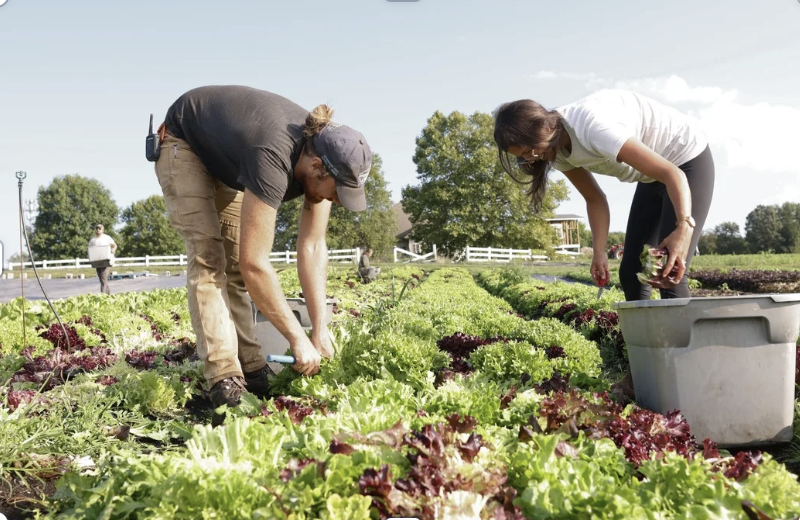
Growing up on a hobby farm, Chad Anderson had a connection to agriculture from a young age. He studied business in college and spent a couple years in the Peace Corps but felt the itch to return to the soil. He spent a season working for a vegetable farm before deciding he wanted to start something of his own. That’s when Green Wagon Farm was born.
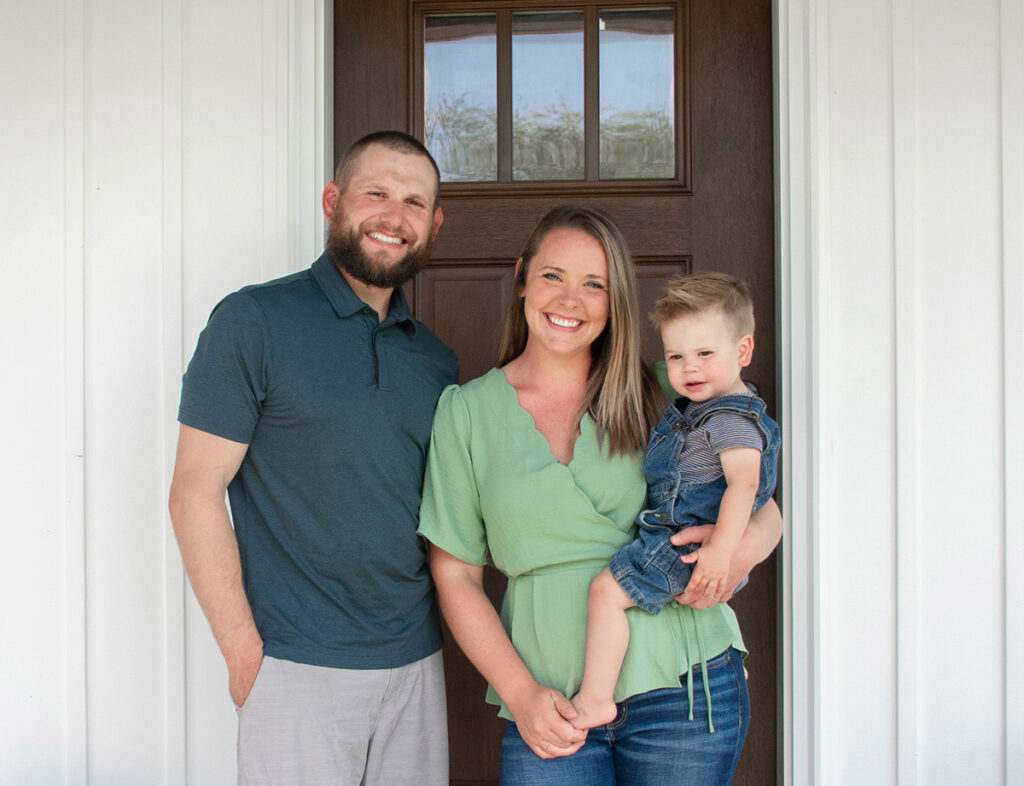
Chad founded Green Wagon Farm in 2010. Shortly after, met his wife, Heather, who joined him as co-owner and farm and market manager. What began as a small operation on four leased acres has since grown into a year-round farm on 18 acres with a crew of about eight employees, which nearly doubles in size during the busy summer months. Chad made his first wholesale sale in his first year growing when a local buyer approached him directly. “We jumped right in and the relationship stuck,” Heather said. “We have a great relationship with them still, among other local restaurants.”
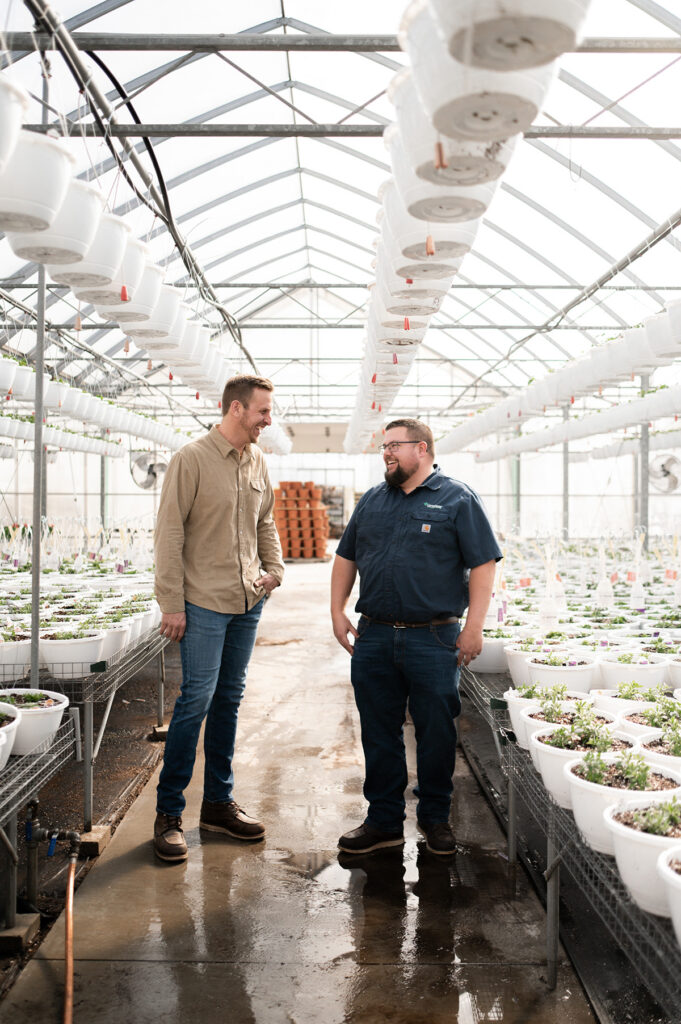
15 years later, after connecting with Forest Hills Foods, their wholesale market expanded quickly. Green Wagon’s ability to produce salad greens, microgreens, kale, and chard throughout the winter has made it a natural fit for grocers and restaurants who want fresh, local produce all year.
Vegetables have always been the focus of the farm, and over the years the Andersons have created many ways to connect with their customers. Their community supported agriculture (CSA) program has been a part of the business from the start – a year-round membership where customers pay monthly and pick their own produce weekly. They also sell at the Fulton Street Market year-round, and the Holland Farmers Market during the summer. Their largest channel now is by far wholesale, which makes up a little over 60% of their sales by supplying small grocers and restaurants with fresh produce throughout the Grand Rapids area.
The Andersons began their relationship with GreenStone a few years after they started the operation, but it wasn’t until Heather heard from her friends at Lakeview Hill Farm in Traverse City, Mich., that they learned about the CultivateGrowth program. That conversation was enough to convince Heather and Chad to apply for the CultivateGrowth grant, which provides young, beginning, and small farmers with financial support to offset the costs of continuing agricultural education.
The grant helped send them to the Organic Vegetable Production Conference, designed to educate vegetable growers at every stage of their operations. Even though the Andersons are more than a decade into the business, they are still looking to sharpen their business.
“We’ve been in operation for over ten years,” Heather said. “We’re not necessarily beginning farmers but still seeking to learn and improve our business.”
The conference offered crop-specific sessions, covering a handful of vegetable crops each year, alongside management-focused sessions on topics like crop storage, soil health, and no-till practices.
One session made a lasting impression: an approach called “habit farming,” a management style borrowed from lean manufacturing principles, and the same philosophy associated with Toyota’s production system. The strategy is to learn what the customer values most and then find the most efficient way to deliver it.
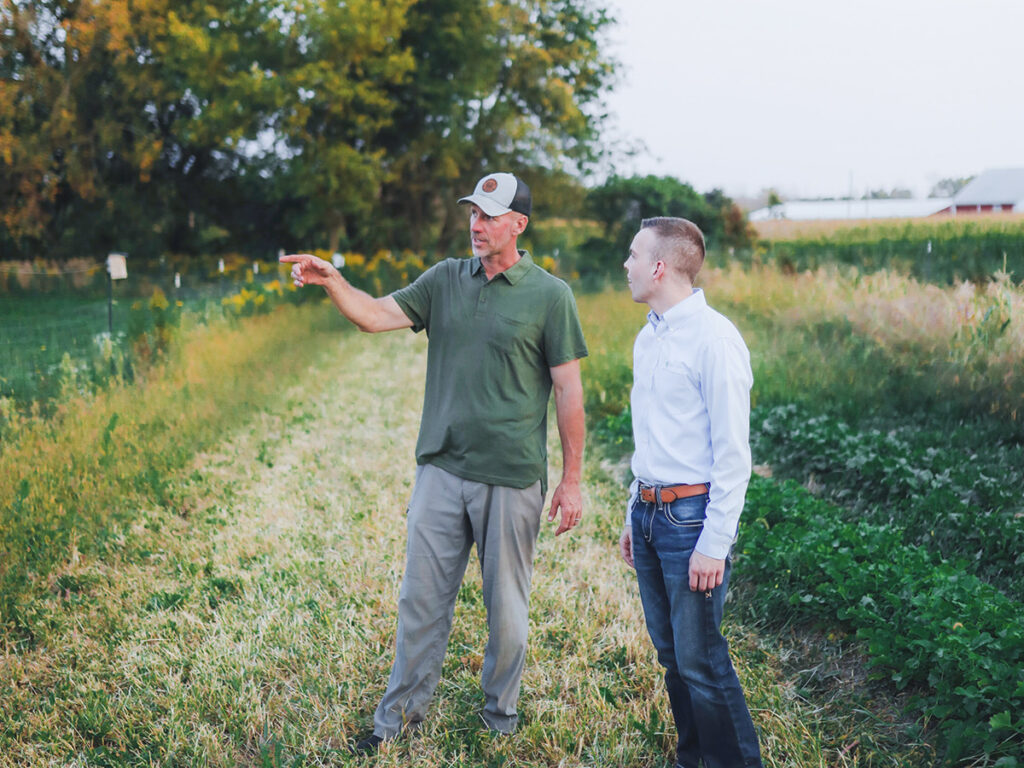
After the conference, Green Wagon’s team took part in a whole-farm review, walking through the property and gathering feedback from all team members on what had worked well over the season and what hadn’t. This review continued into the winter as they started to implement real changes, like a new lettuce-bagging process and new field signage marking bed numbers so the team can quickly identify the proper harvesting locations. Over this planting season, they have already seen the positive effects of the changes they made.
For Heather, the value of GreenStone’s CultivateGrowth grant goes beyond any one event. “It’s nice to be able to have an outlet to learn in so many different ways for people, because it’s not just one specific program, but we can use it to learn in so many different ways, both hands on and in community with other farmers.”
The Andersons have already applied for further CultivateGrowth support – one more step for farmers that even 15 years in, still aren’t done growing.
We’re here to help.
With locations across Michigan and northeast Wisconsin, we’re here when you’re ready to talk.